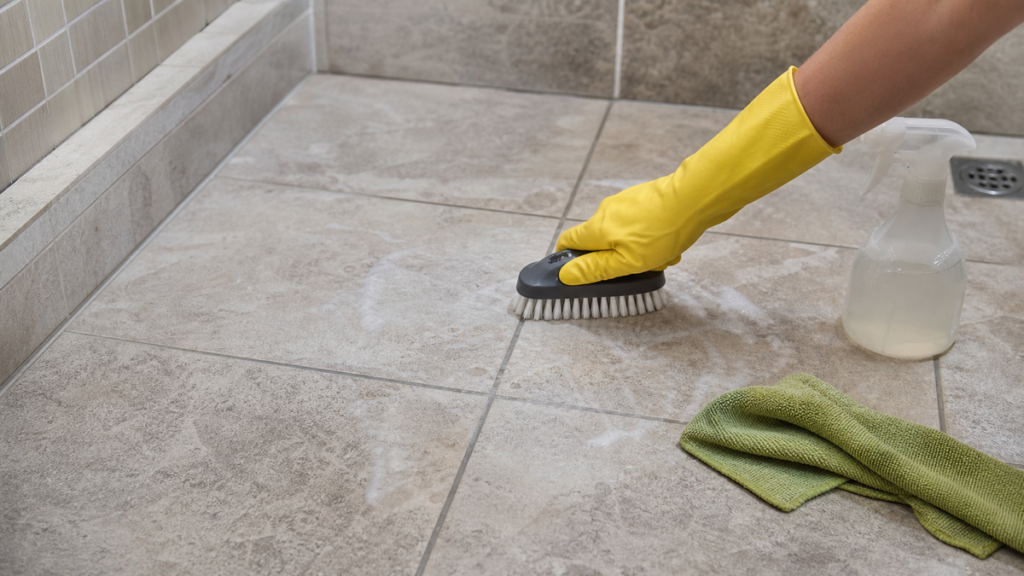
How to Clean Cloudy Glass Shower Doors Without Scratching Them

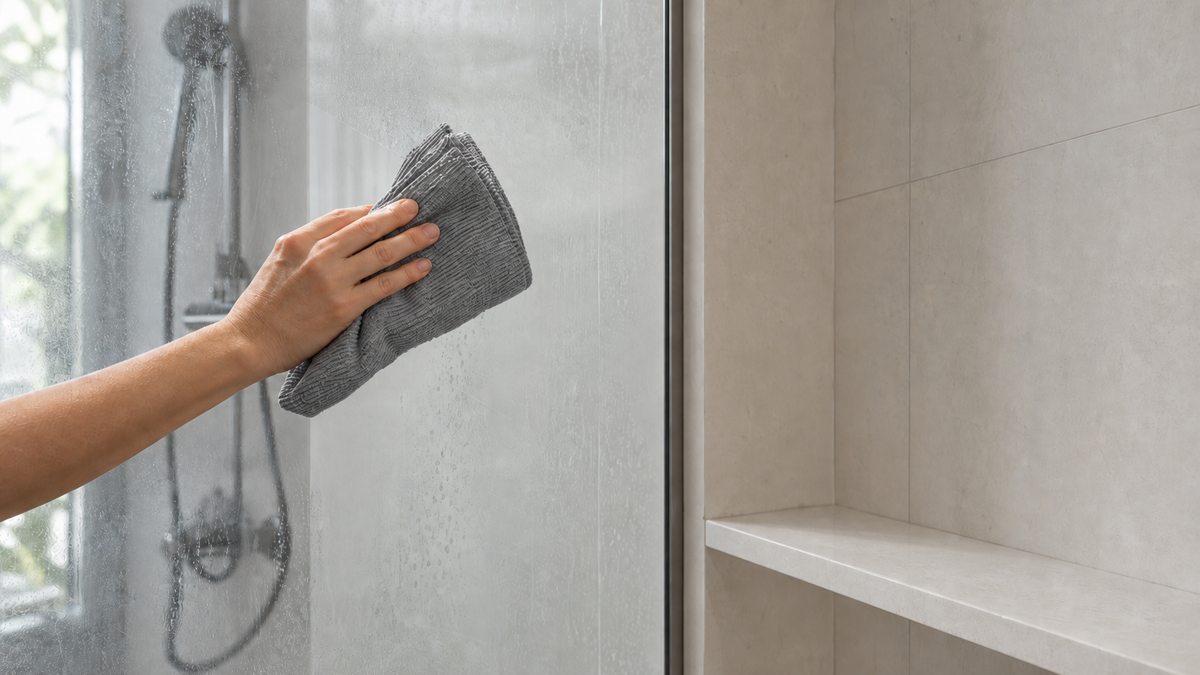
Quick Answer
To clean cloudy glass shower doors without scratching them, first figure out whether the haze is mostly soap scum, hard-water residue, or ordinary streaky film. Use a bathroom cleaner that is appropriate for the glass, allow it the contact time listed on the directions, wipe with a soft microfiber cloth or non-scratch tool, rinse away loosened residue, and dry the glass completely.
Avoid scouring powders, steel wool, rough pads, gritty pastes, and aggressive scraping unless the shower-door manufacturer specifically approves them. Coated glass needs even more caution because the protective coating can be damaged by abrasive cleaning.
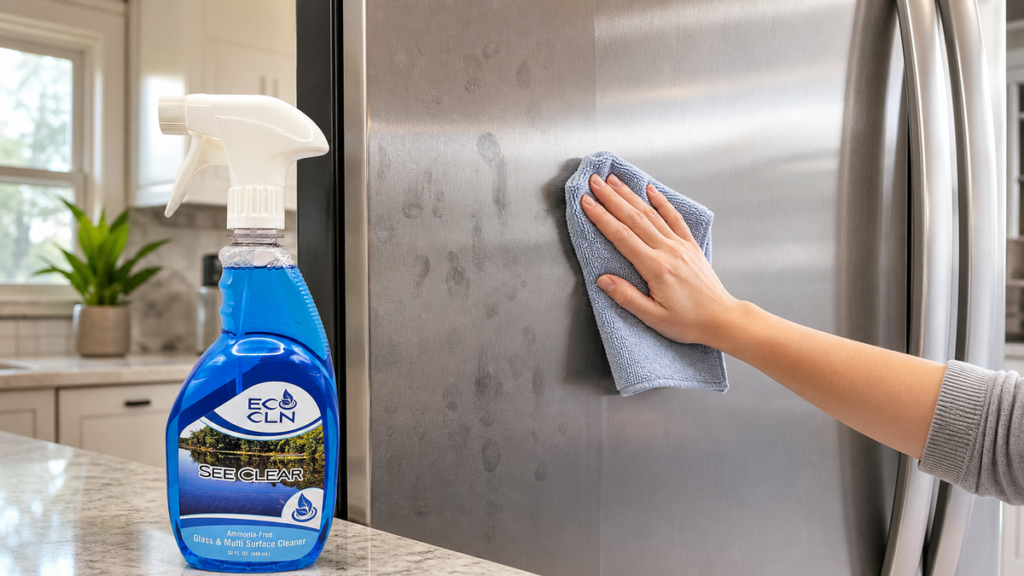
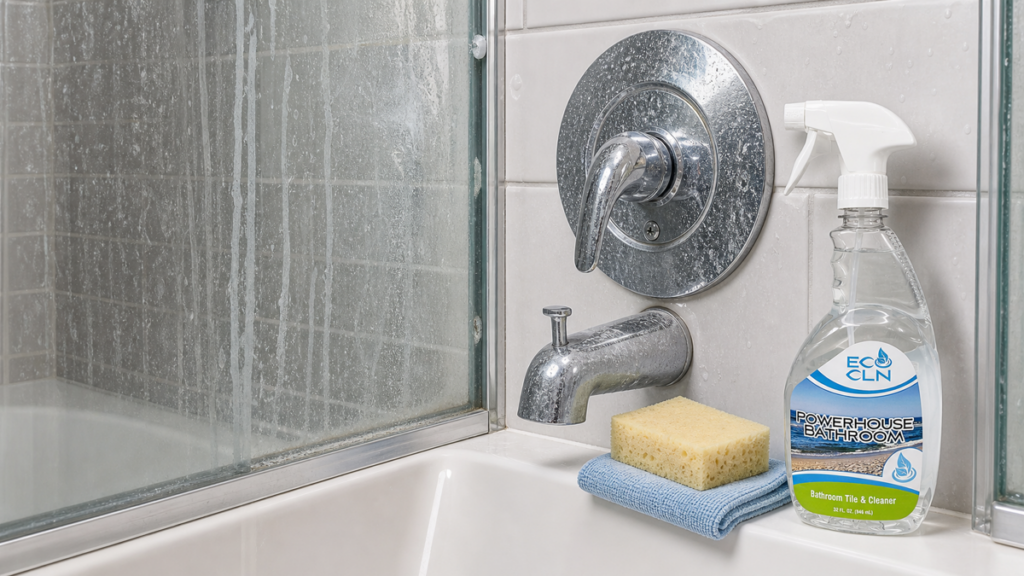
For Eco Cln, Powerhouse Bathroom is the product positioned for soap scum, hard-water-related bathroom buildup, tubs, tile, sinks, fixtures, and shower-area grime. See-Clear is the ammonia-free glass and surface cleaner for routine fingerprints, haze, smudges, mirrors, windows, chrome, and shiny surfaces. On a cloudy shower door, the bathroom buildup comes first; the final glass-cleaning step comes after the residue is removed.
Why Shower Glass Turns Cloudy
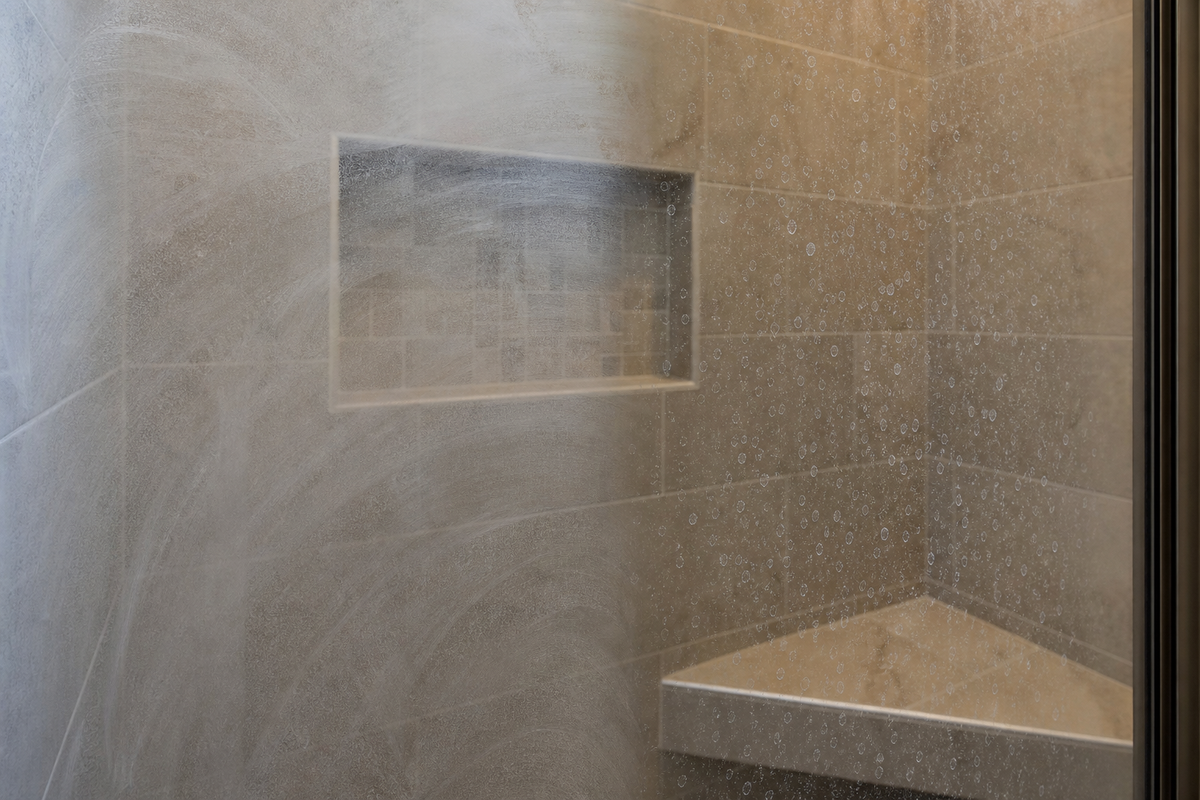
Shower glass collects more than water.
Soap, shampoo, body oils, minerals, and tiny droplets dry on the surface every day. Over time, they can create a film that scatters light and makes the glass look dull or milky.
Soap scum often has a waxy or filmy look. Hard-water residue is more likely to appear as chalky spots, rings, or crusty mineral marks. In many showers, the two overlap.
That distinction matters because a glass cleaner intended for fingerprints and light haze is not always the right first tool for heavy bathroom buildup.
Step 1: Inspect the Glass Before You Scrub
Look at the door when it is dry.
Is the cloudiness strongest in the lower half where water and soap hit? Are there individual white spots around the edges? Does the haze feel rough? Is there a manufacturer-applied water-repellent coating?
If you know the shower-door brand, check its care instructions before deep cleaning. Some manufacturers specifically call for mild detergents and soft, non-abrasive cloths. A coated enclosure may have restrictions that ordinary uncoated glass does not.
If the glass has a specialty film, tint, coating, etched design, or decorative surface, follow those instructions rather than using a generalized method.
Step 2: Rinse Away Loose Material
A quick warm-water rinse can remove hair, loose soap, and grit before you wipe the glass.
This matters because a soft cloth can still scratch if hard grit is trapped under it. Start clean.
Step 3: Apply the Bathroom Cleaner in a Controlled Layer
Apply Powerhouse Bathroom according to its directions to the affected shower-glass area.
Use enough product to wet the buildup without flooding door tracks, hinges, seals, hardware joints, or nearby materials. Work in manageable sections.
Do not immediately scrub as hard as possible. Allow the product the contact time specified on the label or site directions so you are not relying entirely on mechanical force.
Step 4: Use a Soft, Non-Abrasive Cleaning Tool
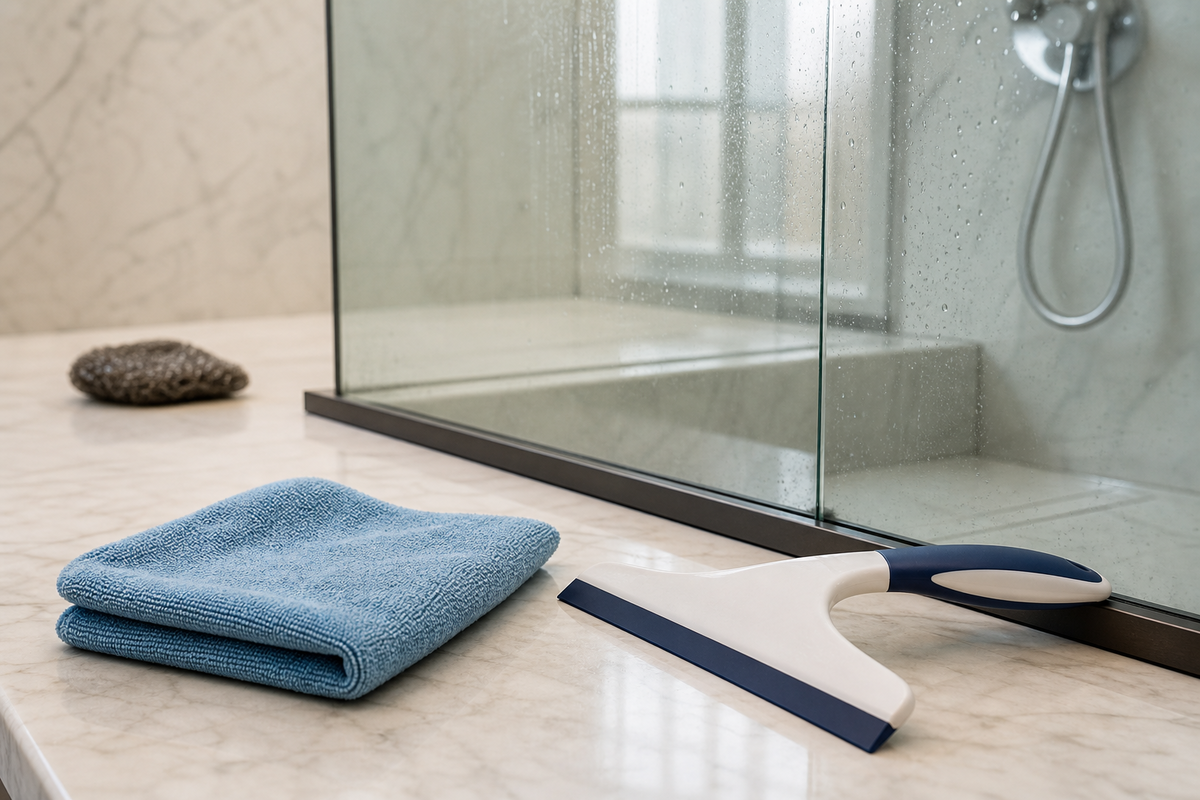
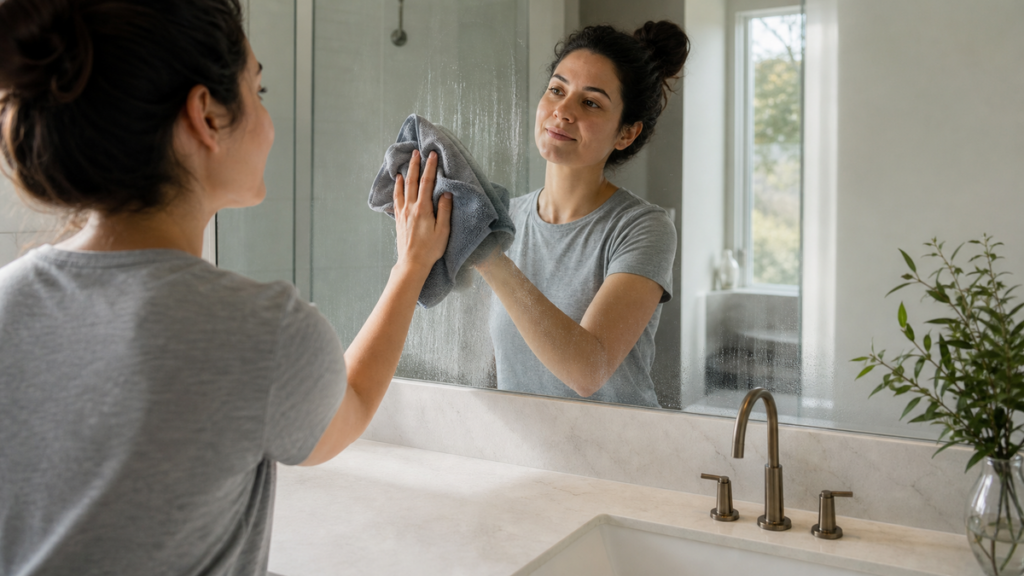
Wipe with a clean microfiber cloth or other non-scratch tool appropriate for the enclosure.
Use overlapping strokes and light to moderate pressure. Fold or rinse the cloth as it picks up residue. If you feel grit between the cloth and glass, stop and rinse rather than grinding it across the surface.
Home Depot and multiple shower-door care guides warn against abrasive cleaners and scouring pads on glass because they can scratch the surface. Gentle tools are especially important on coated glass.
Step 5: Rinse the Glass Thoroughly
Once the buildup loosens, rinse it away.
Leaving bathroom cleaner mixed with loosened soap film on the glass can create a new haze when it dries. Pay attention to the lower door edge, seals, and corners where runoff collects.
If the shower has metal hardware, wipe and rinse those areas according to their finish-care instructions.
Step 6: Dry the Glass Completely
Use a clean, dry microfiber cloth or a shower squeegee.
Drying is not just cosmetic. It lets you see what is actually left. Wet glass can temporarily hide mineral spots and fine haze.
If the surface looks dramatically clearer after it is dry, you were dealing mainly with removable buildup. If the cloudiness barely changes, you may be looking at heavier mineral deposits or etched glass.
Step 7: Use See-Clear for the Final Glass Finish
After bathroom buildup has been removed and the surface has been rinsed, See-Clear can be used for the routine glass-cleaning lane when the shower-door care instructions support it.
See-Clear is ammonia-free and positioned for glass, mirrors, windows, chrome, stainless steel, appliance smudges, display cases, and shiny surfaces. Use a clean cloth and a controlled amount of product, then buff dry.
Think of this as the finishing step, not a substitute for removing heavy soap scum or mineral buildup first.
What If the Glass Is Still Cloudy?
Do not automatically scrub harder.
First repeat the inspection. If you still see isolated chalky or crusty marks, mineral residue may remain. If the door has years of buildup, one gentle pass may not remove everything.
But there is another possibility: the glass itself may be etched.
Minerals can interact with glass over time, and scratched or etched glass can look cloudy even when it is clean. If the haze does not respond to appropriate cleaning and the surface has a rough, permanently dull appearance, a glass professional may need to evaluate it.
A cleaner cannot restore glass that has been physically etched or scratched.
Common Mistakes That Scratch or Haze Shower Glass
The biggest mistake is reaching for something abrasive because the buildup looks stubborn.
Other mistakes include using a dirty sponge with trapped grit, scraping with a metal edge, letting cleaner dry on the glass, mixing multiple products, ignoring the shower-door manufacturer’s coating instructions, and using one towel for the whole bathroom until it is loaded with residue.
More force is not the same thing as better cleaning.
How to Keep Shower Glass Clearer Between Deep Cleans
Use a squeegee after showers to remove water before it dries into spots. Kohler and other glass-care guidance recommend routine squeegee use to help reduce water spotting.
Let the bathroom ventilate after showering. Wipe obvious soap splatter before it builds into a film. Clean the glass on a regular schedule instead of waiting for a heavy cloudy layer.
Also clean the actual source zones: shower walls, fixtures, and ledges. If every nearby surface is coated with soap film, the glass will not stay clear for long.
FAQ
What makes shower glass look cloudy?
Usually soap scum, body oils, shampoo residue, hard-water minerals, or a combination of them. Permanent etching or scratches can also create a cloudy look.
Can I use a scrub pad on glass shower doors?
Use only a non-abrasive tool approved for the glass and any protective coating. Rough scouring pads can scratch glass or damage a coating.
Should I use a glass cleaner or a bathroom cleaner?
For heavy shower buildup, start with a bathroom cleaner suited to soap scum and hard-water-related residue. Once the buildup is removed, a glass cleaner can handle routine haze, fingerprints, and finishing.
How do I know if the haze is permanent?
If appropriate non-abrasive cleaning does not change the appearance and the glass remains rough, etched, or dull when dry, the issue may be physical damage rather than removable residue.
How can I prevent water spots?
Squeegee or dry the glass after showers, keep the bathroom ventilated, and clean on a regular schedule before deposits become heavy.
The Bottom Line
To clean cloudy glass shower doors without scratching them, first figure out whether the haze is mostly soap scum, hard-water residue, or ordinary streaky film. Keep moisture and pressure controlled, follow the material’s care instructions and stop if the finish or fabric reacts poorly.
For additional material or process limits, review the Kohler shower-door care guidance.
Cloudy shower glass is often a bathroom-buildup problem before it is a glass-polishing problem. Start with Eco Cln Powerhouse Bathroom for soap scum and hard-water-related bathroom residue when used as directed, then use Eco Cln See-Clear for the routine ammonia-free glass-cleaning finish when appropriate.