Ammonia Free Cleaners: 6 Smart Uses for Glass and Shiny Surfaces


Quick Answer
Ammonia free cleaners make sense when you want to clean glass, mirrors, chrome, stainless steel, appliances, and shiny surfaces without using a sharp ammonia-based glass cleaner. They are not automatically safe for every material, and they are not the same thing as disinfectants. For Eco Cln customers, See-Clear is the focused ammonia-free glass and surface cleaner for windows, mirrors, chrome, stainless steel, appliances, and shiny surfaces when used as directed.
Table of Contents
- What ammonia free cleaners are good for
- Why shiny surfaces need a different approach
- 6 smart uses for ammonia free cleaners
- When to use See-Clear instead of another Eco Cln product
- Mistakes to avoid
- FAQs
Ammonia Free Cleaners: What They Are Good For
Ammonia free cleaners are usually chosen by people who want to clean visible surfaces without the sharp smell associated with traditional ammonia glass cleaners. In practical home cleaning, the best fit is often glass, mirrors, chrome, stainless steel appliance exteriors, bathroom fixtures, display surfaces, and other shiny materials that show fingerprints, haze, and wipe marks quickly.
The benefit is not magic. An ammonia-free cleaner still needs the right cloth, the right amount of product, and the right surface match. Too much product can still streak. A dirty cloth can still leave lint. A delicate finish can still need a hidden-area test.
See-Clear fits this job because Eco Cln describes it as an ammonia-free glass and surface cleaner for windows, mirrors, chrome, stainless steel, appliances, and shiny surfaces. It is designed for a streak-free finish without harsh chemical fumes when used as directed.
Why Shiny Surfaces Need a Different Approach
Glass and shiny surfaces are unforgiving. A counter can look clean enough even with a faint wipe mark, but a mirror will show every streak. Chrome fixtures show water spots. Stainless steel appliances show fingerprints. Windows show haze as soon as the light hits them.
That is why ammonia free cleaners should be used with a cleaner process, not just a different bottle. Use a clean microfiber cloth. Avoid overspraying. Wipe evenly. Buff dry when needed. If the cloth gets dirty, switch sides or grab a fresh one.
The EPA Safer Choice program is a useful reminder that cleaning product selection should consider both performance and ingredient choices. For Eco Cln content, keep that framing modest. Do not imply See-Clear has a certification unless the live product page says so. The safer wording is that See-Clear is an ammonia-free option for shiny surfaces without harsh chemical fumes.
6 Smart Uses for Ammonia Free Cleaners
1. Bathroom mirrors
Bathroom mirrors collect toothpaste spots, fingerprints, haze, and water marks. Spray See-Clear directly onto the mirror or onto a clean microfiber cloth, then wipe evenly and buff dry.
If the mirror has a specialty coating, antique backing, or unknown finish, test first in a small hidden area or follow the manufacturer care instructions.
2. Windows and glass doors
Windows and glass doors show streaks quickly, especially when sunlight hits them. Use light passes instead of soaking the glass. Too much product can create extra wiping and more visible streaking.
For best results, clean when the glass is not hot from direct sun. A cooler surface gives you more time to wipe before the cleaner dries.
3. Chrome fixtures
Chrome faucets, handles, and bathroom fixtures can collect fingerprints, soap film, and water spots. See-Clear is a good fit for shiny fixture wipe-downs when the surface is compatible and the product is used as directed.
Use a soft cloth. Avoid abrasive pads that can scratch or dull the finish.
4. Stainless steel appliance exteriors
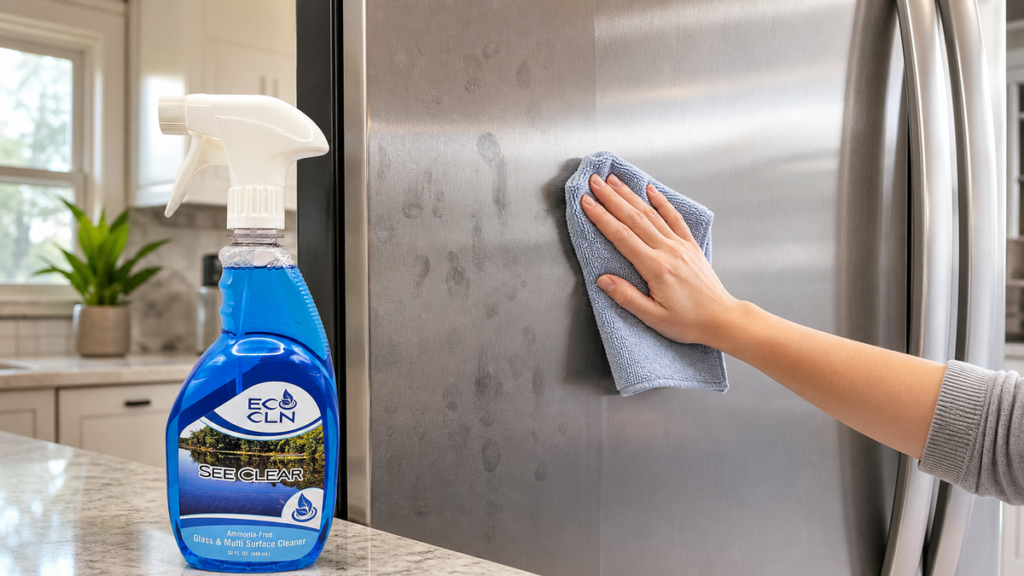
Stainless steel appliance doors and handles are fingerprint magnets. See-Clear can be used on stainless steel and appliances when you want an ammonia-free glass and surface cleaner for a cleaner-looking finish.
Wipe with the grain when possible. Buff dry with a clean cloth to reduce leftover streaks.
5. Display cases and touch-prone glass
Glass tabletops, display cases, and touch-prone surfaces often need quick cleanups. An ammonia-free cleaner is useful here because the goal is a clear finish without a heavy smell.
Do not treat display surfaces like every material underneath them is the same. If glass is paired with wood, painted trim, stone, or specialty coatings, control overspray and test first.
6. Shiny kitchen surfaces
Some kitchen surfaces need a shiny finish more than a grease-cutting approach. See-Clear can be useful for appliance exteriors, chrome, and shiny surfaces. For cooking residue, grease spots, counters, cabinet fronts, and daily kitchen messes, Shine-It is usually the better Eco Cln match.
This product separation matters. If the problem is fingerprints on a stainless steel fridge, See-Clear may be right. If the problem is food residue on a counter, Shine-It may be the smarter first choice.
When to Use See-Clear Instead of Another Eco Cln Product
Use See-Clear for glass, mirrors, chrome, stainless steel, appliances, and shiny surfaces.
Use Shine-It for kitchen counters, cooking residue, grease spots, stainless steel appliance exteriors, cabinet fronts, tables, and everyday kitchen messes.
Use Powerhouse Bathroom for soap scum, hard water buildup, tubs, tile, sinks, and bathroom grime.
Use Citrus Concentrate for dilution-based all-purpose cleaning, heavier grease, floors, counters, and larger cleaning jobs.
Use Spot Gone for targeted carpet, rug, upholstery, and fabric spots.
The cleaner should match the job. That keeps the content helpful and keeps the product recommendation from sounding like a lazy sales pitch. We have enough of those on the internet already.
Mistakes to Avoid
Do not assume ammonia-free means safe on every surface. Specialty coatings, tinted surfaces, anti-glare coatings, unfinished wood, and delicate finishes may require different care.
Do not overspray mirrors, windows, appliance seams, or electronics. Spray onto a cloth when you need more control.
Do not use a dirty towel and blame the cleaner for streaks. Lint, grease, and residue on the cloth can create the problem.
Do not claim ammonia free cleaners disinfect unless the specific product label supports that claim.
Do not mix cleaning products. Use one product at a time and follow label directions.
FAQs
What are ammonia free cleaners?
Ammonia free cleaners are cleaning products formulated without ammonia. They are often used by people who want to clean glass, mirrors, chrome, stainless steel, appliances, and shiny surfaces without the sharp smell of ammonia-based cleaners.
Is See-Clear an ammonia-free glass cleaner?
Yes. Eco Cln See-Clear is positioned as an ammonia-free glass and surface cleaner for windows, mirrors, chrome, stainless steel, appliances, and shiny surfaces when used as directed.
Are ammonia free cleaners safe for every surface?
No. Ammonia-free does not mean universal. Always test first on delicate finishes, specialty coatings, tinted surfaces, anti-glare coatings, unfinished wood, or surfaces with unknown compatibility.
Can I use ammonia free cleaners on stainless steel?
See-Clear is designed for stainless steel and shiny appliance exteriors when used as directed. Use a clean microfiber cloth, wipe evenly, and buff dry for the best finish.
Why does glass still streak after cleaning?
Streaking can come from too much product, dirty cloths, lint, cleaning in direct sun, or residue left from previous products. Use less product, a clean cloth, and even wiping passes.
Should I use See-Clear or Shine-It in the kitchen?
Use See-Clear for glass, chrome, stainless steel, appliances, and shiny surfaces. Use Shine-It for counters, cooking residue, grease spots, cabinet fronts, tables, and everyday kitchen messes.
Choose the Right Eco Cln Cleaner
For windows, mirrors, chrome, stainless steel, appliances, and shiny surfaces, see Eco Cln See-Clear Ammonia-Free Glass & Surface Cleaner. For more product detail, see the See-Clear guide page, or browse all cleaners in the Eco Cln shop.