Move-In Cleaning Checklist: What to Clean Before You Unpack

Quick Answer
The best move-in cleaning happens before the rooms fill with boxes. Start with dry dust and debris, then clean from high areas to low areas and from the back of each room toward the exit. Prioritize cabinet and closet interiors, kitchen grease zones, bathroom buildup, windows and mirrors, high-touch surfaces, carpet spots, and floors.
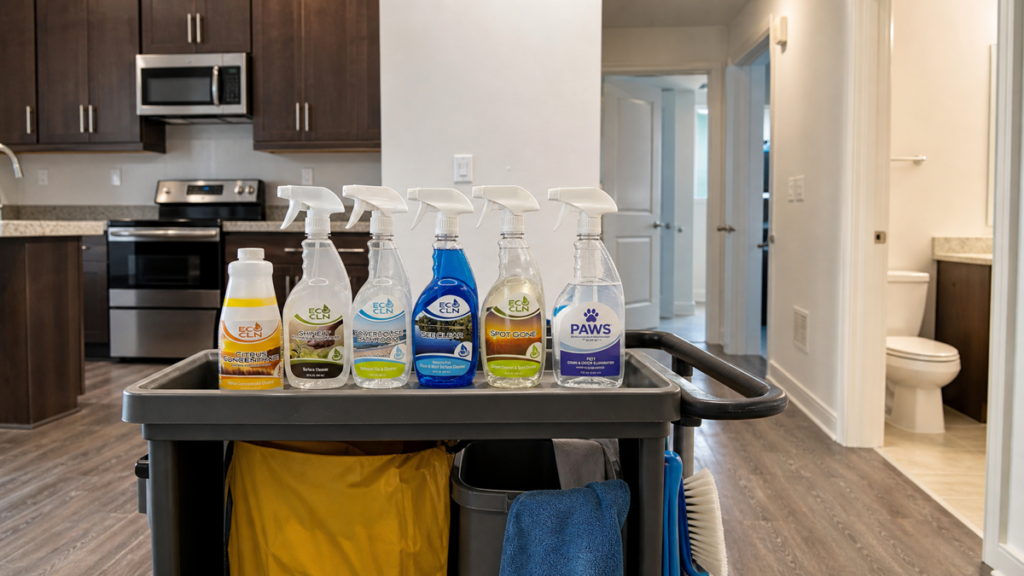
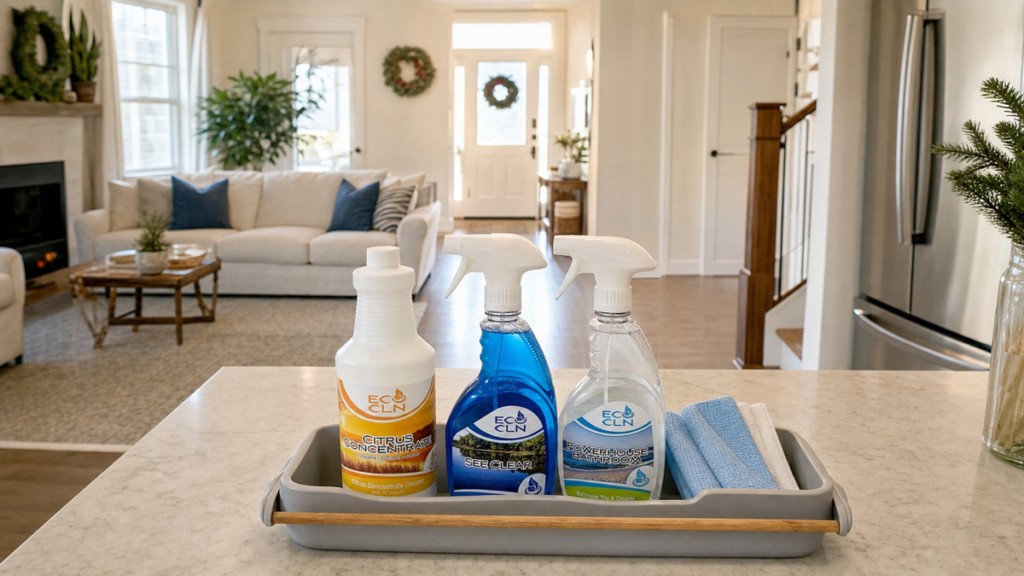
Use the cleaner that matches the mess: Citrus Concentrate for dilution-based all-purpose cleaning on compatible washable surfaces; Shine-It for kitchen grease; Powerhouse Bathroom for soap scum and hard-water-related bathroom buildup; See-Clear for ammonia-free glass and shiny surfaces; Spot Gone for non-pet carpet/upholstery spots; and PAWS for pet urine and organic accident areas.
Before You Start: Photograph and Inspect
If you are renting, photograph the condition of the apartment before cleaning or moving furniture in. Note existing stains, chips, damaged flooring, worn paint, cracked tile, and appliance issues so cleaning does not get blamed for damage that was already there.
In any home, look for specialty surfaces before you choose products: natural stone, newly painted walls, unsealed wood, coated glass, specialty flooring, and delicate fixtures may have manufacturer-specific restrictions.
Move-In Cleaning Order
- 1. Remove trash, packing debris, loose dust, hair, and crumbs.
- 2. Clean cabinet, drawer, closet, and shelf interiors while they are empty.
- 3. Clean kitchen grease and food-residue zones.
- 4. Clean bathroom buildup and fixtures.
- 5. Clean windows, mirrors, and glass.
- 6. Wipe high-touch surfaces and washable trim.
- 7. Treat carpet or pet spots individually.
- 8. Clean floors last so you are not walking dirty water back across them.
1. Dry-Clean First
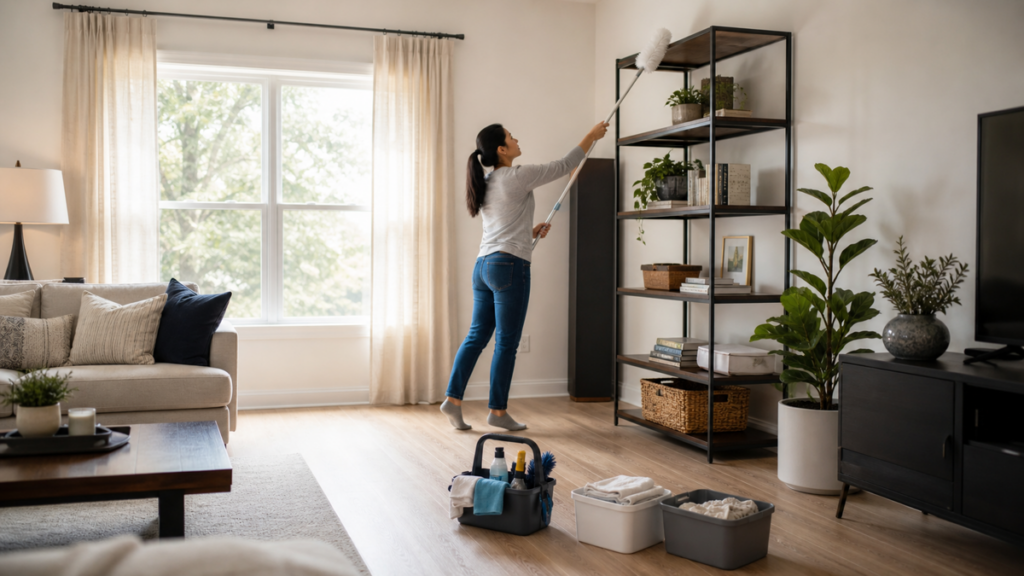
Vacuum or sweep before spraying anything. Remove cobwebs, dust from shelves, loose hair, cabinet crumbs, and grit from floor edges. Dry soil is easier to remove dry; once it gets wet it can turn into streaky paste.
Pay attention to closet shelves, top edges of doors, baseboards, window sills, vent covers, cabinet tops, and corners behind appliances if they are accessible without moving connected equipment unsafely.
2. Clean Empty Cabinets, Drawers, and Closets
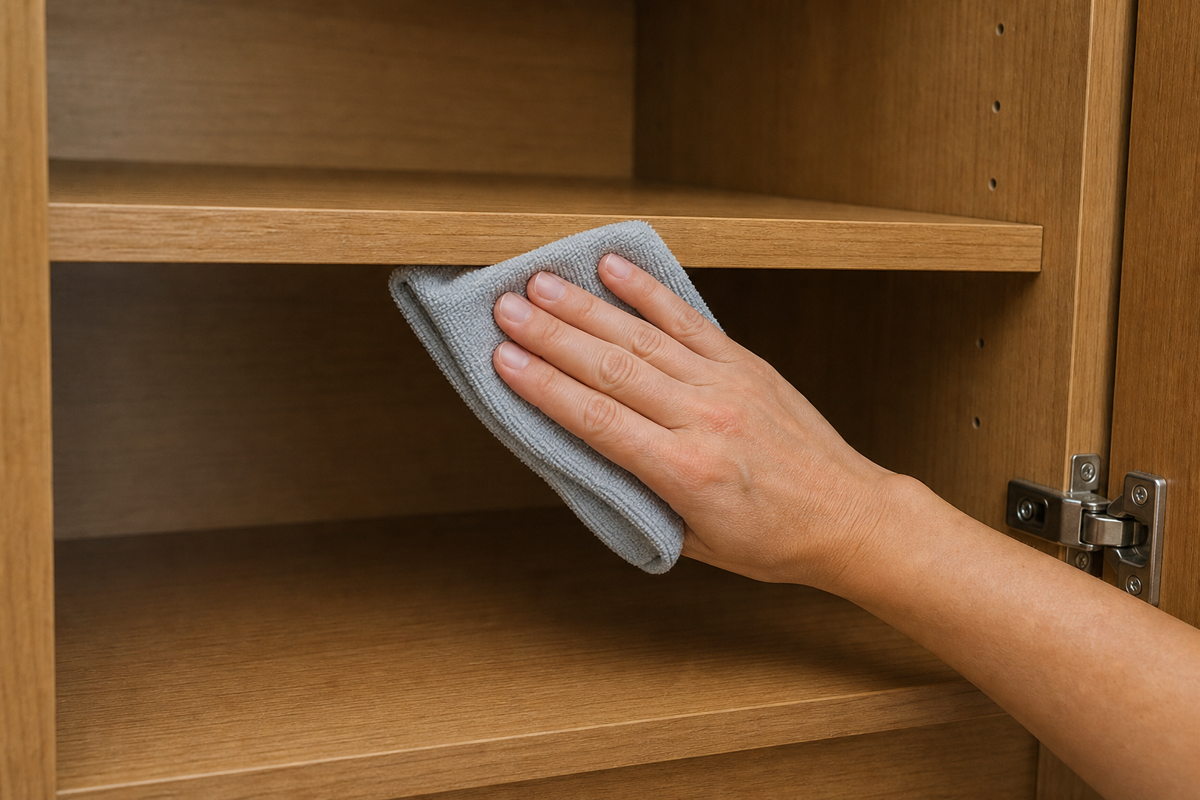
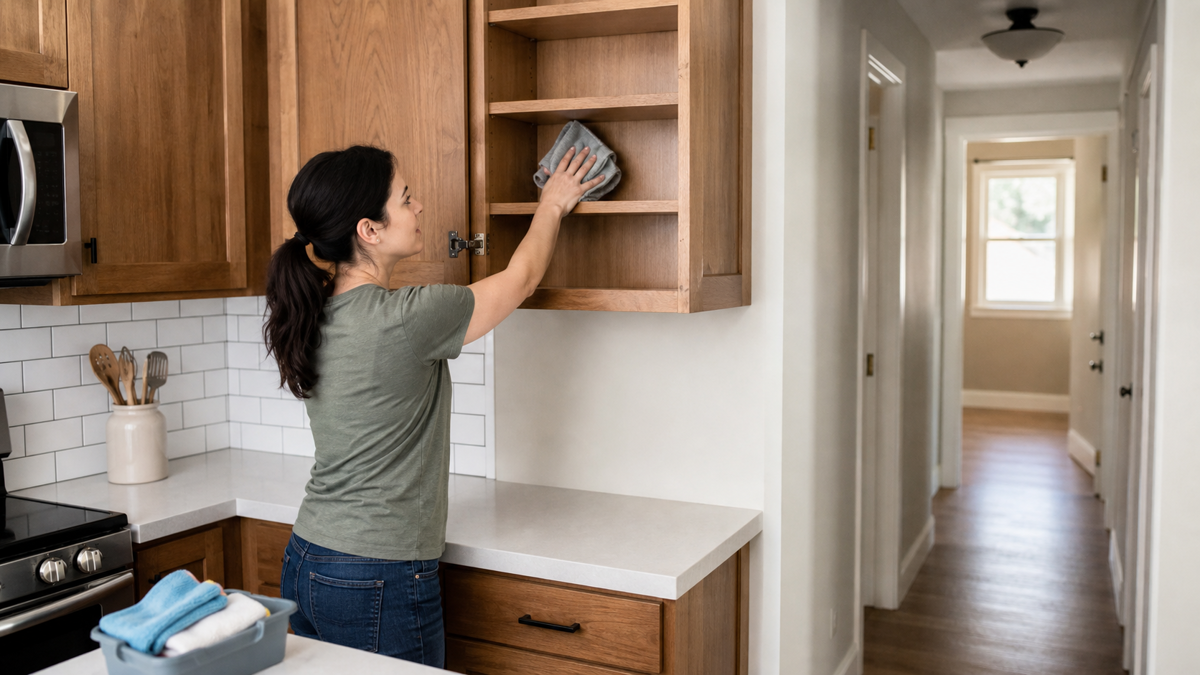
For compatible washable shelf and cabinet interiors, a light or all-purpose dilution of Citrus Concentrate can fit the job. Start with the lowest strength that makes sense and follow the current dilution guide.
Use a clean cloth rather than spraying heavily into particleboard seams, unfinished edges, drawer slides, or hardware. Wipe away cleaner residue where appropriate and let shelves dry fully before food, linens, or clothing go inside.
3. Reset the Kitchen Before Food Arrives
Degrease cabinet fronts, backsplash areas, stovetop exteriors, range-hood exteriors, and other compatible washable kitchen surfaces with Eco Cln Shine-It when cooking residue and grease are the problem. Use controlled moisture around appliance controls, seams, and painted finishes.
Wipe refrigerator handles, cabinet pulls, drawer faces, the outside of the microwave, and the areas around the trash and food-prep zones. If an appliance interior has manufacturer-specific cleaning instructions, follow them instead of treating the entire kitchen as one surface.
4. Clean the Bathroom Before Towels and Toiletries Move In
Use Powerhouse Bathroom for soap scum, hard water buildup, tubs, tile, sinks, fixtures, and everyday bathroom grime when the surface is compatible. A bathroom-specific cleaner makes more sense here than forcing an all-purpose cleaner into heavy shower buildup.
Clean the shower or tub, sink edges, faucet bases, vanity exterior, toilet exterior, shelves, and the floor perimeter. Specialty stone, coated fixtures, and unknown finishes should be spot-tested and cleaned according to manufacturer guidance.
5. Clean Glass and Mirrors After the Dust Is Gone
Use See-Clear for routine windows, mirrors, glass doors, chrome, and shiny surfaces. It is the Eco Cln ammonia-free glass and surface cleaner. Remove dry dust first, use a clean microfiber cloth, and finish the glass dry so you are not leaving new streaks behind.
For a dedicated technique, see our window cleaning guide source guidance when working with specialty windows or coatings.
6. Wipe High-Touch Areas and Painted Surfaces Carefully
Door handles, switch plates, door frames, stair rails, closet pulls, and washable trim are worth cleaning before you move in because they are immediately touched during unpacking.
For painted walls with fingerprints, use a finish-conscious method: dust first, test a hidden area, and use controlled moisture. Sherwin-Williams recommends non-abrasive cleaning and testing on painted surfaces. See painted-wall care guidance.
7. Treat Carpet Spots Before Furniture Covers Them
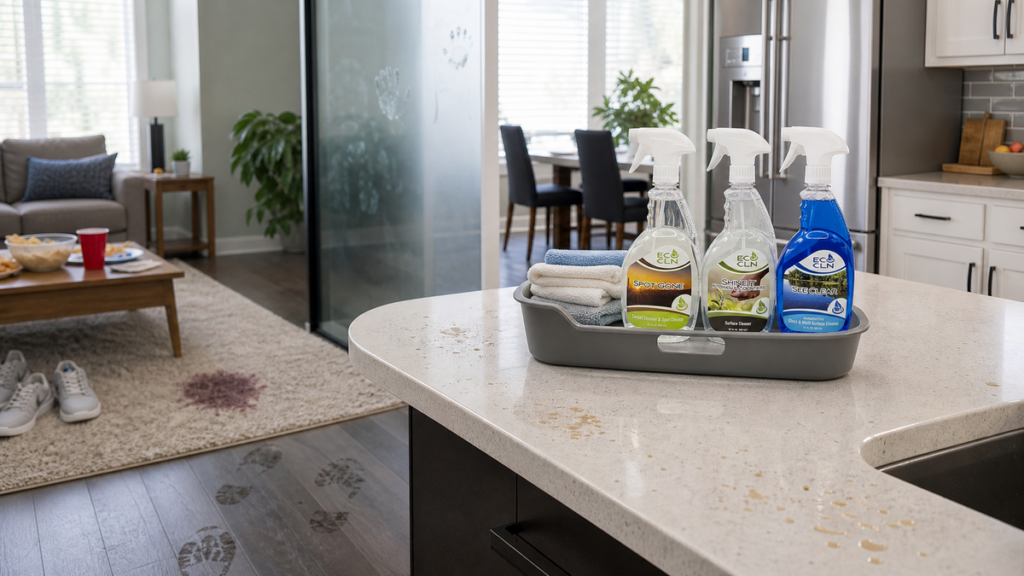
If you see a localized food, dirt, mud, or grease spot, use Spot Gone as a targeted carpet or upholstery stain remover rather than soaking a large area. Blot, do not scrub, and spot-test first.
If the carpet is broadly dirty, smells musty, or has unknown staining throughout a room, a professional carpet cleaning may make more sense than trying to spot-treat the entire floor.
8. Check for Old Pet Accident Areas
If you know pets lived in the home and find a urine or organic accident area, use PAWS for the pet-accident lane. Pay attention to carpet edges, baseboards, floor seams, rug areas, and corners where old accidents can be missed.
Do not repeatedly soak an odor spot. If the smell seems to come from padding, subfloor, flooring seams, or trim, deeper inspection may be needed.
9. Clean Floors Last
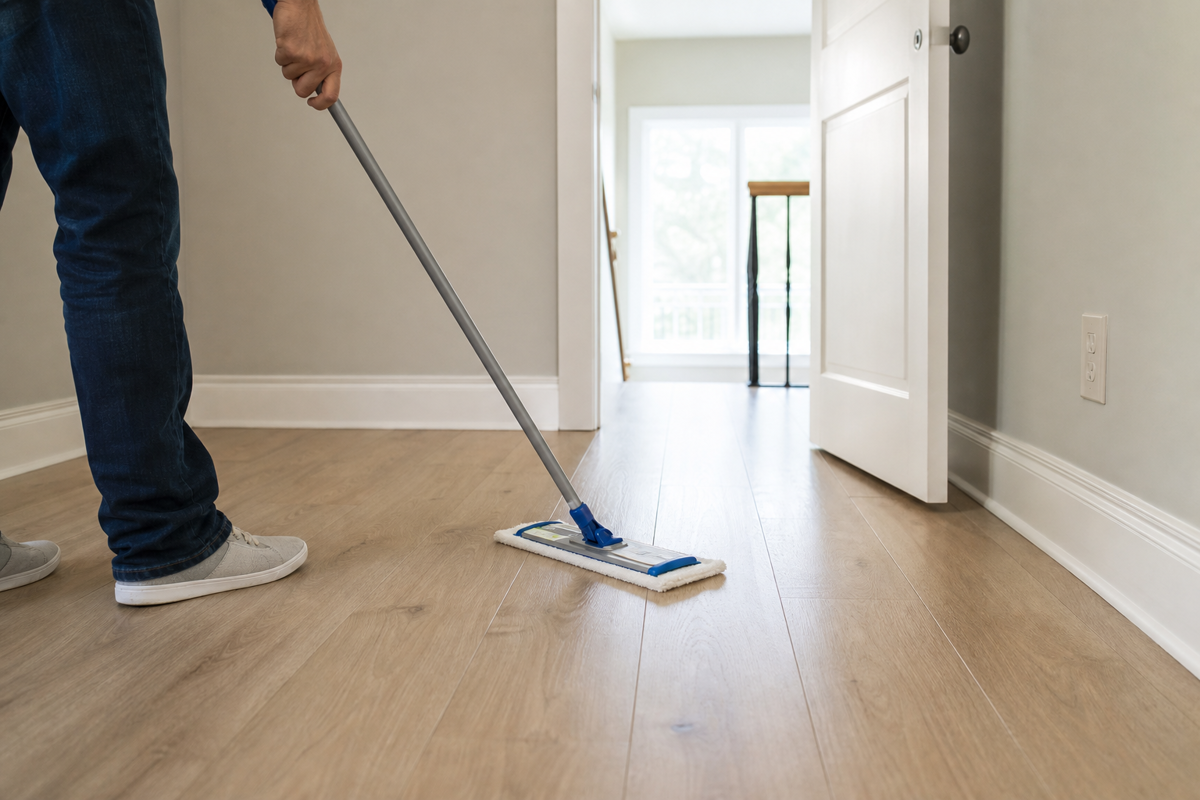
Once upper surfaces are finished, clean compatible floors according to the flooring manufacturer’s care instructions. Citrus Concentrate is positioned for floors and larger cleaning jobs when appropriately diluted, but specialty flooring may require a manufacturer-approved cleaner.
Vacuum or sweep first. Use the smallest amount of moisture appropriate for the material, avoid flooding seams, and let the floor dry before boxes and furniture are dragged across it.
Move-In Spots People Commonly Forget
- Top and inside edges of closet shelves.
- Cabinet and drawer interiors.
- Backsplash corners and the range-hood exterior.
- Faucet bases and the back edge of the bathroom sink.
- Window sills and tracks.
- Baseboards behind doors.
- Door tops and door frames.
- Switch plates and thermostat surrounds.
- Floor transitions and room corners.
- The space under removable mats or rugs left by a prior occupant.
Do Not Try to “Sanitize Everything” With One Product
A move-in clean is a good time to match products to surfaces instead of using one strong chemical everywhere. This article should not make disinfecting or sanitizing claims for Eco Cln products. The goal here is visible soil, grease, soap scum, stains, pet accidents, and routine surface cleaning.
FAQ
Should I clean before or after moving boxes in?
Do as much as possible before boxes arrive, especially cabinets, closets, bathrooms, glass, baseboards, and floors. Empty rooms are faster and easier to clean.
What should I clean first in a new apartment?
Start with dry dust and debris, then cabinet and closet interiors, kitchen and bathroom surfaces, glass, high-touch areas, carpet spots, and floors last.
Do I need a separate cleaner for every room?
Not necessarily, but different messes benefit from different products. Use all-purpose cleaner for compatible washable surfaces, kitchen cleaner for grease, bathroom cleaner for soap scum, glass cleaner for shiny surfaces, and targeted products for carpet or pet accidents.
Should I clean freshly painted walls?
Check the paint manufacturer’s cure-time and cleaning guidance first. Fresh paint may not have full washability yet.
What if I find a pet urine smell after moving in?
Check carpet edges, baseboards, floor seams, and nearby surfaces. Use a pet accident cleaner such as PAWS where compatible, and avoid repeatedly flooding the area if the odor appears to be below the surface.
The Bottom Line
The best move-in cleaning happens before the rooms fill with boxes. Work through the plan in order, finish one zone before moving on and match each cleaner to the mess it is designed to handle.
A move-in clean is easier when each mess has a clear lane. Browse Eco Cln cleaning products for Citrus Concentrate, Shine-It, Powerhouse Bathroom, See-Clear, Spot Gone, and PAWS, then match the product to the surface instead of using one cleaner for everything.