Kitchen Surface Cleaner: 7 Practical Tips for Daily Messes


Quick Answer
A kitchen surface cleaner is best used for everyday kitchen messes like food residue, fingerprints, light grease, appliance smudges, and counter wipe-downs. The right cleaner should match the surface, the mess, and the amount of buildup. For Eco Cln customers, Shine-It is the focused kitchen surface cleaner for counters, cooking residue, grease spots, stainless steel appliance exteriors, cabinet fronts, tables, and other washable kitchen surfaces when used as directed.
Table of Contents
- What a kitchen surface cleaner should handle
- Where kitchen messes build up fastest
- 7 practical kitchen surface cleaning tips
- When to use Shine-It, Citrus Concentrate, or See-Clear
- Mistakes to avoid
- FAQs
Kitchen Surface Cleaner: What It Should Handle
A kitchen surface cleaner should help with the messes kitchens actually make. That usually means fingerprints on appliance handles, cooking residue near the stove, food splatter on counters, light grease on washable surfaces, crumbs, smudges, and sticky spots from daily use.
The point is not to turn every kitchen cleanup into a heavy-duty project. Most kitchens need regular, controlled cleaning before residue has a chance to harden, spread, or collect more dirt. A focused kitchen cleaner makes sense when the surface is washable and the mess is more about daily grime than carpet stains, bathroom buildup, or glass-only polishing.
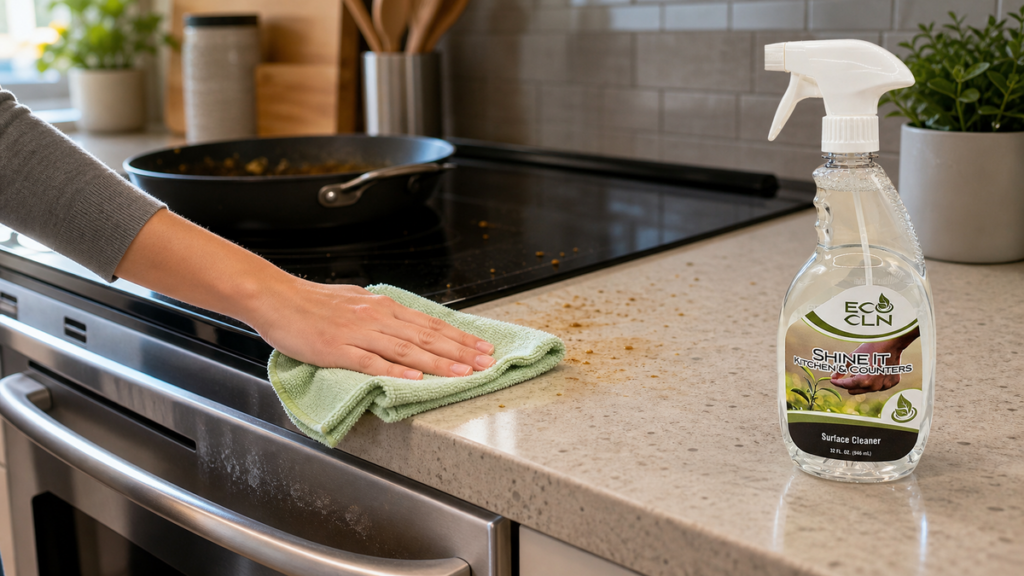
Shine-It fits that lane. Eco Cln describes Shine-It as a ready-to-use kitchen surface cleaner for counters, cooking residue, grease spots, stainless steel, appliances, and everyday kitchen messes without harsh chemical fumes. That makes it a better support topic for kitchen cleaning than forcing every kitchen query onto a general cleaner page.
Where Kitchen Messes Build Up Fastest
Kitchen messes usually collect in predictable places. Counter edges catch crumbs and sticky drips. Stovetop areas collect oil mist and cooking residue. Cabinet handles pick up fingerprints. Appliance doors show smudges fast, especially stainless steel. Tables and washable food-prep surfaces get a mix of crumbs, spills, and daily wipe marks.
That is why a kitchen surface cleaner should be used with a little method. Spray-and-wipe works for light daily messes, but tougher spots often need a short dwell time. Letting the cleaner sit briefly gives it time to loosen the mess before wiping. Scrubbing hard right away can spread grease or make a surface look worse.
The CDC notes that cleaning is an important first step before sanitizing or disinfecting because dirt and residue can get in the way. For this article, keep the claim simple: routine kitchen cleaning helps remove visible mess, buildup, and residue. Do not present Shine-It as a sanitizer or disinfectant.
7 Practical Tips for Using a Kitchen Surface Cleaner
1. Match the cleaner to the surface
Before cleaning, ask what the surface is. Laminate counters, sealed stone, stainless steel appliance exteriors, painted cabinets, wood finishes, and specialty coatings do not all behave the same way. A cleaner may be a good fit for many washable surfaces, but that does not mean every surface should be treated the same.
Always test first in a hidden area, especially on delicate finishes, painted surfaces, specialty coatings, unsealed natural stone, unfinished wood, or materials with unknown compatibility.
2. Remove loose crumbs before spraying
Wiping cleaner over crumbs can turn a quick job into a streaky paste. Brush crumbs into the trash first, then clean the surface. This is especially helpful around counters, tables, stove edges, toaster areas, and appliance handles.
A dry first pass also keeps you from using more product than needed. Less mess on the surface means the cleaner can focus on residue instead of loose debris.
3. Let grease spots sit briefly
Light grease and cooking residue often need a short dwell time. Spray Shine-It directly onto the surface or onto a clean cloth, let it sit briefly on cooking residue or grease spots, then wipe with a clean cloth, sponge, or appropriate cleaning tool.
Do not flood the surface. Controlled application is cleaner, less wasteful, and safer for materials that do not like excess moisture.
4. Use microfiber for shiny appliances
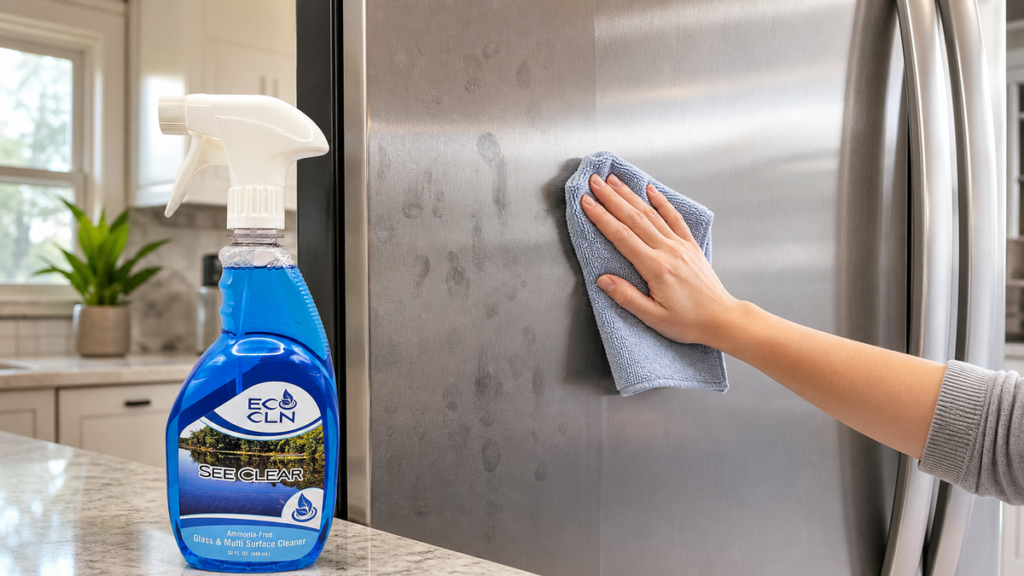
Stainless steel and shiny appliance exteriors can show streaks if the wrong cloth is used. A clean microfiber cloth helps pick up smudges without leaving as much lint behind. Use even wiping passes and flip the cloth when it gets dirty.
For glass, mirrors, and high-shine surfaces where streak-free clarity matters most, See-Clear may be the better Eco Cln product.
5. Clean handles and touch points often
Cabinet pulls, fridge handles, microwave buttons, faucet handles, and drawer fronts get touched constantly. These areas can look dull or feel sticky even when the main counter looks fine.
Add touch points to your normal wipe-down instead of waiting until they look bad. It is a small habit that makes the whole kitchen feel cleaner.
6. Avoid mixing cleaners
Do not mix cleaning products. Mixing can create unwanted fumes, residues, or surface problems. Use one product at a time, follow the label directions, and rinse or wipe as needed before switching products.
This matters most when someone is moving between kitchen grease, glass, floors, and bathroom cleaners. More product does not automatically mean better cleaning. Sometimes it just means more residue.
7. Know when the job is bigger than daily cleaning
A kitchen surface cleaner is great for regular messes, but baked-on buildup, heavy grease, neglected grout, or a large floor job may need a different approach. Eco Cln Citrus Concentrate is better suited for dilution-based all-purpose cleaning, heavier grease, floors, counters, and larger cleaning jobs when mixed and used as directed.
Use Shine-It for targeted kitchen surfaces. Use Citrus Concentrate when the job calls for a mixed solution or broader cleaning. Use See-Clear when glass and shiny surfaces need a clear finish.
When to Use Shine-It, Citrus Concentrate, or See-Clear
Use Shine-It for kitchen counters, cooking residue, grease spots, stainless steel appliance exteriors, cabinet fronts, tables, and everyday kitchen messes.
Use Citrus Concentrate for dilution-based all-purpose cleaning, heavier grease, floors, counters, and larger cleaning jobs.
Use See-Clear for glass, mirrors, chrome, stainless steel, appliances, and shiny surfaces when you want an ammonia-free glass cleaner.
That separation helps avoid the common mistake of using one cleaner for every surface and every mess. Kitchens are mixed-use spaces. The cleaner should match the job.
Mistakes to Avoid
Do not oversoak counters, cabinets, appliance controls, seams, or wood finishes. Excess moisture can cause problems on surfaces that are not designed for it.
Do not skip the hidden-area test on specialty finishes. This includes painted cabinets, unsealed stone, unfinished wood, and coated appliances.
Do not claim a routine cleaner disinfects unless the product label supports that claim. This article should stay focused on visible mess, residue, grease spots, fingerprints, and daily kitchen cleaning.
Do not use abrasive pads on delicate finishes unless the manufacturer says they are safe.
FAQs
What is a kitchen surface cleaner used for?
A kitchen surface cleaner is used for washable kitchen surfaces such as counters, appliance exteriors, cabinet fronts, tables, handles, and areas with food residue, fingerprints, light grease, and daily grime.
Can I use Shine-It on stainless steel?
Shine-It is positioned for stainless steel appliance exteriors and everyday kitchen messes when used as directed. Test first, use a clean cloth, and avoid abrasive scrubbing on delicate finishes.
Is a kitchen surface cleaner the same as a disinfectant?
No. A kitchen surface cleaner helps remove visible mess, residue, grease spots, and daily grime. Do not treat it as a disinfectant unless the product label specifically supports disinfecting claims.
Should I spray directly on the counter or on a cloth?
Either can work depending on the surface and mess. For delicate surfaces, appliance controls, seams, or areas where overspray is a concern, spraying onto a cloth gives more control.
What should I use for glass or mirrors in the kitchen?
For glass, mirrors, chrome, and shiny surfaces where streak-free clarity matters, Eco Cln See-Clear is usually the better fit.
What should I use for bigger grease jobs?
For larger cleaning jobs or dilution-based cleaning, Eco Cln Citrus Concentrate may be a better fit than a ready-to-use kitchen surface cleaner.
Choose the Right Eco Cln Cleaner
For everyday counters, appliance exteriors, cooking residue, and washable kitchen surfaces, see Eco Cln Shine-It Kitchen Surface Cleaner for Grease & Counters. You can also compare Citrus Concentrate, See-Clear, and the Shine-It guide page.