Stain Remover vs All-Purpose Cleaner: When to Use Spot Gone

Stain Remover vs All-Purpose Cleaner: Quick Answer
Stain remover vs all-purpose cleaner decisions start with the surface. Use Spot Gone when the mess is on carpet, rugs, upholstery, or fabric and the problem is a food spot, grease mark, dirt track, mud, or everyday stain. Use an all-purpose cleaner for washable hard surfaces like counters, sealed surfaces, appliance exteriors, and general wipe-down jobs.
The difference is the surface. Carpet fibers, upholstery fabric, rug backing, seams, and cushion layers need controlled blotting and a stain-focused cleaner. Hard surfaces usually need wiping, rinsing when appropriate, and drying. Mixing those jobs up can leave residue, spread the stain, or overwet fabric.
Why Stains Need a Different Plan Than Surface Messes
An all-purpose cleaner is built for broad surface cleaning. That can make sense on washable counters, sealed surfaces, tables, appliance exteriors, and other hard areas where the mess sits on top.
Stains on carpet and upholstery behave differently. Tomato sauce, coffee, cooking oil, mud, tracked-in dirt, and food spills can move down into fibers. Upholstery can hide moisture in padding. Rugs may have dyes, backing, fringe, or seams that react differently from wall-to-wall carpet. That is why the method matters as much as the cleaner. The Carpet and Rug Institute also recommends cleaning spots and spills quickly, which supports treating fabric and carpet spots promptly instead of letting residue settle.
When to Use Spot Gone Stain Remover
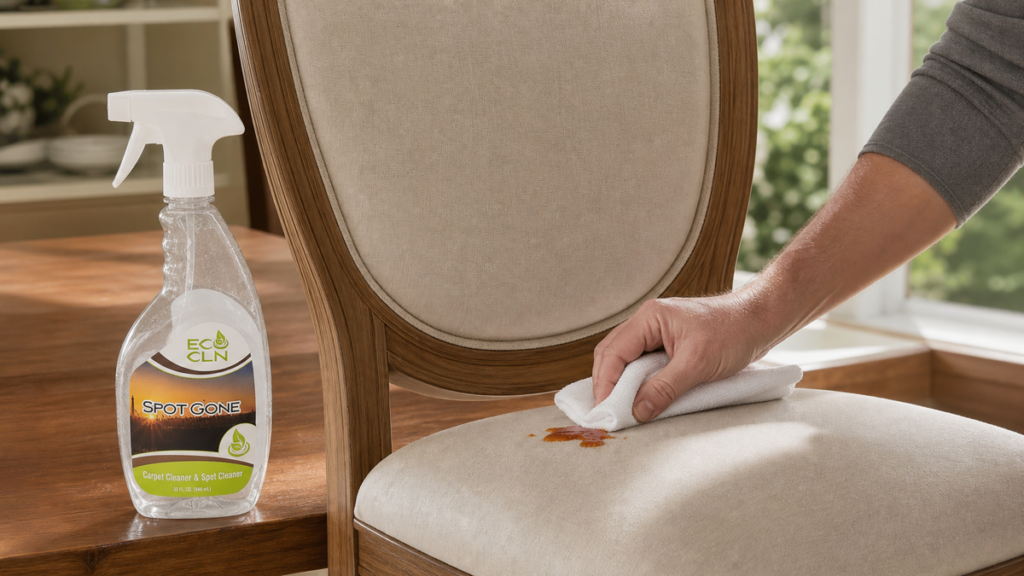
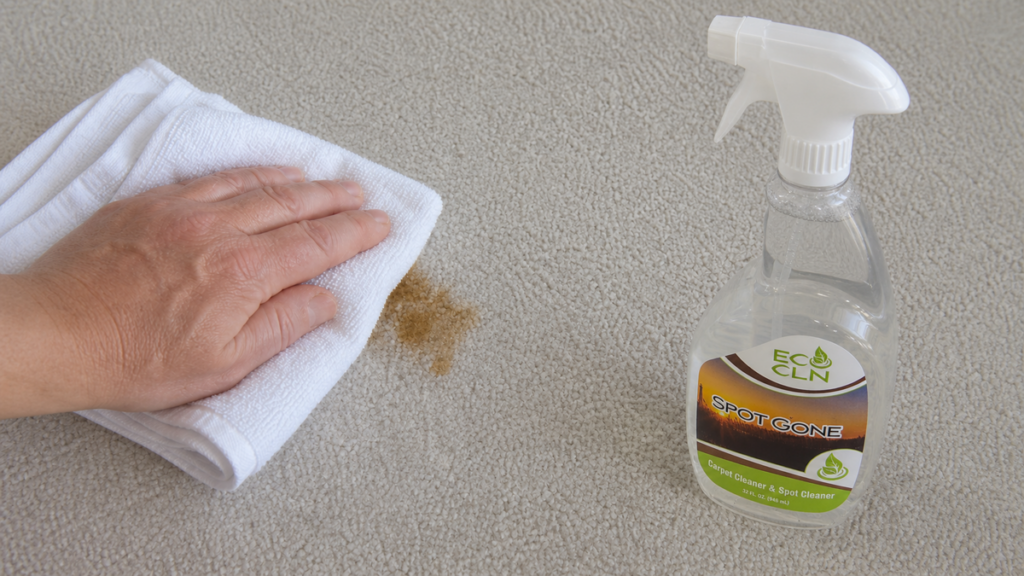
Use Eco Cln Spot Gone when the mess is a spot or stain on carpet, rugs, upholstery, or fabric surfaces. It is positioned for food, grease, dirt, mud, and everyday fabric or carpet messes.
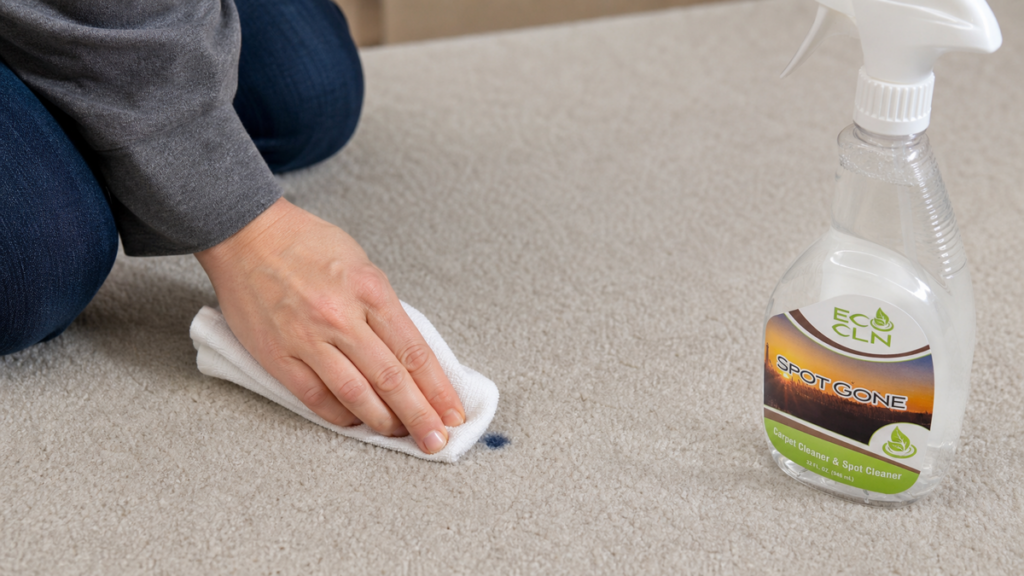
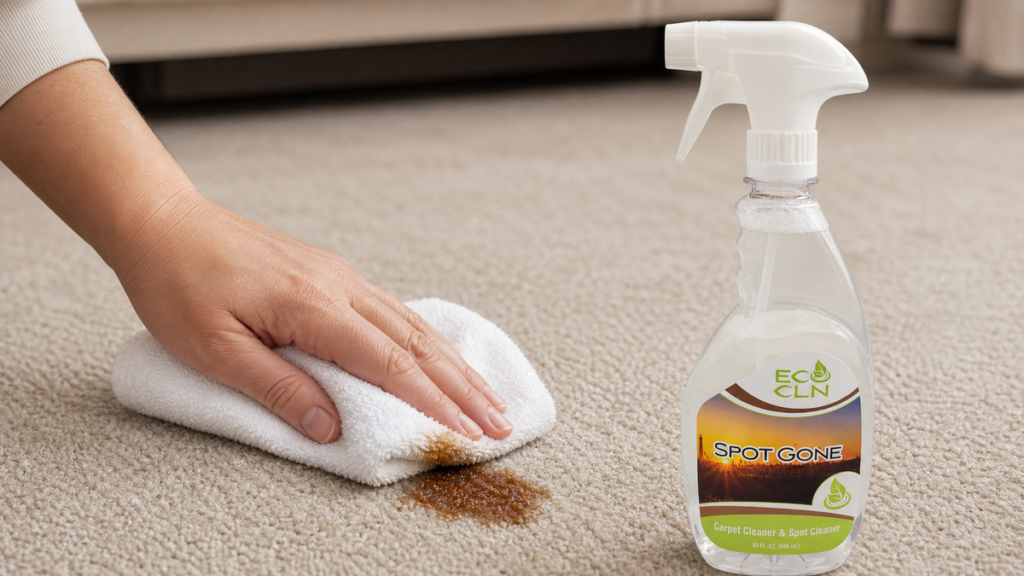
Spot Gone is a strong fit for small targeted cleanup: a sauce dot on carpet, a dirty shoe mark near an entry rug, a greasy food drip on upholstery, or a mud spot on a carpeted hallway. It is not a reason to soak the entire cushion or turn a small spill into a wet cleanup marathon.
When All-Purpose Cleaner Makes More Sense
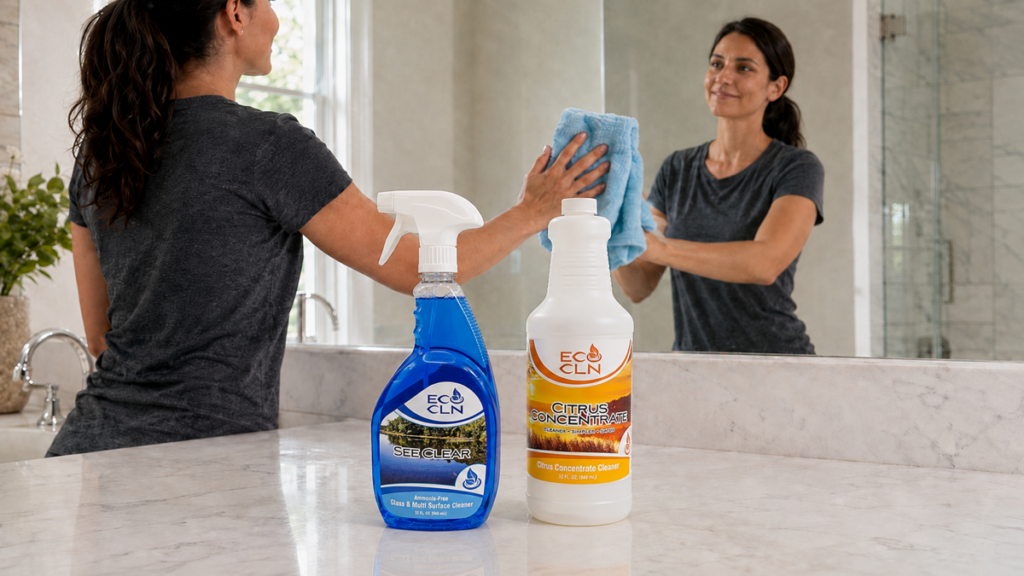
Use an all-purpose cleaner for hard washable surfaces: counters, sealed tables, trash can exteriors, appliance smudges, shelves, door handles, and general household wipe-downs. Those jobs usually need surface contact, wiping, and drying.
An all-purpose cleaner is not automatically the right choice for carpet or upholstery just because the word "all" is in the name. The word "all" on a label does not mean it belongs on every fabric or fiber. Read the label and match the cleaner to the surface.
How to Handle a Fresh Carpet or Upholstery Stain
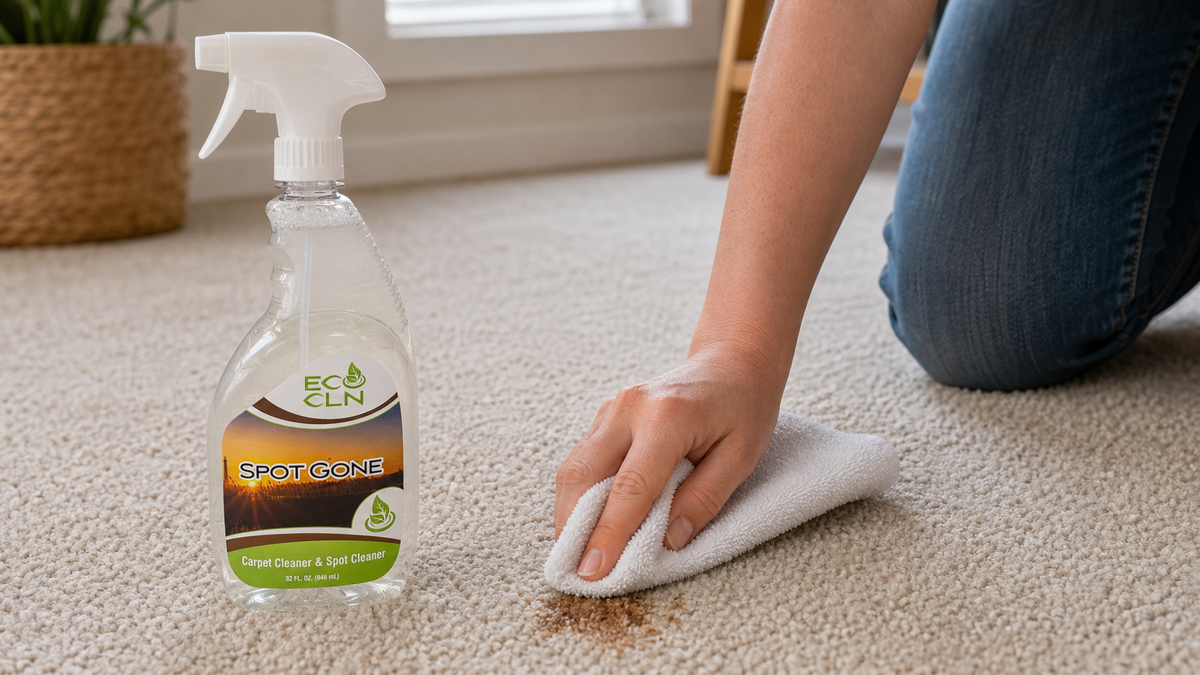
- Blot the spill before adding cleaner. Use a clean white cloth or paper towel to lift liquid or loose residue. Press down and lift; do not rub in circles.
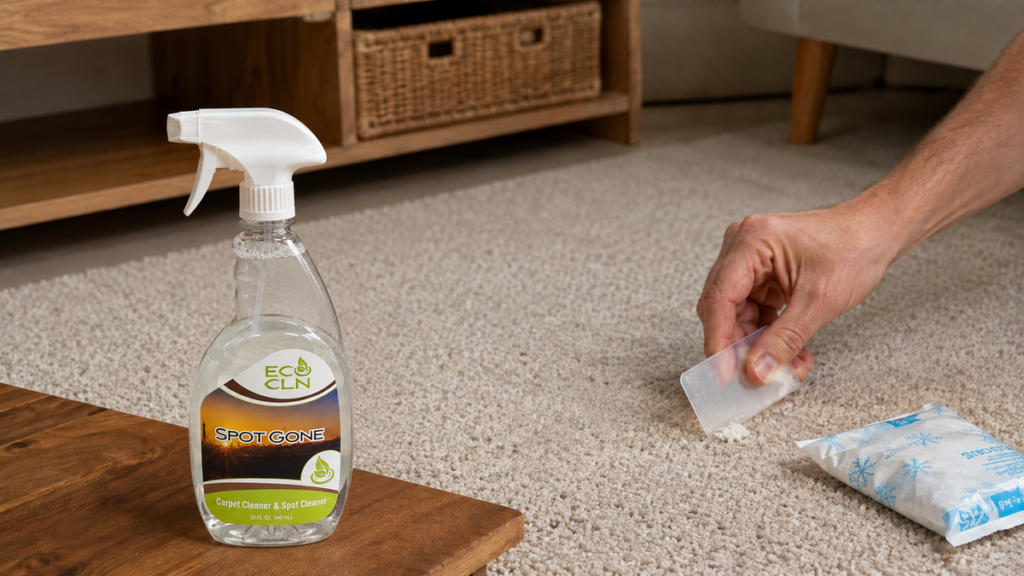
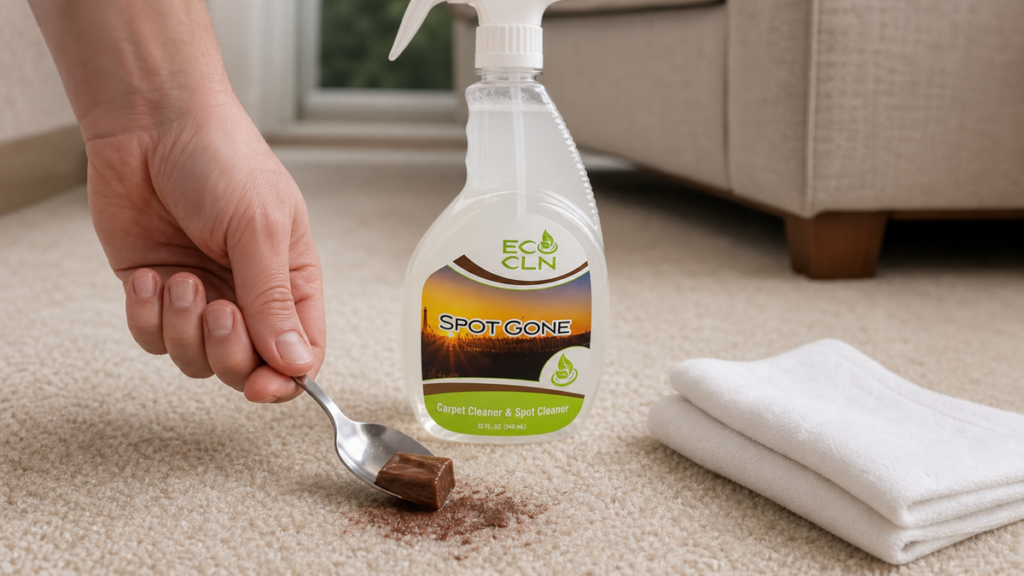
- Remove solids gently. For sauce, mud, or food bits, lift solids with a spoon or dull edge before blotting. Avoid grinding chunks deeper into carpet fibers.
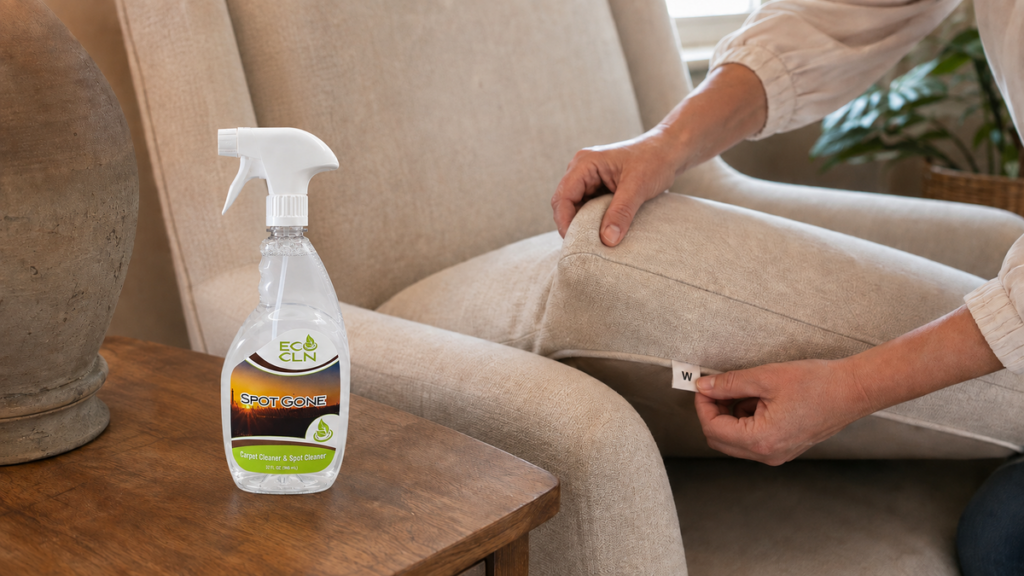
- Test in a hidden area. Check colorfastness on a hidden carpet edge, rug corner, or upholstery seam before treating the visible stain.
- Apply stain remover lightly. Use the product as directed and keep the treatment focused on the spot. More liquid can push residue deeper or spread the stain.
- Blot from the outside inward. Work from the outer edge toward the center so the stain does not get larger.
- Repeat patiently if needed. Some stains need more than one controlled pass. Letting the area get wetter and wetter is not the same as cleaning better.
- Let the area dry fully. Check the spot after drying. Carpet and upholstery can look clean while damp, then reveal residue later.
Why Stains Sometimes Come Back
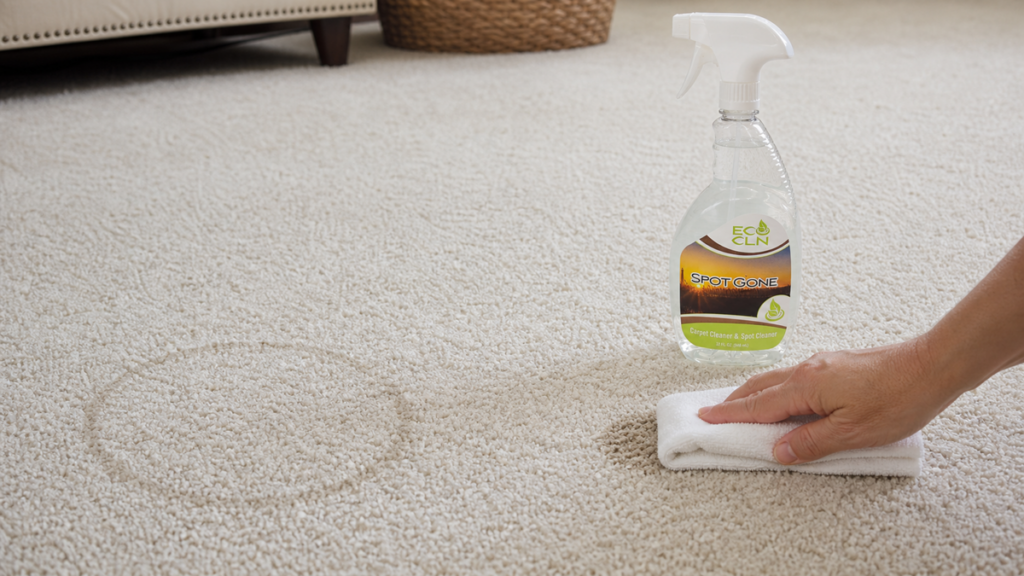
Stains can return when sticky residue remains in the fibers or when moisture pulls material back up from deeper layers. This is common with sugary drinks, sauces, oily foods, over-applied cleaner, and overwet carpet.
If a stain comes back after drying, do not just spray more cleaner and scrub harder. Blot, use less moisture, and focus on removing residue. A returning stain is often a residue problem, not proof that harder scrubbing is the answer.
Common Mistakes When Choosing a Cleaner for Stains
The first mistake is treating fabric like a countertop. Carpet and upholstery absorb liquid, so soaking them can create drying problems.
The second mistake is rubbing. Rubbing can distort carpet fibers, spread pigment, and push food residue deeper.
The third mistake is using a cleaner without checking the label. Some cleaners are better suited for hard surfaces than fabric, and some fabrics need professional cleaning.
When Not to Use a DIY Spot-Cleaning Method
Do not keep treating a stain if the fabric dye transfers to your cloth, the material changes texture, the spot spreads quickly, or the item has a dry-clean-only care tag. Silk, wool, vintage rugs, delicate upholstery, and specialty fabrics need extra caution.
Pet urine, old odor problems, large spills, and soaked cushions may also need a different approach than a simple spot treatment. If moisture reached padding, backing, or subfloor material, surface cleaning alone may not solve the problem.
FAQ
Is stain remover the same as all-purpose cleaner?
No. Stain remover is usually targeted for spots on fabric, carpet, upholstery, or rugs. All-purpose cleaner is generally for routine cleaning on washable hard surfaces.
Can I use all-purpose cleaner on carpet stains?
Only if the label specifically says it is appropriate for carpet or fabric. Otherwise, use a cleaner designed for carpet or upholstery stains and test first.
What should I do first after spilling food on carpet?
Lift solids gently, blot liquid with a clean white cloth, and avoid rubbing. Treat the remaining spot after the loose mess is removed.
Why should I blot stains from the outside inward?
Blotting from the outside inward helps keep the stain from spreading into a larger ring.
Can Spot Gone fix every old stain?
No cleaner can guarantee removal of every old stain. Set-in dyes, bleached fibers, old grease, or stains that reached padding may not fully come out with routine spot cleaning.
The Bottom Line
Use an all-purpose cleaner for washable hard surfaces and a targeted stain remover for carpet, rugs, upholstery, and fabric spots. Eco Cln Spot Gone is the better fit for food stains, grease spots, dirt, mud, and everyday fabric or carpet messes when used with controlled blotting, light application, and a hidden-area test.