Glass Cleaner vs. All-Purpose Cleaner: Which One Should You Use?

Use glass cleaner when clarity and a low-residue finish are the priority: mirrors, windows and compatible shiny surfaces. Use all-purpose cleaner when the job is broader soil on washable counters, sealed floors, cabinet exteriors or utility surfaces. They overlap, but they are not interchangeable on every material.
The deciding factors are the surface, the soil and the finish you need. A greasy fingerprint on a mirror may respond to glass cleaner; a cooked-on kitchen film on a washable counter usually calls for an all-purpose or kitchen-focused product. Always follow both the product label and the material maker’s care instructions.
Quick Answer
Cleaning job
Better starting category
Why
Mirror fingerprints
Glass cleaner
Designed for clarity and light residue
Interior window glass
Glass cleaner
Easier controlled finishing and buffing
Washable counter grime
All-purpose cleaner
Broader soil and surface role
Sealed floor maintenance
Approved all-purpose mix
Designed for larger routine areas when the floor permits it
Greasy appliance exterior
Depends on finish and soil
Use glass cleaner for compatible shiny smudges; broader cleaner for heavier film
Electronic screen
Neither by default
Follow the device maker’s exact instructions
What Glass Cleaner Is Designed to Do
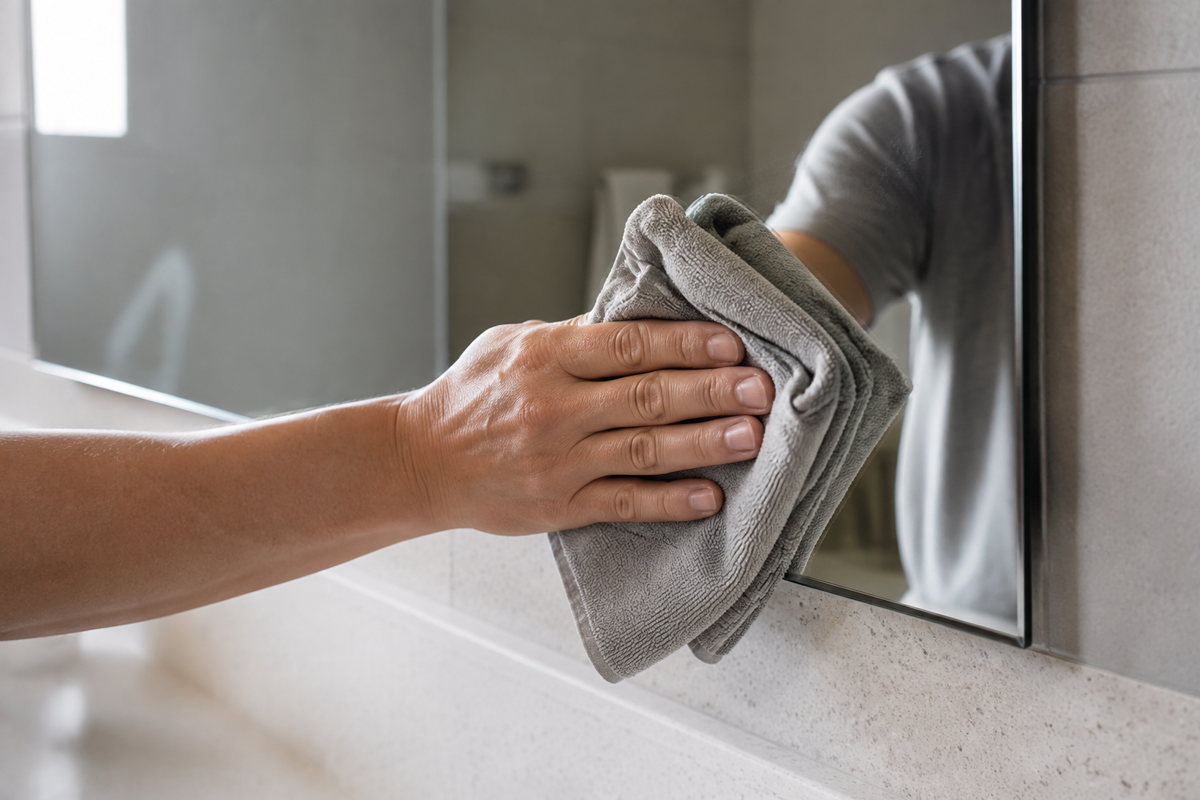
Glass cleaner is intended to lift fingerprints, light film and ordinary marks while allowing a clear finish with minimal visible residue. Technique still matters: too much product, a dirty cloth or overspray at edges can create streaks even with the right cleaner.
Apply cleaner to the cloth near mirror backing, wood frames, window seals, electronics and specialty coatings. Use a clean lint-free cloth, turn it as soil transfers and finish with a dry section. Black spots at a mirror edge may be backing damage rather than removable dirt.
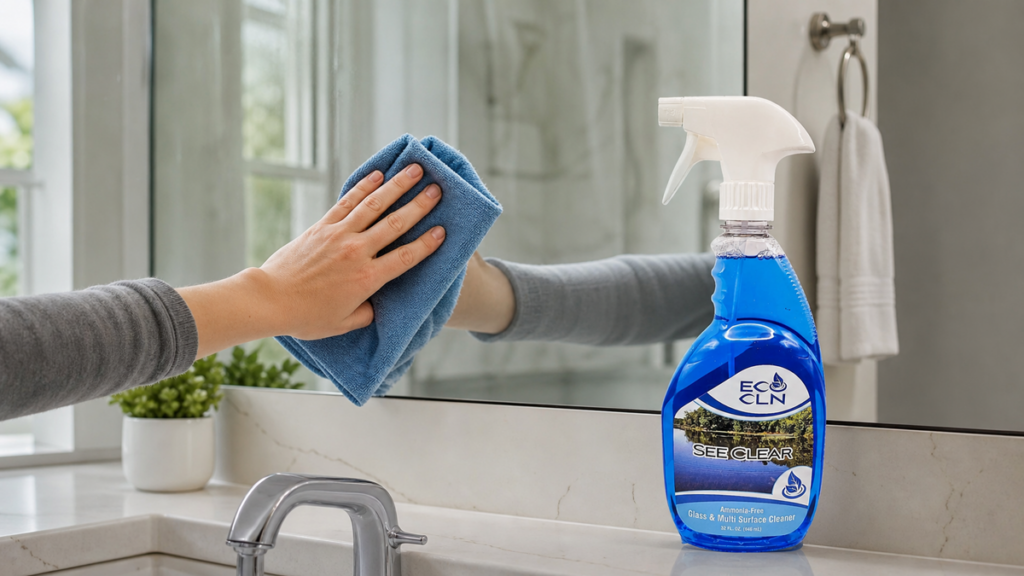
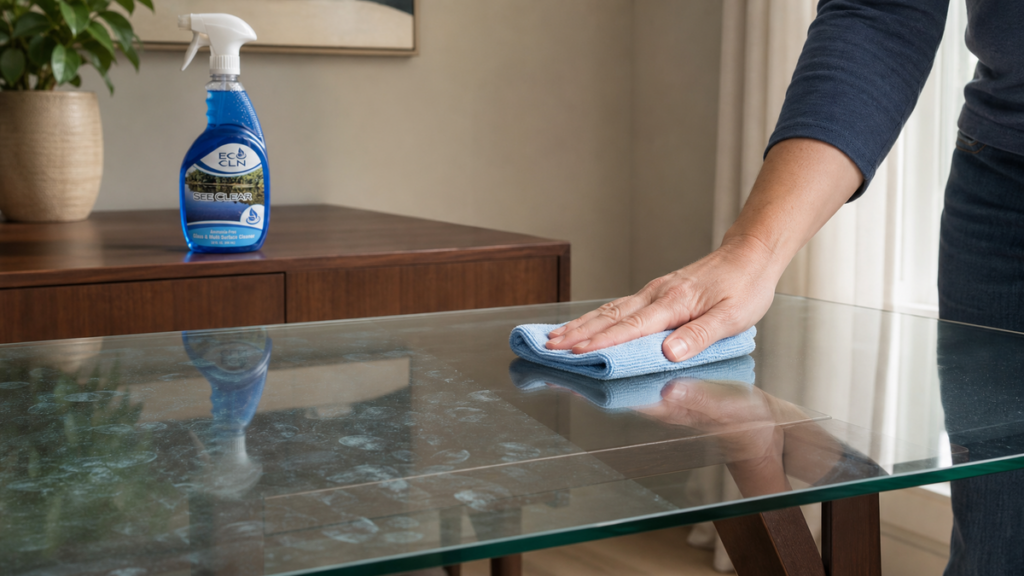
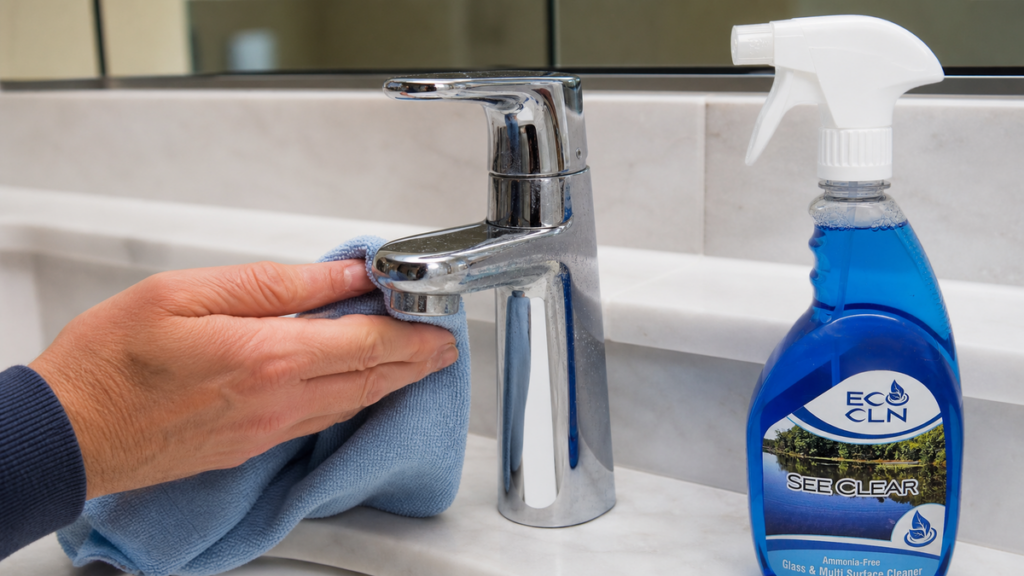
Some glass cleaners have material-specific advantages. Eco Cln See-Clear is the ammonia-free Eco Cln option for compatible glass, mirrors, chrome, stainless steel and shiny surfaces. That does not make every coated screen, tinted film or natural-stone surround compatible; the maker’s directions remain the gate.
What All-Purpose Cleaner Is Designed to Do
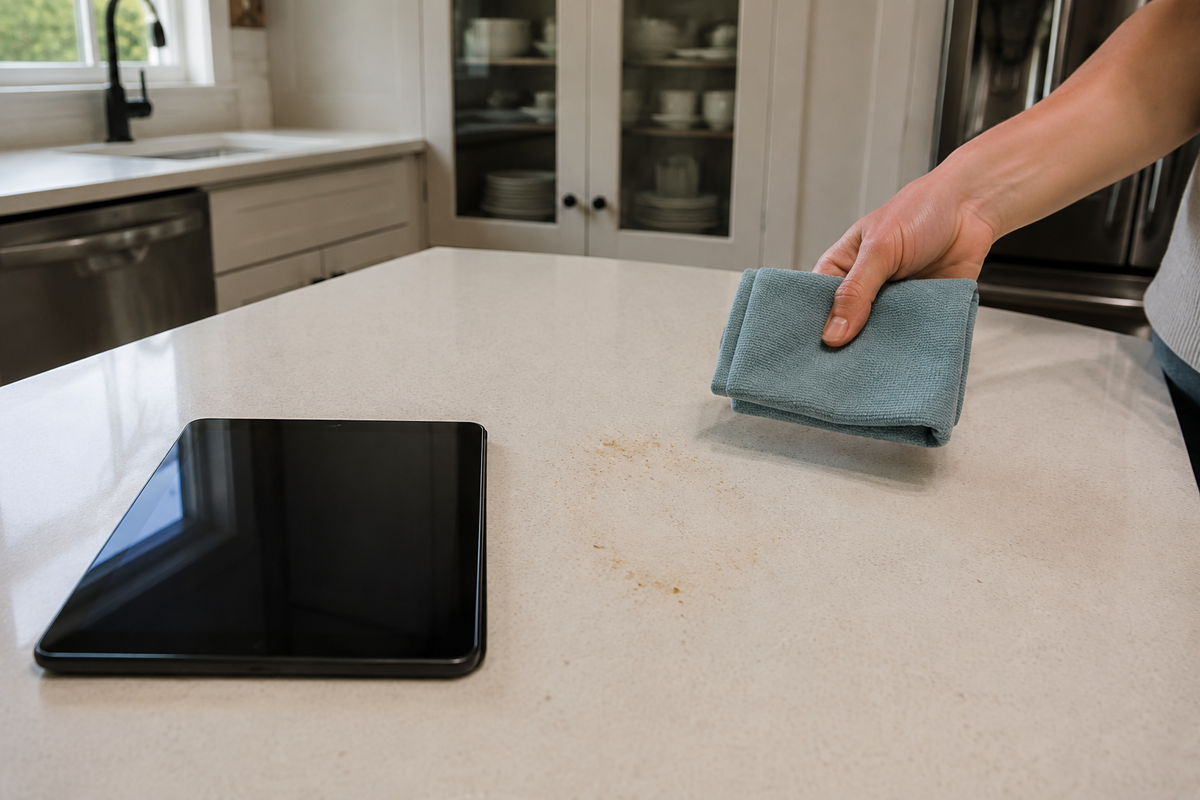
All-purpose cleaner covers a wider range of washable household soil: tracked grime, light grease, food residue and routine dirt on compatible counters, floors, cabinets and utility areas. Because the job range is broader, the product may leave more visible film on transparent glass if too much is used or the cloth is not changed.
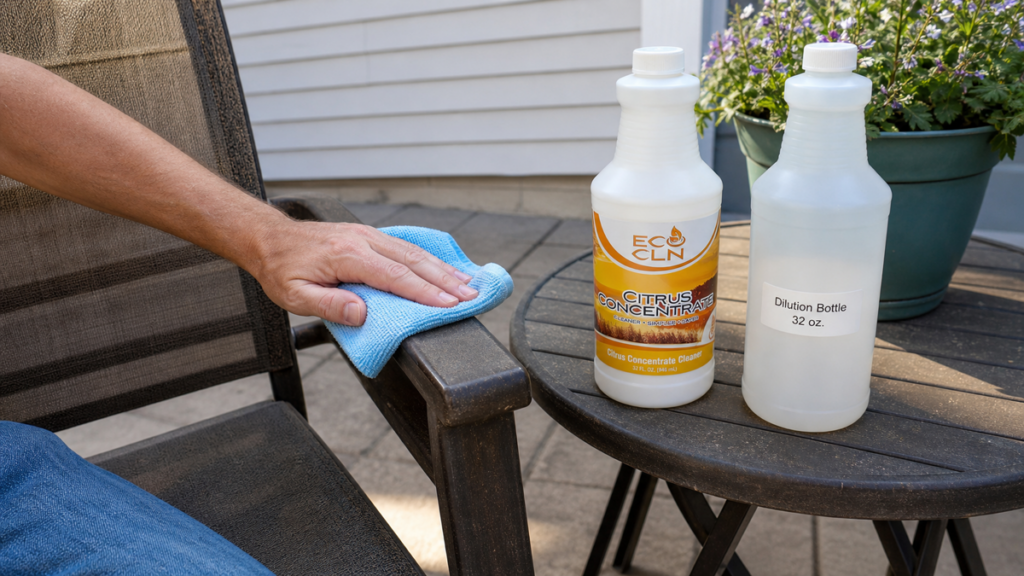
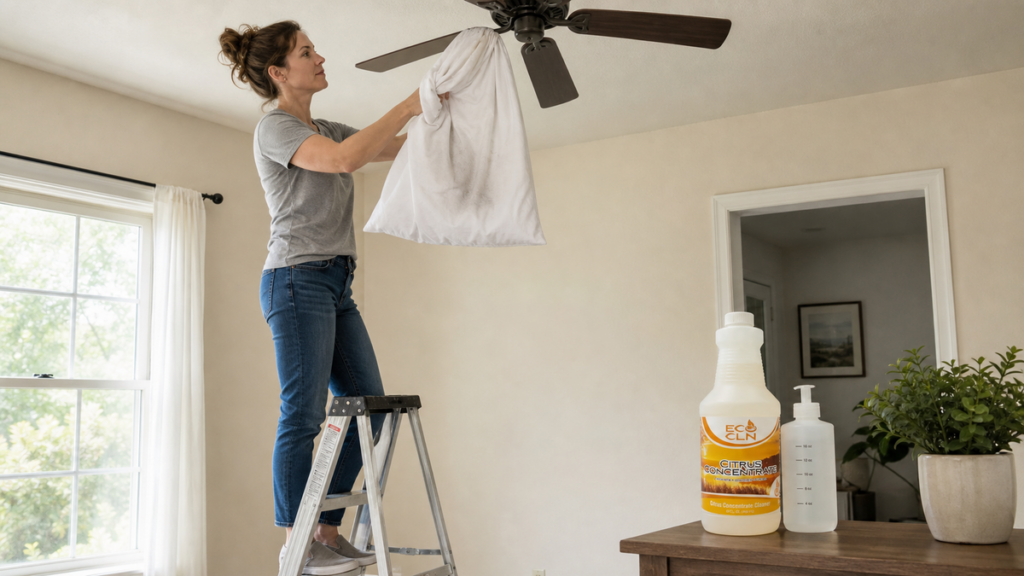
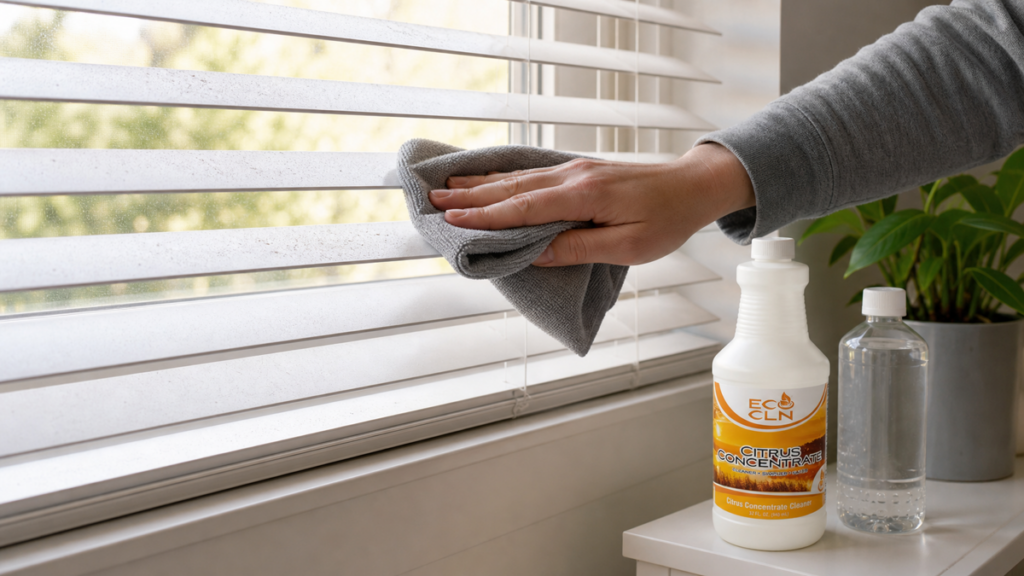
Concentrated products also require accurate mixing. Eco Cln Citrus Concentrate uses 1 ounce per quart for light-duty work, 2 ounces per quart for all-purpose cleaning and 8 ounces per quart for heavy-duty jobs. The correct strength depends on the approved surface and soil; a stronger bottle is not automatically a better glass finish.
An industry comparison such as Nu Standard Cleaning’s glass-versus-all-purpose overview makes the same broad distinction: glass formulas prioritize transparent surfaces, while all-purpose products serve a wider task range.
Glass Cleaner vs. All-Purpose Cleaner by Surface
Mirrors
Start with glass cleaner on an ordinary compatible mirror. Spray the cloth near edges so liquid does not reach the reflective backing. If the mirror is framed, treat wood, metal and glass as separate materials.
Windows
Use glass cleaner on the pane when the window maker permits it. Remove loose grit first and protect seals, painted muntins and tinted film. Exterior windows with heavy soil may need a separate wash before the final glass-cleaner pass.
Stainless-steel appliance exteriors
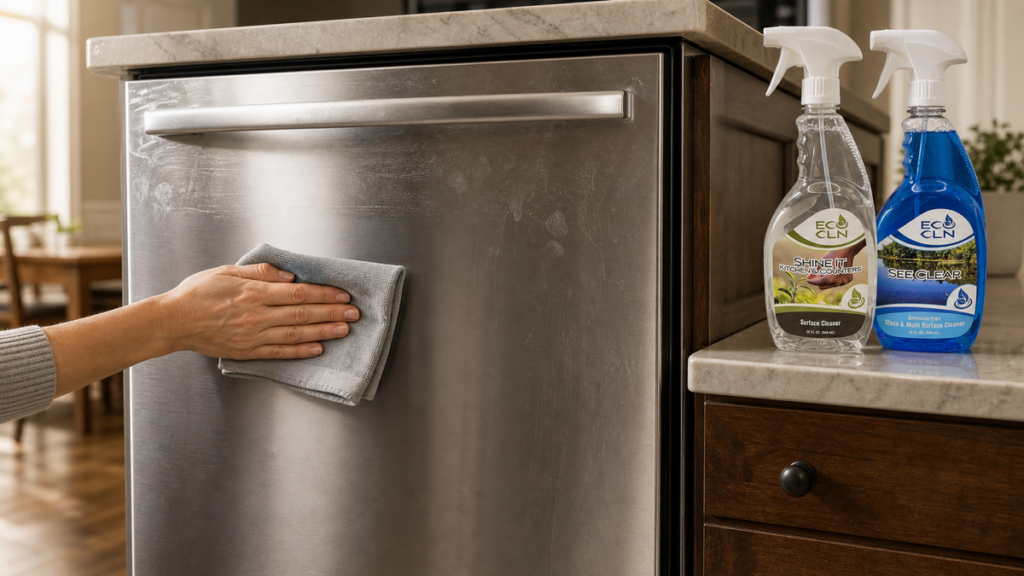
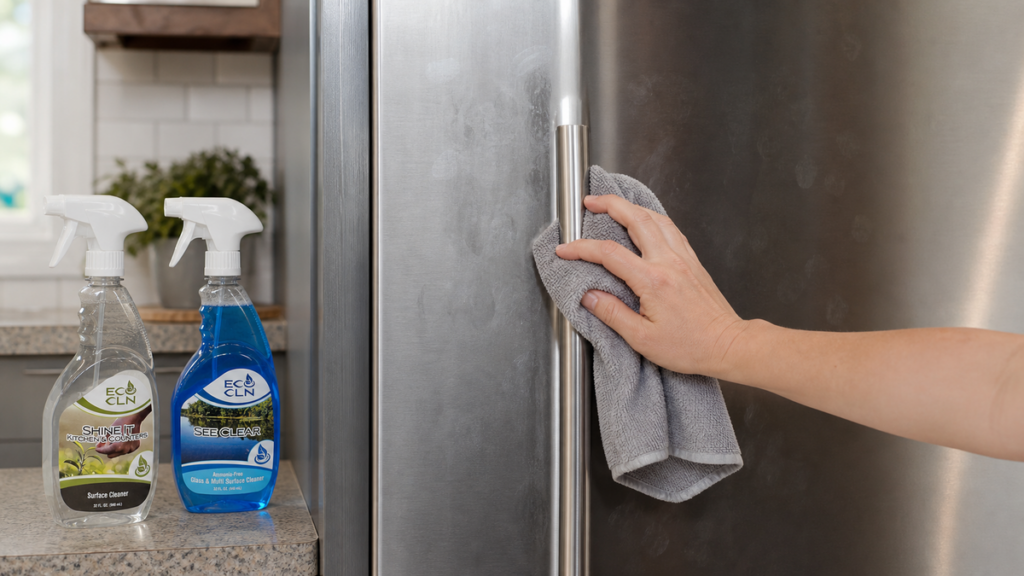
Both categories may fit some stainless steel, but the appliance maker controls. Light fingerprints on compatible shiny steel may finish well with glass cleaner. Cooking grease may need a kitchen or all-purpose product followed by the maker-approved finish. Keep spray away from displays, buttons and seams.
Kitchen counters
All-purpose cleaner is usually the more logical category for routine washable counters because the soil includes food film, grease and crumbs. Natural stone, butcher block and specialty coatings have separate restrictions, and routine cleaning is not the same as food-safety treatment.
Sealed floors
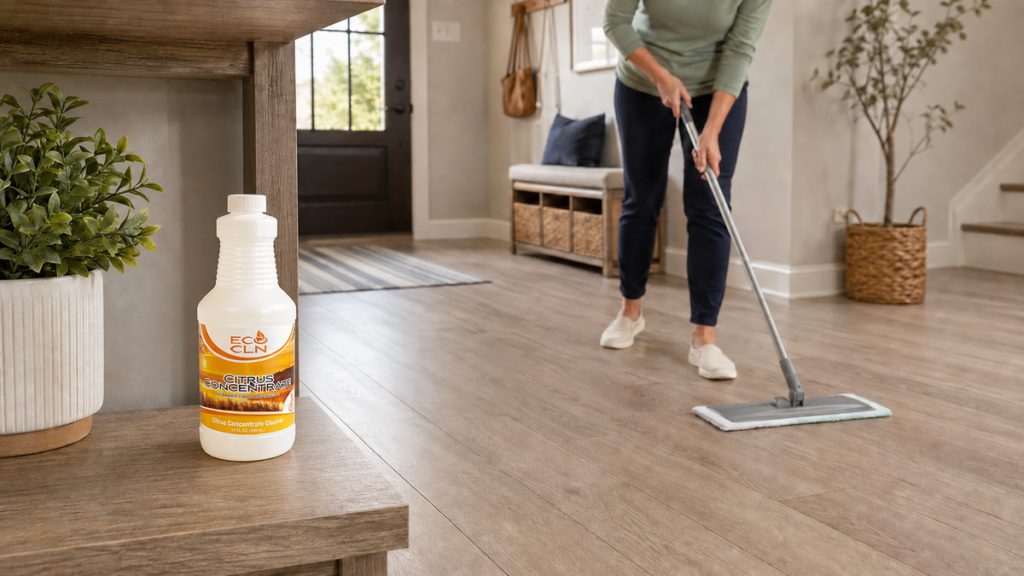
Use only a cleaner and strength approved by the floor manufacturer. Glass cleaner is not a floor-care substitute. With an approved concentrate, measure accurately and keep moisture within the material’s limits.
Chrome and shiny fixtures
A compatible glass-and-surface cleaner can work well for light fingerprints and spotting. Bathroom mineral buildup or soap film may call for a bathroom-focused product instead. Match the cleaner to the soil rather than to shine alone.
Screens, coated glass and electronics
Do not generalize. Television panels, computer monitors, camera lenses, eyeglasses, tinted windows and coated shower glass may prohibit common household cleaners. Follow the device or coating maker’s exact process.
Step-by-Step: Choose the Right Cleaner
1. Name the material. Identify ordinary glass, coated glass, mirror, stainless steel, laminate, stone, sealed wood or another finish.
1. Identify the soil. Fingerprints and light haze are different from cooking grease, sticky food or mineral buildup.
1. Read the surface instructions. Eliminate any product category the manufacturer forbids.
1. Choose the narrowest effective option. Use glass cleaner when clarity is the main goal; use all-purpose cleaner when broader soil removal is the task.
1. Test a hidden area. Check for haze, color transfer, changed gloss or coating reaction after the test dries.
1. Apply sparingly. Put product on the cloth near edges, frames, controls and joints. Large wet sprays create runoff and residue.
1. Use separate cleaning and finishing cloths. Lift soil with one cloth and dry or buff with another clean lint-free cloth.
1. Inspect after drying. If streaks remain, change cloths and reduce product before switching cleaners.
Why Glass Streaks After Cleaning
Streaks often come from excess product, a saturated cloth, old oily residue, hot glass or drying before the cleaner is evenly spread. Clean out of direct sun when practical, use less product and replace the cloth once it stops absorbing.
Do not keep adding cleaner to a hazy pane. The article on why glass looks hazy after cleaning separates removable film from hard-water deposits, coating damage and haze between insulated panes.
When All-Purpose Cleaner Can Be Used on Glass
An all-purpose product may be permitted on ordinary glass, especially when greasy soil needs a first pass. However, it can require a clean follow-wipe and dry buff to remove visible film. The label must allow glass, and the frame, tint and surrounding materials must also tolerate the process.
For routine transparent surfaces, a dedicated glass cleaner is usually simpler. Use the broader product when its soil-removal role is actually needed, not because one bottle happens to be closest.
Common Cleaner-Selection Mistakes
• Choosing by scent instead of surface and soil.
• Spraying mirror edges, window seals or electronic controls directly.
• Using a stronger concentrate mix to chase streaks.
• Cleaning hot sunlit glass that dries too quickly.
• Reusing a grease-loaded cloth for the finishing pass.
• Assuming “shiny” means every coating accepts glass cleaner.
• Treating mineral damage or failed mirror backing as ordinary residue.
Where See-Clear and Citrus Concentrate Fit
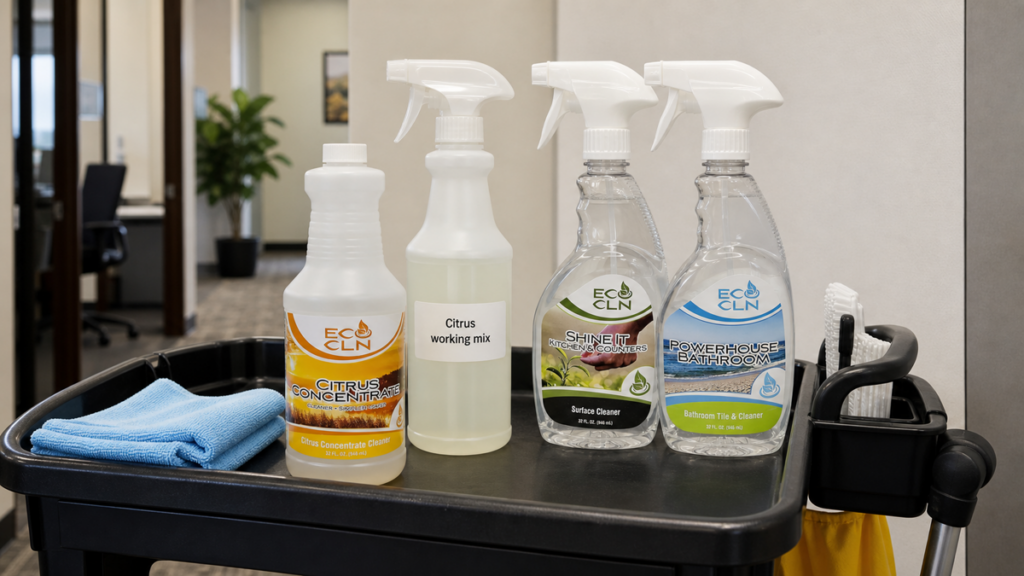
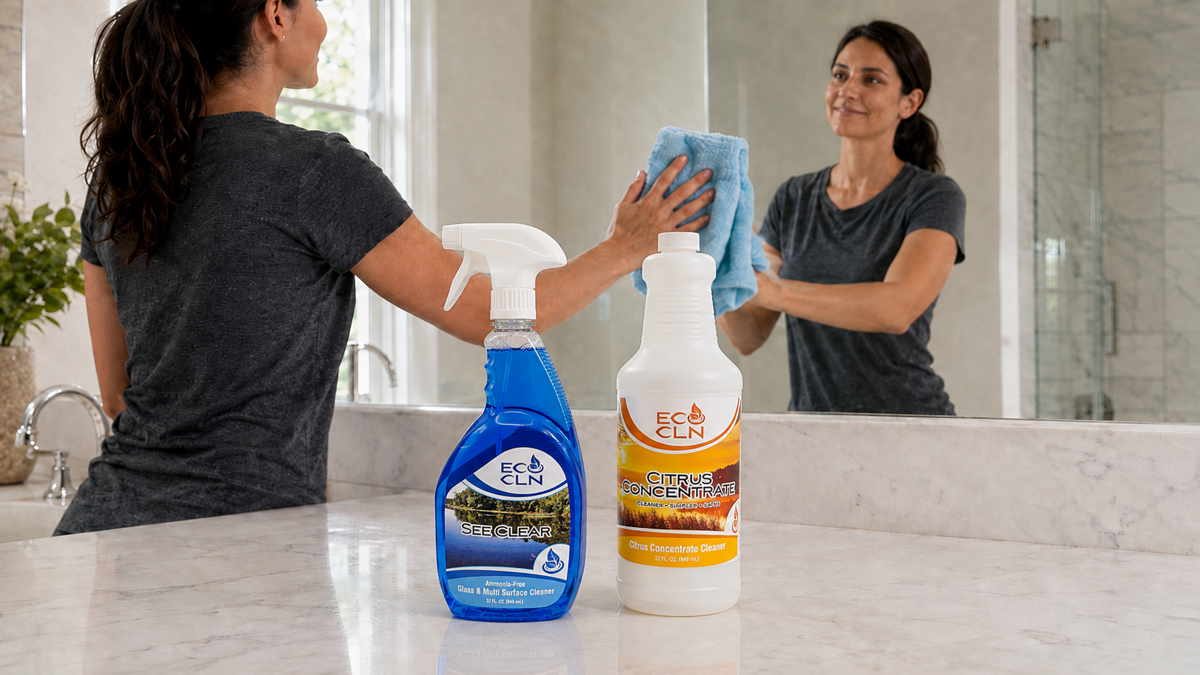
Choose See-Clear for compatible mirrors, windows and shiny surfaces when a light, clear finish is the goal. Choose Citrus Concentrate for compatible broader household cleaning where measured strength and larger-area use matter.
The ammonia-free glass cleaner guide provides more See-Clear context. The all-purpose cleaner uses and limits guide covers jobs that belong in the Citrus lane and surfaces that still need special care.
Five Everyday Cleaner-Choice Examples
Bathroom mirror with toothpaste specks: Lift the dried specks gently, then use See-Clear with a clean lint-free cloth. Spray the cloth near the mirror edge so liquid does not reach the backing.
Glass patio door with nose prints and dusty tracks: Use glass cleaner on the pane, but vacuum the track and clean its metal, vinyl or painted parts separately. One product does not have to handle both zones.
Kitchen counter with crumbs and cooking film: Remove crumbs first, identify the counter material and choose an approved all-purpose or kitchen cleaner. Glass cleaner is not the logical default for broad greasy soil.
Stainless refrigerator with light fingerprints: Check the appliance instructions. See-Clear may fit a compatible shiny exterior, while heavier cooking film can call for a kitchen-focused first pass and a clean finishing cloth.
Large washable utility-room floor: Follow the flooring manufacturer’s guidance and use a correctly measured all-purpose solution only if it is approved. A glass cleaner would be inefficient and is not designed as routine floor care.
These examples show why “which cleaner is stronger?” is the wrong question. The useful question is which product matches the material, mess, area size and desired finish with the fewest extra steps.
Frequently Asked Questions
Can all-purpose cleaner be used on mirrors?
Only if the label and mirror construction allow it. A dedicated glass cleaner usually leaves less visible film, and application to the cloth protects the mirror edges.
Is glass cleaner strong enough for kitchen grease?
It may handle light fingerprints on compatible shiny surfaces. Heavier cooking film usually fits an all-purpose or kitchen-focused product better.
Why does all-purpose cleaner leave streaks on glass?
Too much product, a dirty cloth or formula residue can stay visible on transparent surfaces. Use less, make any required follow-wipe and buff with clean microfiber.
Can See-Clear be used on stainless steel?
Use it only when the appliance or surface maker permits it. Spray the cloth near controls and wipe in the recommended direction.
What Citrus strength should I use for everyday cleaning?
Light duty is 1 ounce per quart and all-purpose is 2 ounces per quart. Use 8 ounces per quart only for approved heavy-duty jobs, not as a default.
Can either cleaner be used on a television screen?
Do not assume so. Follow the device maker’s screen-cleaning instructions; many coated displays restrict household sprays.
The bottom line
Glass cleaner is the better starting point for clarity on compatible mirrors, windows and shiny surfaces. All-purpose cleaner belongs on a broader range of approved household soil and materials. Choose by surface and mess, use See-Clear or measured Citrus only in its proper lane, and judge the result after a clean dry finish.