How to Clean Ceiling Fan Blades Without Dropping Dust Everywhere

Quick Answer
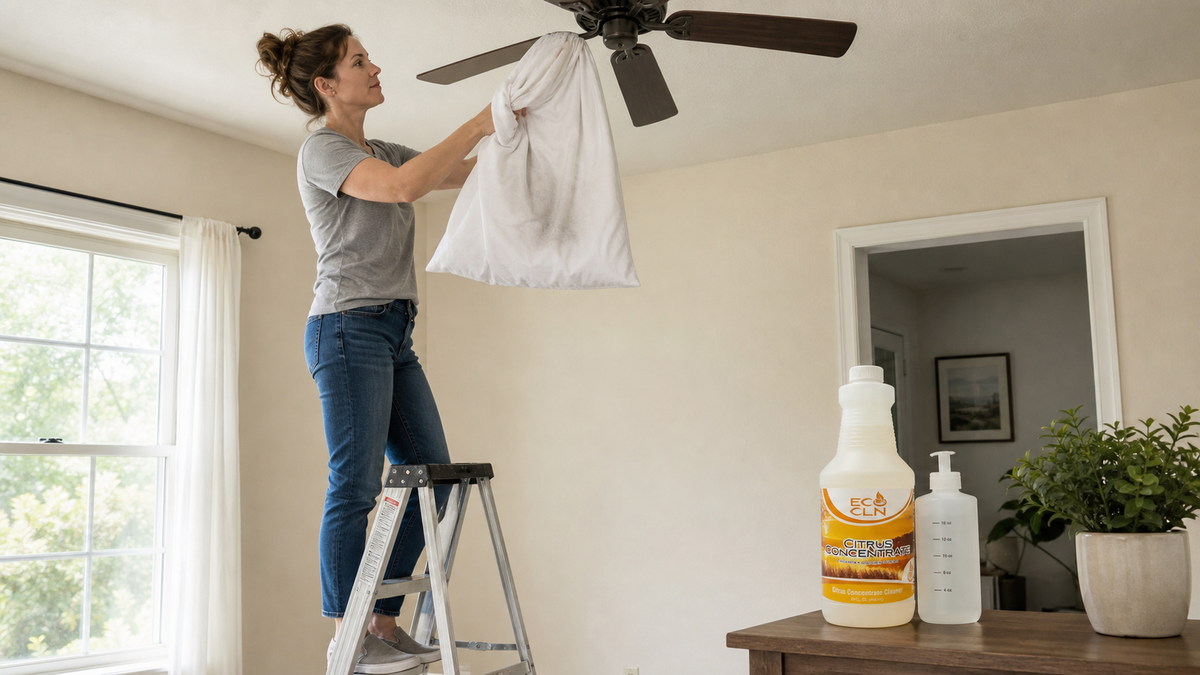
Turn the fan off and let it stop completely. Protect furniture below and use a large pillowcase or microfiber duster to capture loose dust from each blade instead of knocking it into the room.
If the blade finish is washable and the fan manufacturer allows a mild cleaner, use the light-duty Eco Cln Citrus Concentrate mix – 1 oz per quart of water – on a microfiber cloth or lightly dampened pillowcase. Keep moisture away from the motor housing, electrical openings, pull-chain openings, and controls.
Hunter recommends turning the fan off, using a pillowcase to capture dust, and using light pressure so blades are not damaged or thrown out of balance. Review Hunter ceiling-fan cleaning guidance.
Why Ceiling Fans Create a Dust Avalanche
Fan blades collect a thick dry layer because moving air constantly brings dust to the blade surfaces. The leading edge often gets the heaviest buildup.
If you start with a wet rag or aggressive duster, that dry layer breaks loose and falls onto the bed, couch, floor, and furniture below.
Step 1: Turn the Fan Off and Let It Stop
Never clean rotating blades. Turn the fan off and wait until the blades are completely still.
Make sure the light fixture is cool before touching shades or nearby surfaces.
Step 2: Protect the Room Below
Place an old sheet or drop cloth over furniture or bedding under the fan.
Use a stable step stool or ladder only if you can reach the fan safely. Do not stand on chairs or unstable furniture.
Step 3: Capture Dry Dust First
Hunter’s pillowcase method slides a large pillowcase over the blade and gently pulls it back so dust stays inside the fabric instead of falling. See Hunter pillowcase method.
An extendable microfiber duster or vacuum brush attachment can also work when the fan maker allows it.
Step 4: Check the Blade Finish Before Wet Cleaning
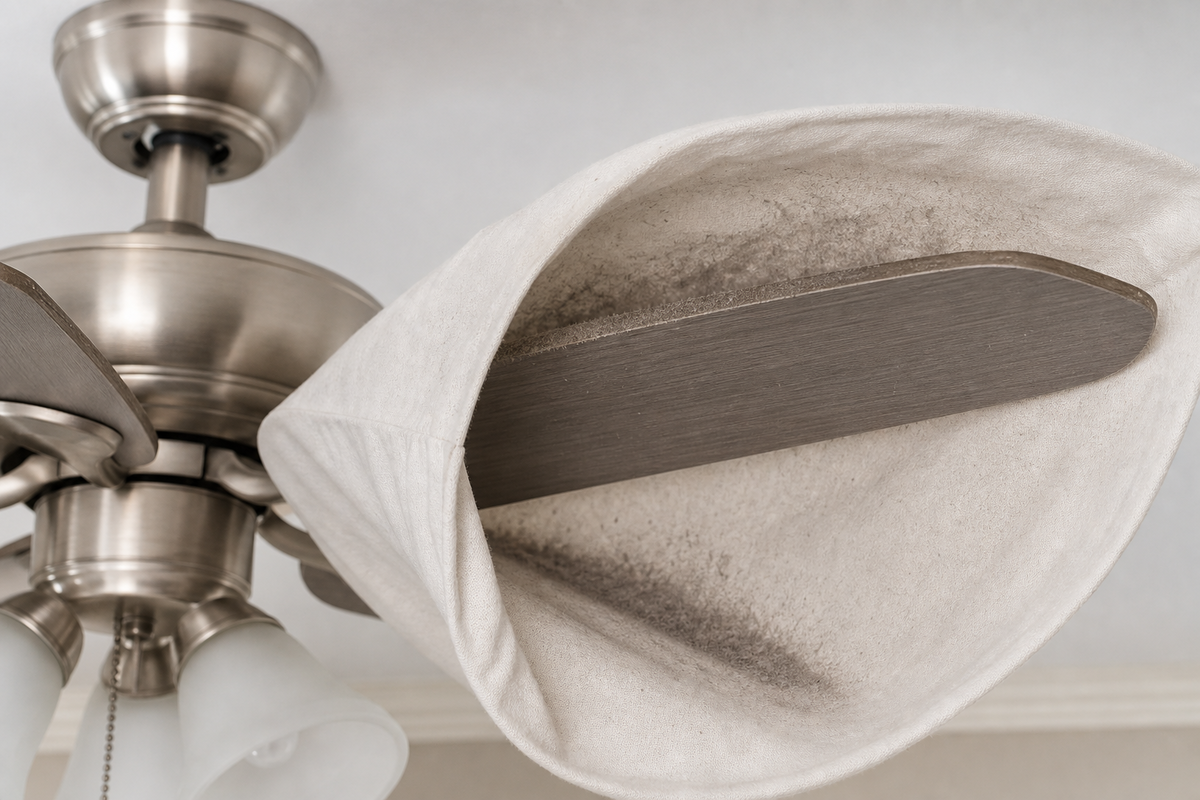
Fan blades may be painted, laminated, veneered, wood, plastic, metal, or coated with a dust-resistant finish.
Some protected blade finishes can be damaged by cleaner residue, so the fan manual wins over general household-cleaner advice.
Step 5: Use Citrus Only on Compatible Washable Blade Finishes
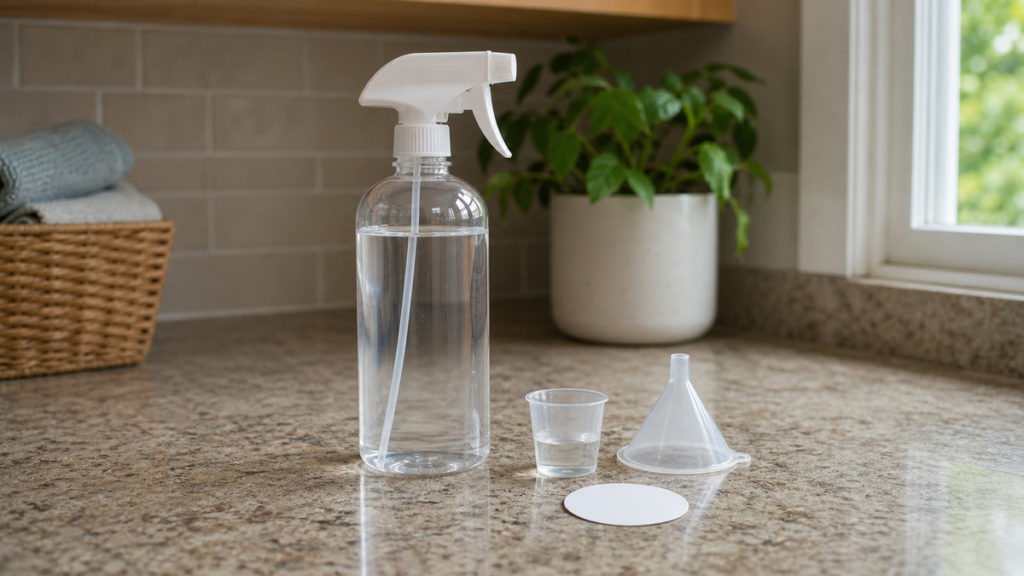
The current Eco Cln dilution guide uses 1 oz Citrus Concentrate per quart of water for light-duty cleaning.
Lightly dampen microfiber – do not saturate it. Wipe the blade while supporting it gently with your other hand if safe and accessible.
Do not spray Citrus upward at the fan or directly onto the blade near the motor.
Step 6: Wipe the Blade Edge and Upper Surface
Clean the leading edge, top surface, and underside with light pressure. Rotate cloth faces often.
Too much downward or sideways force can flex the blade or affect balance.
Step 7: Keep Cleaner Away From the Motor and Electrical Parts
Use dry microfiber or the fan manufacturer’s approved method on the motor housing, switches, receivers, and electrical openings.
Do not spray liquid into vents, pull-chain holes, canopy gaps, light sockets, or remote-control electronics.
Step 8: Dry the Blades Before Turning the Fan Back On
Use a dry cloth and allow any remaining moisture to evaporate.
Remove the drop cloth, vacuum fallen dust if necessary, then restore fan operation only when everything is dry and clear.
What If the Fan Is Greasy?
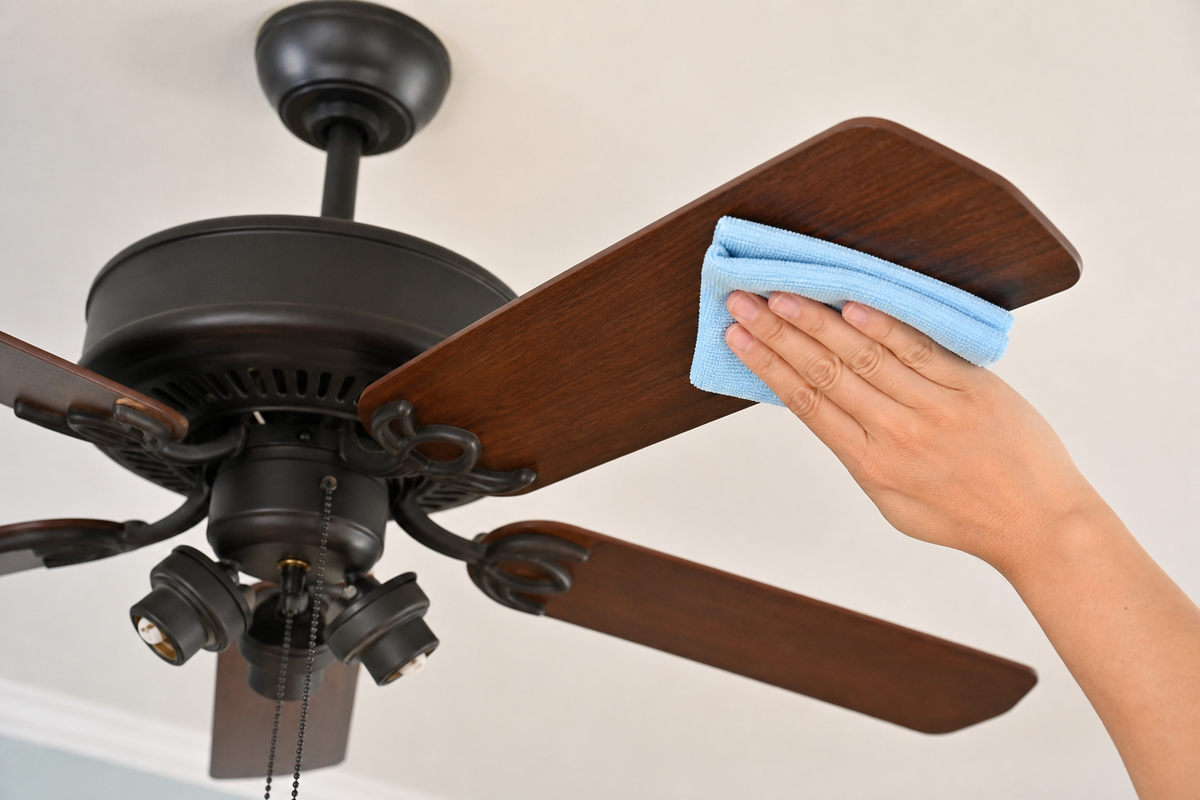
Kitchen ceiling fans can collect a mixture of dust and airborne cooking grease. Dry removal still comes first.
If the blade finish is compatible and the manufacturer allows wet cleaning, use controlled repeated passes rather than soaking the blade. Specialty wood/veneer finishes may need a different cleaner.
Common Ceiling-Fan Cleaning Mistakes
- Cleaning while the fan is moving.
- Using an unstable chair instead of safe access equipment.
- Knocking dry dust directly onto the room.
- Spraying cleaner upward toward the motor.
- Using too much pressure on blades.
- Assuming every blade finish can be wet-cleaned.
- Using Citrus dilution on the motor housing or electronics.
- Turning the fan back on while blades are still damp.
Where Citrus Concentrate Fits
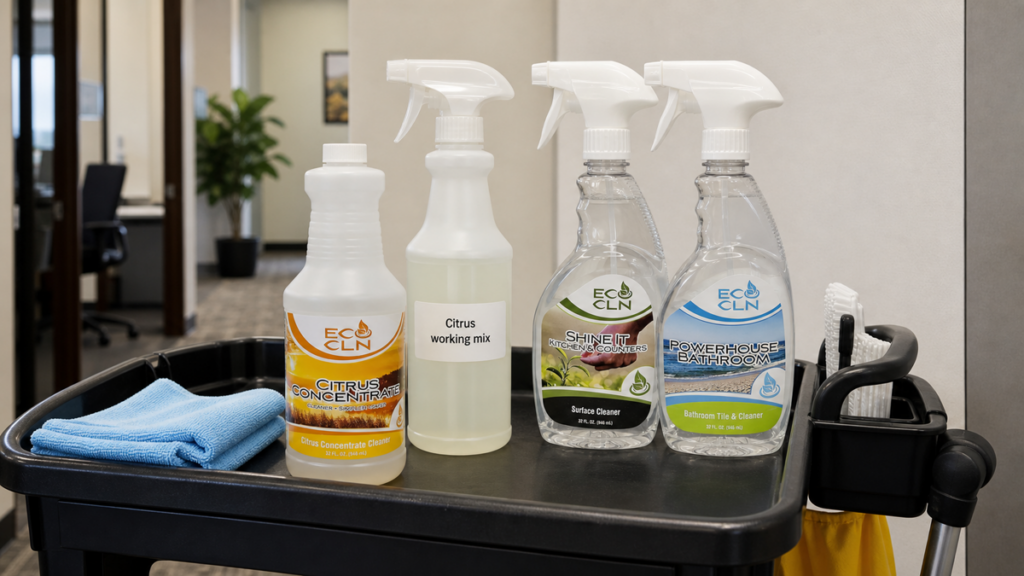
Eco Cln Citrus Concentrate can fit compatible washable fan-blade finishes after dry dust removal and manufacturer approval. Use the light-duty mix for routine residue, apply it to the cloth rather than the fan, and keep all liquid away from electrical components.
FAQ
What is the easiest way to dust a ceiling fan without making a mess?
A large pillowcase can capture dust while you slide it over each stationary blade. Protect furniture below as a backup.
Can I spray Citrus directly on a ceiling fan blade?
No. Put a light amount on a cloth only when the blade finish and manufacturer allow wet cleaning.
What Citrus dilution should I use for light fan-blade grime?
Use the current light-duty mix: 1 oz Citrus Concentrate per quart of water.
Can I clean the motor housing with Citrus?
Do not apply Citrus to motor/electrical parts unless the fan manufacturer explicitly approves it. Keep liquid out of openings.
Why is my fan wobbling after cleaning?
Excess pressure can flex or affect blades, but wobble can have other causes. If cleaning did not solve it or it started afterward, follow the fan manufacturer’s balancing/service guidance.
The Bottom Line
Turn the fan off, let it stop completely, and use a stable step stool or ladder positioned according to its safety instructions. Protect the floor or furniture below, then capture dry dust before adding moisture. A pillowcase can enclose a compatible blade while you pull dust inward, or a vacuum brush and microfiber cloth can remove loose material with less fallout. Support the blade near the point you are cleaning so you do not bend it or strain the bracket. If washable residue remains and the blade maker permits damp cleaning, spot-test the light-duty Citrus mix and apply it to a well-wrung cloth, never toward the motor, wiring, canopy, light sockets, controls, or blade hardware. Clean one blade at a time, dry it, and compare all blades for balanced finish and moisture. Stop if the fan is unstable, the blade flexes, a finish transfers, wiring or hardware is exposed, or safe access requires overreaching. Dust containment and careful support matter more than fast, aggressive wiping overhead.
For compatible washable ceiling-fan blade finishes, Eco Cln Citrus Concentrate can handle the light grime that remains after you capture the dry dust. Keep the mix light, apply it to the cloth, and keep moisture far away from the motor and electrical housing.