How to Clean Sticky Food Residue From a Kitchen Table

Quick Answer
Identify the tabletop material and manufacturer care instructions first. Lift crumbs and solid food, then soften the sticky residue using the mildest compatible method.
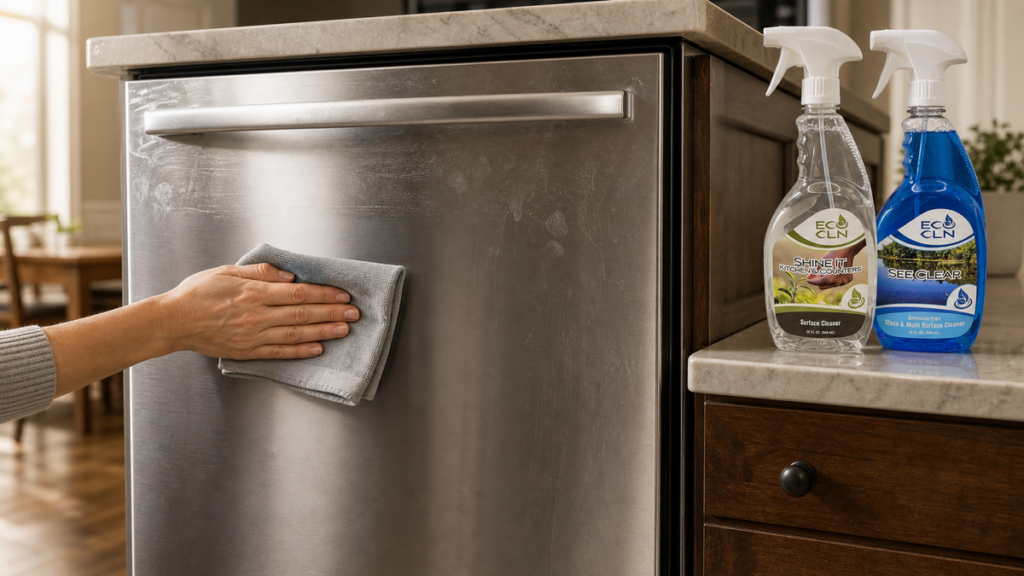
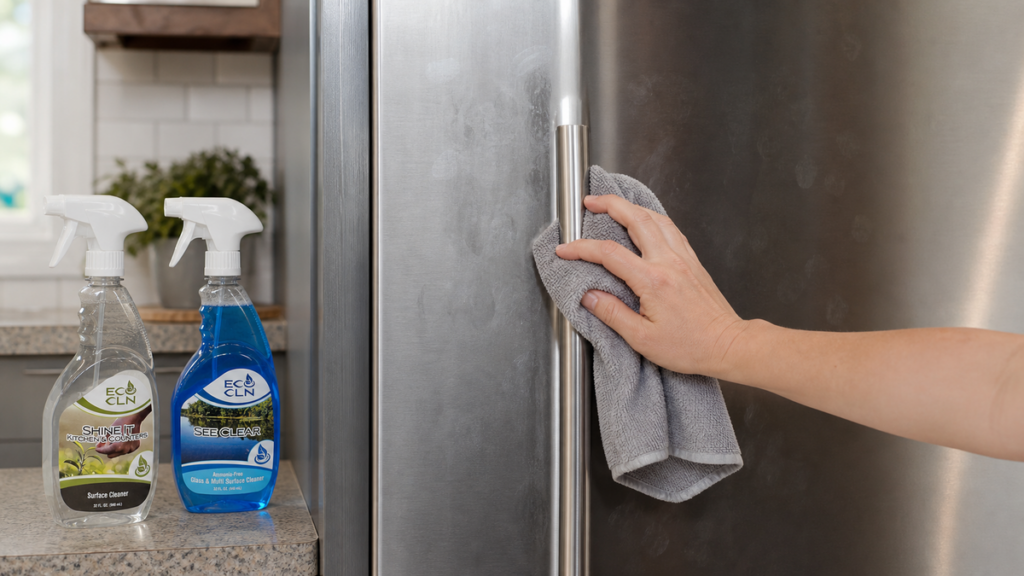
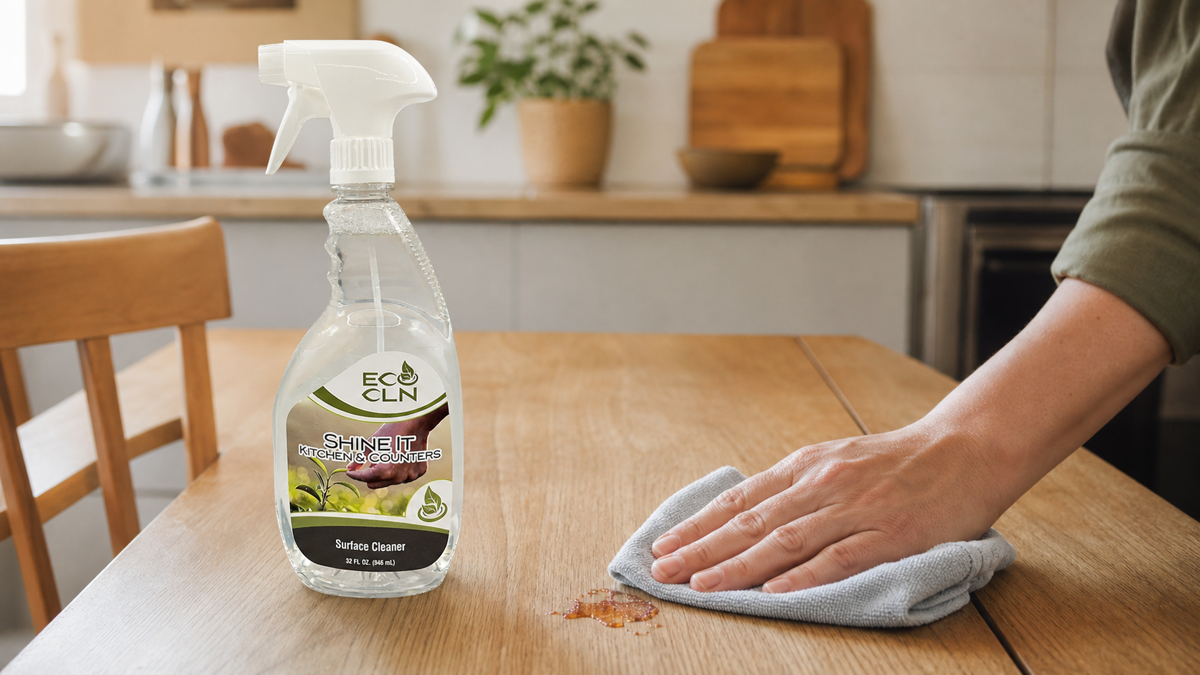
For compatible washable kitchen tables, Eco Cln Shine-It is positioned for food residue, grease, fingerprints, tables, stainless steel, appliance exteriors, counters, and other washable kitchen surfaces.
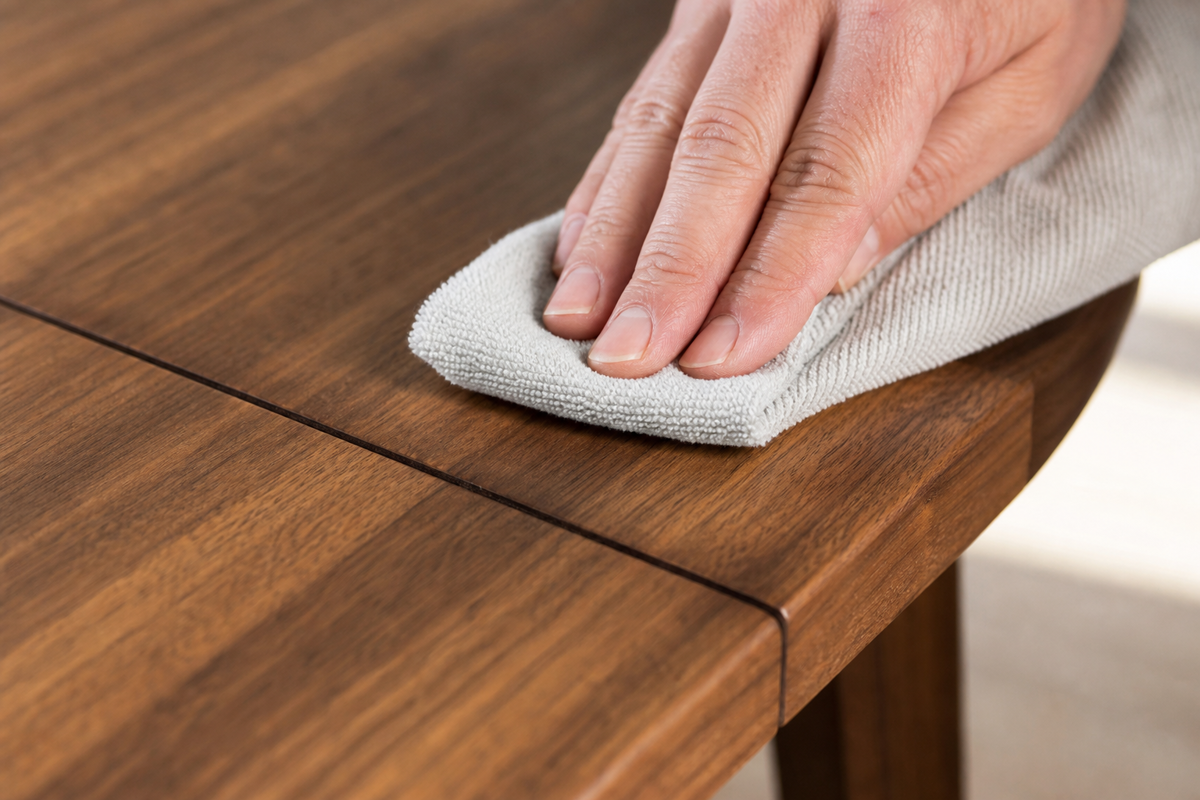
Apply cleaner to a microfiber cloth for better control on wood, veneer, seams, edges, and mixed-material tables. Let the cleaner contact the sticky spot briefly, wipe gently, remove leftover film with a clean cloth as the surface instructions allow, and dry immediately.
Why a Table Can Stay Sticky After Wiping
Sugar, syrup, juice, sauce, grease, hand oils, and cleaning residue can all leave a tacky film.
A damp cloth may remove the visible food color but leave the sugar or oil behind.
Step 1: Identify the Tabletop Finish
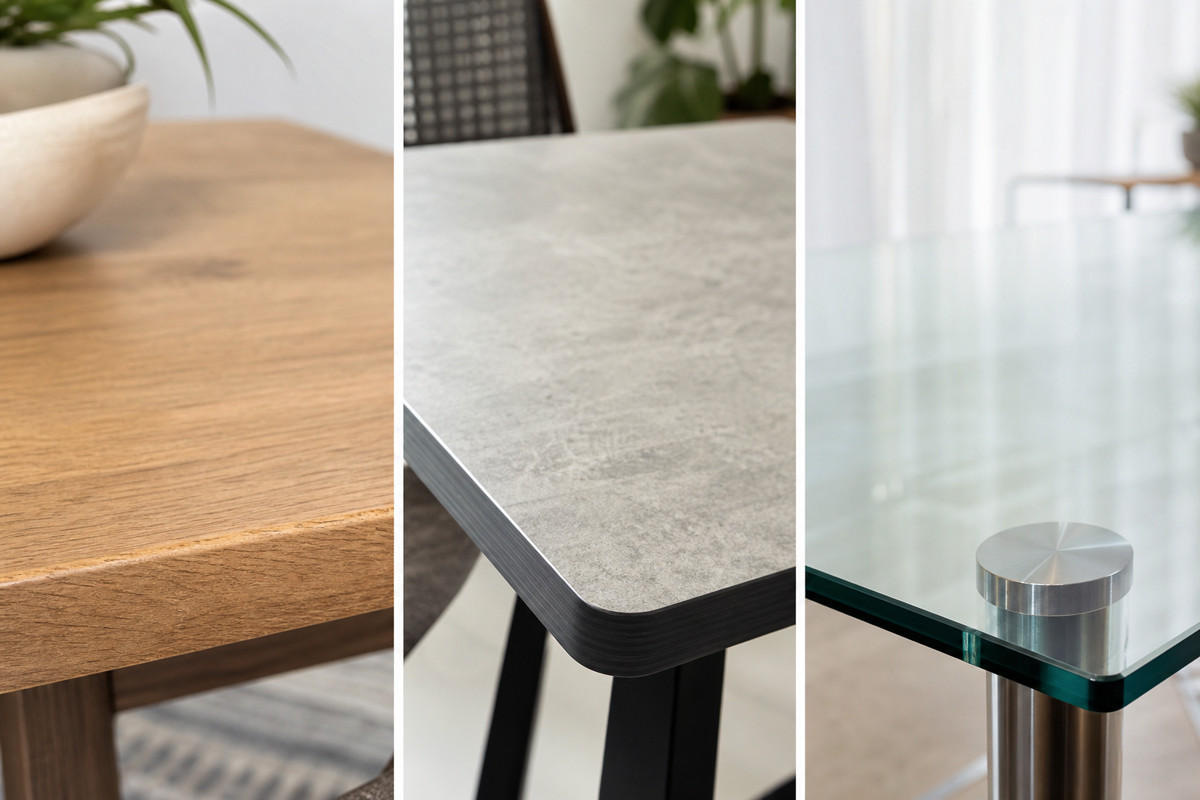
Common kitchen tables include sealed solid wood, wood veneer, laminate/melamine, glass, stone, painted surfaces, and mixed-material tops.
IKEA’s care directions for an oak-veneer tabletop call for a damp cloth with mild cleaner followed by wiping dry. Review an IKEA veneer table care example.
Formica recommends a damp nonabrasive cloth and mild detergent/household cleaner for laminate, with care not to flood seams because water can reach the substrate. Review Formica laminate care.
Step 2: Remove Crumbs and Solid Food First
Use a dry cloth, soft brush, or dull plastic edge to lift dried crumbs or food pieces.
Do not grind dry grit under a wet cloth, especially on glossy or lacquered tables.
Step 3: Spot-Test Shine-It
The current Shine-It product page specifically lists tables and washable kitchen surfaces, while also directing users to test delicate finishes, painted surfaces, specialty coatings, unfinished wood, and unknown materials.
Test in a hidden spot and let it dry. Stop if the finish changes sheen, color, texture, or feel.
Step 4: Soften the Sticky Residue Without Flooding It
Lightly dampen microfiber with Shine-It and hold it on the residue briefly according to product directions.
For sealed wood or veneer, controlled cloth application is safer than spraying enough liquid to run into seams, joints, or unfinished edges.
Step 5: Wipe With the Grain or Surface Pattern
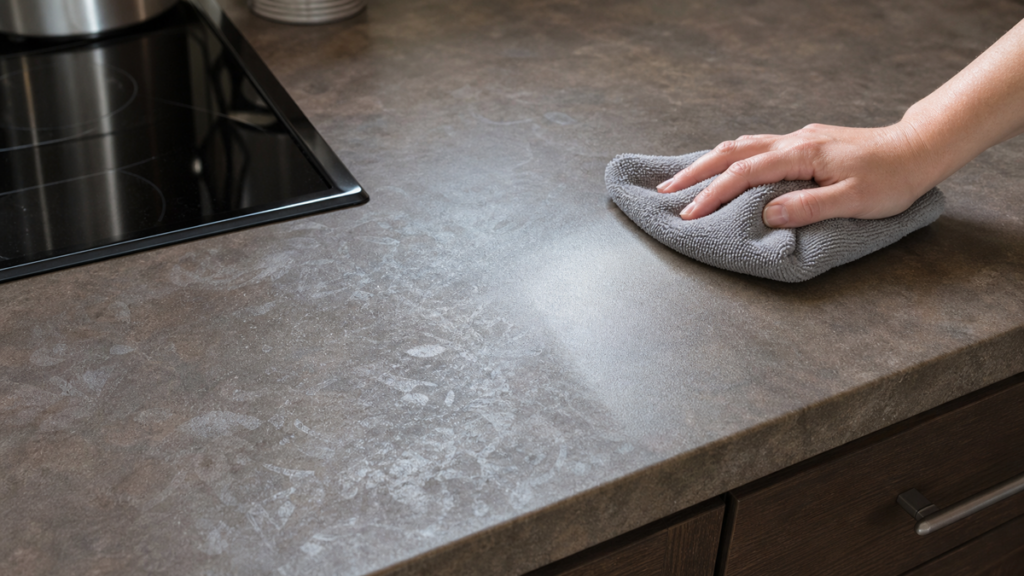
On wood or veneer, wipe in the grain direction with light pressure. On laminate or glass, use overlapping passes with a soft nonabrasive cloth.
Repeat a gentle pass if needed rather than moving immediately to a rough scrub pad.
Step 6: Remove Cleaner and Food Film
Switch to a fresh cloth. If the surface maker allows a lightly damp water follow-up, use it to pick up remaining sugar and cleaner residue.
A clean table should not feel tacky after it dries.
Step 7: Dry the Table Immediately
Dry wood, veneer, laminate seams, edges, and hardware promptly.
Standing moisture can damage some substrates, wood joints, veneers, and finishes even when the top surface looks washable.
Sticky Residue vs. Finish Failure
If a table remains gummy after normal compatible cleaning and material transfers to the cloth, the finish itself may be softening or failing.
Do not keep increasing cleaner strength. A degraded lacquer, soft-touch coating, wax, polish, or adhesive problem may need furniture-specific repair.
Special Cases
- Unfinished or oil-finished wood: follow the furniture maker; general kitchen cleaner may not be appropriate.
- Natural stone: use a stone-compatible cleaner and avoid unapproved acids or degreasers.
- Glass: See-Clear may be a better Eco Cln fit for light fingerprints and haze after food residue is gone.
- Laminate: avoid flooding seams and exposed substrate edges.
- Painted tables: hidden-area test before broader use.
Common Sticky-Table Mistakes
- Scrubbing dried sugar with an abrasive pad.
- Spraying liquid into veneer joints, leaf seams, or unfinished edges.
- Using one grease-loaded cloth across the entire tabletop.
- Skipping the hidden-area test.
- Leaving cleaner residue behind.
- Letting water stand on laminate seams or wood.
- Trying to clean through finish failure or damaged lacquer.
Where Shine-It Fits
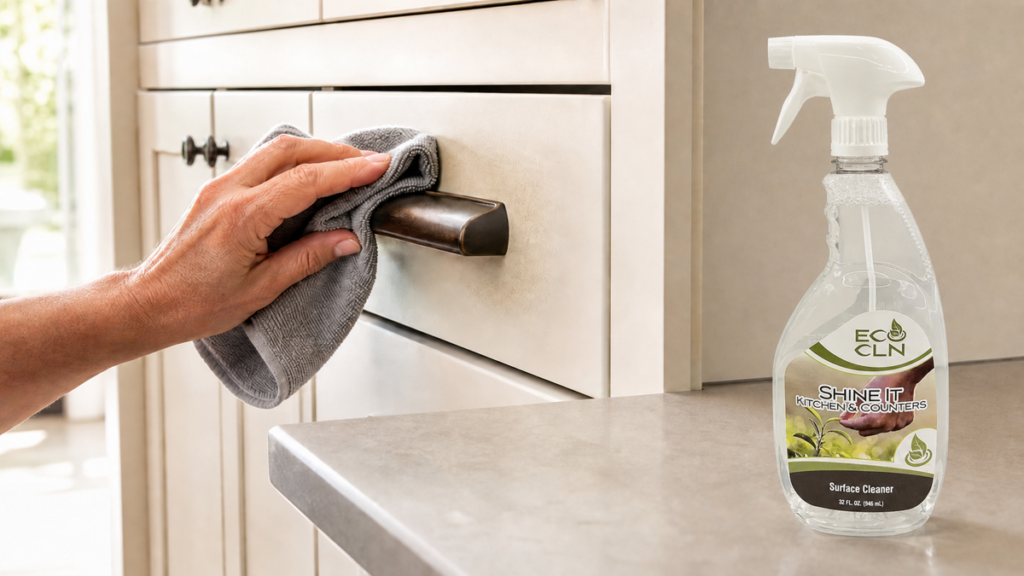
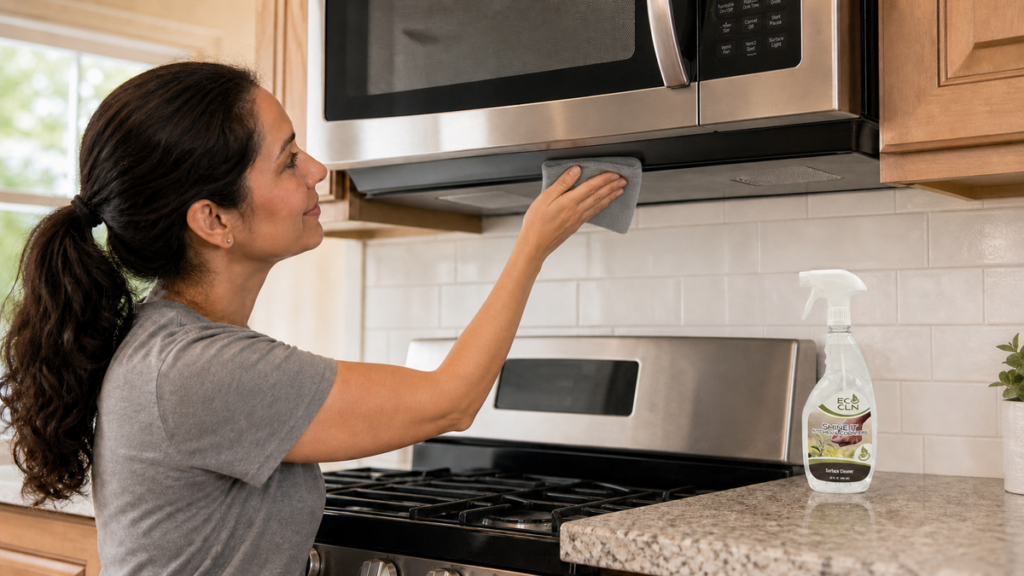
Eco Cln Shine-It is the kitchen-focused Eco Cln product for compatible tables, counters, grease spots, cooking residue, fingerprints, stainless steel, appliance exteriors, cabinet fronts, handles, and washable kitchen surfaces. The table material always gets the final say.
FAQ
Can I use Shine-It on a kitchen table?
The current Eco Cln page lists tables and washable kitchen surfaces. Check the table material, manufacturer instructions, and a hidden-area test first.
How do I remove dried syrup without scratching the table?
Use controlled moisture to soften it, then wipe with a soft microfiber cloth. Avoid hard scraping or abrasive pads.
Why is my table still sticky after cleaning?
Sugar, grease, or cleaner residue may remain. If the finish itself feels gummy or transfers to the cloth, stop cleaning and investigate finish damage.
Can I spray cleaner directly on wood veneer?
Cloth-first application is safer around veneer edges, seams, and joints. Follow the furniture manufacturer’s care instructions.
What if the table is laminate?
Use a nonabrasive damp cloth and compatible mild cleaner, but avoid flooding seams or exposed substrate edges.
The Bottom Line
Identify the tabletop material, finish, seams, edges, and manufacturer care instructions before treating the sticky patch. Lift crumbs and dried solids with a soft brush, dry cloth, or dull plastic edge so grit is not dragged under the wet cloth. On a compatible washable kitchen table, hidden-area test Shine-It and let the test dry before broadening the treatment. Put a controlled amount on microfiber, hold it against dried syrup, sauce, juice, or food film briefly to soften the residue, then wipe gently with the wood grain or surface pattern. Rotate to a clean cloth face as sugar, grease, and cleaner film transfer; repeated light passes are safer than abrasive scrubbing or flooding the area. If the surface maker allows it, use a lightly damp clean-cloth follow-up to remove remaining residue, then dry the tabletop, leaf seams, veneer edges, laminate joints, and hardware immediately. Use the material-specific method for unfinished or oil-finished wood, natural stone, specialty coatings, and mixed-material tables rather than assuming one kitchen cleaner fits every finish. Recheck only after the surface is dry: removable soil should no longer feel tacky. If the finish itself becomes gummy, changes sheen, transfers color, or softens under the cloth, stop cleaning because lacquer, wax, polish, adhesive, or another coating may be failing. Shine-It can remove compatible kitchen residue; it cannot repair damaged veneer, swollen substrate, worn finish, or failed coating.
Continue with this related Eco Cln guide: Kitchen surface cleaner guide.
For sticky food film and everyday kitchen residue on compatible washable tables, Eco Cln Shine-It gives you a focused kitchen-cleaning option. Use controlled moisture, protect seams and finishes, and dry the tabletop after cleaning.