How to Clean a Greasy Kitchen Backsplash Without Leaving Residue

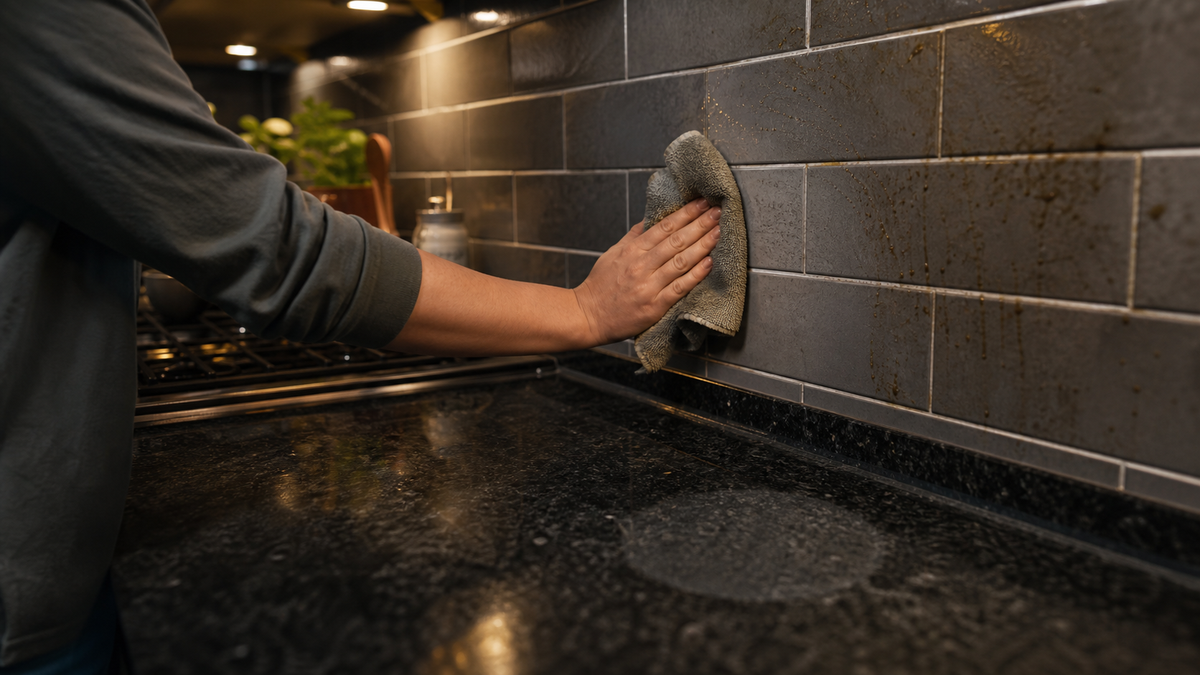
Quick Answer
To clean a greasy kitchen backsplash without leaving residue, first identify the material. On a washable backsplash that allows your cleaner, remove dry crumbs and grit, then use Eco Cln Shine-It as directed in small sections with a clean microfiber cloth. Give greasy film time to loosen, wipe it away, then use a separate clean cloth for the finishing pass and dry the surface so leftover cleaner does not become a new haze.
Do not assume ceramic tile, glass tile, painted backsplash panels, stainless steel, quartz, marble, limestone, and other natural stone all have the same care rules. The backsplash material decides what is safe.
Why Backsplashes Get Greasy
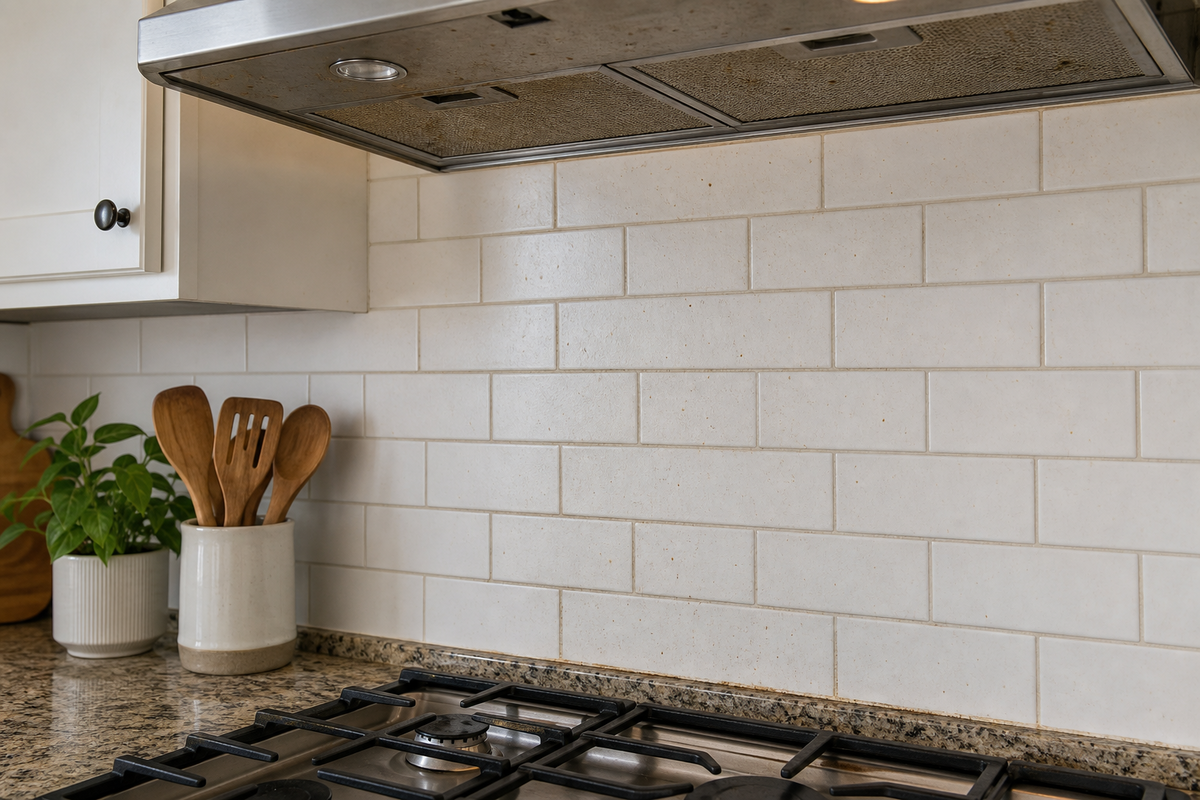
Cooking releases tiny droplets and vapors that settle on the wall behind and beside the range. Oil combines with steam, dust, food splatter, and repeated hand contact to form a thin film. Because that film is transparent at first, it can build for weeks before the backsplash suddenly looks dull or feels sticky.
The areas closest to frying pans, burners, countertop appliances, and the bottom of the range hood usually collect the most residue.
Step 1: Identify the Backsplash Material
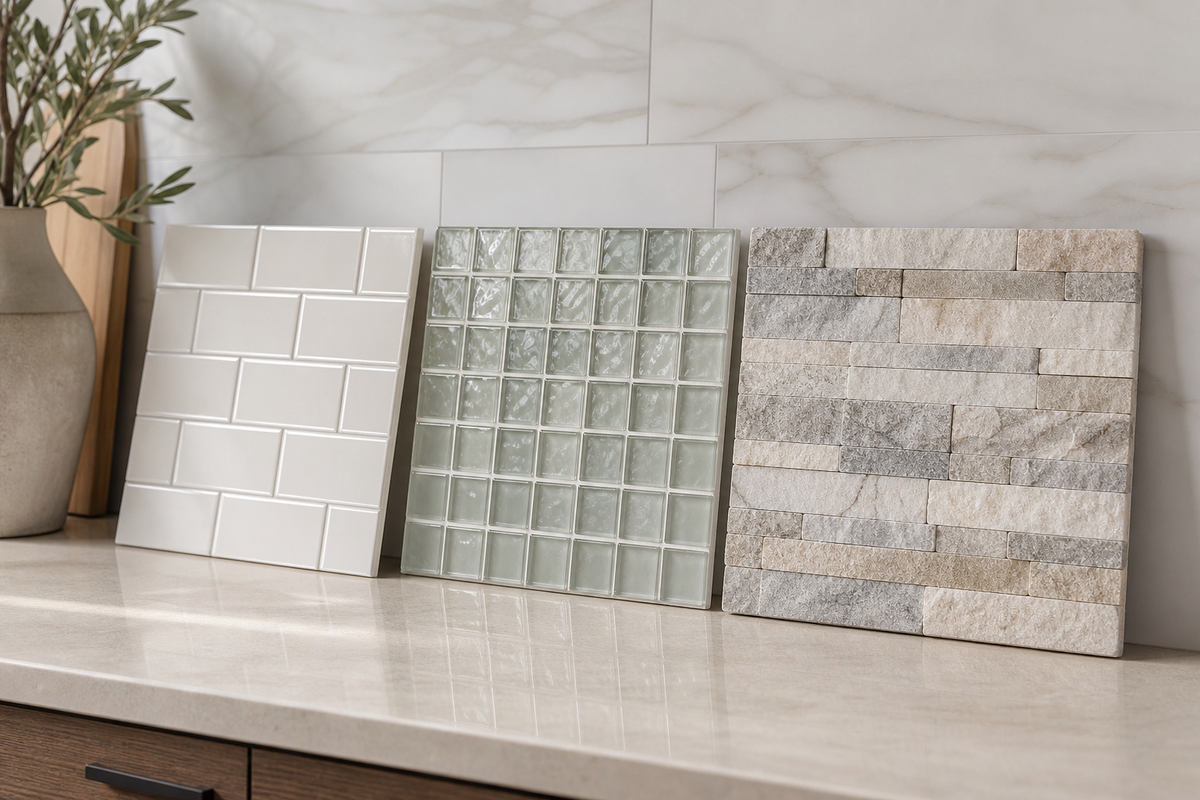
Glazed ceramic, porcelain, and many glass tiles are relatively easy to wipe, but specialty finishes and natural stone need different care. Natural Stone Institute guidance recommends using products appropriate for the specific stone and avoiding acidic cleaners on sensitive stone such as marble, limestone, travertine, and onyx.
If you have natural stone, an unusual tile finish, hand-painted tile, unsealed grout, or a coated panel, follow the material manufacturer before using a generalized kitchen cleaner.
Step 2: Remove Dry Grit First
Wipe or vacuum loose crumbs and grit from the backsplash ledge, grout joints, and counter seam before you introduce liquid. Even a soft cloth can create fine scratches if hard debris is trapped underneath it.
Step 3: Protect the Counter and Work in Small Sections
Place a clean towel along the countertop edge if runoff could reach a sensitive counter material, caulk joint, outlet, or appliance. Work on a manageable section instead of spraying an entire wall and letting product dry while you catch up.
Step 4: Use the Right Amount of Kitchen Cleaner
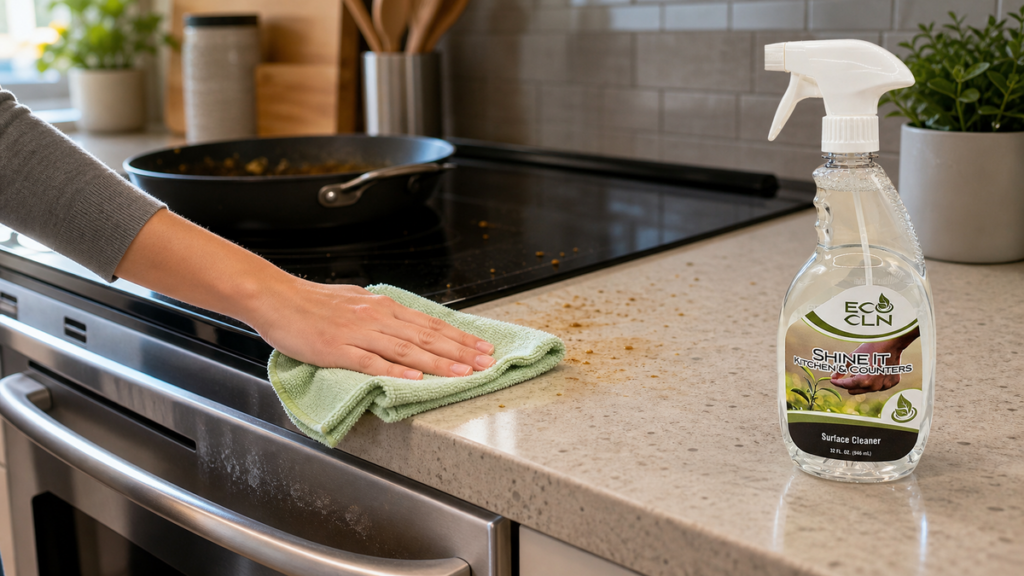
Shine-It is Eco Cln’s ready-to-use kitchen surface cleaner for grease spots, cooking residue, counters, appliance smudges, cabinet fronts, backsplashes, and other washable kitchen areas when used as directed. Apply only enough to wet the greasy film.
More product does not automatically mean a cleaner finish. An oversprayed backsplash can leave a visible film if the liquid dries before it is wiped away.
Step 5: Give Grease a Moment to Loosen
Follow the product directions for contact time. On a heavy greasy section, immediate aggressive scrubbing can be harder on the surface than allowing the cleaner to loosen the film first.
Step 6: Wipe With a Clean Non-Abrasive Cloth
Use a clean microfiber cloth or other non-abrasive tool approved for the backsplash. Wipe with overlapping passes and rotate to a clean part of the cloth as it loads with grease. If the cloth feels oily, replace it rather than redistributing the same film across the tile.
For textured tile or grout, use only a brush or tool appropriate for that material. Avoid steel wool and rough scouring pads as a default approach.
Step 7: Do the Residue-Removal Pass
This is the step many people skip. Once the grease has been lifted, use a second clean cloth, lightly dampened when the surface instructions allow, to pick up remaining cleaner and loosened residue. Then dry the backsplash with a fresh cloth.
If the backsplash looks clear while wet but hazy after it dries, residue is a likely suspect. Switch to fresh cloths and use less product on the next pass.
What About Grout Lines?
Grout can hold grease differently than glazed tile. Do not automatically attack grout with the harshest brush or chemical in the cabinet. Sealed grout, unsealed grout, colored grout, epoxy grout, and damaged grout can respond differently. Follow the tile/grout care instructions and test a small area first.
What If the Backsplash Is Natural Stone?
Pause before using a general kitchen cleaner. Identify the stone and the sealer, then use a cleaner approved for that stone. Natural Stone Institute guidance recommends neutral cleaning products for routine stone care and warns that acids can etch acid-sensitive stones. When in doubt, a stone fabricator or installer is the better source than a generic internet recipe.
Common Backsplash-Cleaning Mistakes
Common mistakes include spraying an entire wall at once, letting cleaner dry on the surface, using one grease-loaded cloth for the whole backsplash, scrubbing with abrasive pads, ignoring natural-stone restrictions, soaking electrical outlets or seams, and leaving the final residue-removal pass out of the process.
How to Keep Grease From Building Up
Wipe fresh splatter after cooking once the surface is safe to touch. Use the range hood when cooking and maintain its filters according to the appliance directions. Clean the high-splatter zones more often than the decorative sections far from the stove.
For the rest of the kitchen, pair this routine with our kitchen surface cleaner guide and greasy kitchen counters guide.
FAQ
Can I use a degreaser on every backsplash?
No. The material matters. Natural stone, specialty coatings, hand-painted tile, metal finishes, and some grout systems may require specific products.
Why does my backsplash look hazy after I clean it?
Too much product, a dirty cloth, or remaining cleaner can dry into a film. Use fresh cloths and a controlled finishing pass.
Should I scrub grease immediately?
Not necessarily. Let the approved cleaner work for the directed contact time, then wipe with a non-abrasive tool.
Can I use Shine-It on natural stone?
Do not assume so. Natural stone needs material-specific care. Follow the stone manufacturer, installer, or Natural Stone Institute guidance.
How often should I clean the backsplash?
High-splatter areas benefit from frequent light cleaning so grease does not cure into a sticky layer. Lower-use areas can be cleaned less often.
The Bottom Line
To clean a greasy kitchen backsplash without leaving residue, first identify the material. Keep moisture and pressure controlled, follow the material’s care instructions and stop if the finish or fabric reacts poorly.
For additional material or process limits, review the Natural Stone Institute care guidance.
For grease and cooking residue on compatible washable kitchen surfaces, Eco Cln Shine-It is the focused kitchen cleaner in the Eco Cln lineup.