How to Clean Window Tracks, Frames, and Sills Without Making Mud


If you want to know how to clean window tracks without creating a gray-brown paste, start dry. Vacuum or brush out dust, grit, hair, and insect debris before using a damp cloth. Then clean the track channels, frame, and sill with the least moisture the material and window manufacturer allow.
That order matters. Spray cleaner onto a dusty track too soon and the loose soil becomes mud that gets pushed into corners, around brush seals, and along the rail. The method below shows how to clean window tracks while keeping the mess controlled and separating washable vinyl or aluminum from painted, sealed-wood, unfinished-wood, and unknown finishes.
Quick answer: how to clean window tracks without making mud
- Open the window and remove the screen only if its design allows safe removal.
- Use a crevice vacuum and soft detail brush on the lower track, rail edges, corners, and sill before adding liquid.
- Lift remaining grit with a dry microfiber cloth or cotton swab.
- Use a barely damp cloth for residue, applying cleaner to the cloth instead of flooding the track.
- Treat painted or wood frames more cautiously than washable vinyl or aluminum, and dry every joint promptly.
- Leave glass until last so track debris does not land on a freshly polished pane.
Why window-track dirt turns into mud
Window tracks collect more than ordinary room dust. Airflow carries in pollen and fine outdoor grit. Screens shed dust. Hair, lint, dead insects, and tiny leaf fragments settle into the lower channel. Condensation or wind-driven rain can add moisture, while cooking film or fingerprints may leave a sticky layer on nearby frames and sills.
Dry debris is easy to lift. Once it is soaked, however, it clings to rail edges and packs into narrow corners. Overspraying can also send dirty liquid toward frame joints, weatherstripping, unfinished wood, walls, or drainage openings. More cleaner does not create more access; it mostly creates wetter dirt with ambitions. That is why any sound guide on how to clean window tracks starts with dry debris.
What You Need to Clean Window Tracks, Frames, and Sills
- Vacuum with a crevice attachment
- Soft detail brush or clean paintbrush
- Two or three microfiber cloths
- Cotton swabs for narrow corners
- Small bowl of clean water, if the frame material permits damp cleaning
- Drop cloth or old towel for the sill and floor below
- Manufacturer-approved mild cleaner, when plain damp wiping is not enough
Avoid abrasive scrub pads, metal picks, razor blades, and stiff wire brushes. They can scratch glass, damage coatings, tear brush seals, or mark vinyl, aluminum, and painted finishes. Steam cleaners and pressure washing can also force moisture where it does not belong unless the window manufacturer specifically permits them.
How to clean window tracks, frames, and sills step by step
1. Identify the frame and finish
Check whether the visible frame and sill are vinyl, aluminum, fiberglass, painted material, sealed wood, unfinished wood, or a specialty-coated surface. Before deciding how to clean window tracks, use the window maker’s care instructions as the authority. A manufacturer example is Andersen’s window-cleaning guidance; the directions for your own window still control. When the material or finish is unknown, test a hidden area and default to the least-wet method.
Older painted windows need extra caution. If paint is peeling, chalking, or deteriorating—especially in a pre-1978 home—do not sand, scrape, or aggressively brush it during routine cleaning. Use EPA lead-safe guidance or a qualified professional before disturbing suspect paint.
2. Open the window and control the work area
Place a towel below the sill to catch loose dirt. Unlock and open the sash only as far as needed for safe access. Remove the screen if the window design allows it, but do not force bent clips, brittle tabs, or unfamiliar hardware.
If the window is above a staircase, high exterior wall, or awkward ledge, clean only what you can reach safely from the room. A clean track is not worth a ladder audition.
3. Vacuum the lower track and rail edges while they are dry
When learning how to clean window tracks without mud, run the crevice attachment slowly along the lower channel, both sides of the raised rail, the end stops, and the inside corners. Keep the nozzle close enough to lift debris without striking brush seals, weatherstripping, or moving hardware.
For sliding windows, pay attention to the path where rollers or guides move. Do not lubricate hardware automatically; some window systems require a specific product or no added lubricant at all.
4. Brush dirt out of corners and seams
Use a soft detail brush to pull compacted dust away from corners, rail edges, screw heads, and the boundary between the track and frame. Hold the vacuum nozzle nearby so loosened debris is captured instead of relocated to the next channel.
Brush gently around fuzzy weatherstripping and flexible seals. If they are loose, torn, or brittle, cleaning harder will not repair them.
5. Lift the last dry grit with a cloth or cotton swab
Fold a dry microfiber cloth over a fingertip or a blunt plastic edge and wipe along the channel. Use cotton swabs for tight corners, changing them as they become dirty. Do not force swabs, brushes, or picks into drainage or weep openings.
Visible drainage openings should remain free of loose debris, but their design varies. Follow the manufacturer’s instructions rather than enlarging, plugging, or aggressively probing them.
6. Use minimal moisture on the track
If sticky residue remains, how to clean window tracks changes only after the material permits damp cleaning: moisten a clean cloth and wring it thoroughly. Wipe a small section, then immediately follow with a dry cloth. Apply any compatible cleaner to the cloth or swab—not as a puddle in the track.
Rinse or replace the cloth before it becomes gray. Otherwise, you are painting the grit back onto the rail with admirable consistency.
7. Clean the frame and sill according to the material
Washable vinyl or aluminum frames may tolerate a damp microfiber wipe when their manufacturer permits it. Painted frames, sealed wood, unfinished wood, laminate trim, and specialty finishes need more caution: use less moisture, avoid soaking joints, test first, and dry immediately.
Work from the upper frame down to the sill so drips do not cross a finished section. Pay attention to sash locks, handles, lower corners, and the seam where the sill meets interior trim, but do not saturate hardware or caulk lines.
8. Dry the track before closing the window
Use a clean microfiber cloth to dry the channel, rail, corners, frame joints, and sill. Leave the sash open briefly if conditions allow so hidden dampness can evaporate. Reinstall a completely dry screen according to its hardware design.
Open and close the window gently to confirm that the track is free of loose grit. If movement remains rough, do not keep adding cleaner or lubricant; worn rollers, bent tracks, damaged guides, or hardware problems may need service.
9. Clean the glass last
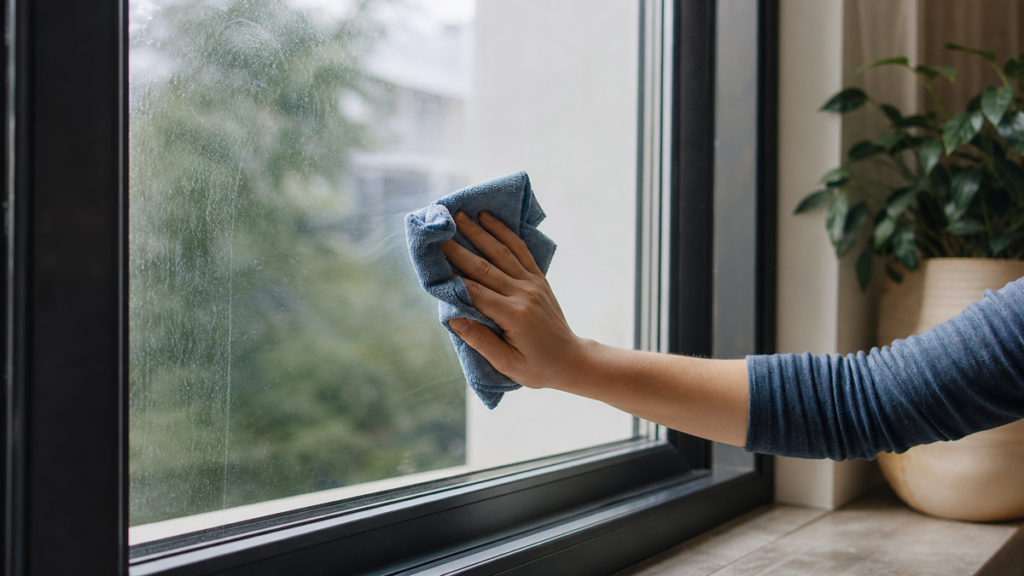
Once the track, frame, and sill are dry, clean the pane. Applying glass cleaner to a microfiber cloth instead of soaking the entire window helps keep liquid off wood, painted trim, specialty coatings, and freshly cleaned channels.
For a full glass-cleaning method, use the ammonia-free glass cleaner guide. Finishing with the pane prevents track dust and brush debris from undoing your streak-free work five minutes later.
Material adjustments that matter
Vinyl and aluminum window tracks
How to clean window tracks made of vinyl or aluminum still begins with vacuuming; then use a soft damp cloth only as allowed by the manufacturer. Avoid abrasive powders and aggressive scouring, which can leave visible scratches or dull the finish. Keep liquid away from wall cavities and frame joints.
Painted frames and sills
Test a hidden spot before using any cleaner. Stop if color transfers to the cloth, the finish softens, or paint begins to lift. Cleaning cannot restore peeling paint or failed adhesion.
Sealed and unfinished wood
Use a dry brush and vacuum as the default. On sealed wood, use only a barely damp cloth when the finish and manufacturer allow it, then dry immediately. Do not wet-clean unfinished wood as if it were vinyl; moisture can raise grain, stain the wood, or enter joints.
Tinted glass and specialty coatings
Keep track and frame products off the pane unless the glass manufacturer permits them. Tints, films, low-maintenance coatings, and specialty glazing may have their own cleaner restrictions.
Where Eco Cln products fit
After the dry grit is gone, Eco Cln Citrus Concentrate may fit compatible washable frames and sills when both the current product label and the window manufacturer permit its use. Use the current light-duty or job-appropriate dilution, apply it through a cloth rather than flooding the channel, test a hidden area, and dry the surface promptly. The Citrus Concentrate dilution guide should remain the authority for current mixing directions.
For the final glass pass, Eco Cln See-Clear is designed for windows, mirrors, and shiny surfaces. Spray it onto a clean microfiber cloth, wipe the pane, and buff dry. See-Clear belongs on the glass step; it is not a substitute for vacuuming grit from the track.
Common window-cleaning mistakes
- Spraying before vacuuming: this turns loose dust and pollen into paste.
- Flooding the lower channel: excess liquid can spread soil and reach joints, trim, weatherstripping, or hidden cavities.
- Using one cloth for everything: a dirty track cloth will streak the frame and glass.
- Scraping corners with metal: screwdrivers, razor blades, and stiff picks can scratch or puncture window components.
- Treating every frame like vinyl: painted, wood, coated, and unknown finishes require different moisture and product limits.
- Ignoring the cause of recurring dampness: repeated moisture may point to condensation, drainage trouble, failed caulk, damaged seals, or water intrusion.
For a broader room-by-room dust routine, see the Sensitive Home Cleaning Checklist.
When cleaning is not enough
Surface cleaning will not fix rotted wood, deteriorating paint, damaged weatherstripping, failed insulated-glass seals, bent rails, worn rollers, or water entering around the window opening. Recurring black or green growth, persistent musty odor, swelling, staining, or soft wood can indicate an ongoing moisture problem that needs diagnosis.
Stop and get product-specific guidance or qualified help when the window will not operate normally, the finish is failing, suspect old paint would be disturbed, or water returns after the track is dried. The goal is a clean window—not ignoring signs of a bigger moisture or maintenance problem.
Frequently asked questions
What is the best way to clean very dirty window tracks?
If you are deciding how to clean window tracks that are very dirty, remove loose debris with a crevice vacuum and soft brush first. Then use a barely damp cloth on compatible materials, working in small sections and drying each section before moving on.
Can I clean window tracks without a vacuum?
Yes. Use a soft brush to sweep debris onto a piece of paper or into a small dustpan, then wipe with a dry microfiber cloth. Keep the dirt dry until most of it has been removed.
Should I use vinegar and baking soda in window tracks?
Not as a universal first step. Window tracks, seals, finishes, and nearby stone or wood vary, so use the window maker’s instructions and a compatible mild method instead of assuming one household mixture fits every assembly.
How do I clean wooden window sills?
Vacuum and dry-dust first. If the wood is sealed and its care instructions allow damp cleaning, use a well-wrung cloth and dry immediately; avoid soaking joints or wet-cleaning unfinished wood.
How often should window tracks be cleaned?
Inspect them seasonally and clean when grit begins to collect or operation feels rough. Homes near busy roads, construction, farms, coastlines, or heavy pollen may need dry vacuuming more often.
Why do my window tracks get dirty again so quickly?
Open windows, screens, airflow, pets, nearby roads, pollen, and outdoor dust continually feed the track. Recurring wet dirt may also signal condensation, blocked drainage, failed seals, or water intrusion that cleaning alone will not correct.
The bottom line
Knowing how to clean window tracks in the right order is simple: remove dry debris first, use minimal moisture second, dry the channels and joints, and polish the glass last. That order keeps grit from becoming mud and gives you better control around rail edges, weatherstripping, painted finishes, and wood.
Use Citrus Concentrate only where the current label and window manufacturer allow it, and reserve See-Clear for the final glass pass. If moisture, failing finishes, or rough operation keeps returning, stop treating the symptom and investigate the window itself.