How to Clean Dirty Baseboards Without Damaging the Paint

Quick Answer
To clean dirty painted baseboards without damaging the finish, start dry. Vacuum or dust the top edge and floor seam first, then spot-test a lightly damp microfiber cloth and the cleaner you plan to use in a hidden location. For compatible washable painted trim, Eco Cln Citrus Concentrate can be mixed at the appropriate dilution and used as directed. Work in small sections, avoid soaking seams, and dry the trim after cleaning.
Painted baseboards are easy to over-clean because scuff marks tempt you to scrub harder. If a mark is actually paint damage, rubbing will not repair it and may make the worn area larger.
Why Baseboards Get So Dirty
Baseboards sit in the dirt highway of the house. Dust settles on the top ledge. Vacuum exhaust and air movement push hair toward the wall. Shoes, bags, toys, vacuum heads, pets, and mops touch the face. Floor-cleaning solution can splash onto the lower edge and dry into a line.
The result is usually a combination of dry dust, sticky grime, scuffs, and old residue, so one aggressive wet wipe is rarely the best first step.
Step 1: Identify the Finish
Painted wood, painted MDF, stained wood, PVC trim, and unfinished material do not respond the same way. This article focuses on washable painted baseboards. If the trim is stained, unfinished, specialty-coated, antique, or damaged, follow the finish or manufacturer guidance instead.
Sherwin-Williams advises checking manufacturer cleaning instructions before scrubbing painted surfaces because cleaning can affect the finish.
Step 2: Remove Dry Dust First
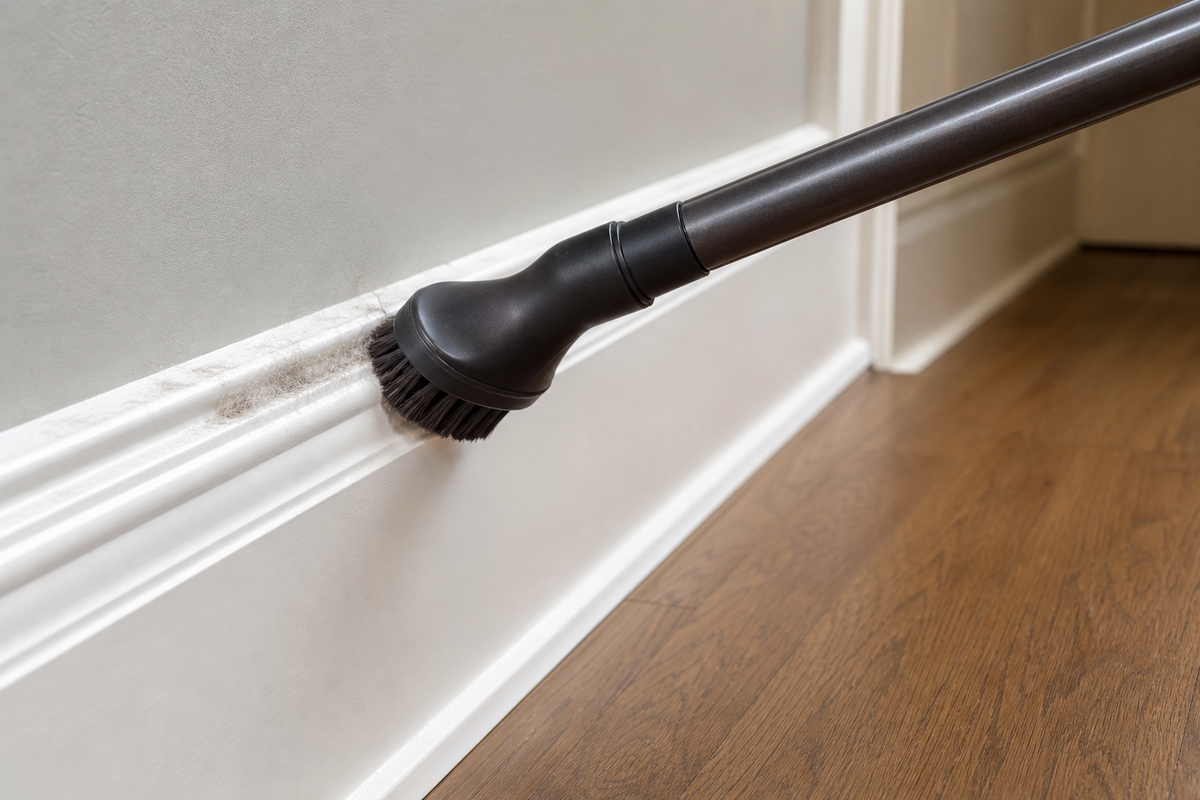
Use a vacuum brush, dry microfiber cloth, or soft duster along the top edge, face, corners, and floor seam. Removing dry debris first keeps it from turning into gray paste when you add moisture.
Step 3: Spot-Test Before Cleaning the Whole Room
Choose a hidden spot behind furniture or near a closet. Lightly dampen a cloth with the planned cleaning solution and wipe a small area. Look for color transfer, dulling, softening, or a change in sheen. If the finish changes, stop.
Step 4: Start With the Lightest Effective Citrus Dilution
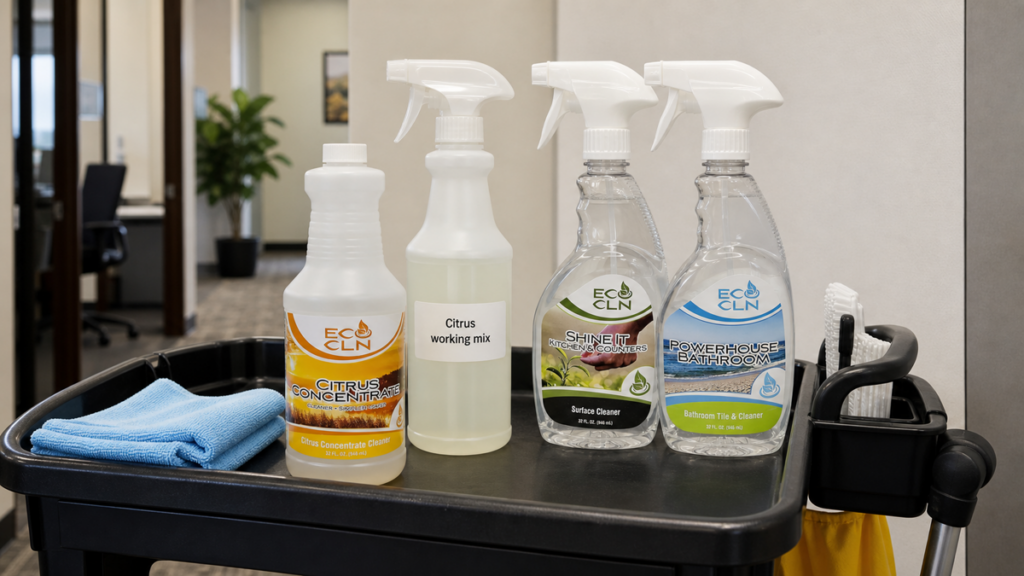
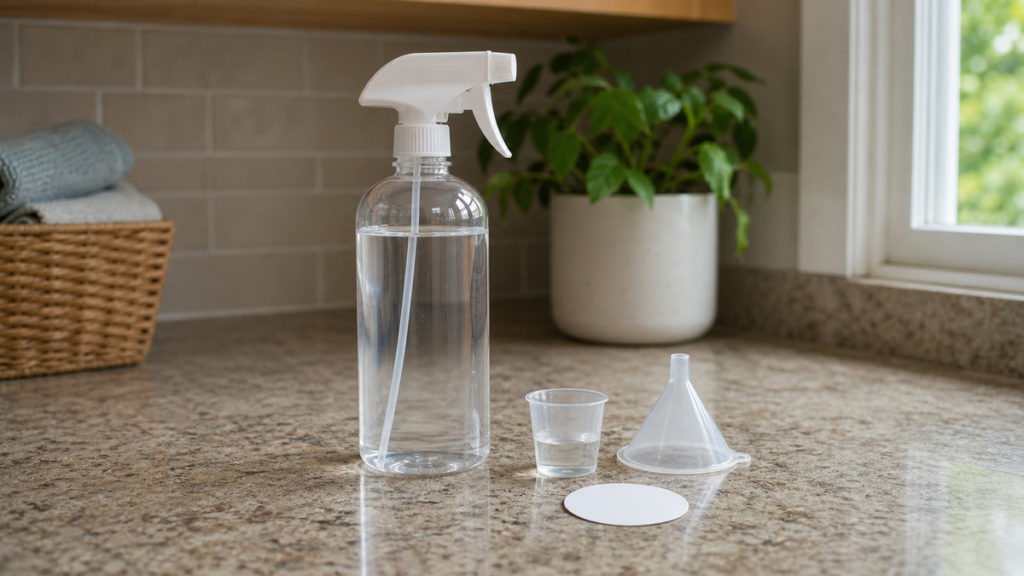
Eco Cln’s current Citrus Concentrate dilution guide lists 1 ounce per 32 ounces of water for light-duty cleaning, 2 ounces per 32 ounces for all-purpose cleaning, and 4 ounces per 32 ounces for heavy-duty cleaning. For ordinary dust and light grime on compatible painted baseboards, start with the lightest strength that fits the job rather than jumping straight to the strongest mix.
The finish still controls the decision. Do not use a dilution simply because the baseboard is dirty if the paint or trim manufacturer says not to wet-clean it.
Step 5: Apply Cleaner to the Cloth for Better Control
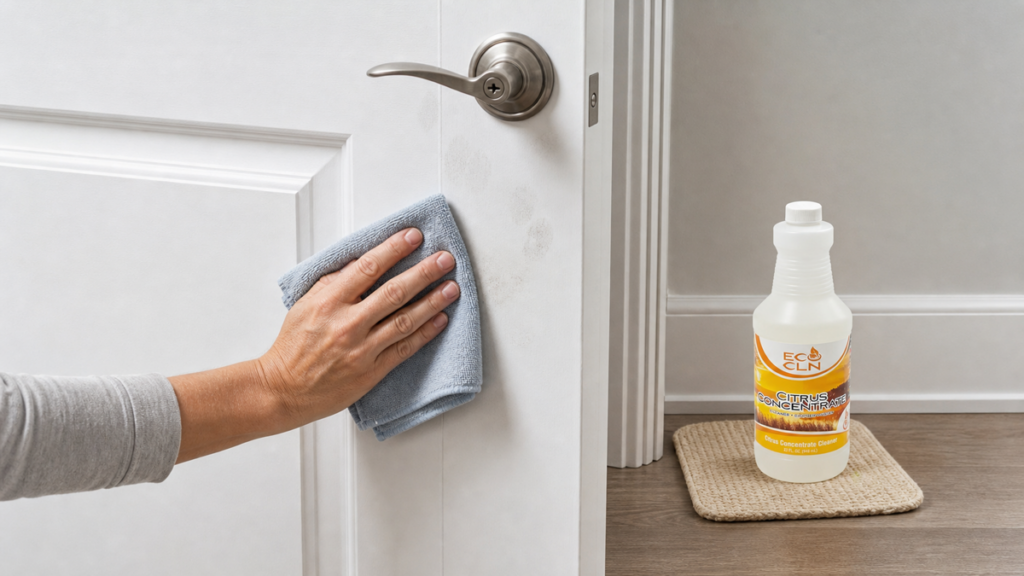
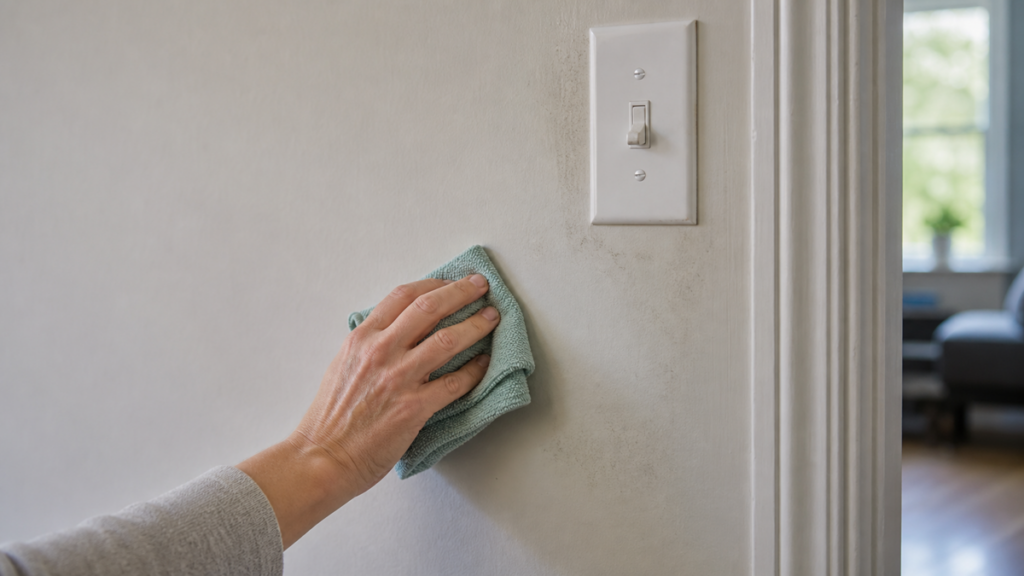
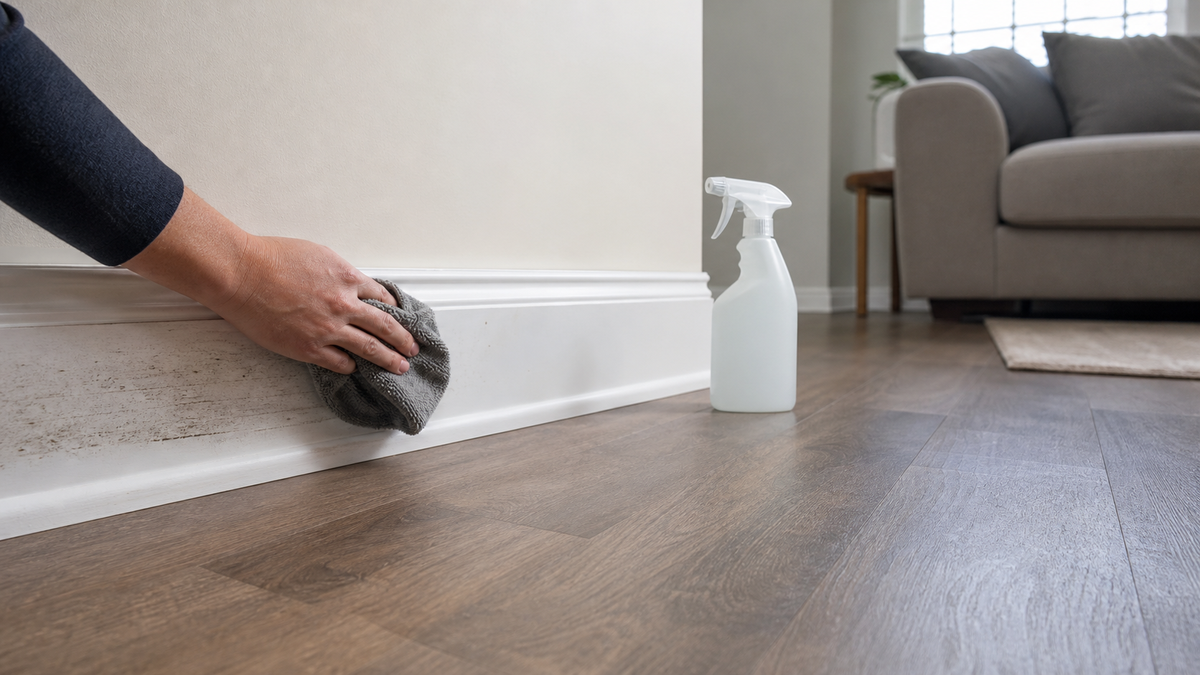
Instead of heavily spraying the wall-floor seam, lightly dampen a clean microfiber cloth. That gives you more control around chipped paint, caulk joints, flooring edges, electrical cords, and unfinished cut ends.
Step 6: Wipe Top to Bottom in Short Sections
Clean the top edge first, then the face, then the lower edge. Fold the cloth frequently so you are not dragging gritty residue across the paint. In hallways and kitchens, switch cloths sooner because grease and floor residue can load the fabric quickly.
Step 7: Treat Scuffs Like Scuffs, Not Dirt
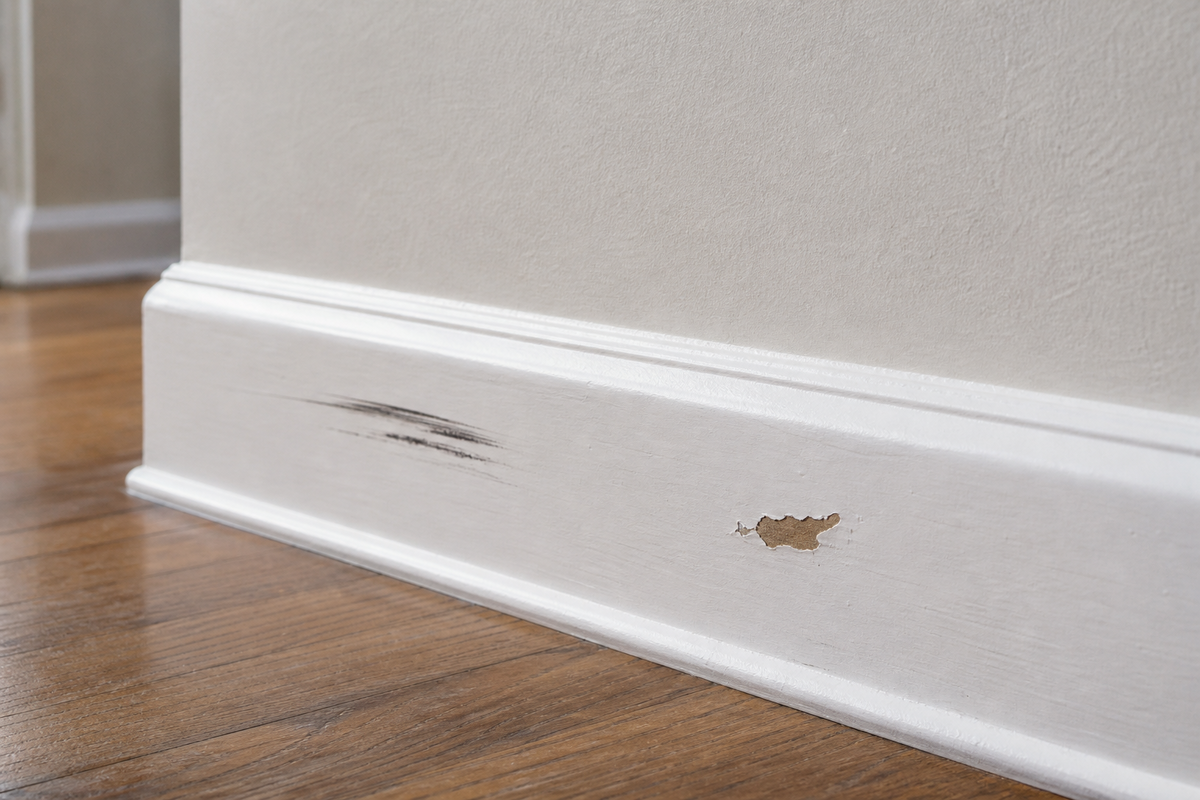
A gray shoe mark may lift with a gentle wipe. A chip, gouge, worn corner, or paint transfer from furniture may not. If repeated gentle cleaning does not change the mark, inspect it closely before reaching for an abrasive pad.
Rough melamine pads and aggressive scrubbing can change the sheen of some paints. A cleaner cannot restore missing paint.
Step 8: Dry the Baseboard and Floor Edge
Finish with a clean dry cloth. Pay attention to corners, caulk joints, and the bottom edge where liquid can collect. Drying helps reveal remaining dirt and keeps moisture from sitting against MDF, wood, or flooring seams.
Common Baseboard-Cleaning Mistakes
Common mistakes include skipping dry dusting, spraying heavily into the wall-floor seam, using the strongest cleaner first, scrubbing worn paint as if it were dirt, cleaning with a gritty sponge, and leaving dampness along the bottom edge.
How Often Should You Clean Baseboards?
High-traffic hallways, kitchens, entryways, and pet areas usually need more attention than bedrooms or formal rooms. A quick dry dusting between deeper cleanings prevents the top ledge from becoming a sticky dust shelf.
For other compatible whole-home surfaces, see our Citrus Concentrate all-purpose uses.
FAQ
Can I use all-purpose cleaner on painted baseboards?
Only if the paint/trim finish allows damp cleaning and the cleaner is appropriate for that surface. Spot-test first.
Why do my baseboards look dull after cleaning?
Too much scrubbing, an abrasive tool, cleaner residue, or an already-worn paint finish can change the appearance.
Can I use the strongest Citrus dilution on every scuff?
No. Start with the lightest effective strength and follow the surface and product directions. Stronger is not automatically safer or better.
Should I spray cleaner directly on the baseboard?
Applying cleaner to the cloth gives better control around seams, chipped paint, flooring edges, and caulk joints.
What if the mark will not come off?
Stop before scrubbing harder. It may be a chip, gouge, paint transfer, or permanent finish damage rather than removable soil.
The Bottom Line
To clean dirty painted baseboards without damaging the finish, start dry. Keep moisture and pressure controlled, follow the material’s care instructions and stop if the finish or fabric reacts poorly.
For additional material or process limits, review the Sherwin-Williams painted-surface guidance.
For compatible washable baseboards, trim, and everyday whole-home grime, Eco Cln Citrus Concentrate gives you dilution flexibility so you can match the mix to the job instead of using one fixed strength everywhere.