How to Clean Dusty Blinds Without Making a Bigger Mess

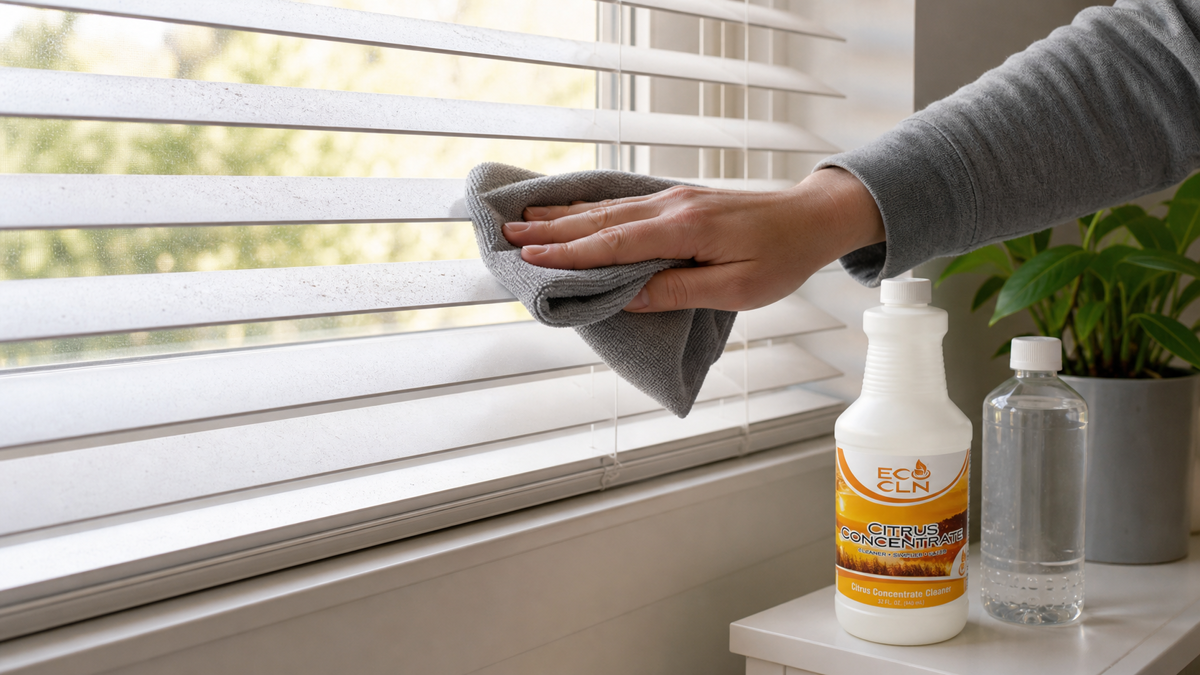
Quick Answer
Lower the blind, tilt slats so you can reach the overlap, and remove loose dust with a microfiber duster or vacuum brush attachment. Clean from the top downward and support slats so they do not bend.
For washable synthetic blinds such as compatible vinyl, metal, or faux-wood materials, a very light mix of Eco Cln Citrus Concentrate may be appropriate only if the blind manufacturer allows wet cleaning. Start with the light-duty ratio: 1 oz Citrus per quart of water. Apply to the cloth, not the blind, and dry each slat.
Hunter Douglas recommends routine dusting/vacuuming for many blinds and warns that real wood should be protected from excess moisture. Review Hunter Douglas blind care.
Why Blinds Turn Into Mud When You Clean Them Wrong
Blind slats collect dry dust, pollen, pet hair, kitchen aerosol, and window-track debris. If you spray liquid before removing the loose dust, that layer becomes gray paste.
Blinds also have cords, ladders, tapes, finishes, and lightweight slats that can be damaged by aggressive wiping.
Step 1: Identify the Blind Material
Determine whether the blind is real wood, faux wood, vinyl, aluminum/metal, fabric-covered, or another specialty material.
Use the product label or manufacturer care instructions. Real wood and fabric treatments often have stricter moisture restrictions than vinyl or metal.
Step 2: Lower and Tilt the Slats Carefully
Lower the blind fully if the product allows it. Tilt slats almost closed rather than locking them tightly together so dust at overlaps remains accessible.
Support wide or delicate slats with one hand while wiping to prevent bending or cracking.
Step 3: Dust or Vacuum Before Any Wet Cleaning

Use a clean microfiber duster, dusting mitt, or vacuum brush attachment. Start at the top and work downward so falling dust lands on slats you have not cleaned yet.
Hunter Douglas lists soft-cloth dusting and brush-attachment vacuuming as primary maintenance methods for several blind types. See Hunter Douglas cleaning guidance.
Step 4: Decide Whether Wet Cleaning Is Allowed
Real wood blinds should generally stay away from high moisture unless their manufacturer gives a specific method. Fabric tapes and decorative components may also react differently than the slats.
For washable synthetic or metal blinds, proceed only if the blind maker permits a damp-cloth method.
Step 5: Use Citrus Only on Compatible Washable Blinds
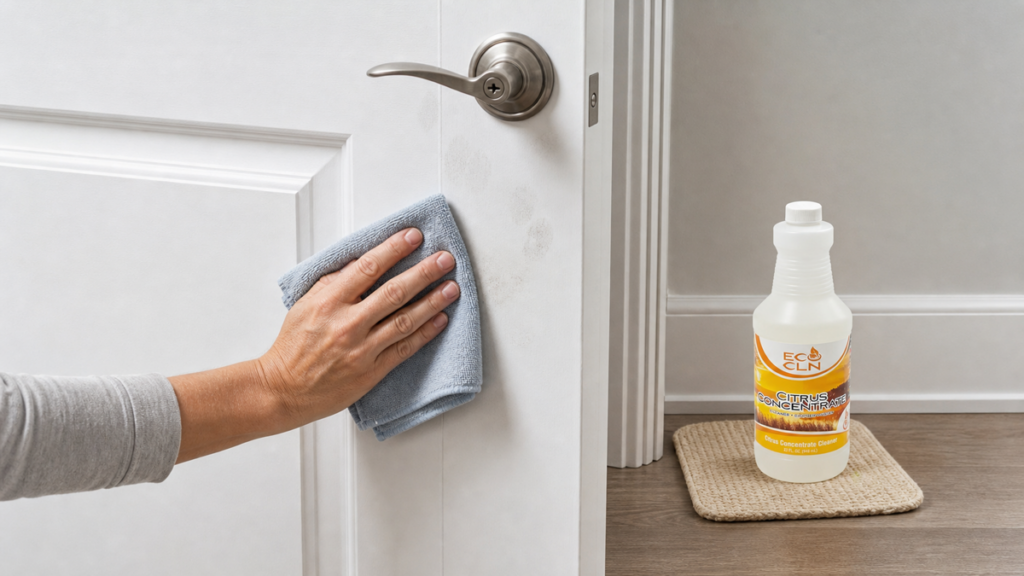
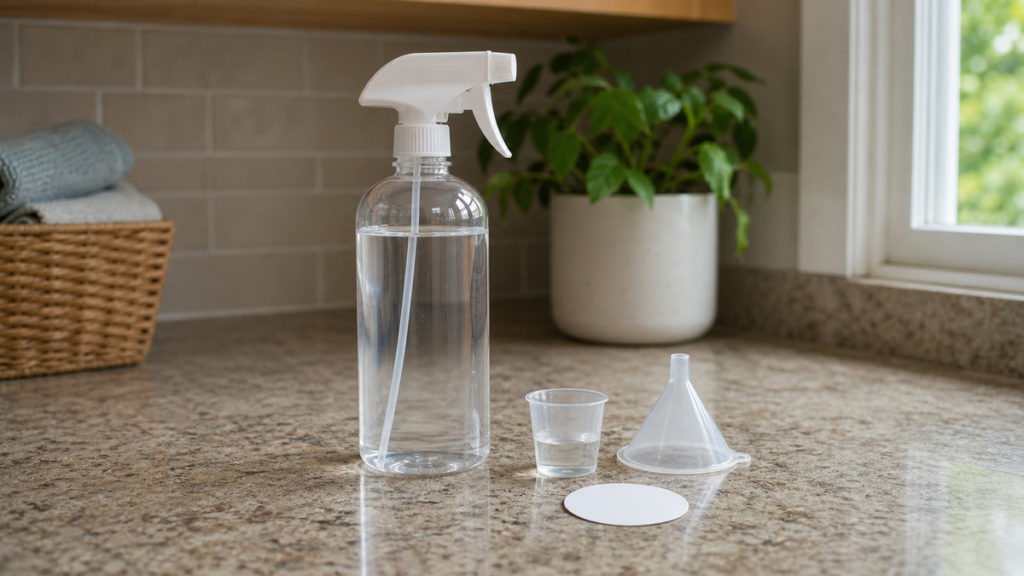
If the blind material permits a household cleaner, use the current light-duty Citrus mix – 1 oz per quart of water – and test a hidden section. See the current Citrus dilution guide.
Put the diluted cleaner on microfiber and wring it well. Do not spray the blind, headrail, cord mechanism, motor, remote-control component, or window glass.
Step 6: Wipe One Section at a Time
Wipe each slat with light pressure, supporting the slat as needed. Change cloth faces as they become dusty or greasy.
For kitchen blinds with oily film, two light passes may be safer than one wet aggressive wipe.
Step 7: Dry the Slats and Hardware
Follow with a clean dry cloth, especially on metal and faux-wood finishes where water spotting may show.
Keep moisture out of headrails, motors, lift mechanisms, cords, and wood end grain.
What About Window Cleaner Overspray?

Hunter Douglas recommends spraying glass cleaner on the cloth rather than directly at the window when blinds are nearby, helping prevent splatter on blind finishes. Review blind/window cleaning advice.
Clean the window separately after the blind is out of the way or protected.
Common Blind-Cleaning Mistakes
- Spraying liquid cleaner onto a thick layer of dry dust.
- Using the same wet cloth until it becomes gray and dirty.
- Wet-cleaning real wood without manufacturer approval.
- Bending aluminum or lightweight slats with too much pressure.
- Spraying cleaner into motorized headrails or lift mechanisms.
- Using Citrus dilution claims on non-Citrus products.
- Cleaning window glass while overspray lands on blind finishes.
Where Citrus Concentrate Fits
Eco Cln Citrus Concentrate can fit washable synthetic or metal blinds only when the blind manufacturer allows a general household cleaner. The smart default is dry dust first, light-duty dilution second, cloth-first application, and no use on moisture-sensitive wood or fabric without explicit approval.
FAQ
Should I dust blinds before using cleaner?
Yes. Remove loose dust first so it does not turn into wet gray residue.
Can I use Citrus on faux wood blinds?
Potentially, if the blind manufacturer permits wet household cleaning. Start with a hidden-area test and the light-duty Citrus mix.
Can I use Citrus on real wood blinds?
Do not assume so. Real wood should be protected from excess moisture; follow the blind maker.
What is the light-duty Citrus dilution?
1 oz Citrus Concentrate per quart of water.
Can I spray cleaner directly on motorized blinds?
No as a general method. Keep liquid away from headrails, motors, electronics, and lift mechanisms.
The Bottom Line
Identify the blind material before choosing a method, then lower and tilt the slats only as the manufacturer allows. Support wide or delicate slats with one hand and remove loose dust first with a clean microfiber duster, dusting mitt, or soft vacuum-brush attachment, working from the top downward. That dry-first sequence keeps dust from becoming gray paste and reduces the chance of bending slats or spreading debris onto already cleaned sections. Real wood, fabric-covered treatments, decorative tapes, motorized headrails, cords, ladders, and specialty coatings may have stricter moisture limits than washable vinyl or metal. If the maker permits damp cleaning on a compatible synthetic or metal blind, spot-test the light-duty Citrus mix, put it on a well-wrung microfiber cloth, and clean one small section at a time rather than spraying the blind or window. Keep liquid away from motors, remotes, lift mechanisms, headrails, wood end grain, and electrical parts. Change cloth faces as soil transfers and finish with a dry cloth. Stop if a slat bends, color transfers, wood darkens, fabric watermarks, or the mechanism becomes damp. Aim for controlled dust removal and material-safe upkeep instead of forcing every blind through one wet-cleaning routine. Dry methods should do most of the work.
For compatible washable synthetic or metal blinds that need more than dry dusting, Eco Cln Citrus Concentrate can be mixed light and applied to a cloth. Dry dust first and let the blind manufacturer decide whether wet cleaning belongs in the routine.