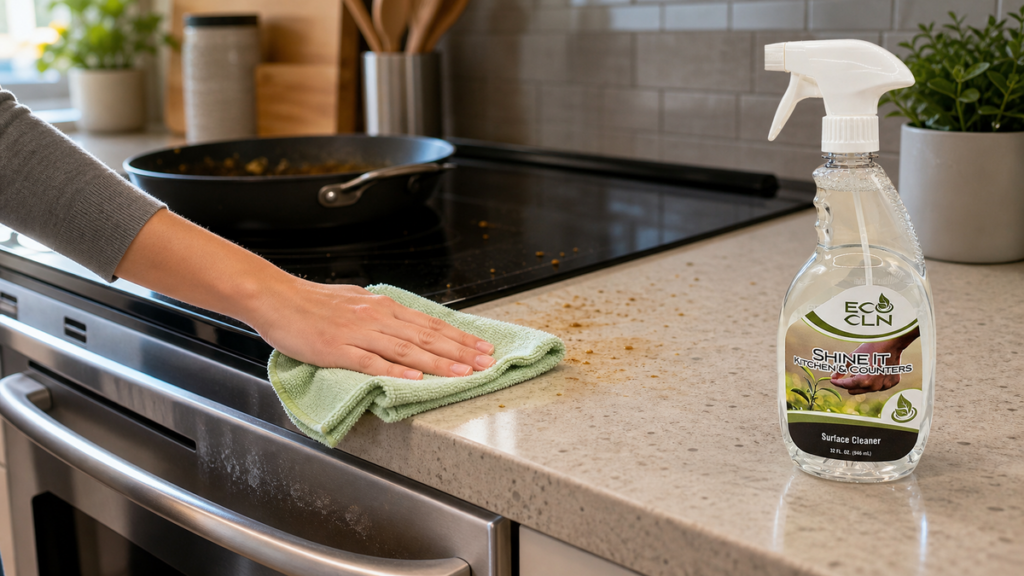
How to Clean Grease Off Kitchen Walls Near the Stove

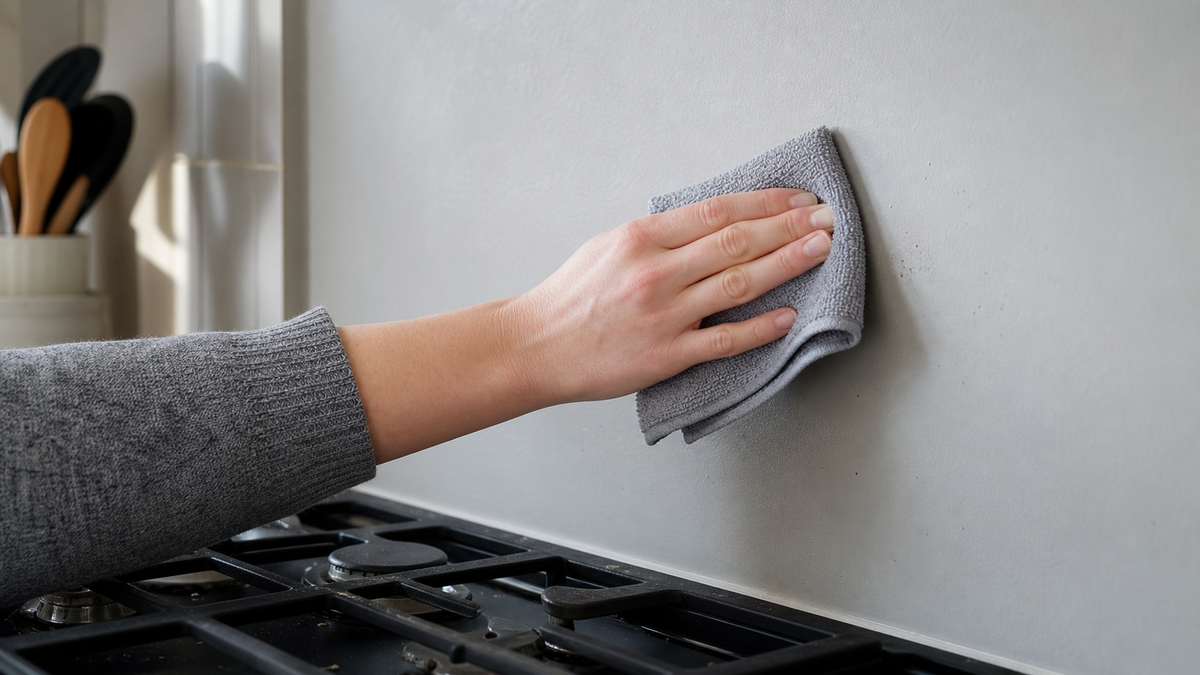
Quick Answer
Dust the wall first, identify the paint sheen or wall material, and test the cleaner in a hidden spot. If the wall is a compatible washable kitchen surface, apply a small amount of Eco Cln Shine-It to a microfiber cloth rather than saturating the wall. Wipe greasy splatter gently in small sections, use a clean damp cloth to remove remaining residue when the paint instructions allow it, and dry the area.
Painted kitchen walls need less liquid and less abrasion than a stovetop or backsplash. If the paint starts transferring, dulling, or turning shiny, stop.
Why Grease Builds Up on the Wall Near the Stove
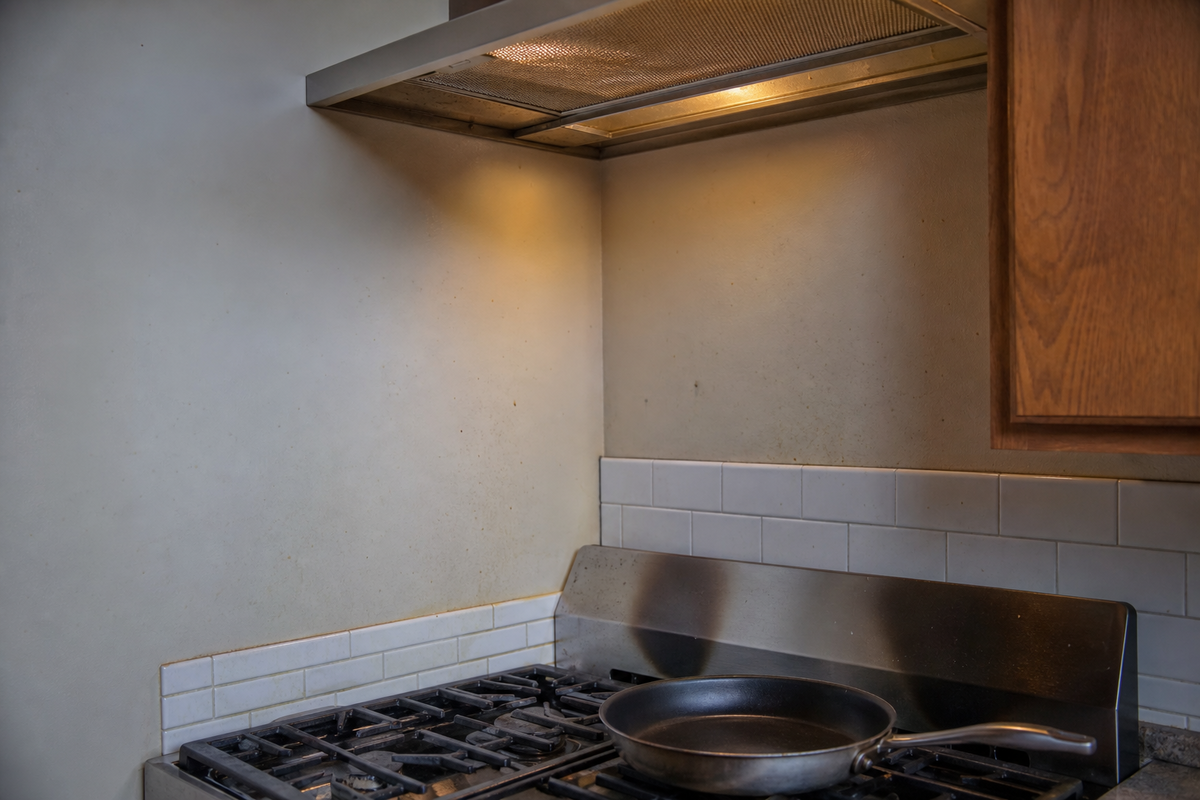
Cooking releases fine droplets and aerosolized oil that settle on nearby walls, backsplash edges, cabinet sides, range-hood surfaces, and appliance handles. Dust and cooking residue cling to that film, creating a tacky patch that grows slowly.
The wall may look clean from straight on but reveal a dull or glossy film when you view it from the side.
Step 1: Check the Wall Material and Paint Sheen
Determine whether the area is painted drywall, washable wall panel, tile, wallpaper, or another finish. Flat and matte paint is generally less scrub-tolerant than satin or semi-gloss.
Sherwin-Williams painted-wall guidance recommends mild cleaning, non-abrasive cloths or sponges, and testing in an inconspicuous spot.
Step 2: Remove Dust Before Wet Cleaning
Use a dry microfiber cloth or vacuum dust-brush attachment. Pay attention to the top of trim, corners, and the narrow strip beside the range where airborne grease captures dust.
Wet cleaner on a dusty wall can turn loose soil into gray smears.
Step 3: Hidden-Area Test Shine-It
Shine-It is made for kitchen grease, cooking residue, cabinet fronts, counters, appliance exteriors, and compatible washable kitchen surfaces. The current product page specifically says to test delicate finishes, painted surfaces, specialty coatings, and unknown materials first.
Apply a small amount to a hidden area, wipe lightly, let it dry, and check for sheen change, softening, color transfer, or watermarking.
Step 4: Put Cleaner on the Cloth for Better Control
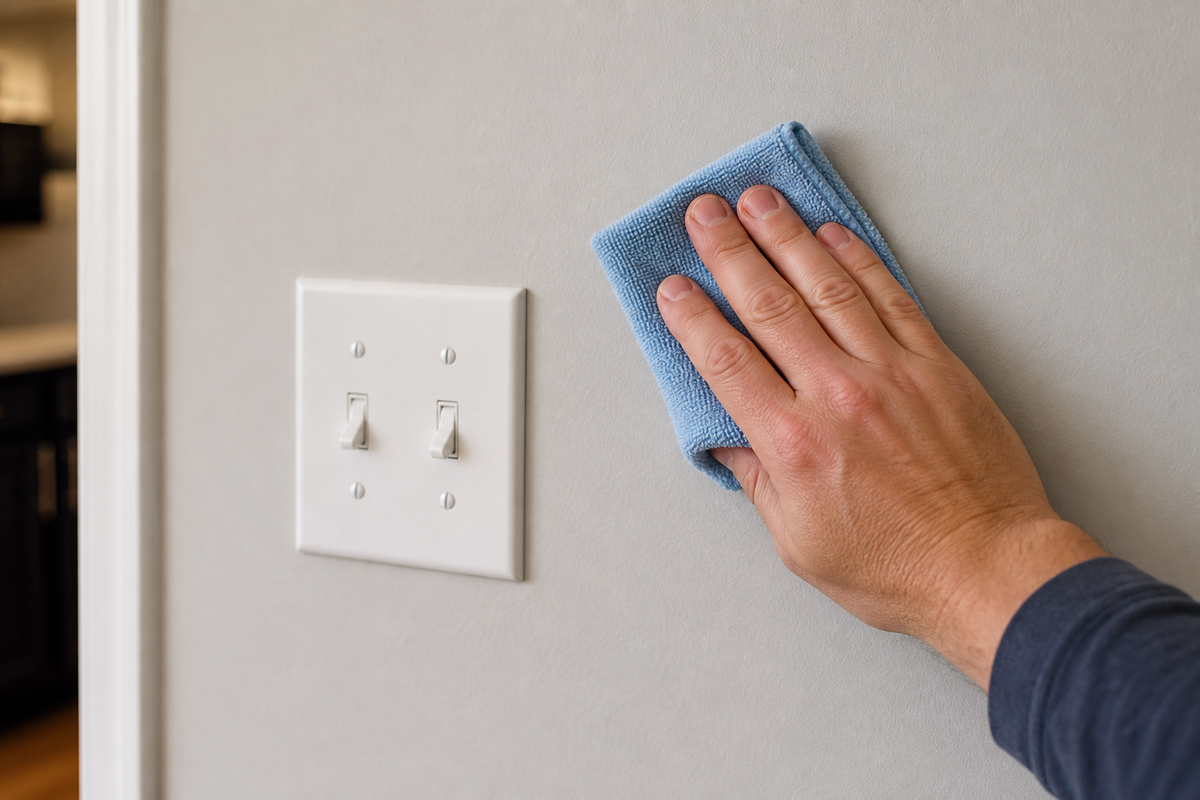
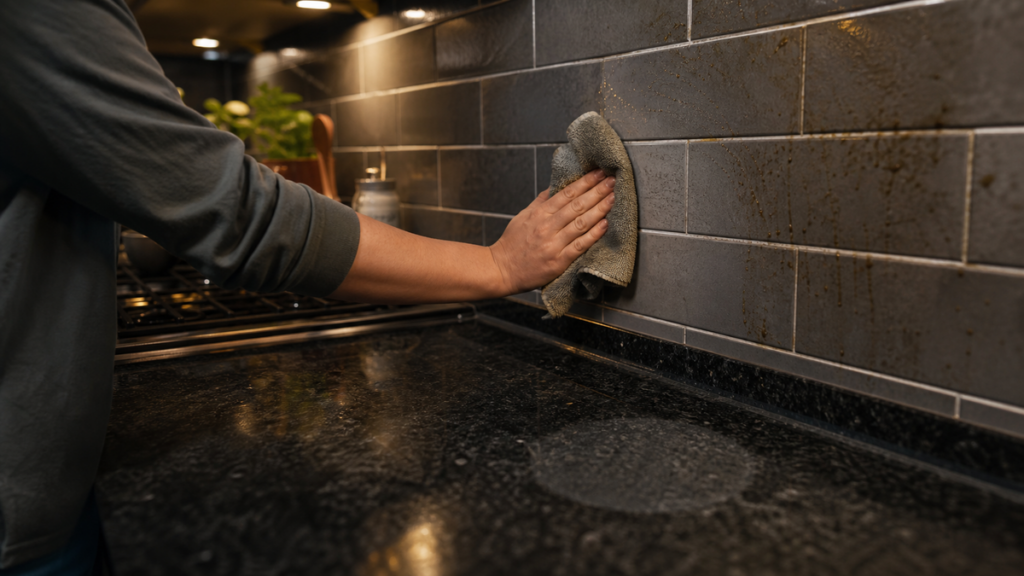
Lightly dampen a clean microfiber cloth with Shine-It rather than spraying a painted wall until it runs. Work on a small greasy patch at a time.
Around outlets, switch plates, seams, caulk lines, and trim, controlled application also keeps cleaner from flowing where it should not.
Step 5: Wipe Gently and Change Cloth Faces Often
Use light pressure. Give the cleaner brief contact time according to the product directions, then wipe. Fold the cloth so a clean section keeps contacting the wall.
If the grease is old, repeat a controlled pass instead of immediately switching to an abrasive sponge.
Step 6: Remove Residue and Dry
If the paint manufacturer allows a damp final wipe, use a separate clean cloth lightly dampened with water to remove remaining cleaner. Then dry the area.
A greasy wall can remain tacky because grease is still present—or because cleaning residue has been left behind. The final clean-cloth pass helps you tell the difference.
What If the Wall Is Still Yellow or Dark After Cleaning?
The remaining mark may be staining, heat discoloration, smoke residue, or paint damage rather than removable surface grease. Cleaning cannot restore a paint film that has physically changed.
When gentle cleaning leaves the same discoloration but the surface no longer feels greasy, repainting may be the correct fix. Check whether the mark follows the hottest edge of the range, sits above a burner, or continues behind a countertop appliance; those patterns can point to heat, smoke, or an old splash that changed the paint film. Let the wall dry completely and inspect it in both daylight and side lighting before cleaning again. Repeated wet passes on flat paint can create a shiny burnished patch that is more noticeable than the original stain. If the surface is clean but the color or sheen remains uneven, document the paint color and finish before touching up the area.
Common Mistakes Around Stove-Side Walls
- Treating painted wall like a stovetop and scrubbing hard.
- Using a rough pad that burnishes flat or matte paint.
- Spraying enough cleaner to run behind trim or outlets.
- Using one grease-loaded cloth over the whole wall.
- Trying to clean away heat-damaged or permanently stained paint.
- Skipping the hidden-area test because Shine-It is a kitchen product.
Where Shine-It Fits
Eco Cln Shine-It is the kitchen-specific Eco Cln product for cooking residue, grease spots, oil splatter, cabinet fronts, counters, appliance exteriors, and other compatible washable kitchen areas. On painted walls, the surface-care rules still come first.
FAQ
Can I use Shine-It on a painted kitchen wall?
Potentially, if the paint is washable and a hidden-area test shows no color or sheen change. The current Shine-It page specifically calls for testing painted surfaces and specialty finishes.
Why does grease collect on the wall beside the stove?
Fine oil droplets and cooking vapor settle on nearby surfaces, then trap dust and food residue.
Can I use a scrub sponge on old wall grease?
Use only a non-abrasive tool compatible with the paint. Flat and matte paints can turn shiny if rubbed too hard.
Why is the wall still sticky after I clean it?
Grease may remain, the cloth may be redistributing oil, or cleaner residue may be left behind. Switch to clean cloths and use a controlled final wipe if the paint instructions allow it.
What if the wall stays yellow after the grease is gone?
That can be staining or heat/smoke discoloration in the paint itself. Cleaning will not reverse every permanent color change.
The Bottom Line
Dust the wall first, identify the paint sheen or wall material, and test the cleaner in a hidden spot. Keep moisture and pressure controlled, follow the material’s care instructions and stop if the finish or fabric reacts poorly.
Continue with this related Eco Cln guide: Greasy kitchen counters and appliance smudges.
For everyday cooking film and grease splatter on compatible washable kitchen surfaces, Eco Cln Shine-It is the focused Eco Cln cleaner. On a painted wall, use it with a lighter hand: test, wipe, remove residue, and protect the finish.