How to Clean the Floor and Walls Around a Litter Box

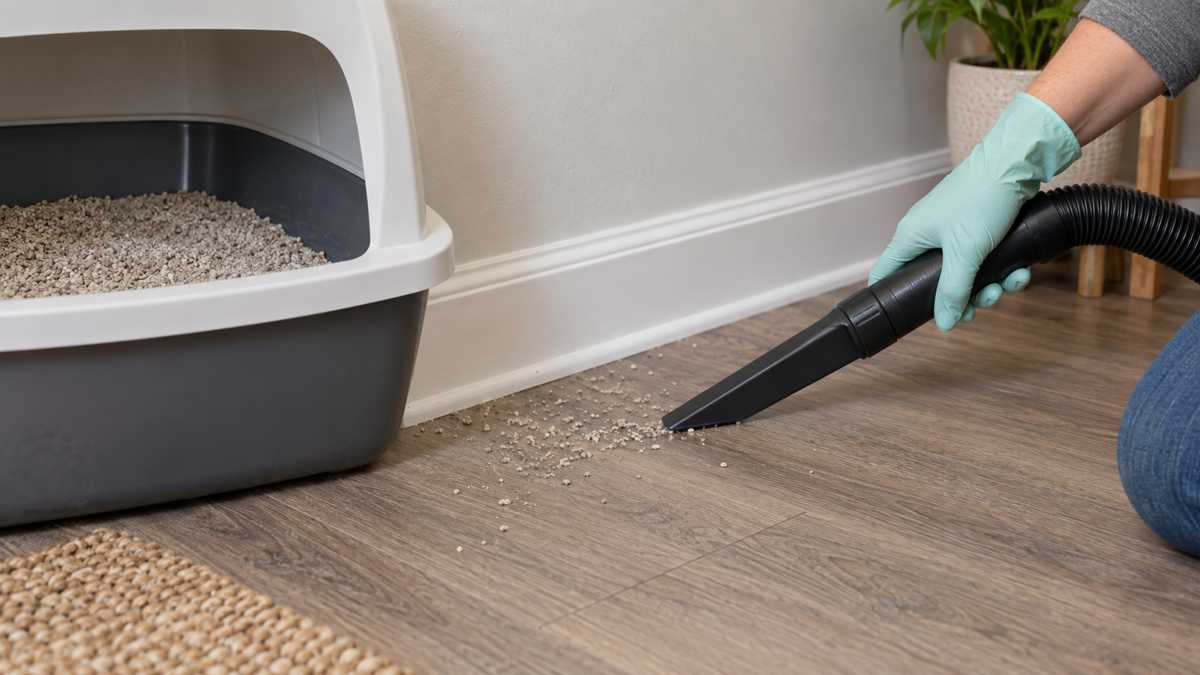
Clean around a litter box in two lanes: dry debris first, then wet residue. Vacuum or sweep tracked granules and fine dust before wiping. If you find urine, fecal residue or an organic accident outside the box, isolate that area and use a pet-accident method rather than spreading it through the routine floor-cleaning pass.
The floor, baseboard and wall may be three different materials. Vinyl seams, laminate edges, painted drywall, unfinished trim and grout lines all react differently to moisture, so apply cleaner to the cloth near vulnerable joints and dry each surface promptly.
Quick Answer
• Move the litter box without tipping loose litter onto the floor.
• Scoop waste and bag it before cleaning the surrounding area.
• Vacuum dry litter, dust and hair from corners and baseboard edges.
• Separate ordinary tracked grime from urine or other organic residue.
• Check the floor, wall paint, baseboard and caulk for moisture limits.
• Apply cleaner to the cloth around seams, raw edges and wall finishes.
• Clean outward splatter separately rather than mopping through it.
• Dry the area fully before returning the box and mat.
Why the Litter-Box Zone Gets Dirty So Quickly
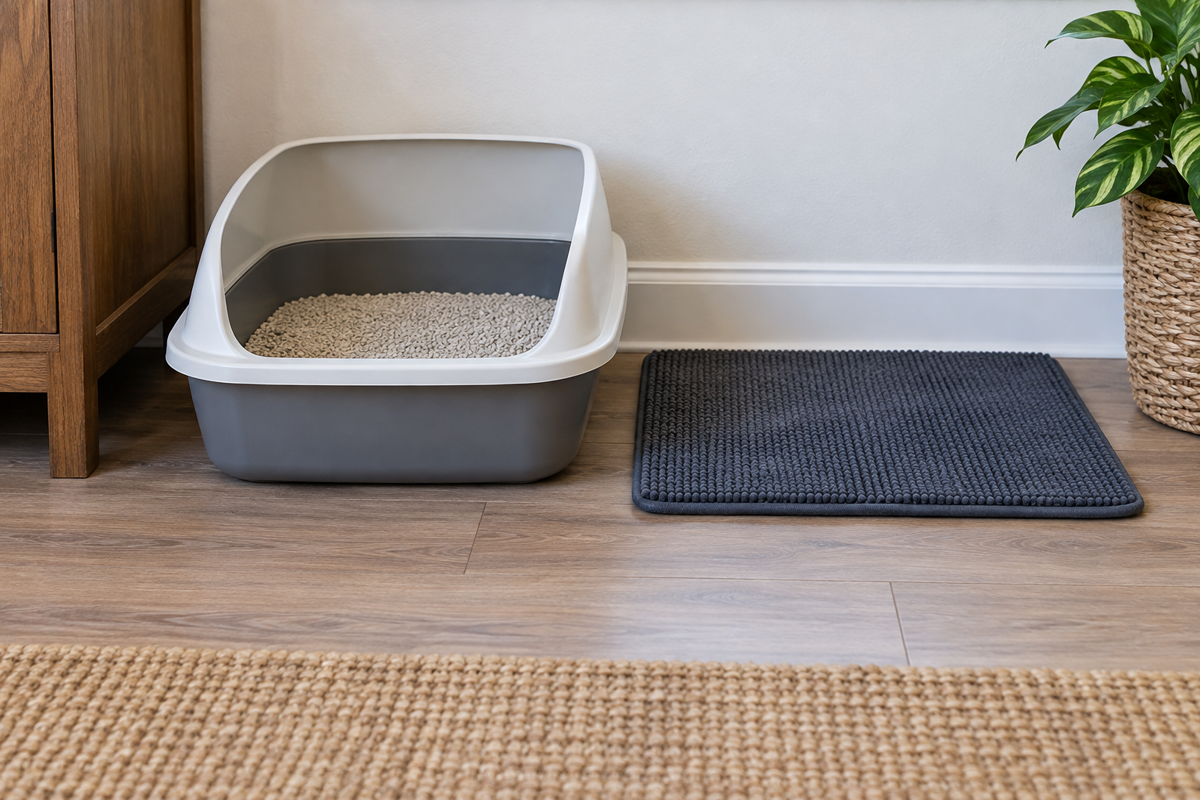
Cats carry granules between their toes, kick litter while covering waste and brush dust against the box rim. Fine particles settle behind the box, under the mat and on the baseboard ledge. High-sided boxes reduce some scatter, but they can still leave a narrow band of dust along the wall.
Urine outside the box creates a different problem. Liquid can run under a mat, enter plank seams, wick into medium-density fiberboard baseboard or leave a vertical mark beside the box. If odor seems larger than the visible spot, use the inspection approach in how to find hidden pet urine smell
before repeatedly wetting the same patch.
Humane World for Animals’ litter-box guidance
recommends regular scooping and keeping boxes clean and accessible. Routine box maintenance reduces the amount of waste and litter that can reach the surrounding floor.
Inspect the Floor, Wall and Trim Separately
Tile and sealed grout
Vacuum granules from joints before wiping. Do not grind litter into grout with a wet mop. Check for cracked grout or open caulk at the wall.
Vinyl or sealed hard flooring
Keep moisture from pooling at click joints, wall gaps and transitions. A removable mat can hide liquid, so inspect and dry beneath it.
Laminate and wood-based edges
These materials can swell at seams and raw cut edges. Use minimal moisture, spray the cloth and dry immediately. A puffed edge is damage, not residue to scrub away.
Painted drywall and baseboards
Check the paint sheen and condition. Flat or damaged paint can mark easily; fiberboard trim can wick liquid through chips and unfinished lower edges. Test in a hidden spot.
Step-by-Step: Clean Around a Litter Box
1. Prepare the area. Keep the cat away temporarily, ventilate normally and put on household cleaning gloves. Do not mix cleaning products.
2. Service the litter box.
Scoop waste and close the disposal bag. Follow the box and litter maker’s directions for any deeper box cleaning.
3. Move the box and mat carefully.
Lift rather than drag them through debris. Check the mat underside and the floor directly below for dampness or discoloration.
4. Remove dry litter and dust.
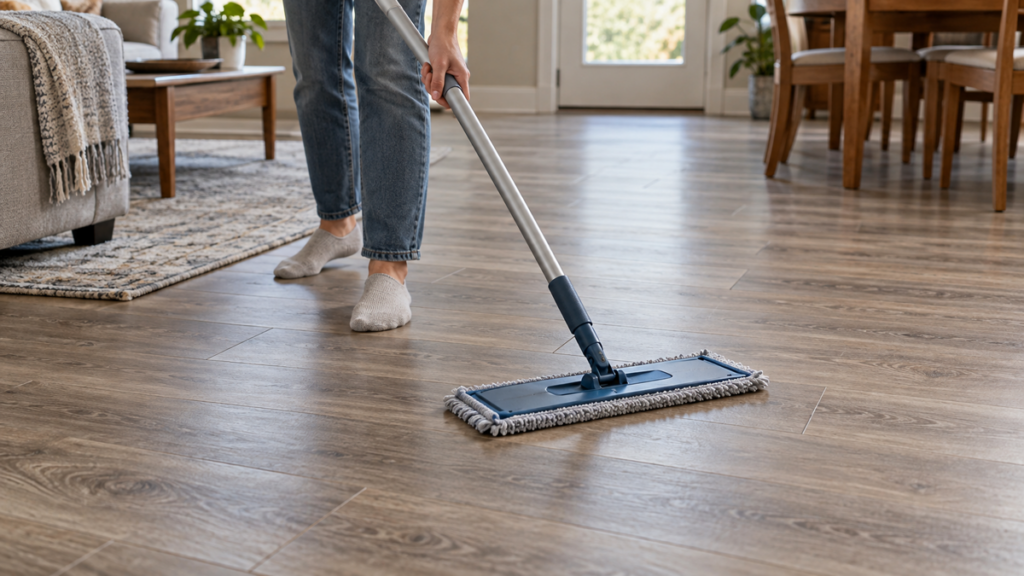
Vacuum with a hard-floor-safe setting or sweep gently. Detail wall corners, baseboard tops and plank bevels before adding liquid.
5. Map any accident residue.
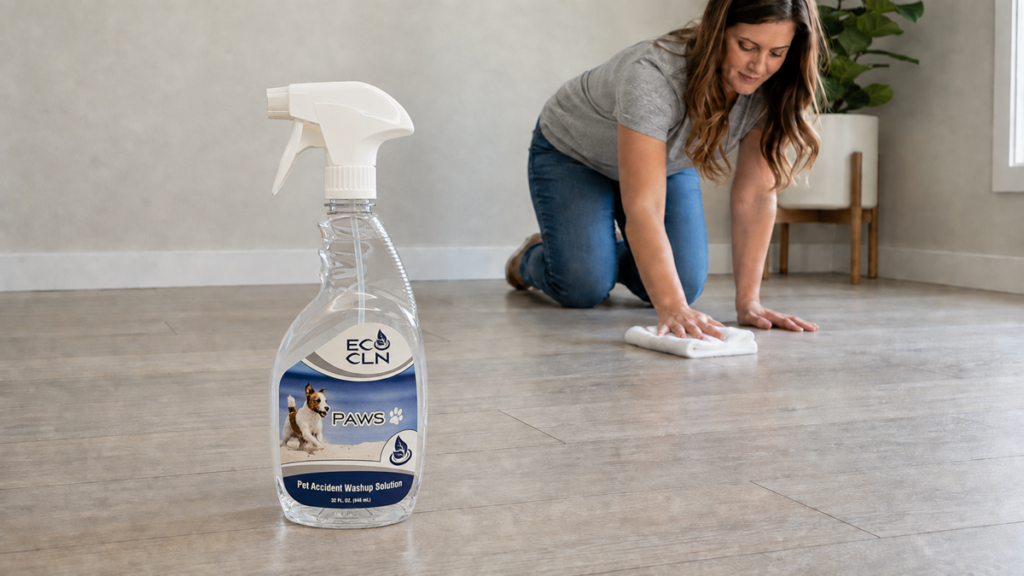
Look at the wall, baseboard, floor seam and mat edge. Blot fresh liquid with white absorbent material instead of wiping it outward.
6. Match the cleaner to the mess.
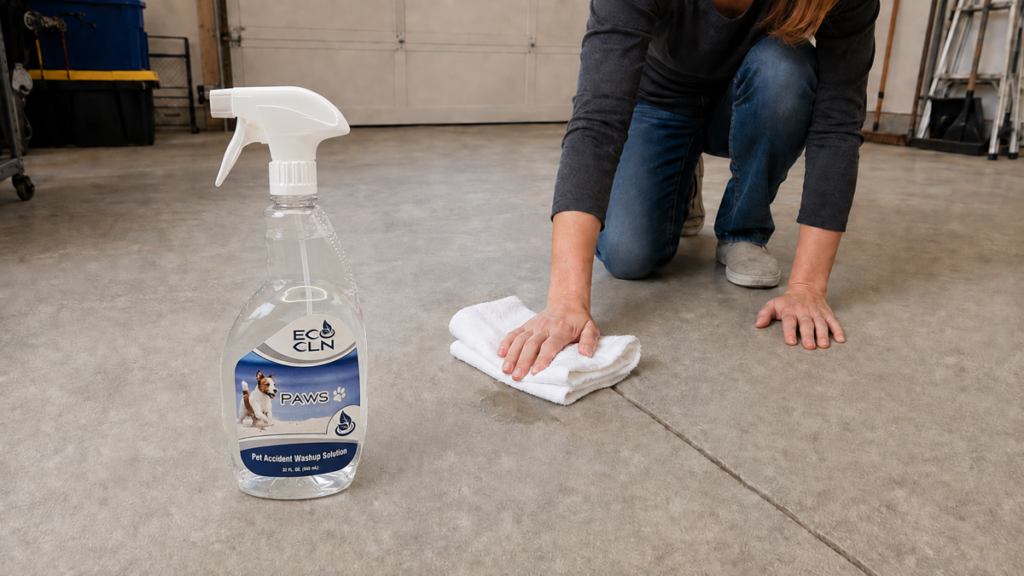
Use a compatible pet-accident cleaner for urine or organic residue. Use a compatible general cleaner only for ordinary non-accident dirt.
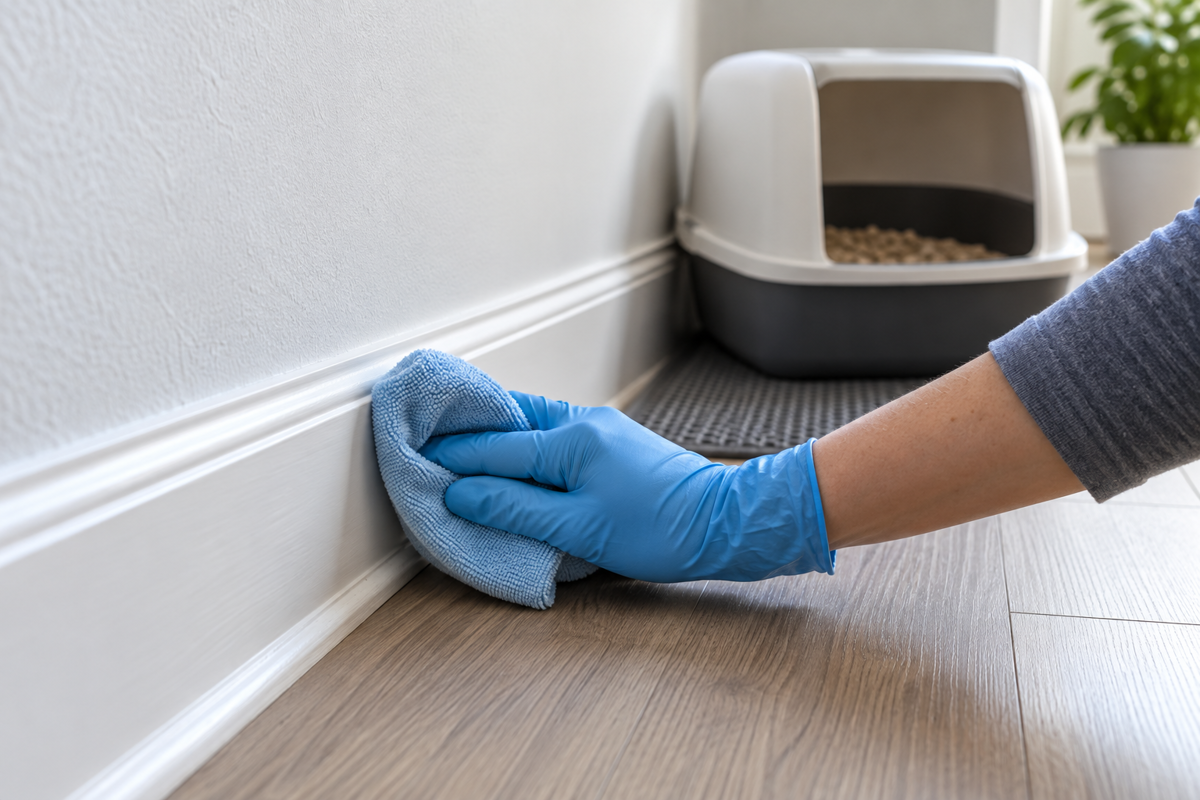
7. Clean the wall and trim by hand.
Apply product to a cloth, work from the outside of the mark inward and keep liquid out of paint chips, joints and unfinished edges.
8. Clean the floor in controlled passes.
Use minimal moisture around seams and grout. Change cloth faces so dust and residue are removed rather than redistributed.
9. Dry and recheck.
Dry the wall, baseboard, floor and mat underside. Return the box only when the full zone is dry and free of cleaner residue.
Keep Pet Accidents Separate From Everyday Grime
Litter dust, ordinary footprints and shelf dust are general household soil. Urine and organic residue belong in the pet-accident lane. Cleaning both with one dirty mop can spread odor-causing material beyond the original spot.
For residue at the room perimeter, the guide to dog urine smell around baseboards
explains how liquid can reach trim joints and the floor-wall gap. The same inspection logic is useful beside a litter box even though the source animal differs.
Where PAWS and Citrus Concentrate Fit
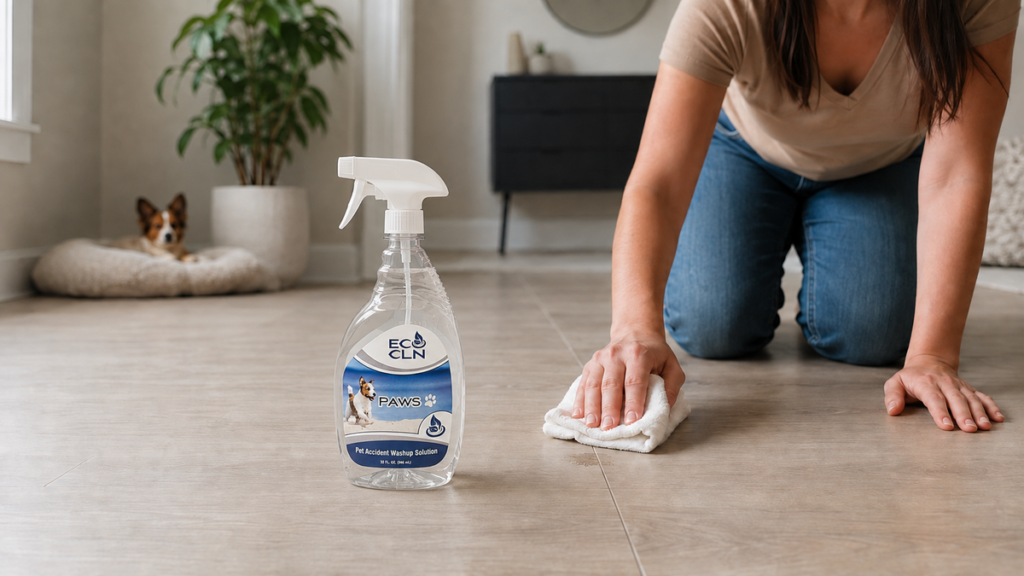
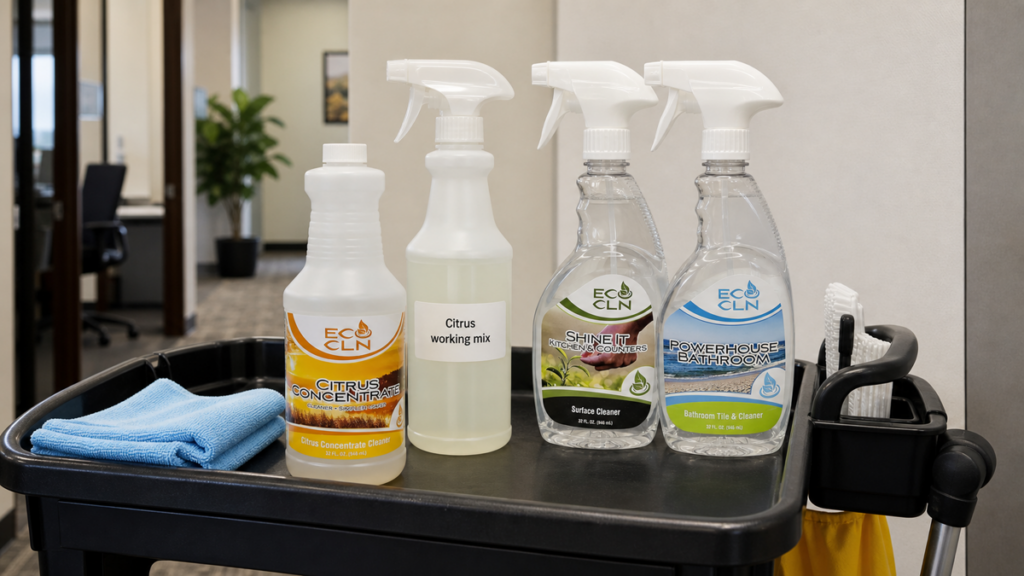
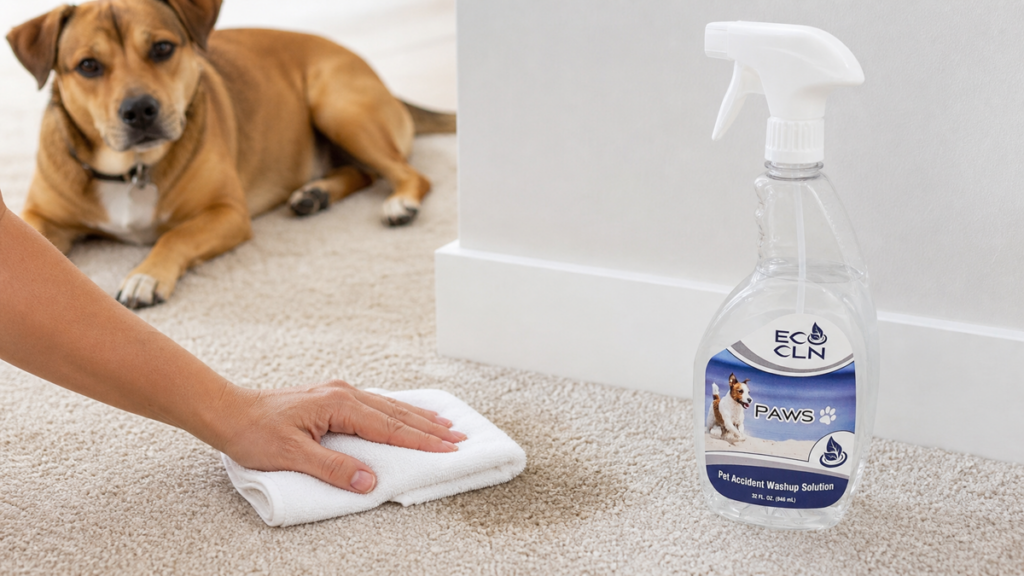
is the ready-to-use option for compatible pet urine, organic stains, litter-box areas, hard floors and repeat accident zones. Treat the mapped accident area without promising that surface cleaning can reach contamination below flooring or behind trim.
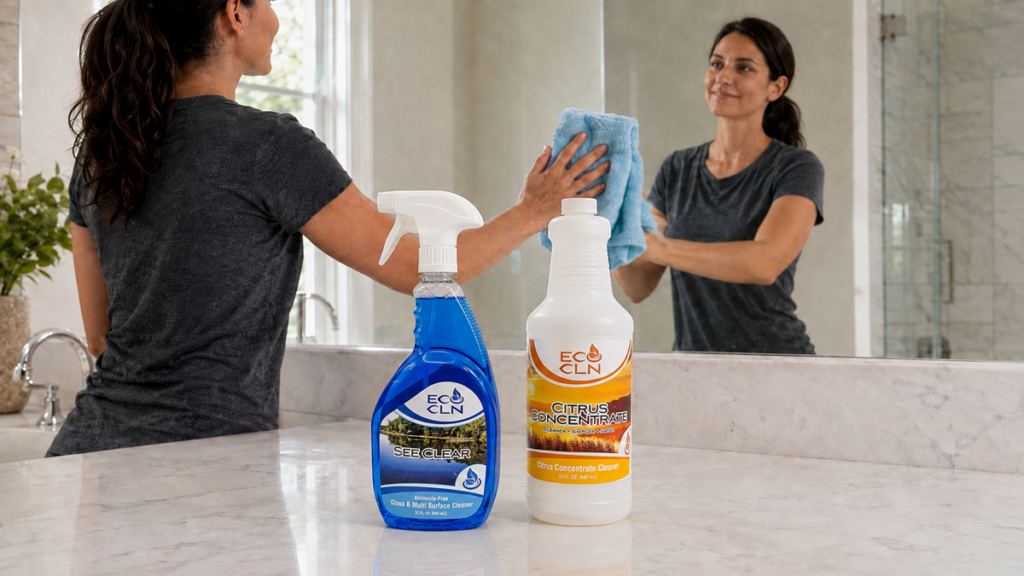
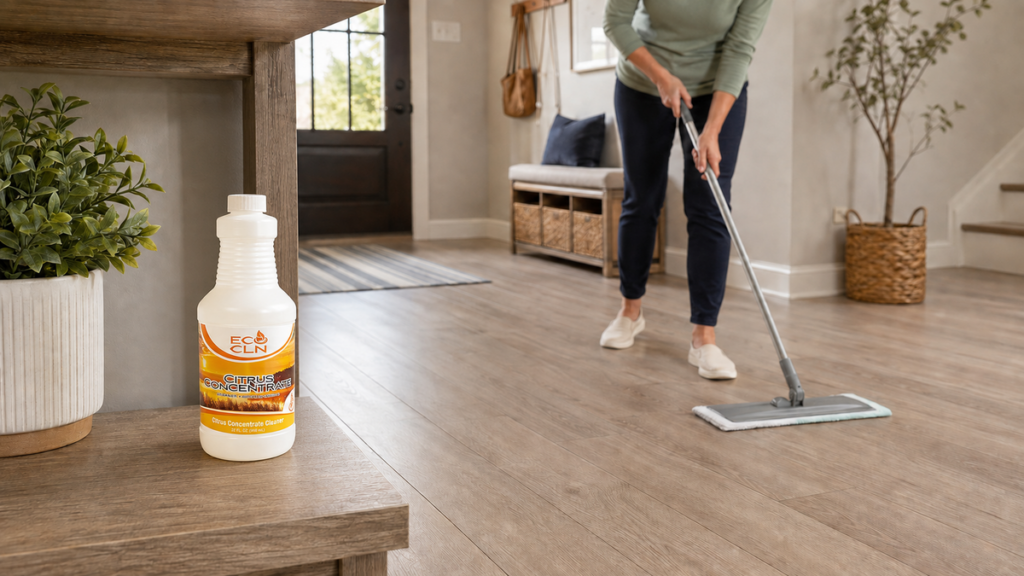
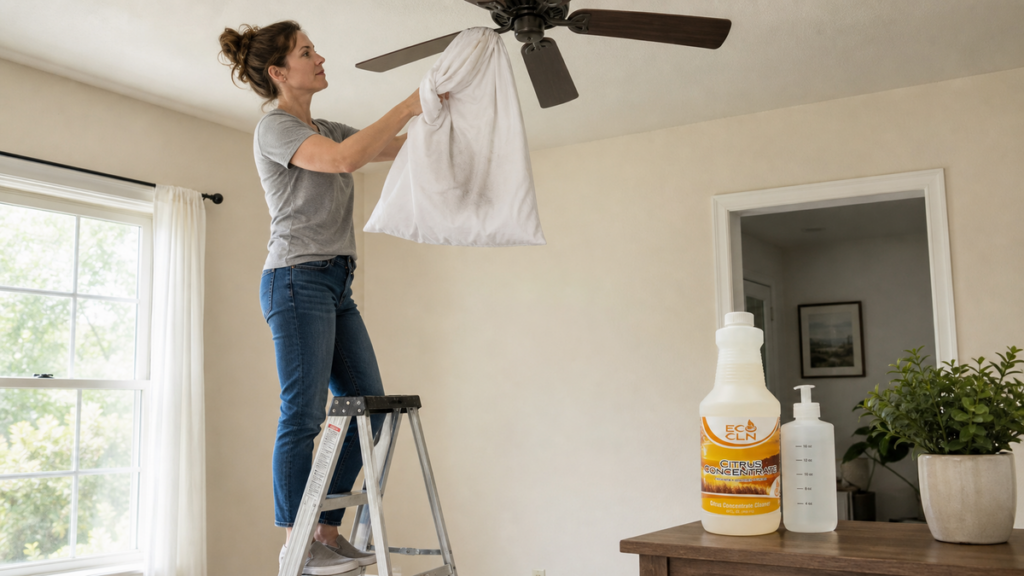
belongs only in the ordinary-grime lane on compatible washable surfaces. It is not the substitute for PAWS on urine residue. Follow the published dilution, the surface directions and a hidden-area test.
Common Litter-Area Cleaning Mistakes
• Wet-mopping before removing loose litter.
• Dragging the box across granules and scratching the floor.
• Cleaning urine and ordinary dust with the same cloth or mop water.
• Spraying painted walls, baseboard seams or outlets directly.
• Flooding laminate, vinyl joints or unfinished trim edges.
• Masking odor with fragrance instead of locating residue.
• Mixing products.
• Returning the mat while its underside is still damp.
When Cleaning Is Not Enough
Recurring odor can indicate residue below a plank, under the mat, inside wall material or behind a baseboard. Swollen trim, peeling paint, loose flooring and persistent dampness require material-specific repair or inspection. If a cat begins avoiding the box or has a sudden change in elimination habits, address the litter-box setup and contact a veterinarian when appropriate; household cleaning is not a behavioral or medical diagnosis.
Frequently Asked Questions
Should I vacuum or mop around the litter box first?
Vacuum or sweep first. Wetting loose litter creates gritty paste and spreads dust across the floor.
What should I use for urine beside the litter box?
Blot fresh liquid, identify every surface it reached and use a compatible pet-accident cleaner according to its directions. Avoid flooding seams and trim.
Can I use an all-purpose cleaner for the whole area?
Use it only for compatible surfaces with ordinary non-accident grime. Keep urine and organic residue in the pet-cleaner lane.
How do I clean litter dust from a painted wall?
Remove loose dust gently, test the paint, apply cleaner to a cloth and wipe with minimal moisture. Dry the wall before judging sheen or color.
Why does the smell return after the floor looks clean?
Liquid may have reached a mat backing, seam, wall gap or porous baseboard. Inspect the broader dry area rather than repeatedly soaking the visible mark.
The bottom line
Clean the litter-box zone dry first and wet second. Keep tracked litter separate from pet-accident residue, protect floor seams and trim edges, and dry everything before the box returns. PAWS fits the accident area; Citrus fits compatible everyday grime nearby.