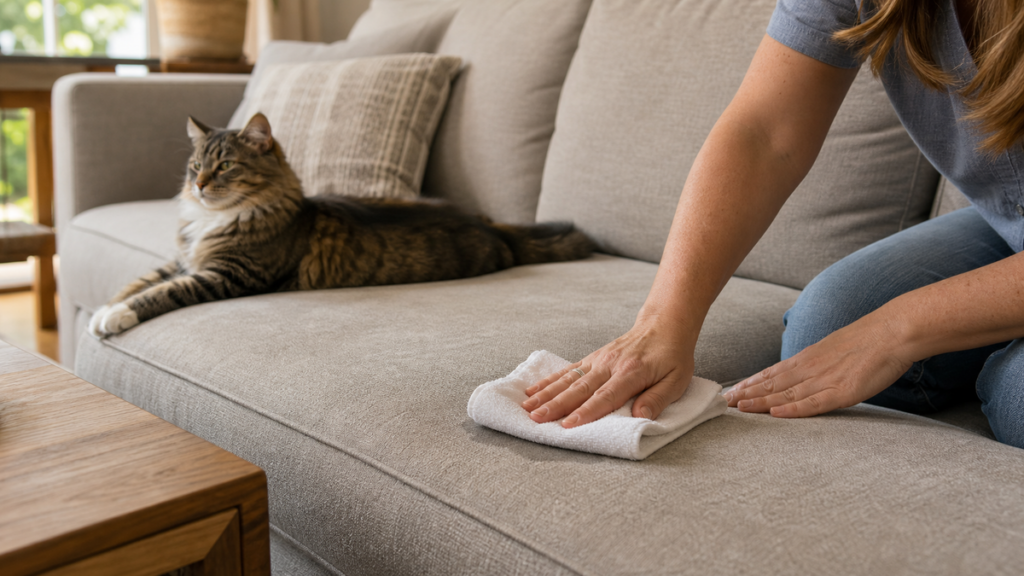
How to Clean Pet Urine From Vinyl Plank Flooring Seams

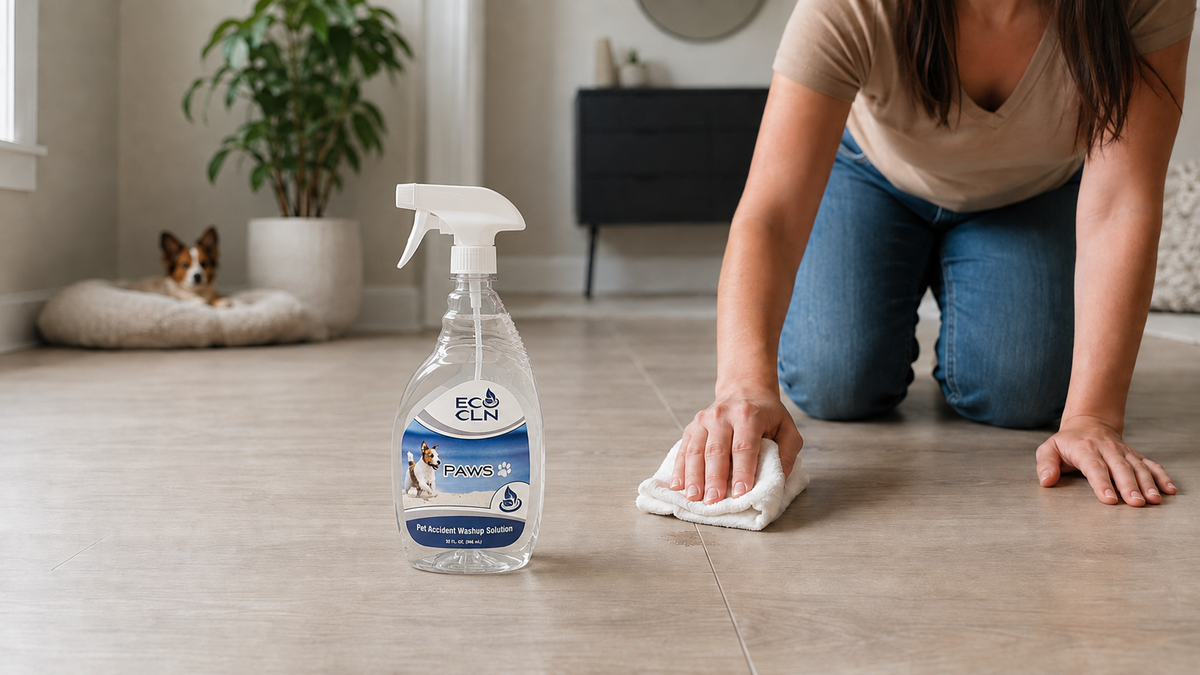
Pet urine on vinyl plank flooring should be removed quickly, but flooding the floor is not the answer. Blot the puddle, inspect the joints and perimeter, then use a cleaner that both the flooring manufacturer and product directions permit. Work with a damp—not dripping—cloth so liquid is lifted from the seam instead of pushed underneath the planks.
Vinyl itself may resist moisture, yet the floor assembly has vulnerable places: click-lock joints, cut edges, wall gaps, transitions and the subfloor below. A clean-looking plank can still have urine trapped where surface wiping cannot reach it.
Quick Answer
• Blot the puddle from the outside toward the center without rubbing it across additional seams.
• Inspect click-lock joints, bevels, perimeter gaps, door thresholds and the baseboard edge.
• Follow the exact care instructions for the flooring brand; luxury vinyl products are not all maintained the same way.
• Put a compatible cleaner on the cloth or use a tightly controlled application.
• Wipe parallel to the seam, remove remaining moisture and keep traffic off the area until dry.
• If odor returns, investigate below the plank rather than repeatedly saturating the top.
Why Vinyl Plank Seams Need Special Attention
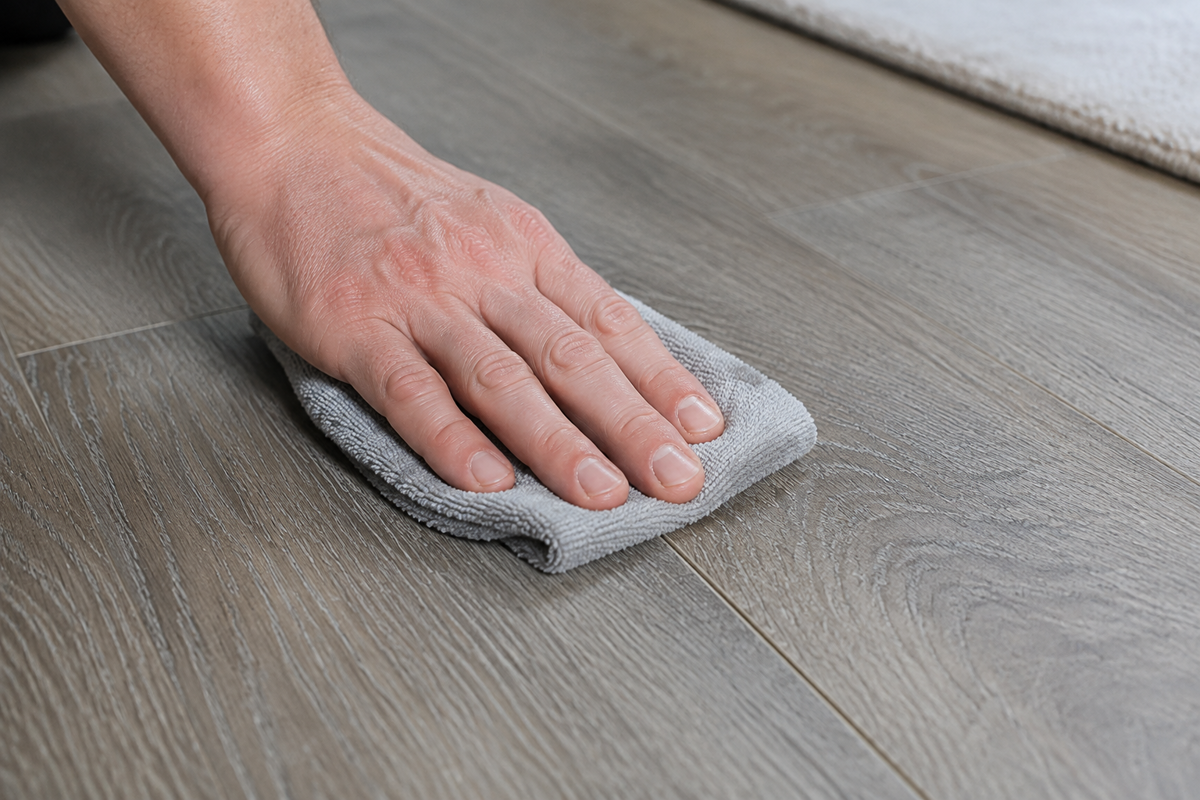
Many vinyl plank floors are described as water resistant or waterproof, but those terms do not mean that every installation detail is sealed against pet urine. A click joint can slow liquid while still allowing it to reach a damaged edge or an open connection. Glue-down flooring has different risks: a loose edge or failed adhesive area can admit moisture even though the plank face is intact.
Beveled planks also create a shallow channel where liquid and soil collect. At the room perimeter, urine can run beneath quarter-round or through the expansion gap. If a puddle reaches a floor vent, transition strip or cabinet toe-kick, the visible spot may be only part of the cleanup.
The floor’s age matters. Separated joints, curled corners, worn wear layers and past water damage reduce the margin for wet cleaning. Check the exact flooring maker’s instructions before treating a seam. Shaw Floors, for example, gives product-specific limits in its resilient vinyl care guidance, which is a useful reminder that generic vinyl advice does not override the installed product’s requirements.
What You Need Before Cleaning the Floor
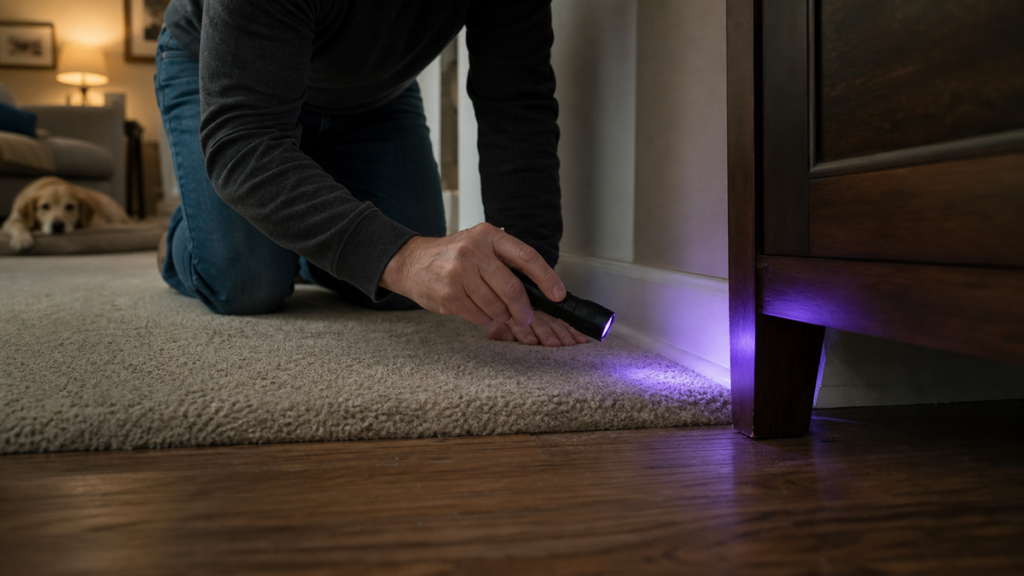
Use absorbent white towels, several clean microfiber cloths, a soft detail cloth or cotton swab for the top of a bevel, and a dry towel. A flashlight held low to the floor can reveal liquid in a joint or a change in sheen. Keep a small disposable bag nearby for used towels, and keep pets away until the floor is fully dry.
Do not pry open a click-lock seam to clean it. Do not use a steam mop unless the flooring maker explicitly permits one; heat and moisture can affect joints, wear layers or adhesive. Avoid abrasive pads, hard brushes and sharp tools that can scratch the wear layer.
Step-by-Step: Clean Pet Urine From Vinyl Plank Seams
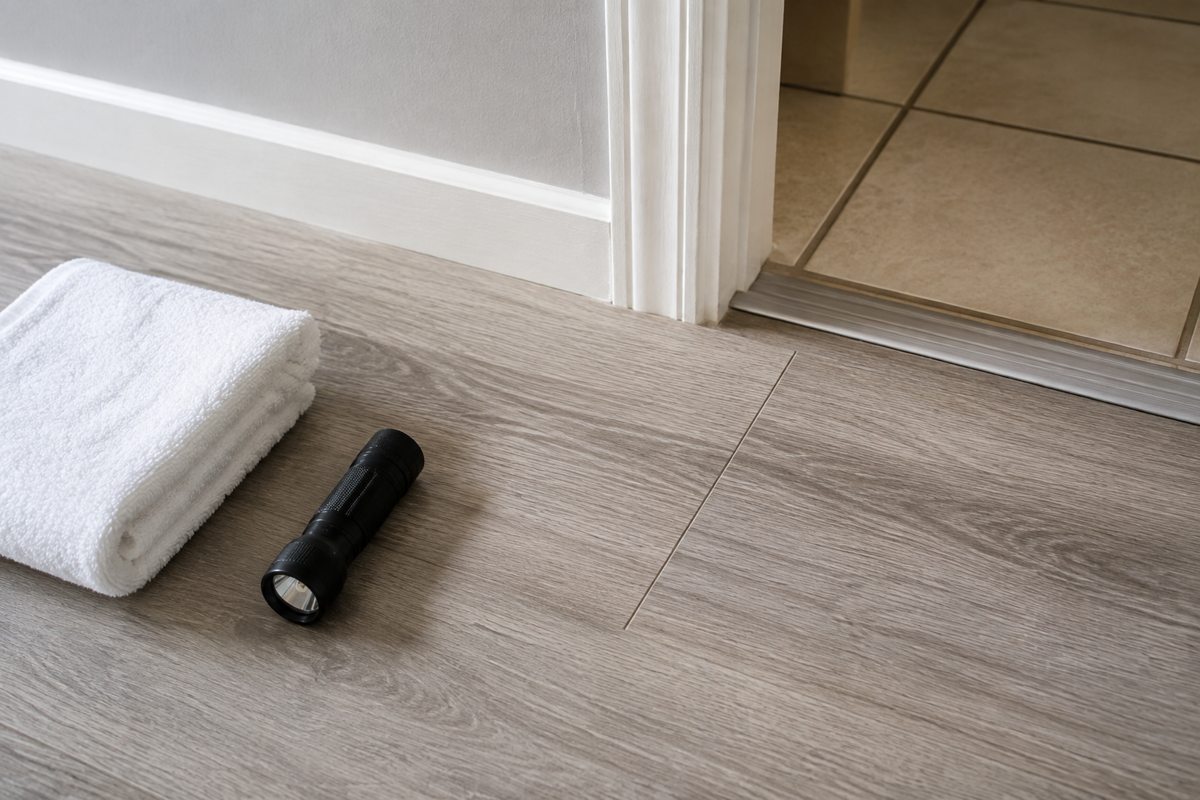
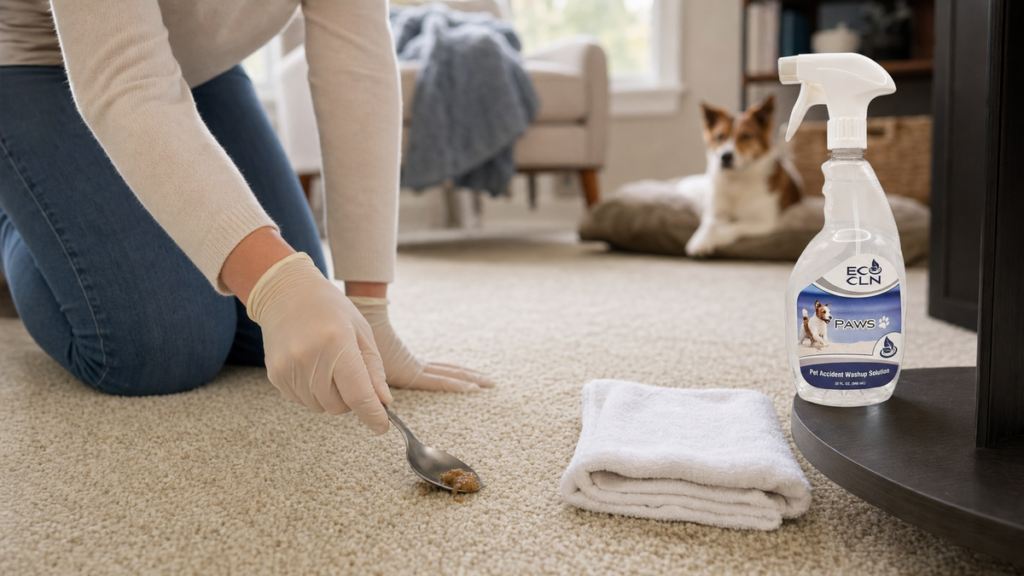
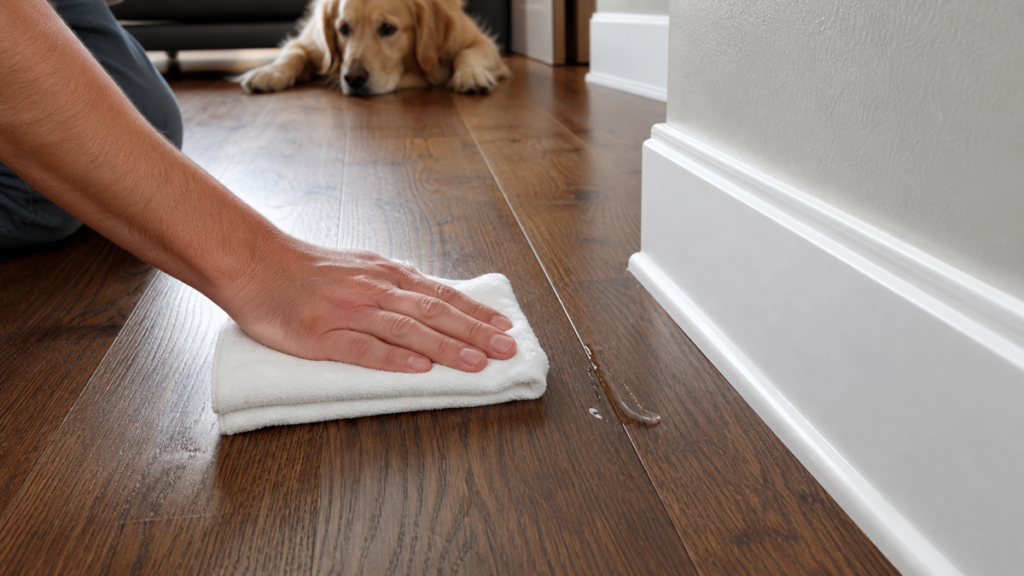
1. Block traffic and blot immediately. Place towels around the outside of the puddle, then press clean folded towels into the center. Lift and replace them until they stop picking up liquid. Rubbing across the floor spreads urine into more bevels.
1. Trace every seam the puddle crossed. Follow the joint lines in both directions. Check the wall edge, transition strip, floor vent and baseboard. If the accident happened beside a cabinet or appliance, look under the toe-kick without pulling the floor apart.
1. Confirm the floor-care limits. Identify whether the planks are click-lock, loose-lay or glue-down and review the manufacturer instructions. Test the intended cleaner in an inconspicuous area if the wear layer, texture or prior finish is uncertain.
1. Treat the plank faces first. Apply the compatible cleaner to a cloth or in a small, controlled amount. Wipe the flat faces toward the affected seam so you are not driving residue outward across the room.
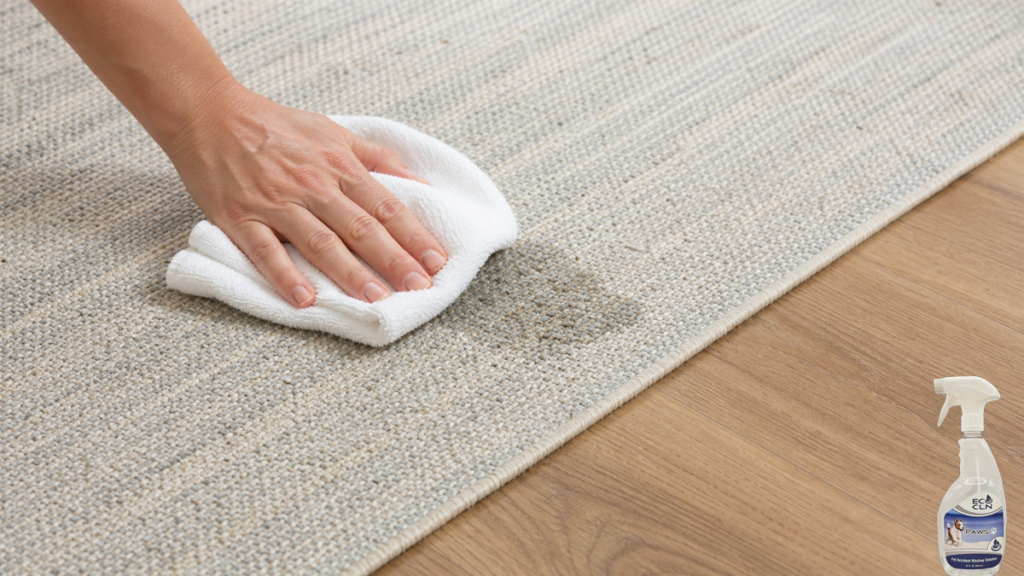
1. Clean along the top of the joint. Fold a clean cloth into a narrow edge and move parallel to the seam. Use only enough moisture to pick up residue from the bevel. Do not insert a tool beneath the click joint.
1. Follow with a clean cloth if required. When the cleaner or floor-care guidance calls for it, make a second pass with a lightly damp clean cloth. Then use a dry towel immediately, especially at plank ends and the room perimeter.
1. Dry and inspect from several angles. Allow normal airflow and keep shoes and paws off the area. Once dry, look for a dark joint, raised edge, haze or odor. Inspection while wet can hide the clues you need.
Cleaning the Perimeter, Thresholds and Floor Vents
If urine reached the baseboard, treat the baseboard and floor as separate finishes. Put cleaner on the cloth near painted trim so it does not run into the expansion gap. A swollen medium-density fiberboard baseboard or stained raw cut edge may need repair rather than more wiping.
At a metal or wood transition, blot both sides and follow the care instructions for each material. Do not remove a nailed or glued transition just to explore unless you are prepared to reinstall it correctly. If liquid entered a floor register, remove and clean the register only if it can be done safely, and inspect the accessible duct edge without dropping moisture below.
Where Eco Cln PAWS Fits
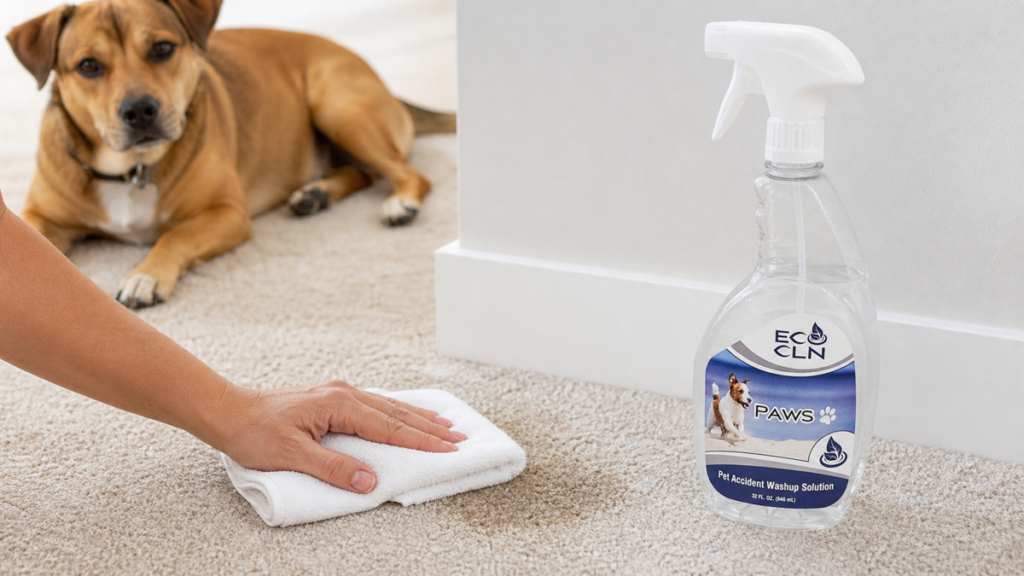
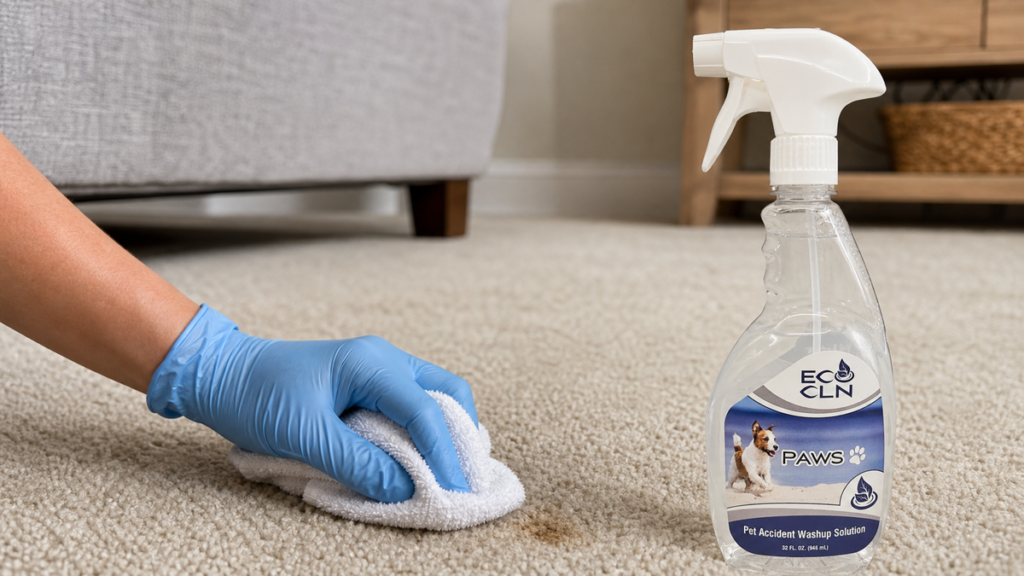
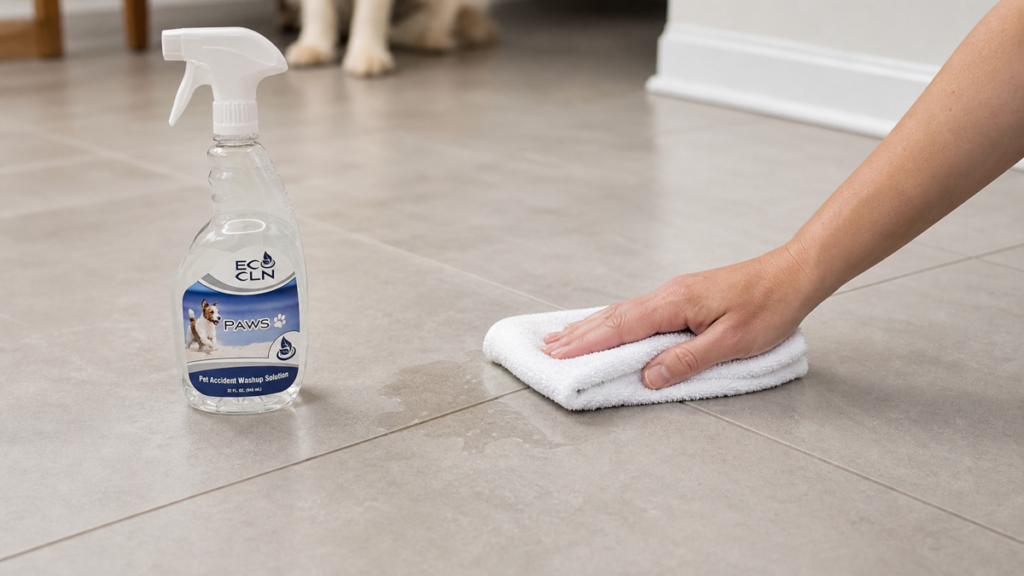
For a compatible vinyl floor, Eco Cln PAWS is the relevant Eco Cln option for pet-accident residue and odor cleanup. Use it according to the current product directions and the flooring maker’s guidance. Applying it to the cloth first is the more controlled choice near open seams, cut edges and transitions.
The goal is to clean what can be reached from the face of the floor without forcing liquid underneath. PAWS cannot correct a separated click joint, failed adhesive, swollen baseboard or contaminated underlayment. Those conditions need a flooring or repair decision.
Common Mistakes on Luxury Vinyl Plank
• Assuming a waterproof plank means the perimeter and subfloor are waterproof.
• Mopping the entire room to treat one localized accident.
• Scrubbing across textured grain and spreading residue into adjacent joints.
• Using steam, abrasive powder or a sharp seam tool without manufacturer approval.
• Leaving a wet towel over the joint for an extended period.
• Treating a recurring odor as a reason to add more liquid from above.
When the Odor Is Under the Flooring
A smell that returns only after humidity rises, a joint that darkens again or a plank edge that lifts can indicate contamination below the wear surface. Stop wetting the area. Document which seams are affected and check whether the floor is floating, glued or otherwise installed. A flooring professional may be able to lift a replaceable section, inspect the underlayment or determine whether the subfloor needs attention.
If you are deciding whether the accident is only on the surface, compare it with this broader pet stain remover versus carpet stain remover guide. For recurring odor, the explanation of why pet urine smell comes back covers hidden layers and incomplete drying.
Frequently Asked Questions
Can pet urine soak through vinyl plank flooring?
It may pass through open, damaged or poorly connected joints and perimeter gaps. The vinyl face may resist liquid while the seam, adhesive, underlayment or subfloor remains vulnerable.
Should I pour cleaner into the seam?
No. Use a controlled cloth-based method unless the flooring and cleaner manufacturers provide different instructions. Pouring liquid into the joint can move the accident farther below the floor.
Can I use a steam mop after a pet accident?
Only if the installed flooring manufacturer expressly allows it. Steam introduces heat and moisture at joints, and many floors have restrictions on that method.
Why does the seam still smell after the top is clean?
Urine may remain under the plank, at the wall gap or in the underlayment. Let the area dry fully and inspect adjacent edges before deciding whether the floor needs professional access.
When should a vinyl plank be replaced?
Consider professional evaluation when a plank lifts, curls, separates, stays discolored or has persistent odor from below. Replacement depends on the installation type and whether matching material is available.
The bottom line
Blot pet urine promptly, trace every joint it crossed and clean along—not into—the vinyl plank seam. Use minimal moisture, follow the installed floor’s care instructions and inspect after complete drying. PAWS can support compatible surface cleanup; a recurring smell below the planks requires access to the hidden source, not another flooded pass.