Why Bathroom Mildew Keeps Coming Back: Moisture, Ventilation and Cleaning

Quick Answer
If mildew-looking bathroom growth keeps returning, focus on moisture control first. Run an exhaust fan that actually vents outdoors, dry wet surfaces, fix leaks or condensation sources, and clean visible growth using an appropriate method for the material.
The U.S. EPA states that moisture control is the key to mold control and that recurring growth is likely to return when the water problem is not fixed. Review EPA mold and moisture guidance.
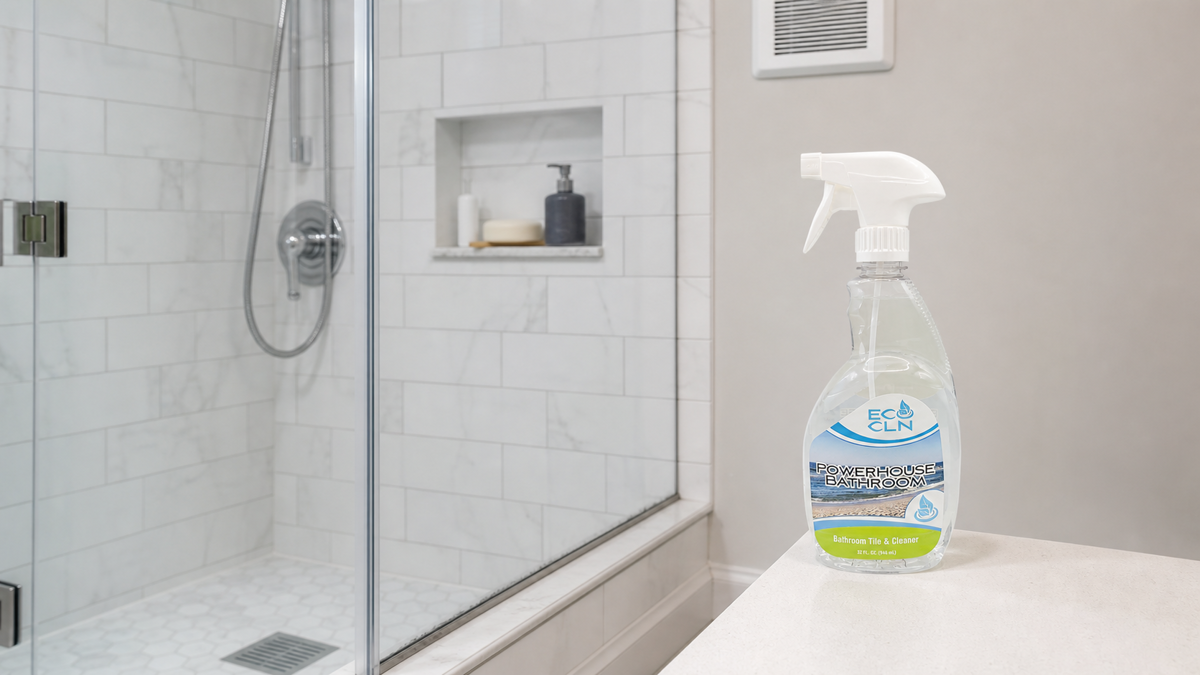
Eco Cln Powerhouse Bathroom is useful for compatible soap scum, hard-water buildup, tile, tubs, sinks, fixtures, and everyday bathroom grime. Do not describe Powerhouse as a mold killer, mildew killer, disinfectant, or remediation product.
First: ‘Mildew-Looking’ Does Not Identify the Organism
Color alone cannot tell you exactly what is growing on a shower seam, grout line, ceiling, or caulk. Pink, gray, black, orange, or green discoloration can have different causes.
For this article, use ‘mildew-looking residue’ or ‘visible growth’ unless the source is professionally identified. The cleaning and moisture-control advice still applies without guessing the species.
Why It Comes Back: Moisture Never Really Leaves
Showers add water vapor to the room and leave liquid water on walls, glass, grout, caulk, tracks, ceilings, and fixtures. If those areas stay damp, visible growth has the conditions it needs to return.
EPA recommends keeping indoor humidity below 60 percent when possible, ideally around 30-50 percent, and using bathroom exhaust ventilation or an open window when conditions allow. See EPA moisture-control tips.
Cause 1: The Exhaust Fan Is On – But Not Effective
A fan that makes noise is not automatically removing enough moisture. It may be undersized, clogged with dust, poorly ducted, or venting into an attic instead of outdoors.
Check that the fan moves air and vents to the exterior. Leave it running long enough after bathing for the room and surfaces to dry according to the fan or building guidance.
Cause 2: Surfaces Stay Wet After Every Shower
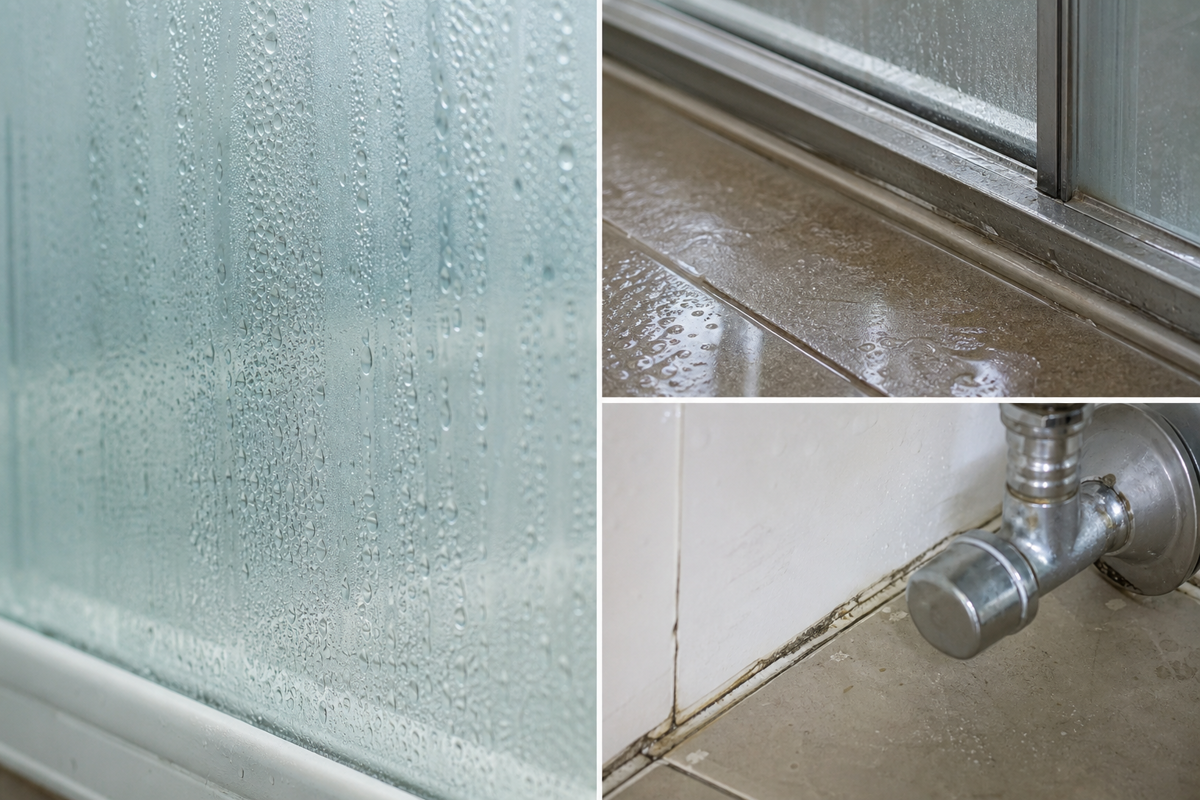
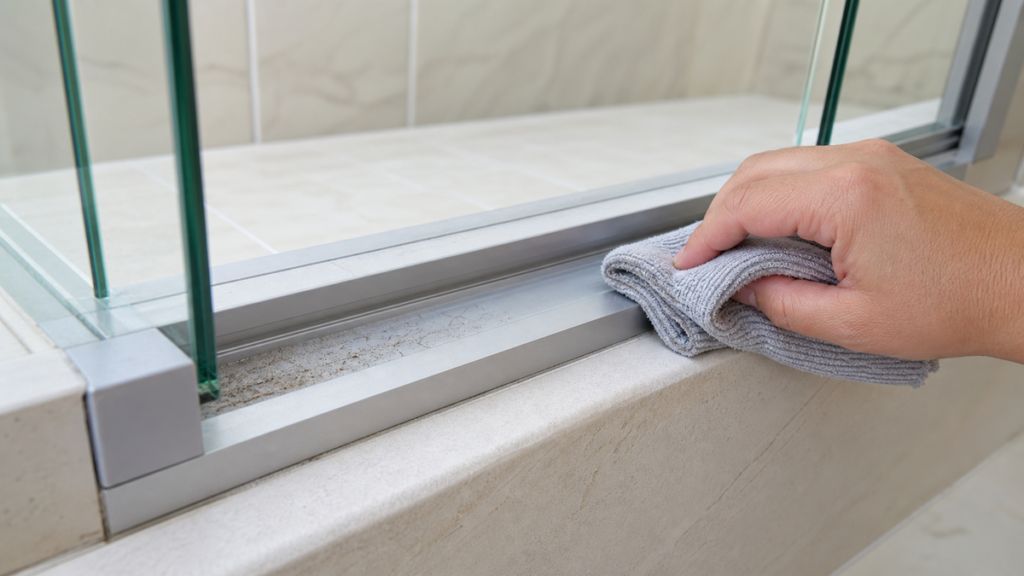
Water beads along the bottom of glass, caulk seams, tracks, corners, grout, ledges, and fixture bases. These low spots dry slower than the open wall.
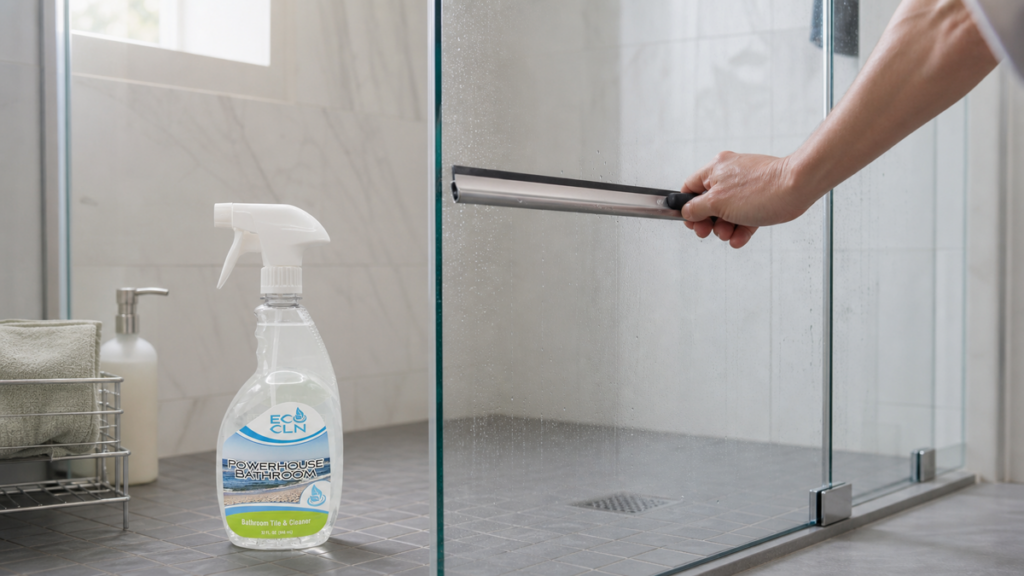
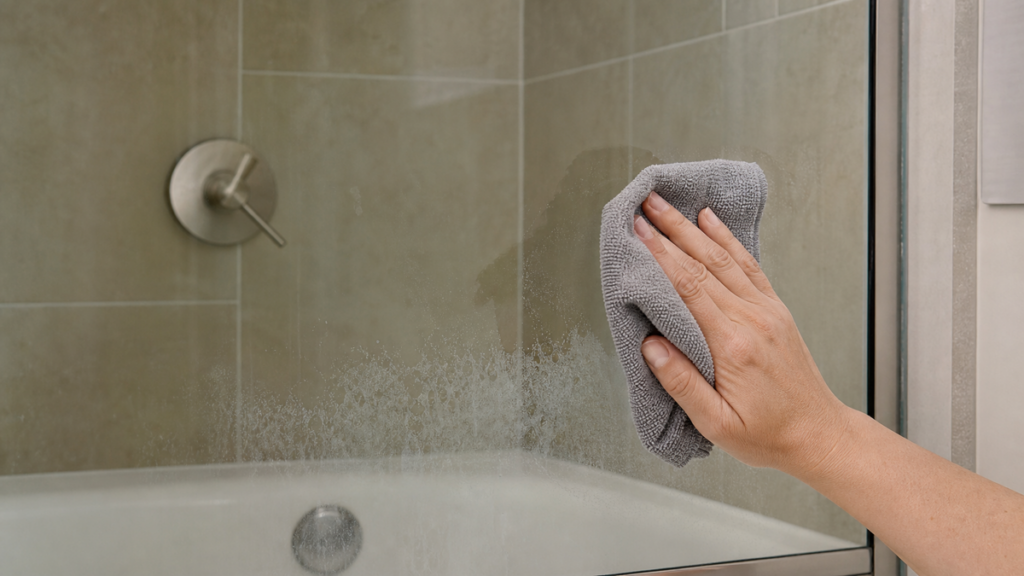
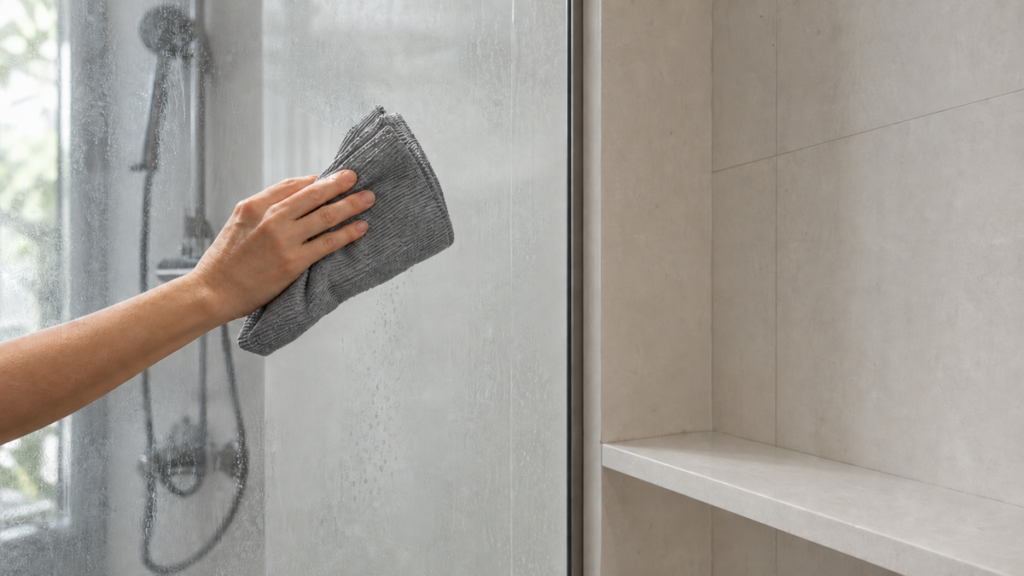
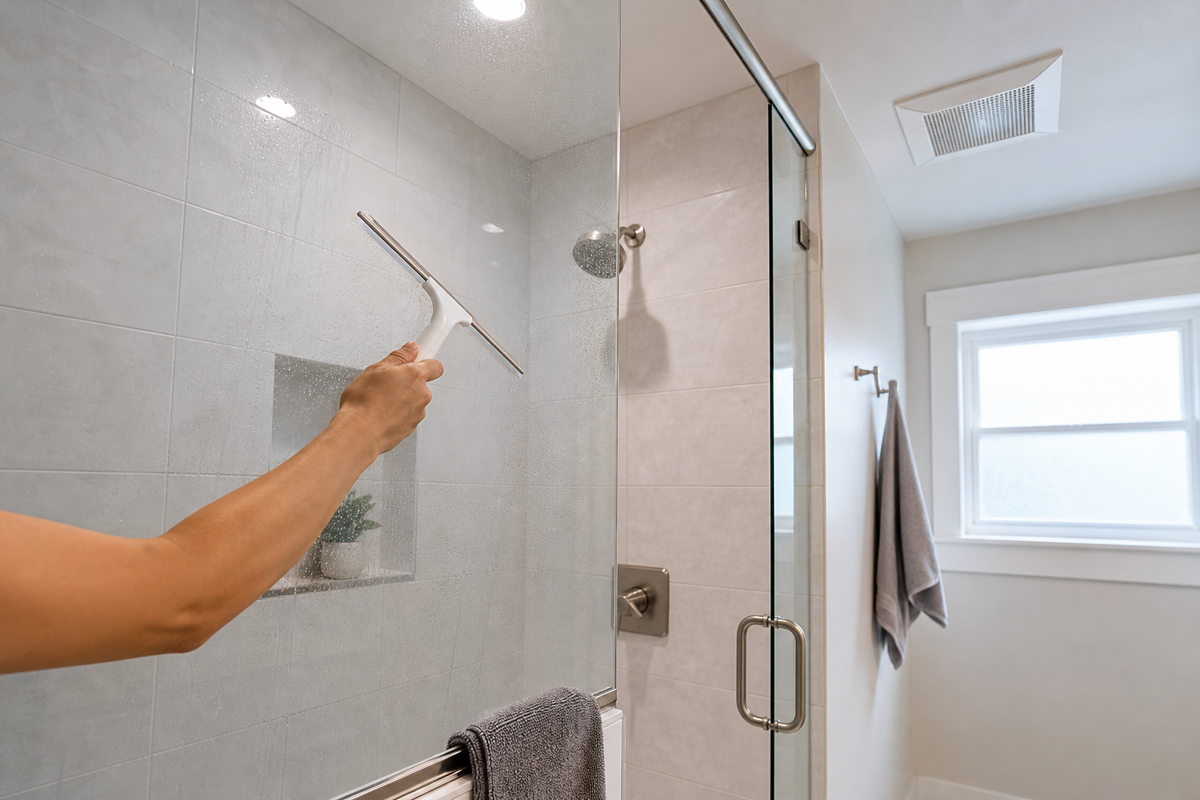
Use a squeegee or microfiber cloth on compatible surfaces after use, especially where water pools.
Cause 3: There Is a Leak or Condensation Problem
Recurring growth near the same ceiling patch, wall edge, plumbing penetration, toilet base, or shower valve can point to more than ordinary shower humidity.
Fix plumbing leaks, failed seals, or condensation problems instead of repeatedly cleaning the symptom.
Cause 4: Porous Material Is Staying Damp
EPA notes that porous materials can be difficult or impossible to clean completely when mold grows into them. Review EPA home mold cleanup guidance.
Drywall paper, ceiling tile, untreated wood, damaged grout, deteriorated caulk, and carpet adjacent to a moisture problem may need repair or replacement rather than more surface cleaner.
Cause 5: Soap Film and Bathroom Grime Stay on the Surface
Soap scum, body oils, shampoo residue, and mineral film create a dirty damp layer that makes bathroom surfaces harder to maintain.
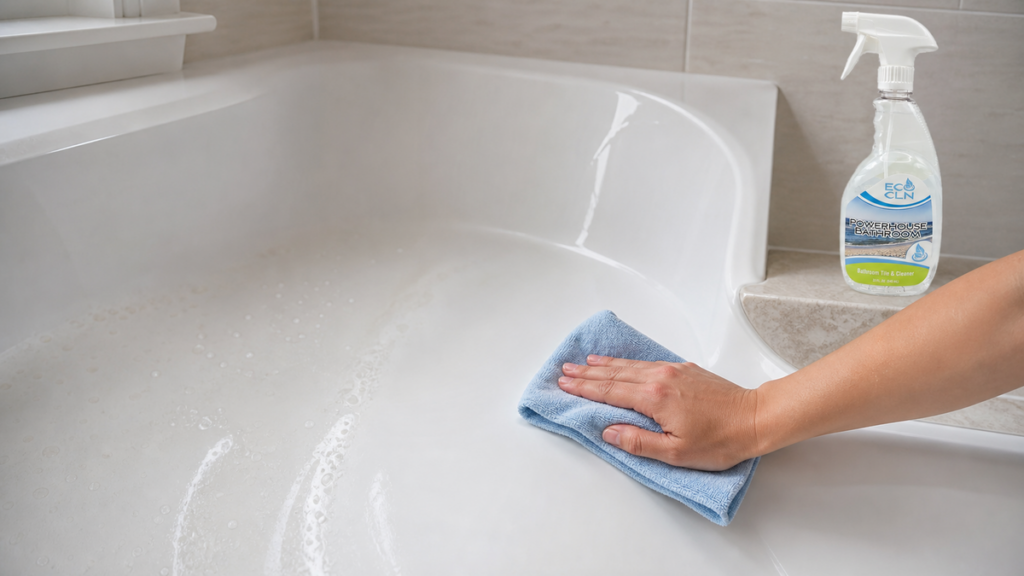
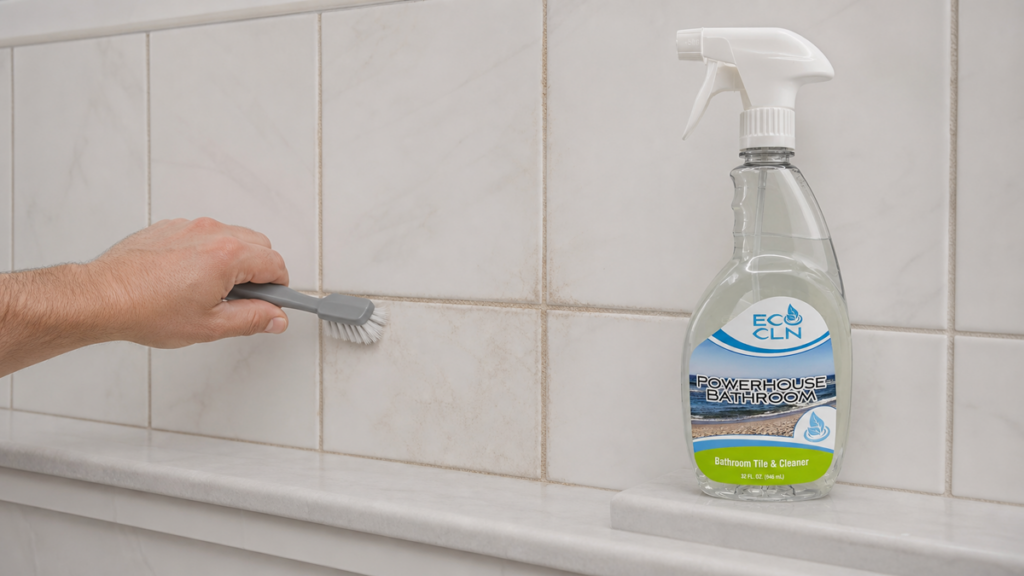
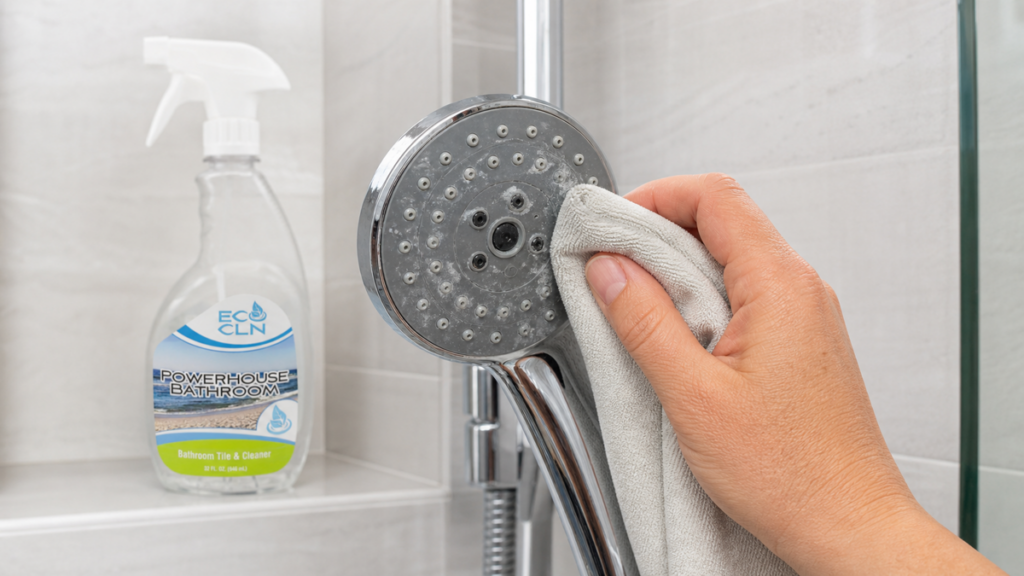
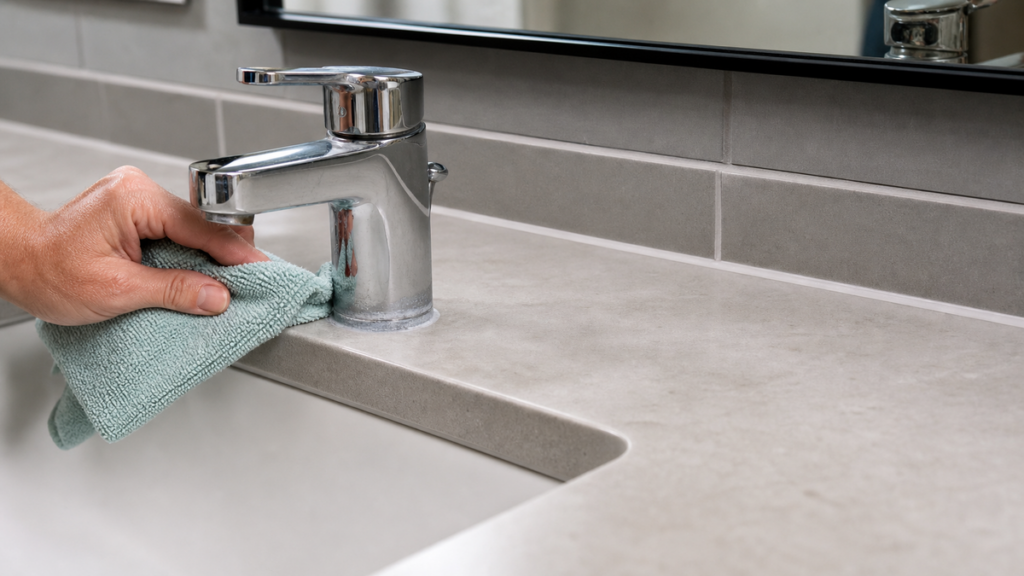
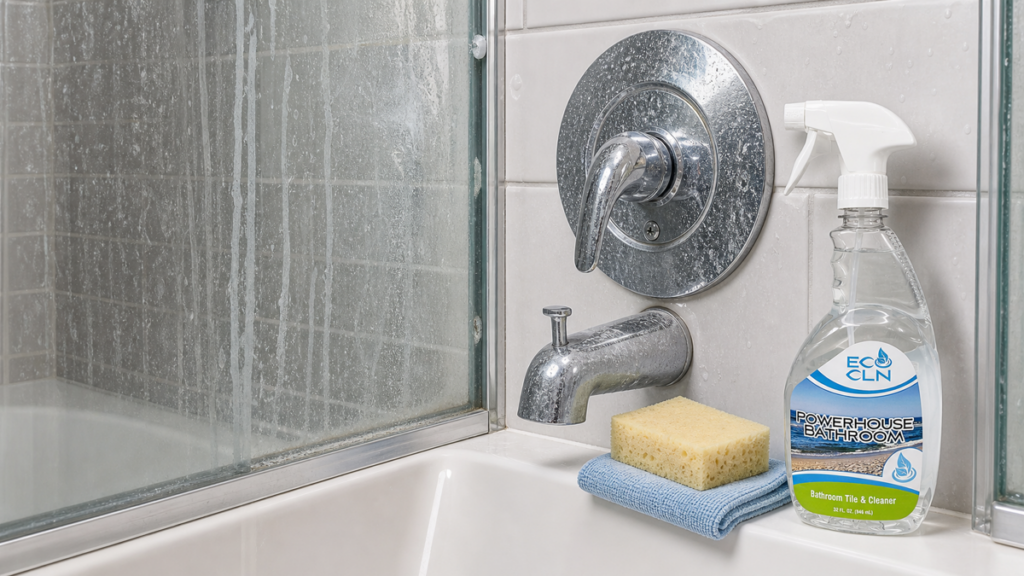
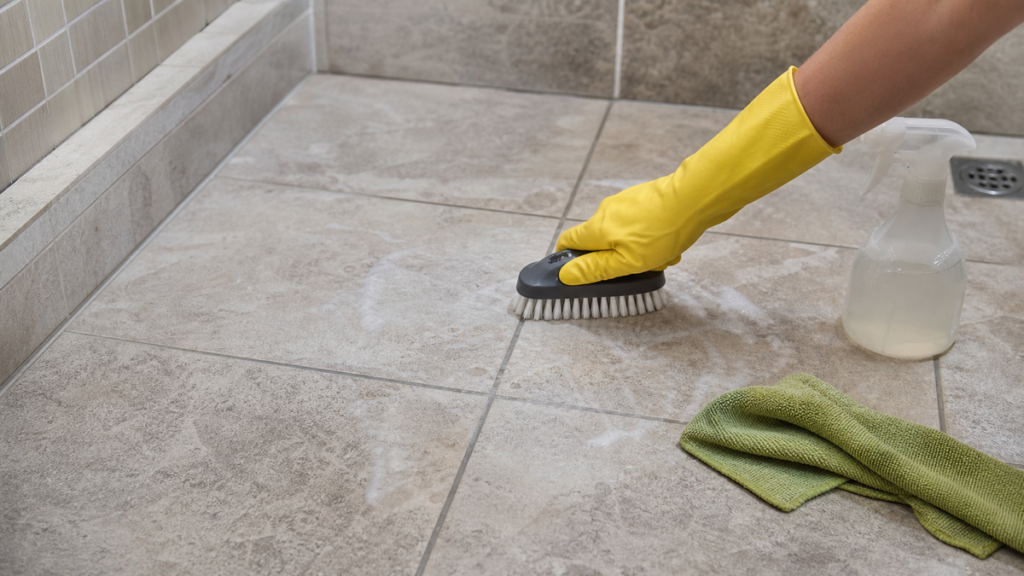
Use Powerhouse Bathroom for compatible routine bathroom buildup such as soap scum, hard-water residue, tile, tubs, sinks, fixtures, and everyday grime. Cleaning that residue is useful maintenance, but it is separate from a mold-kill or remediation claim.
A Better Recurrence-Control Routine
- Fix any active leak or water-entry problem.
- Confirm the bathroom fan vents outdoors and is actually moving air.
- Dry shower glass, tracks, fixtures, and low seams after use.
- Clean soap scum and bathroom grime before it becomes a thick layer.
- Let the room and surfaces dry fully between uses when possible.
- Inspect caulk, grout, ceilings, and wall edges for damage or persistent moisture.
- Escalate repeated or extensive growth instead of endlessly adding cleaner.
When to Call a Professional
EPA says that moldy areas larger than about 10 square feet, significant water damage, sewage-related contamination, or suspected HVAC contamination warrant additional professional guidance. See EPA mold cleanup guidance.
Also escalate if growth appears behind walls, keeps returning after moisture is corrected, involves a damaged ceiling, or the material cannot be cleaned and dried safely.
Common Bathroom Mildew Mistakes
- Treating recurring growth only as a cleaner-strength problem.
- Assuming color identifies the organism.
- Running a fan that vents into an attic or is not actually exhausting moisture.
- Caulking or painting over visible growth or wet material.
- Leaving shower tracks, seams, or lower edges wet every day.
- Calling Powerhouse a mold killer, mildew killer, sanitizer, disinfectant, or antimicrobial product.
- Repeatedly soaking damaged grout, drywall, caulk, or porous material.
Where Powerhouse Bathroom Fits
Eco Cln Powerhouse Bathroom belongs in the routine-cleaning part of the plan: soap scum, hard-water buildup, tile, tubs, sinks, fixtures, shower areas, and everyday bathroom grime. Moisture control, repair, and proper mold cleanup are separate jobs.
FAQ
Why does mildew keep coming back in the same shower corner?
That corner may dry slowly, collect soap residue, have weak airflow, or sit near a leak or failed seam. Fix the moisture source instead of only repeating cleaner.
Does Powerhouse Bathroom kill mold or mildew?
Do not make that claim. Powerhouse is positioned for bathroom buildup and grime, not as a mold-killing or disinfecting product.
Should I run the bathroom fan after showering?
Yes when the fan is properly vented and functioning. The goal is to remove moisture and help surfaces dry.
Can I just caulk over recurring dark growth?
No. EPA advises cleaning and drying moldy surfaces before painting or caulking. Failed or contaminated caulk may need replacement.
When is a bathroom mold problem too large for DIY cleanup?
EPA uses roughly 10 square feet as a point where additional professional guidance is recommended, especially with major water damage or contaminated water.
The Bottom Line
When mildew-looking bathroom growth keeps returning, let the pattern guide the next step. Condensation across several cool surfaces points toward humidity and ventilation; a damp line beside one seam, ceiling edge, or plumbing penetration can point toward a localized leak or failed seal. Dry the room, run the exhaust fan during and after bathing as the manufacturer recommends, squeegee compatible surfaces, spread wet curtains, and remove standing water from tracks and corners. Clean ordinary soap film, hard-water residue, and compatible bathroom grime with Powerhouse only where its current directions and the surface maker allow it. Do not claim the cleaner kills mold or substitute another wet pass for repairing caulk, grout, leaks, insulation, or ventilation. Stop and escalate when growth covers a large area, returns from behind a finish, follows water damage, or anyone has a health concern. The durable fix is controlling the moisture source while cleaning only the reachable compatible residue.
Continue with this related Eco Cln guide: Soap scum vs. hard-water stains.
For the soap film, hard-water residue, and everyday bathroom grime that often coexist with damp shower areas, Eco Cln Powerhouse Bathroom is the focused Eco Cln cleaner. Pair routine cleaning with moisture control and surface repair instead of relying on cleaner alone.