How to Find a Hidden Pet Urine Smell When You Can’t See the Spot

Quick Answer
Start by narrowing the odor to one room or zone. Check the floor perimeter, baseboards, rug edges, furniture legs, pet beds, doorways, corners, and vertical surfaces at pet height. Smell close to suspect areas rather than spraying cleaner everywhere.
Humane World for Animals recommends using your nose, closely examining suspect areas, and using a black light to help identify older dried messes.
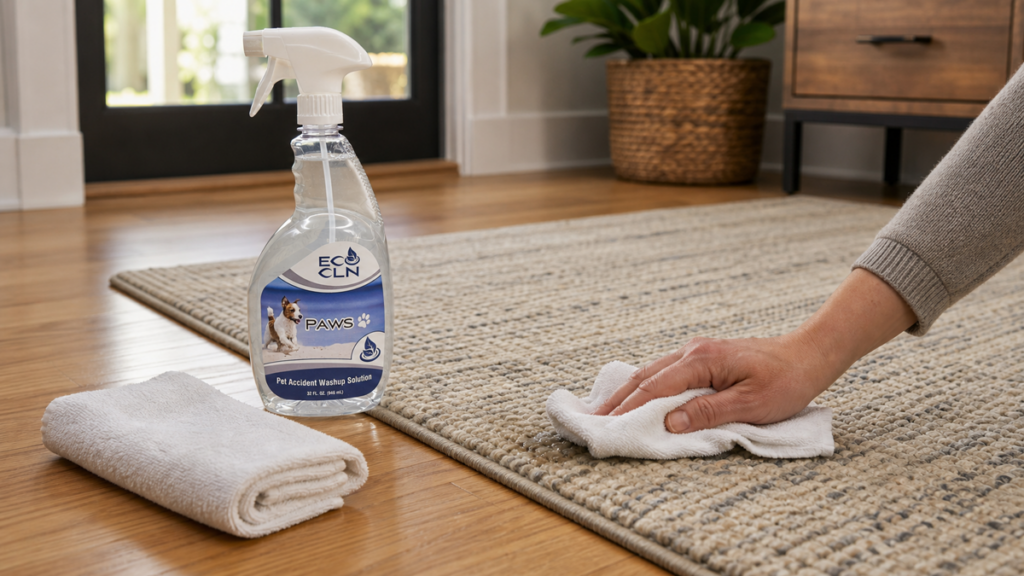
A black light is a locator clue, not perfect proof. Mark suspect spots lightly, then inspect the material and odor before cleaning. Once the source is reasonably identified, use a pet-accident cleaner such as Eco Cln PAWS on compatible surfaces according to the product directions.
Why the Smell Can Be Strong When the Spot Is Invisible
Old urine can dry without leaving an obvious dark stain. It can spread farther than the visible wet spot, wick into carpet backing, reach a rug pad, run toward baseboards, or hit a vertical surface if a pet marked rather than squatted.
Humidity or later damp cleaning can make an old odor noticeable again, which is why the smell can seem to ‘come back’ in a room that looks clean.
Step 1: Narrow the Odor to a Room or Side of the Room
Close doors temporarily and compare rooms. Then move slowly through the suspect room. Get lower to the floor where appropriate, but avoid putting your face directly against an unknown contaminated surface.
Notice whether the odor is strongest near a wall, doorway, couch, pet bed, rug, litter area, or favorite marking location.
Step 2: Check the Perimeter Before the Center of the Carpet
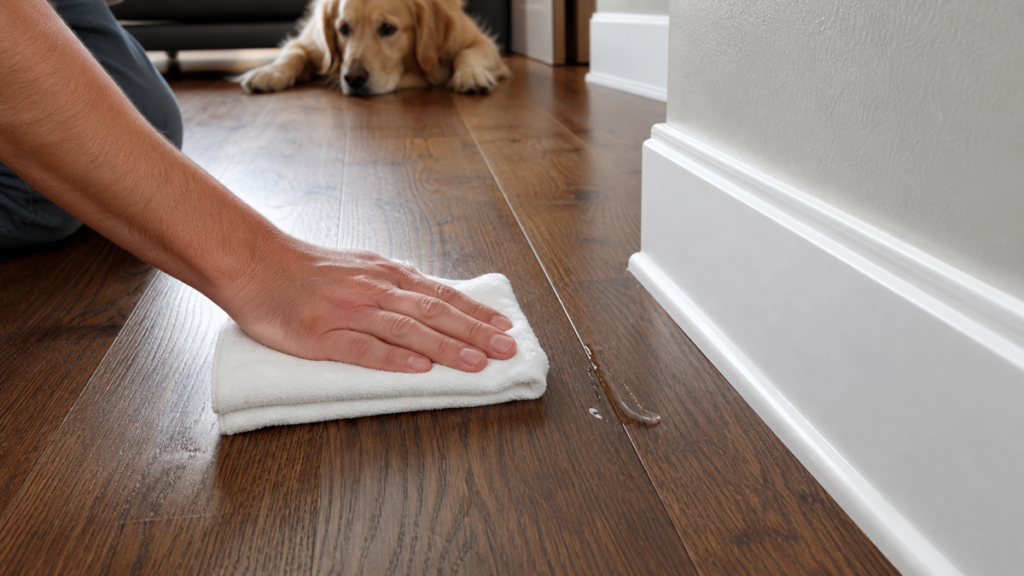
Pet urine often ends up where floors meet walls: baseboards, carpet edges, transition strips, door frames, furniture legs, and corners. Male dogs and marking cats may leave urine on vertical surfaces rather than only on the floor.
If the smell is concentrated along trim, use the dedicated dog urine smell from baseboards guide instead of repeatedly soaking the middle of the floor.
Step 3: Look Under and Behind Things
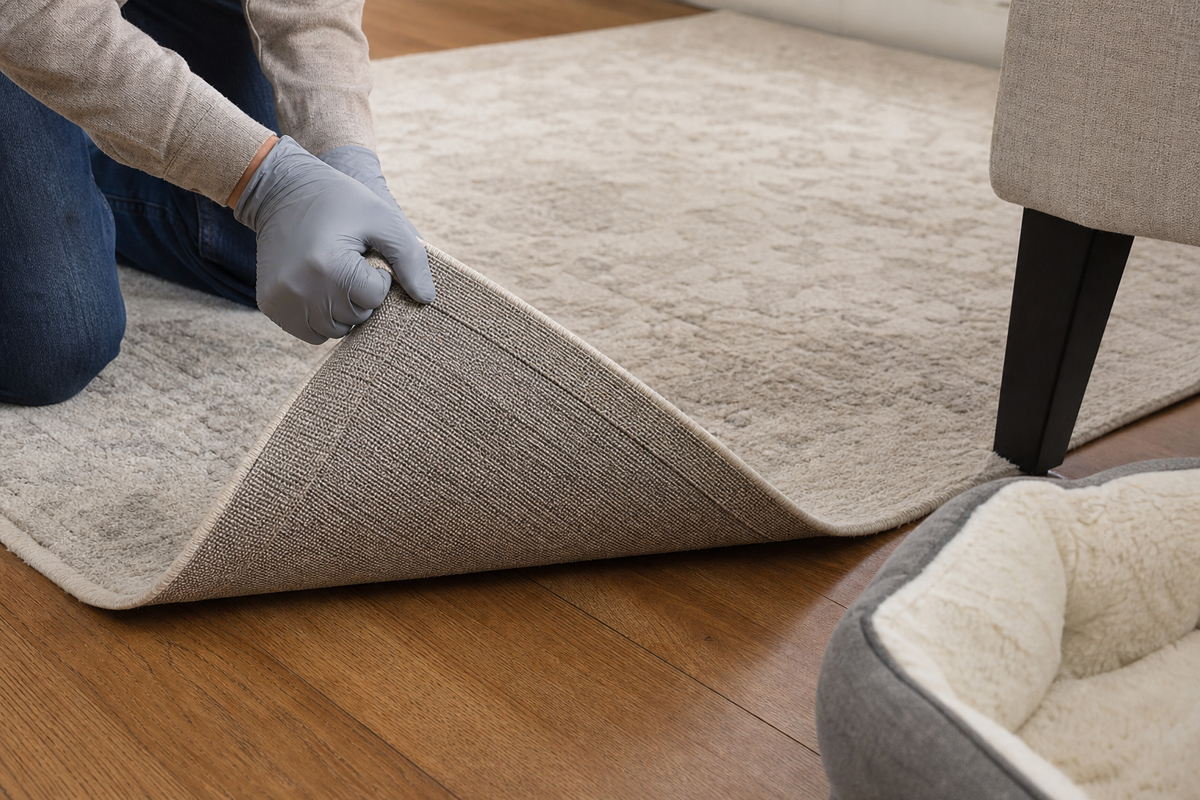
Lift washable rugs and check the backing and pad. Inspect beneath pet beds, under the front edge of couches, around furniture feet, near curtains that touch the floor, and behind litter boxes or crates.
Check both the top and underside of absorbent items. A clean-looking rug surface can hide contamination in the pad or backing.
Step 4: Use a Black Light in a Dark Room as a Clue
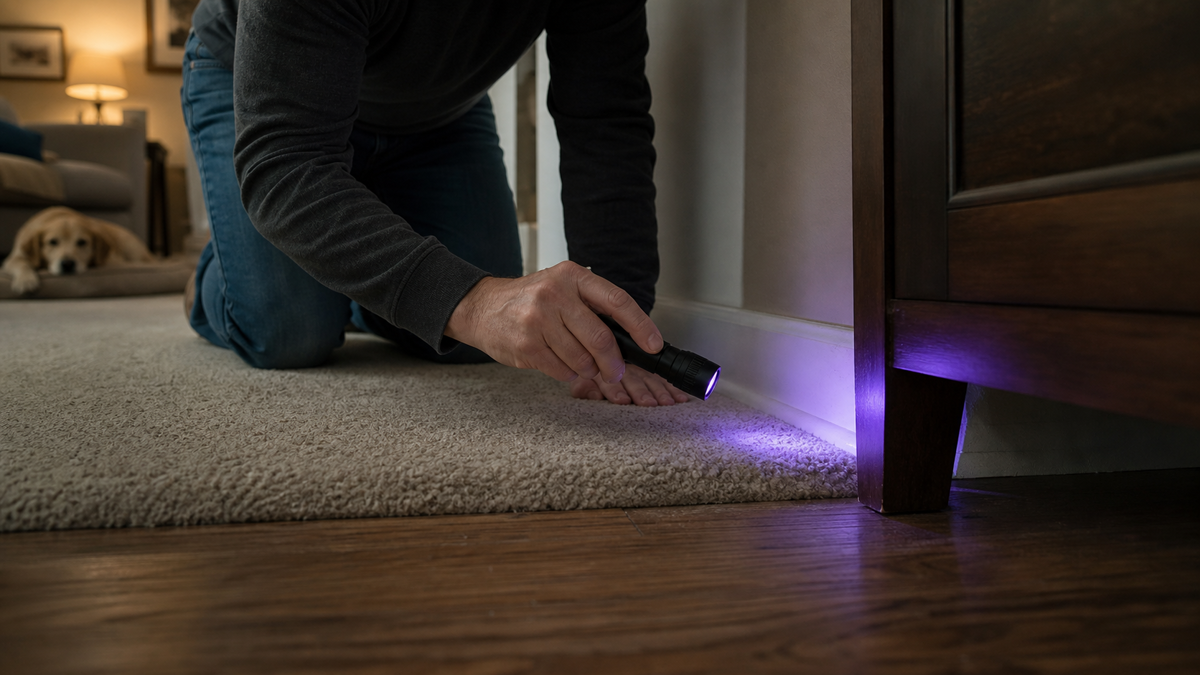
Humane World suggests a black light for locating older dried messes, and VCA Animal Hospitals notes that black lights can help identify soiled sites.
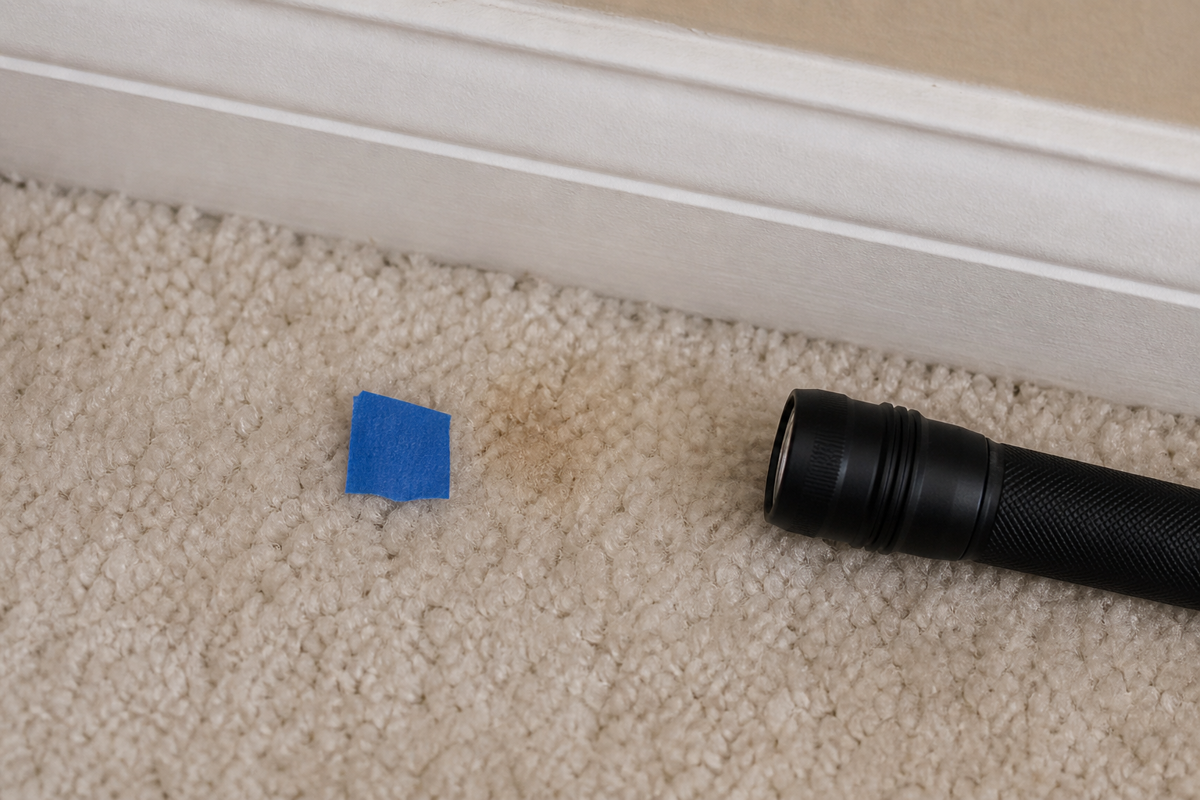
Darken the room, scan slowly, and mark suspicious areas with removable painter’s tape or a light chalk outline where appropriate. Then turn the room lights back on and inspect the spot normally.
Do not assume every fluorescent patch is urine. Cleaners, food, fibers, dyes, and other organic residues can also glow. Use location, odor, shape, and surface context together.
Step 5: Check Vertical Surfaces and Repeated Marking Zones
Scan or inspect baseboards, wall corners, furniture legs, lower curtains, doors, trash cans, plant pots, and other vertical objects at pet height. A vertical urine mark may create a strong odor while leaving very little on the floor.
Look for repeated small spots rather than one large puddle, especially near windows, doors, new furniture, or objects brought into the home.
Step 6: Mark Suspect Spots Before You Clean
If you identify several possible areas, mark them before treatment. This keeps you from losing track of the original odor map once the room smells like cleaner.
Photographing or numbering spots can also help if you need to re-check them after everything dries.
Step 7: Clean the Confirmed Area, Not the Whole Room
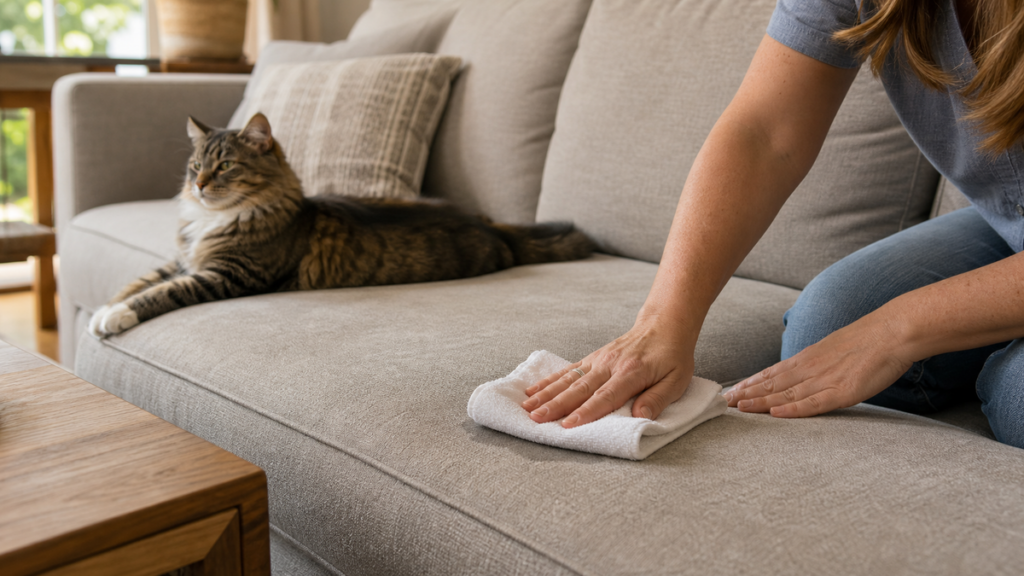
Eco Cln PAWS is made for pet urine odors, organic stains, carpets, rugs, upholstery, hard floors, pet beds, and repeat accident spots. Blot any moisture first, apply PAWS to the actual affected zone, blot or wipe, and let the area dry fully.
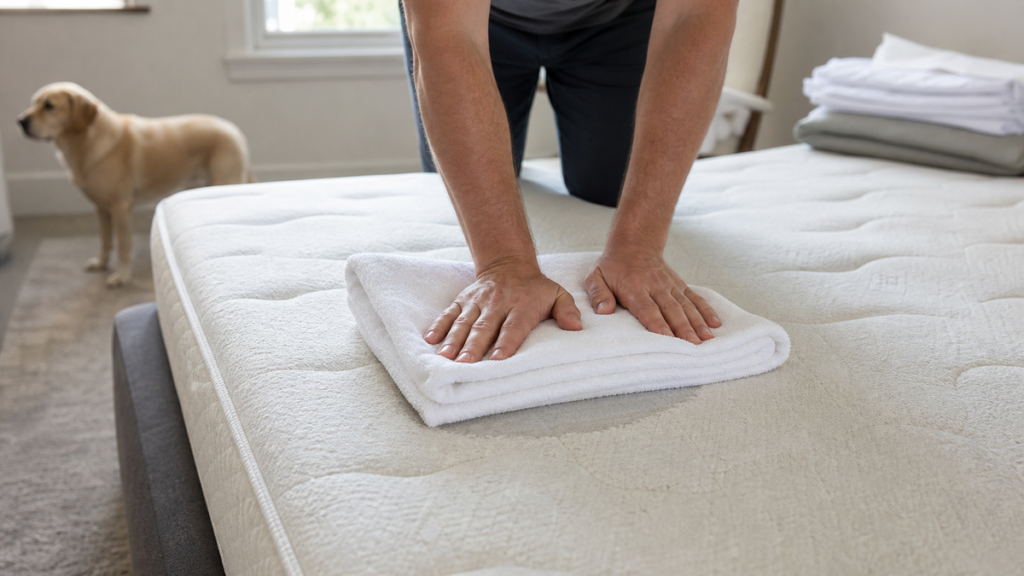
Keep moisture controlled on carpet, upholstery, wood edges, and bedding. If the odor seems to come from padding, subfloor, inside a mattress, or behind trim, surface treatment may not reach the full source.
Step 8: Recheck Only After the Area Is Dry
Do not judge the final odor while carpet or fabric is still damp. Once the treated spots are dry, return to the room and repeat your odor check.
If one area still smells, focus there. If the odor is still broad and source-less, inspect HVAC returns, trash, damp materials, drains, or other non-pet odor sources before assuming there is more urine everywhere.
What If the Accidents Suddenly Started?
A sudden change in house-training, frequent urination, straining, excessive drinking, or repeated accidents can have behavioral or medical causes. Cleaning handles the mess; it does not diagnose why it happened.
VCA guidance on inappropriate urination recommends veterinary evaluation when a previously house-trained pet begins urinating indoors or urinary signs suggest a health issue.
Common Hidden-Odor Search Mistakes
- Spraying deodorizer across the whole room before locating the source.
- Assuming the center of the carpet is the only place to check.
- Ignoring vertical surfaces, rug pads, carpet edges, and baseboards.
- Treating every black-light glow as confirmed urine.
- Soaking several suspect spots at once and losing track of what worked.
- Punishing the pet instead of addressing cleanup and the reason for repeat accidents.
Where PAWS Fits
Eco Cln PAWS is the targeted Eco Cln cleaner once you have identified the pet-accident zone. The search comes first; PAWS is for cleaning urine odors, organic residue, upholstery, carpet, pet beds, hard floors, and repeat accident spots—not for spraying blindly across an entire room.
FAQ
Will a black light always find pet urine?
No. It can help locate older soiled areas, but not every urine spot fluoresces strongly and other residues can glow. Use it together with odor, location, and visual inspection.
Where should I look first if I smell urine but see no stain?
Start with baseboards, carpet edges, rug pads, furniture legs, pet beds, doorways, corners, and vertical surfaces at pet height.
Should I spray PAWS everywhere until the smell goes away?
No. Locate the likely source first, then treat the affected zone. Broad overspraying can add unnecessary moisture and make it harder to identify what actually solved the problem.
Why does pet urine smell stronger on humid days?
Old residue in absorbent materials can become more noticeable when humidity rises or the area gets damp again.
When should I call a vet about repeat accidents?
If a previously house-trained pet suddenly begins urinating indoors, urinates frequently, strains, drinks much more than usual, or shows other urinary changes, contact a veterinarian.
The Bottom Line
Start by narrowing the odor to one room or zone. Check carpet edges, rug undersides, baseboards, furniture legs, pet bedding, and nearby lower walls before adding cleaner. Use a black light only as a locator clue, mark suspect spots, and confirm the odor and material. Treat the smallest verified area, then let it dry fully before deciding whether another source remains.
Once you have actually found the pet-accident zone, Eco Cln PAWS gives you the targeted cleaner for urine odors, organic stains, carpet spots, upholstery, hard floors, pet beds, and repeat accident areas. Find first. Treat second. Dry completely.