How to Clean Dog Urine From Hardwood Floor Seams and Edges

Quick Answer
For dog urine on hardwood, speed and moisture control matter more than aggressive scrubbing. Blot the liquid immediately with dry absorbent towels, then check the flooring manufacturer’s care instructions before using any cleaner. Do not pour water or cleaner into plank seams, wall edges, or transitions.
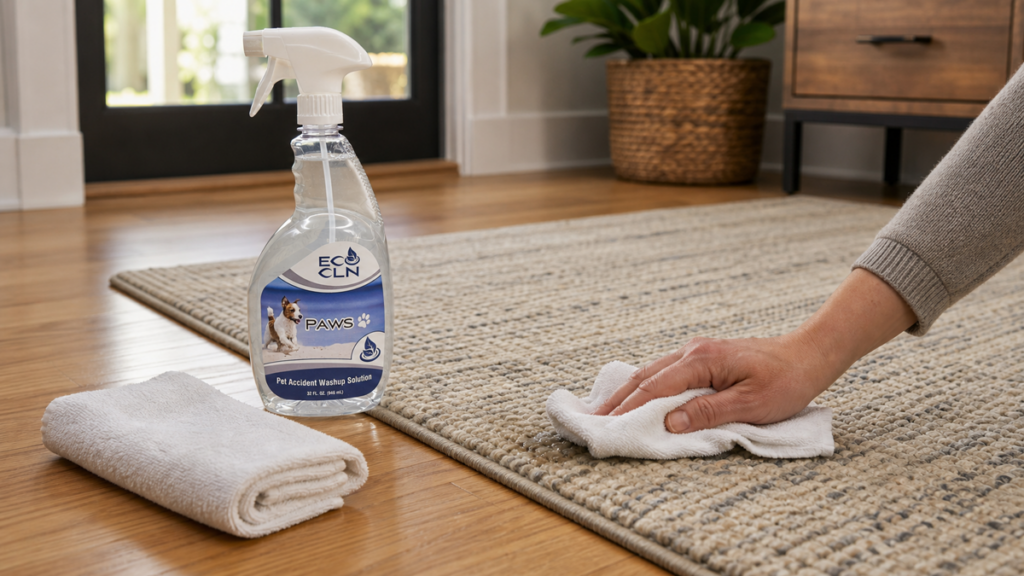
If the hardwood is sealed and the floor manufacturer allows the cleaning method, Eco Cln PAWS is the Eco Cln pet-accident cleaner for urine odors and organic pet messes. Apply it in a controlled way—preferably to a cloth when seams are exposed—wipe the affected surface and edge, then dry the area completely.
If odor, dark staining, cupping, swelling, or finish damage remains after the surface is dry, stop repeated wet cleaning. The urine may have penetrated the finish, the plank joint, the baseboard edge, or the subfloor and may need professional evaluation.
Why Hardwood Seams Are Different From a Tile Floor
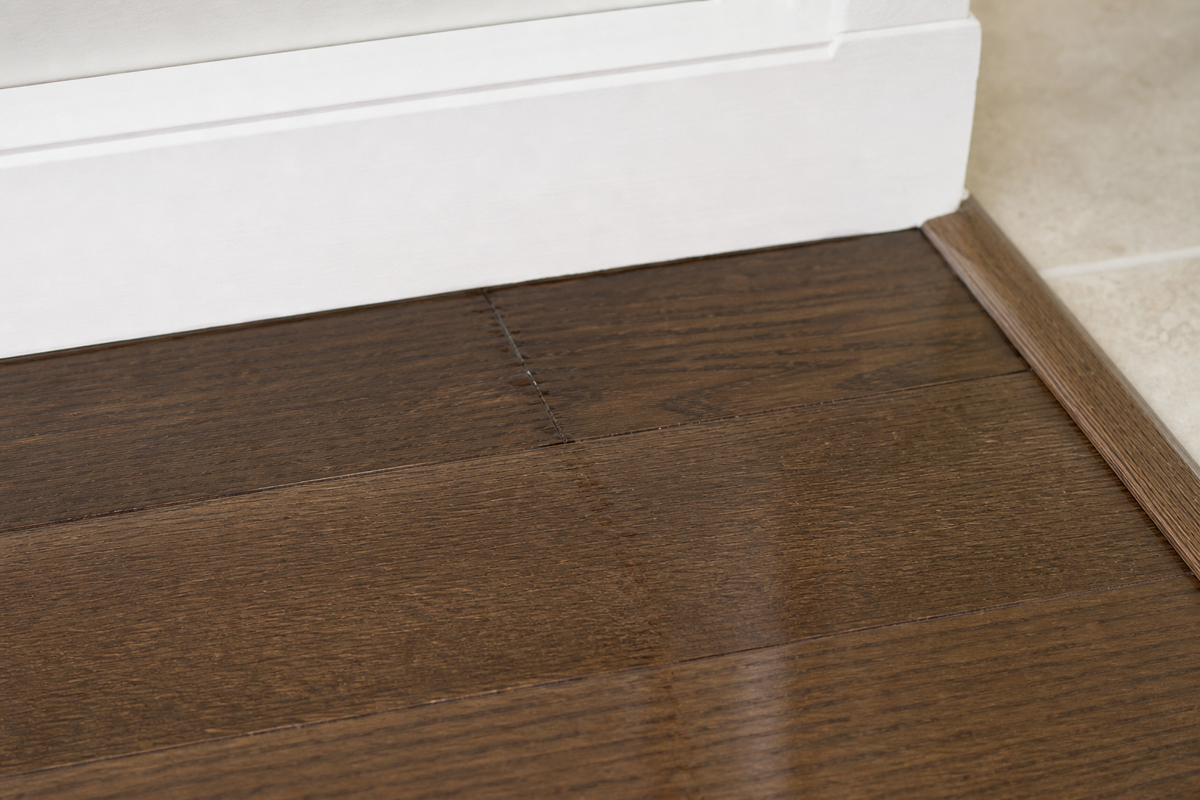
A sealed wood surface can look easy to wipe, but the joints between boards are still places where liquid can travel. Pet urine may move along the grain, into plank seams, under a baseboard, or toward a transition strip before you find the accident.
Shaw hardwood-care guidance recommends wiping spills immediately with a clean dry cloth and using the correct floor cleaner rather than adding unnecessary moisture. That is the right mindset for pet accidents too: remove liquid first, then clean conservatively.
Step 1: Blot the Urine Immediately
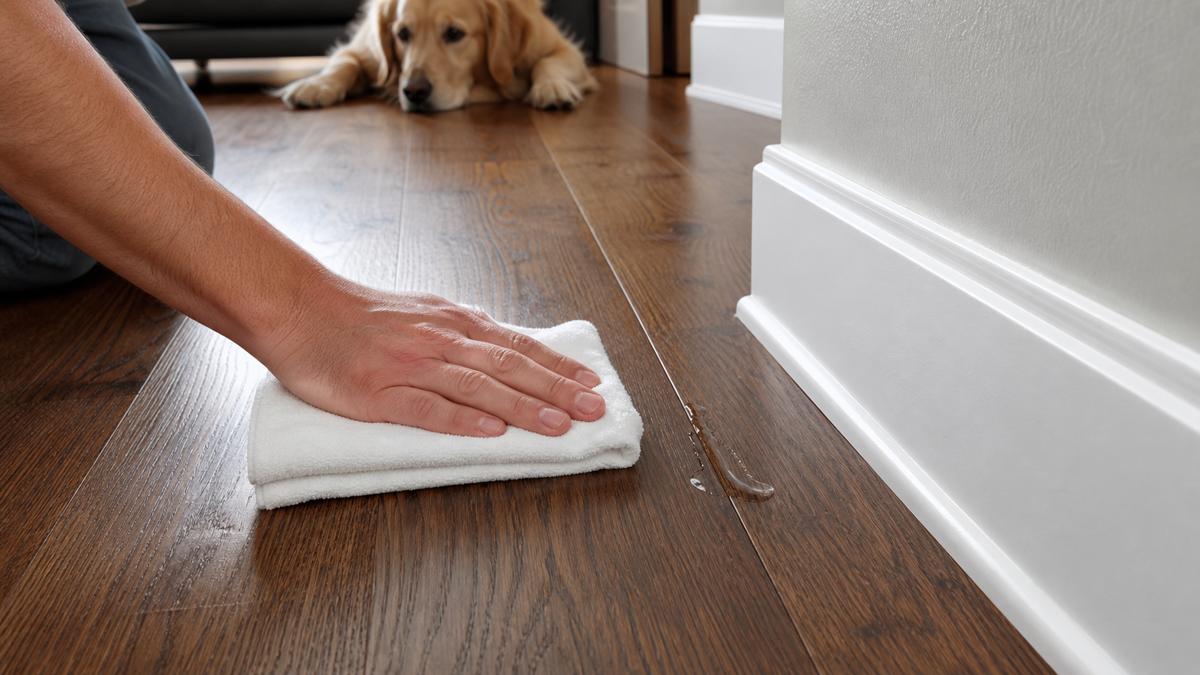
Place clean absorbent towels over the accident and press straight down. Lift and replace the towel until very little moisture is transferring. Do not scrub the puddle across a larger area.
Check the direction the liquid traveled. Follow the seams toward the wall, rug edge, doorway, or floor transition. A narrow wet line can be more important than the center of the original puddle.
Step 2: Identify the Hardwood and Finish
Solid hardwood, engineered hardwood, site-finished floors, factory-finished floors, oil-finished floors, waxed floors, and water-resistant hardwood products can have very different care rules. If you know the brand, use the manufacturer’s cleaner and method requirements as the final rule.
If the floor is unfinished, damaged, worn through, or has open seams, moisture can penetrate much more easily. Do not assume a pet cleaner that works on a sealed hard floor is automatically safe for exposed wood.
Step 3: Test the Cleaner Away From the Main Accident
Test PAWS or any proposed cleaner in a hidden, finished area first. Check after the test dries for changes in sheen, color, texture, or finish.
If the floor manufacturer restricts cleaners to a specific hardwood product, follow that restriction instead of using generalized pet-cleaning advice.
Step 4: Clean the Surface Without Flooding the Seams
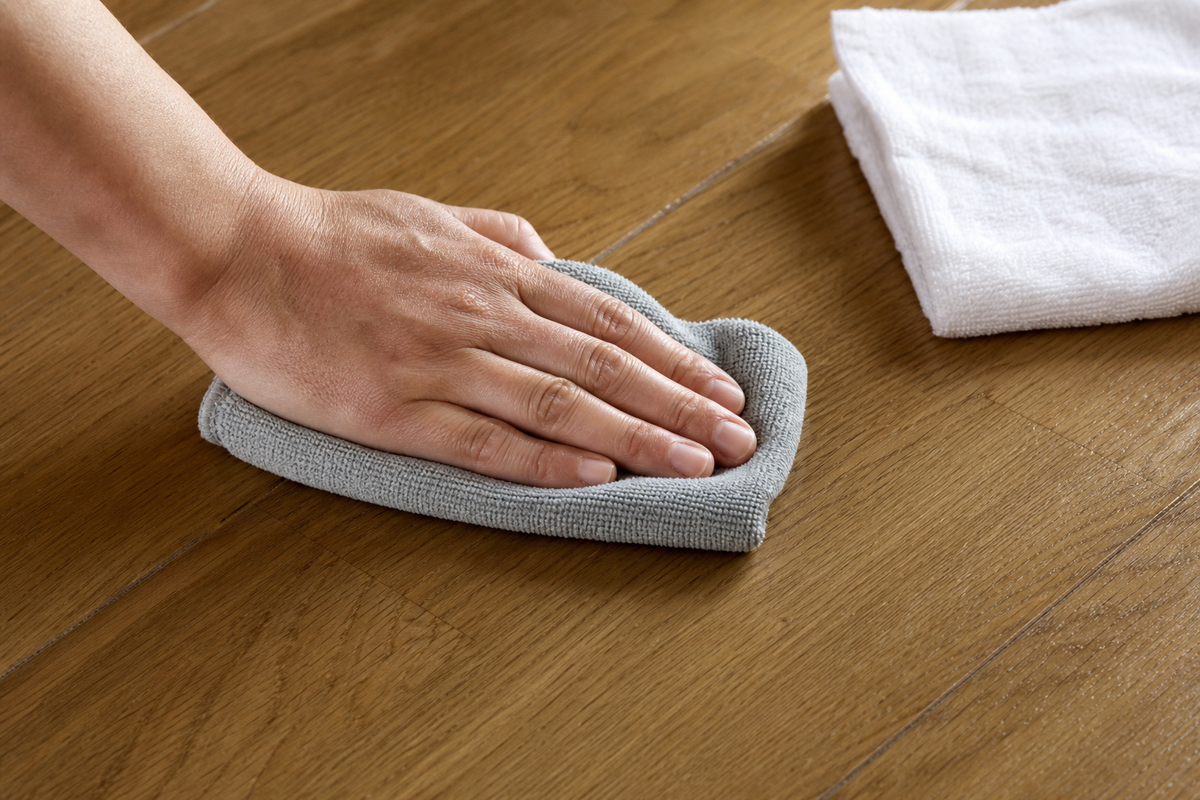
For a compatible sealed hard floor, apply PAWS according to the product directions while keeping liquid out of open seams and gaps. When seams are the concern, dampening a microfiber cloth with product and wiping the surface can provide more control than heavy direct spraying.
Work from the outside of the accident toward the center. Wipe the plank faces and the immediate seam line. Do not use enough liquid that it pools between boards.
Step 5: Clean the Wall Edge and Baseboard Separately
If the accident reached the wall, clean the baseboard face and floor edge as separate surfaces. Our dog urine/baseboard guide covers that zone in more detail.
Avoid forcing cleaner into the gap under the baseboard. If odor seems strongest underneath the trim, the source may be beyond the accessible surface.
Step 6: Dry the Area Completely
Use clean dry microfiber or absorbent towels and remove remaining moisture from the plank faces, seams, and wall edge. Increase ordinary room airflow if needed, but do not use steam on the wood.
Judge the final odor only after the floor is dry. Damp wood, cleaner, and urine residue can all smell different while moisture is still present.
What If the Odor Comes Back?
A returning smell can mean the urine moved below the finish, into a seam, under trim, or into the subfloor. It can also mean there was more than one accident. Do not keep adding liquid to the top of the same boards without confirming the source.
Bruce Flooring notes that dog urine can damage hardwood floors and emphasizes fast cleanup. If dark staining or damage remains, a flooring professional may need to assess whether the finish, board, or material below the floor has been affected.
Warning Signs That Surface Cleaning May Not Be Enough
- Persistent odor concentrated in one seam or wall edge after full drying.
- Dark or black discoloration that does not change with surface cleaning.
- Raised edges, cupping, swelling, or gaps that have changed shape.
- A finish that has turned cloudy, soft, rough, or worn through.
- A history of repeat accidents in the same location.
Common Mistakes With Pet Urine on Hardwood
- Flooding the floor because the odor seems deep.
- Using a wet mop or steam mop over the accident area.
- Scrubbing with abrasive pads that change the finish.
- Pouring cleaner directly into seams or under baseboards.
- Using bleach, acids, or mixed household chemicals without flooring approval.
- Covering the area with a rug before it is fully dry.
Where PAWS Fits
Eco Cln PAWS is the pet-focused cleaner for urine odors, organic stains, carpets, rugs, upholstery, hard-floor accident zones, pet beds, and repeat pet mess areas when used as directed. For hardwood, the key qualifier is surface compatibility: use only on a sealed, compatible finish and follow the flooring manufacturer’s restrictions.
For a broader comparison of hard-floor and carpet accidents, see pet accident cleanup on hard floors vs. carpet.
FAQ
Can dog urine get between hardwood floor boards?
Yes. Liquid can travel into plank seams, along wall edges, or under transitions before it is absorbed. That is why fast blotting and minimal moisture are important.
Should I pour pet cleaner into the seam where the urine went?
No. Flooding the seam can drive more moisture below the finished surface. Clean the accessible surface carefully and follow the floor manufacturer’s care instructions.
Can I use PAWS on hardwood floors?
PAWS is positioned for pet accidents and hard-floor accident zones. On hardwood, use it only when the finish is sealed and compatible, spot-test first, and follow the flooring manufacturer’s cleaner restrictions.
Why is the wood darker after a pet accident?
The dark area may be remaining moisture, staining in the finish or wood, or damage below the surface. Let the area dry fully. Persistent discoloration may need professional flooring assessment.
When should I call a flooring professional?
If odor repeatedly returns after proper drying, the floor swells or cups, the finish is damaged, or dark staining persists in a seam or board, professional evaluation is appropriate.
The Bottom Line
For dog urine on hardwood, blot immediately and keep cleaner out of exposed seams, wall edges, and transitions. Use only a method allowed for the floor’s finish, apply cleaner to a cloth when possible, and dry the area completely. If odor returns or a seam darkens, swells, or cups, stop adding moisture—the accident may be below the finish and need professional evaluation.
For a compatible sealed hard-floor pet accident, Eco Cln PAWS gives you a pet-specific cleaner for urine odors and organic messes without turning the cleanup into a flood-the-floor project. Blot first, clean carefully, and dry completely.