How to Clean Windows Without Streaks or Cloudy Residue

Quick Answer
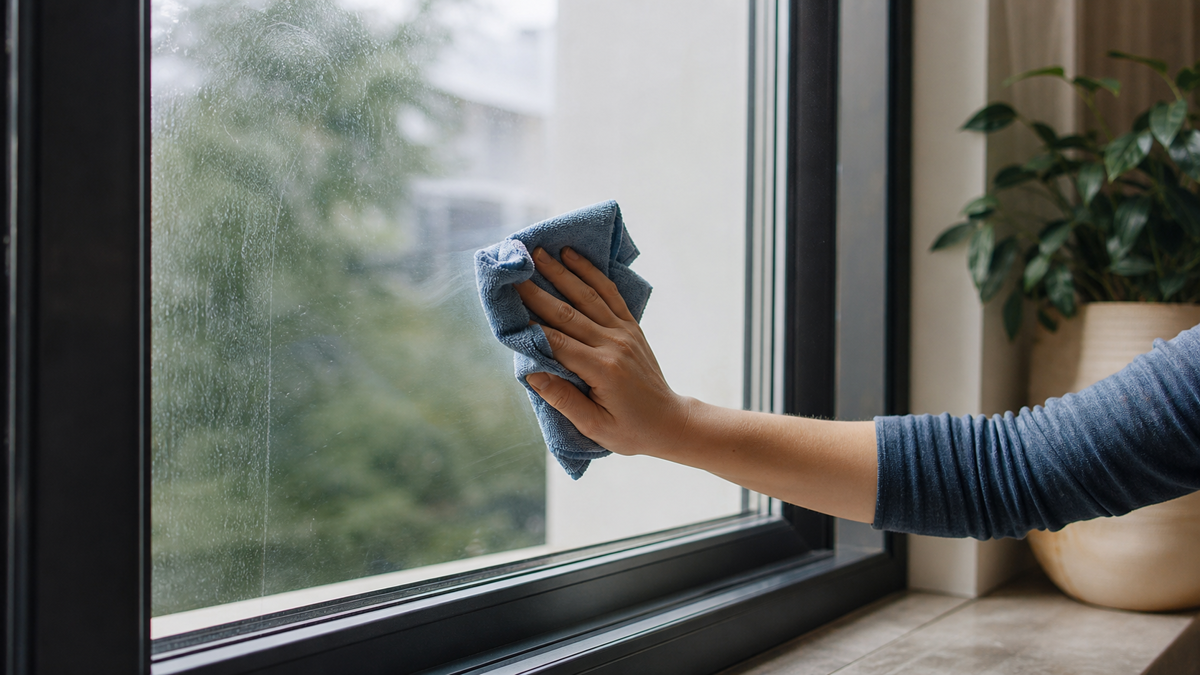
For streak-free windows, clean out of strong direct sunlight when possible, remove loose dust first, use a small amount of glass cleaner, and work from the top of the pane downward with a clean lint-free microfiber cloth or squeegee. Eco Cln See-Clear is the ammonia-free glass and surface cleaner in the Eco Cln lineup for windows, mirrors, glass doors, chrome, stainless steel, appliances, and shiny surfaces when used as directed.
Use light product, change to a clean cloth surface as it becomes damp or dirty, and finish by removing all remaining moisture and cleaner. Most cloudy residue problems get worse when more spray is layered over a window that already has cleaner film on it.
Why Windows Streak After Cleaning
Window glass makes small mistakes visible. Too much cleaner can dry into a film. A dirty cloth can drag oils and dust back across the pane. Cleaning in direct sun can make solution dry before you remove it. Minerals in tap water can leave spots, and linty paper products can make clean glass look fuzzy or hazy.
The solution is not usually a stronger cleaner. It is a cleaner surface, cleaner tools, less product, and a complete dry finish.
Step 1: Check the Glass and Window Manufacturer Instructions
Before deep cleaning, check whether the window has tinted film, specialty coating, aftermarket film, decorative glass, Low-E surfaces exposed on a particular product, or another feature with special care instructions. Window manufacturers may restrict abrasive tools, strong chemicals, or certain cleaning methods.
Marvin care guidance specifically warns against cleaning glass in direct sunlight, especially coated or tinted surfaces, and recommends non-abrasive tools. Use your own window manufacturer instructions as the final rule.
Step 2: Clean on a Cloudy or Cooler Window When Possible
Strong sun can heat the glass and make cleaning solution evaporate unevenly before you have time to wipe it off. Andersen window-care guidance notes that direct sunlight can cause streaks or allow cleaning products to dry on glass.
If you have to clean in sun, work in smaller sections and remove solution quickly.
Step 3: Remove Loose Dust and Grit First
Use a clean dry microfiber cloth, soft brush, or appropriate vacuum attachment to remove dust from the glass edges, frame, and sill before wet cleaning. If there is visible grit stuck to the glass, rinse or loosen it carefully rather than grinding it under a cloth.
This is especially important on exterior glass, where windblown dirt can act like an abrasive particle.
Step 4: Use a Small Amount of See-Clear
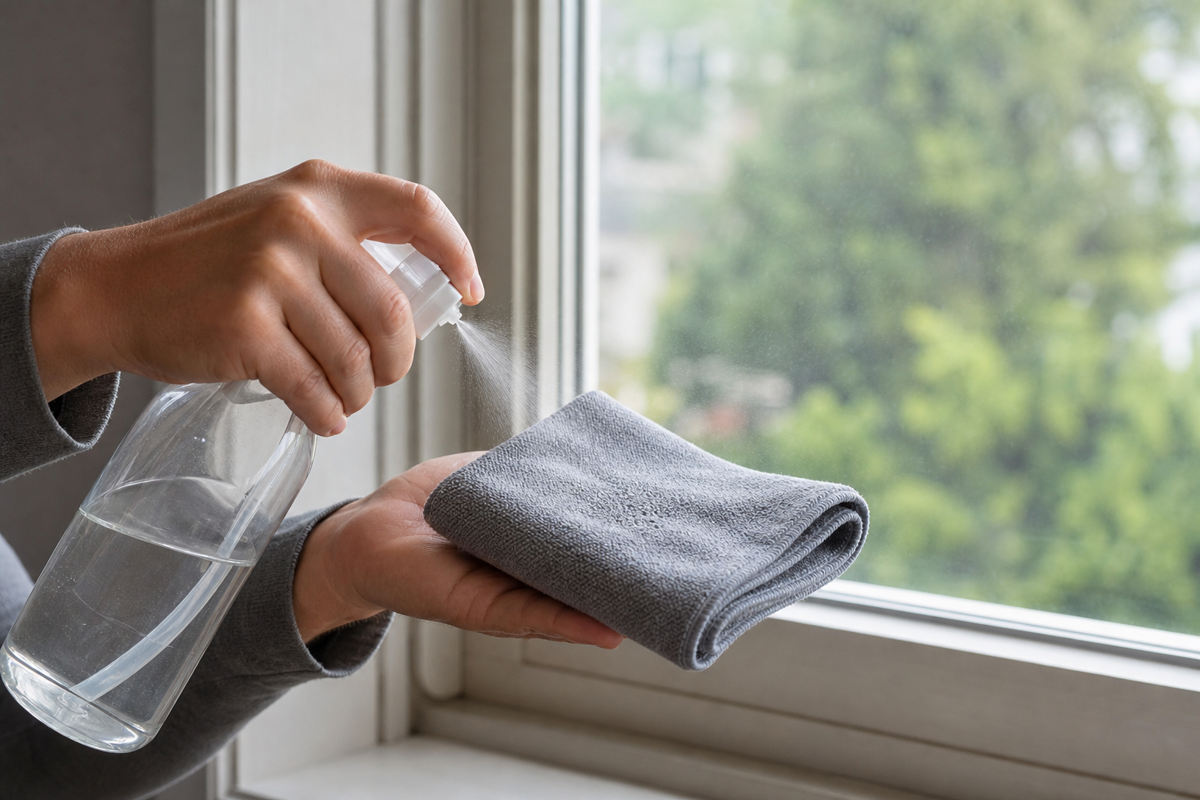
Apply See-Clear directly to the glass or to a clean microfiber cloth according to the product directions. On framed windows, decorative trim, sensitive sills, or areas near seals, applying product to the cloth can give you more control.
Do not soak the window. More liquid means more solution that has to be removed before it dries into streaks.
Step 5: Work From Top to Bottom
Start at the top of the pane and work downward in overlapping passes. This keeps drips moving into areas you have not cleaned yet instead of over sections that are already finished.
Pella window-cleaning guidance recommends cleaning glass from top to bottom and using lint-free microfiber. It also recommends applying cleaning solution to the microfiber cloth instead of automatically soaking the glass.
Step 6: Use a Clean Cloth Surface or Squeegee
Fold your microfiber cloth so you have multiple clean working faces. Rotate the cloth when it becomes damp or visibly dirty. If you use a squeegee, wipe the blade between passes so dirty water is not carried back onto the glass.
Do not use a towel that just cleaned a greasy countertop, stainless appliance, or bathroom sink. Glass needs a truly clean cloth if you want a clear finish.
Step 7: Buff the Final Moisture Away
Finish with a dry microfiber cloth around the pane edges, corners, and any faint streaks left by the first pass. Inspect from an angle. Side light makes thin residue much easier to see than looking straight through the window.
What Causes Cloudy Residue on Windows?
Cloudiness can come from leftover cleaner, minerals from water, aerosol overspray, greasy fingerprints, cooking film on kitchen windows, smoke residue, exterior pollution, or old products that built a film over time. The first cleaning pass may loosen that layer without completely removing it.
If the window has a cloudy patch that does not change after appropriate cleaning, the problem may be inside an insulated glass unit, in a coating, or physical damage rather than removable surface dirt. Cleaning cannot fix failed seals or haze trapped between panes.
Inside vs. Outside Windows
Interior windows usually collect fingerprints, dust, cooking film, pet nose marks, and household aerosols. Exterior windows deal with pollen, rain spots, dirt, and environmental residue. The basic glass technique is similar, but exterior panes may need loose dirt rinsed away before the cleaner touches the glass.
Avoid pressure-washing window glass unless the manufacturer specifically approves it. High-pressure water can affect seals, glazing, frames, or surrounding building materials.
Do Not Ignore Frames, Sills, and Tracks
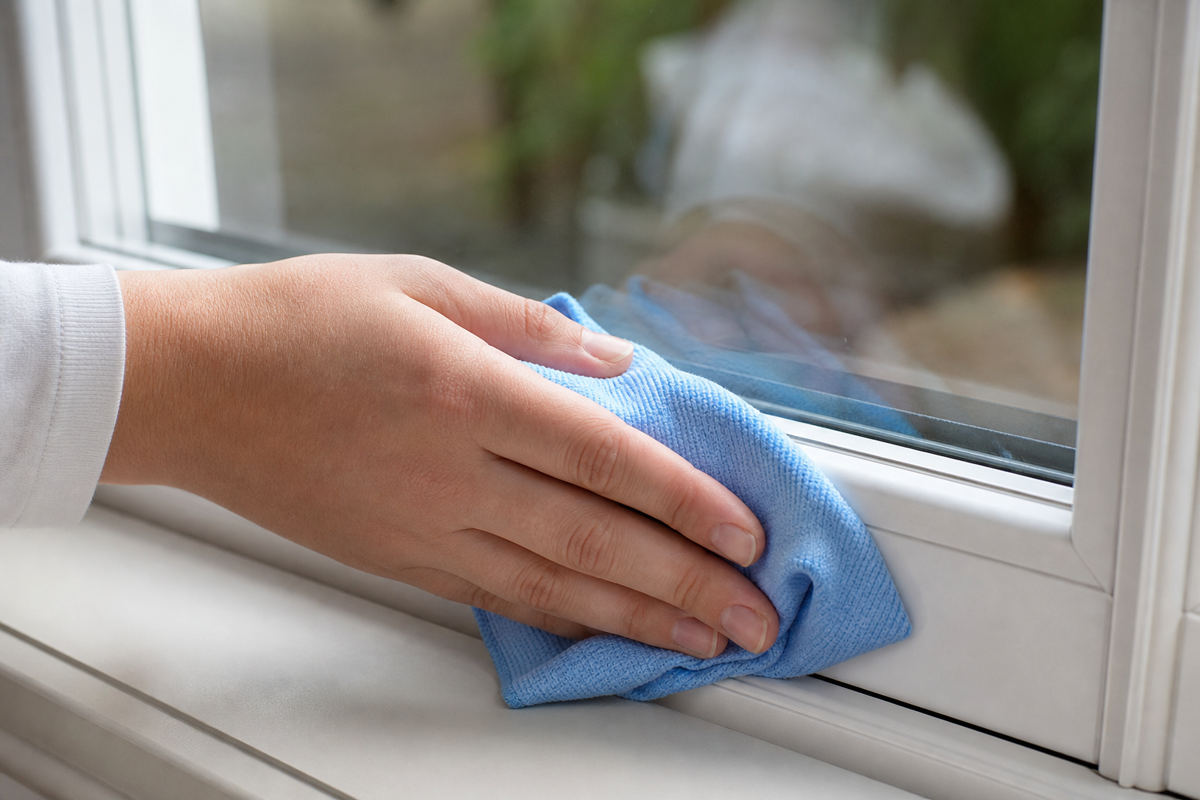
A perfectly clean pane can still look dirty when the frame, sill, and track are loaded with dust. Clean those areas separately with a method appropriate for the frame material. Avoid flooding tracks or letting dirty runoff drain back across the glass.
Keep the pane-focused method separate from frame, sill, and track cleaning. Those areas collect different debris and may need material-specific tools, less moisture around joints, and a dry-debris-first routine before any damp cleaning.
Common Window-Cleaning Mistakes
The biggest mistakes are using too much cleaner, cleaning hot glass in direct sun, using a dirty or linty cloth, skipping loose-dirt removal, letting solution dry on the pane, cleaning every window with one saturated towel, and chasing streaks by adding even more product.
Another mistake is using metal razor blades or abrasive tools on glass without manufacturer approval. Specialty coatings and films can be damaged by aggressive scraping.
Where See-Clear Fits
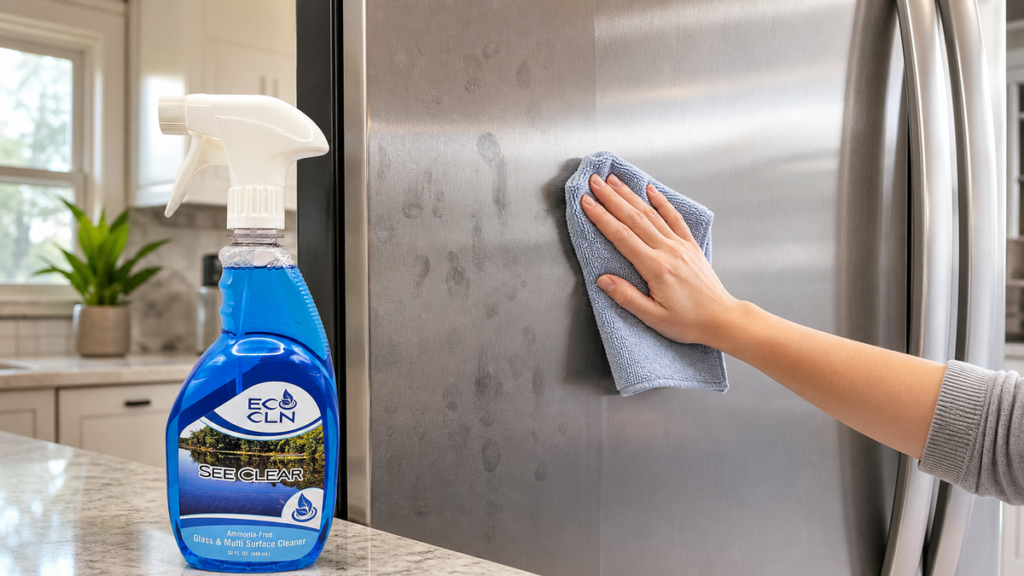
Eco Cln See-Clear is the ammonia-free glass and surface cleaner for windows, mirrors, glass doors, chrome, stainless steel, appliances, display cases, and shiny surfaces. It belongs in the light-residue, fingerprints, haze, and streak-prone cleaning lane rather than heavy soap scum, kitchen grease, or pet stains. For more uses, link to the See-Clear glass and surface cleaner guide.
FAQ
Why do my windows look streaky right after I clean them?
Usually too much product, dirty cloths, fast drying, or cleaner residue. Use less product, clean microfiber, and a dry finishing pass.
Is it better to clean windows in the sun or shade?
Shade or a cooler cloudy period is usually easier because cleaning solution is less likely to dry before you remove it.
Should I spray glass cleaner directly on the window?
You can when the window and product directions allow it, but spraying the cloth first gives more control around frames, seals, trim, and nearby materials.
Why does my window still look cloudy after cleaning?
The haze may be leftover film, minerals, greasy residue, or physical issues such as coating damage or moisture between insulated panes. If proper surface cleaning does not change it, investigate the window itself.
Is See-Clear ammonia-free?
Yes. See-Clear is the Eco Cln ammonia-free glass and surface cleaner for windows, mirrors, chrome, stainless steel, appliances, and shiny surfaces when used as directed.
The Bottom Line
Clean windows when the glass is cool, remove loose dust and grit first, and use only a small amount of glass cleaner. Work from the top down, rotate to a clean microfiber surface or wipe the squeegee blade between passes, and finish the edges with a dry cloth. If cloudy haze remains after the pane is dry, the cause may be mineral film, coating damage, or moisture trapped between insulated panes rather than removable dirt. Eco Cln See-Clear fits compatible windows and other shiny surfaces when used as directed.
For fingerprints, haze, smudges, and routine window cleaning, Eco Cln See-Clear is the ammonia-free glass and surface cleaner built for clear, streak-controlled results on windows and other shiny surfaces when used as directed.