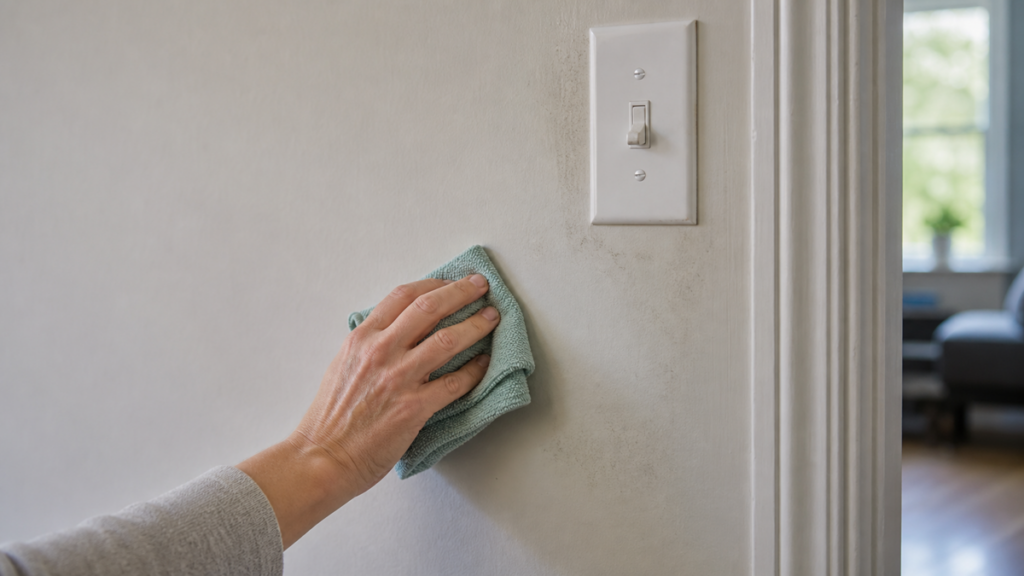
How to Clean Laminate Floors Without Residue or Swollen Seams

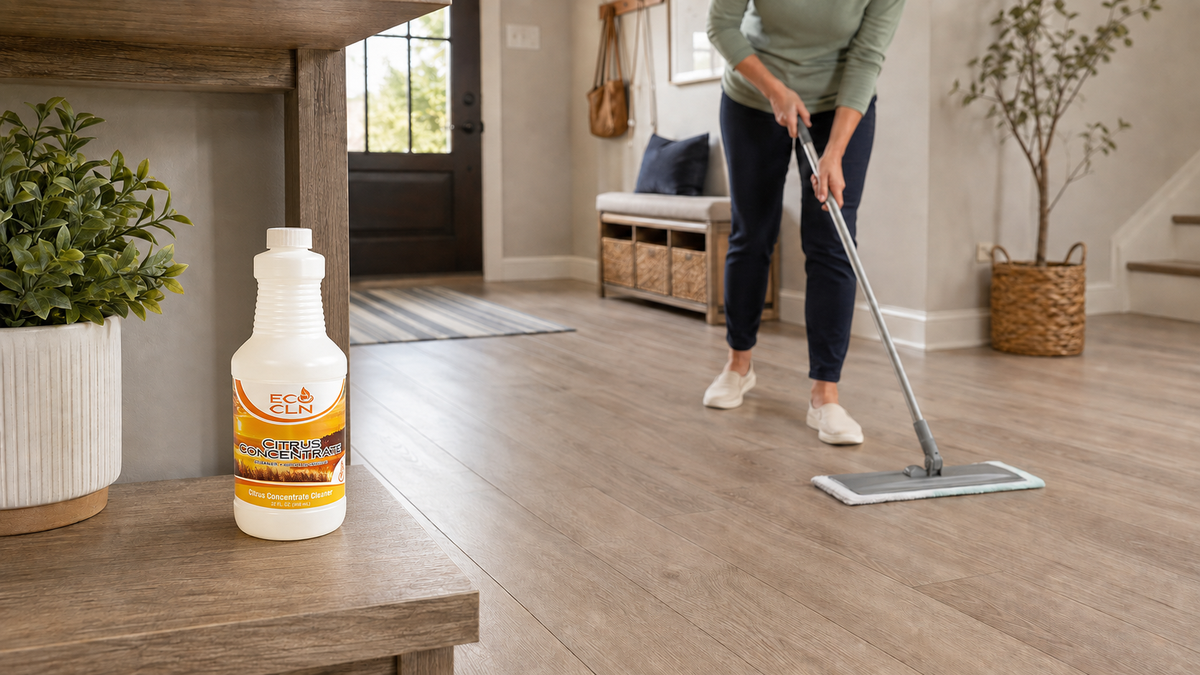
To clean laminate flooring without residue, remove grit first, use the cleaner strength approved for the floor and wring a microfiber mop until it is only lightly damp. Work in small sections, keep liquid out of plank joints and dry any wet seam immediately. More cleaner and more water usually create more haze, not a cleaner floor.
Laminate has a wear layer over a printed design and a wood-fiber core. The face may tolerate routine wiping while damaged edges and open joints remain vulnerable. Manufacturer care instructions and warranty terms should control the process.
Quick Answer
• Vacuum or dust-mop grit before wet cleaning.
• Check the installed laminate brand’s approved products and moisture limits.
• Measure concentrate accurately; never guess by color or scent.
• Use a clean microfiber pad that is damp, not dripping.
• Mop with the plank direction in manageable sections.
• Dry joints, wall edges and transitions immediately.
• If haze remains, stop adding cleaner and investigate residue, dirty water or pad loading.
What Causes Residue on Laminate Floors
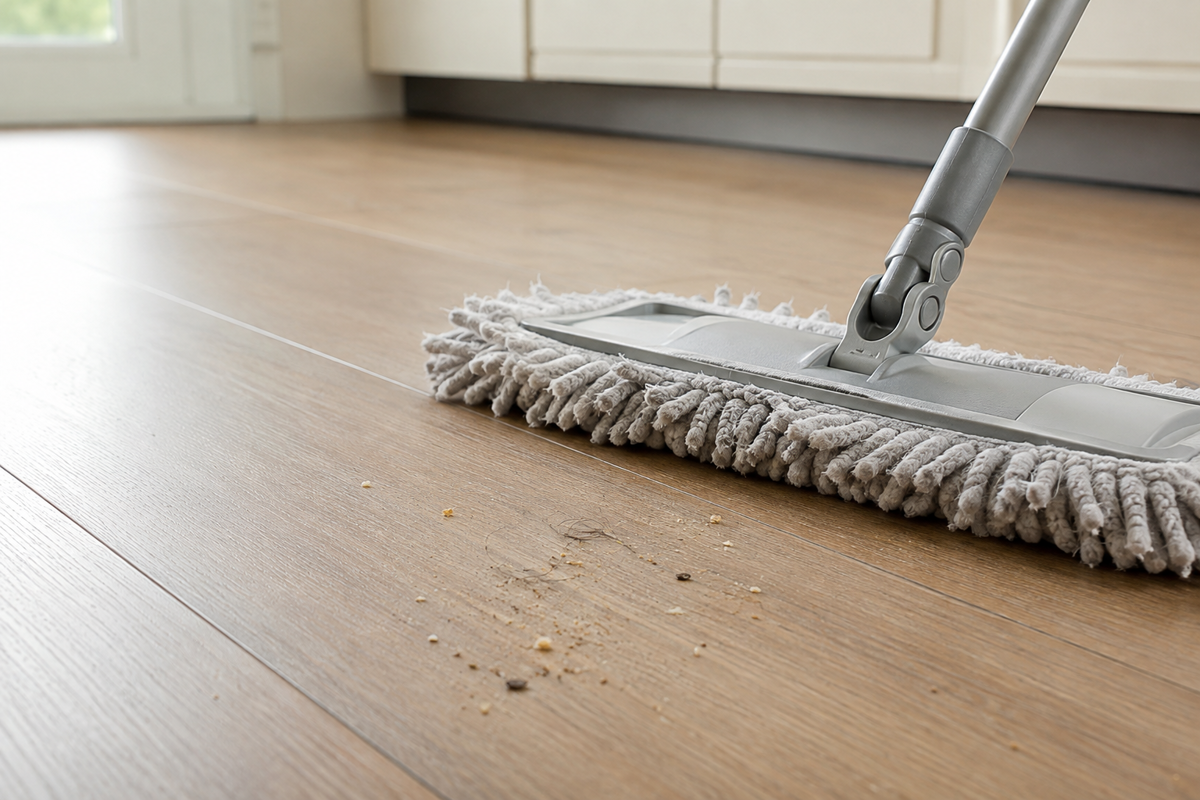
Cloudy film can come from excessive product, an incorrect mix, dirty mop water, fabric softener on the pad, oily tracked-in soil or cleaner left from earlier routines. A saturated pad redistributes the mixture instead of lifting it. Hard water can also leave visible spots as droplets dry.
Residue often feels sticky under shoes and appears as dull arcs matching the mop path. Before repeating the whole job, buff a small dry section with clean microfiber. If the haze transfers, it is likely on the face. If the edge itself is raised or dark, the issue may be moisture in the core rather than removable film.
Mohawk’s laminate care and maintenance guidance stresses product-specific care and prompt spill removal. Treat the installed floor’s instructions as more authoritative than a generic recipe.
Why Laminate Seams Swell
The fiber core can take in liquid through chipped corners, open joints, cut edges and perimeter gaps. Once it swells, the edge may peak, curl or feel rough. Cleaning cannot compress a damaged core back to its original shape.
Steam mops and puddles are especially risky when the manufacturer does not approve them. Liquid can also collect at thresholds, sliding-door tracks, refrigerator edges and beneath a wet mat. Waterproof marketing does not erase installation and warranty limits.
Step-by-Step: Clean Laminate Without Leaving Film
1. Remove grit and hair. Use a laminate-approved vacuum setting or dry microfiber mop. Turn off a beater bar when the floor maker warns against it.
1. Inspect joints and damaged edges. Look for gaps, chips, raised corners and dark seams. Clean those zones with extra moisture control and document existing damage.
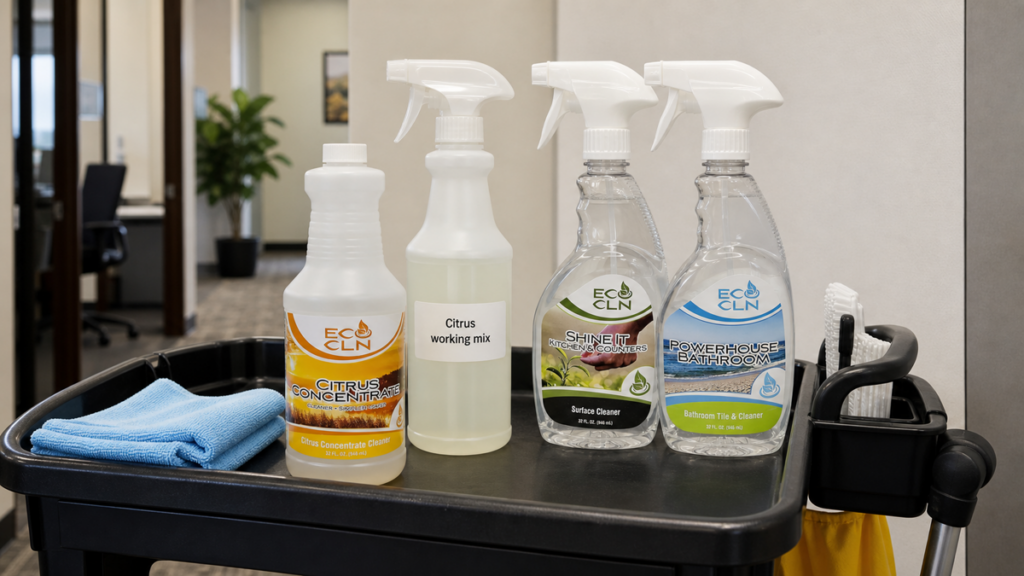
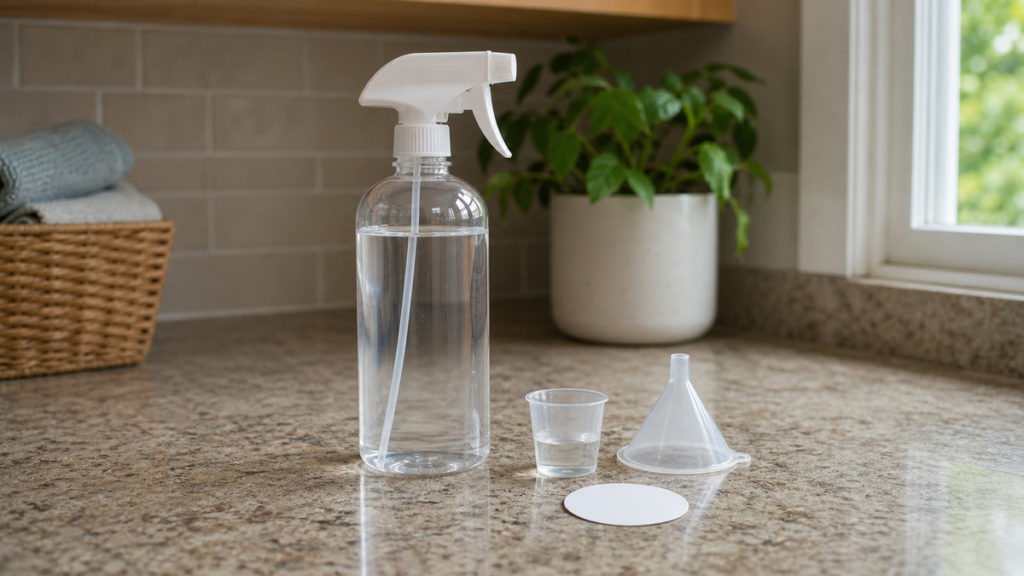
1. Prepare the cleaner accurately. If the floor maker permits Citrus Concentrate, use the light-duty mix of 1 ounce per quart of water for routine cleaning. Add water first, measure the concentrate and label the bottle. Heavy-duty Citrus is 8 ounces per quart, but that stronger mix is not the default for routine laminate mopping.
1. Test a hidden section. Clean a small area near a closet or under movable furniture. Let it dry and compare gloss, slip, color and edge condition.
1. Use a clean, nearly dry pad. Wring the microfiber thoroughly. It should leave a thin damp trail that disappears quickly, not beads or puddles.
1. Work with the plank direction. Mop a small section with overlapping passes. Avoid driving moisture across open joints and into the wall gap.
1. Change loaded pads. When the pad becomes gray or sticky, replace or rinse it as the system allows. A dirty pad spreads grease and product film.
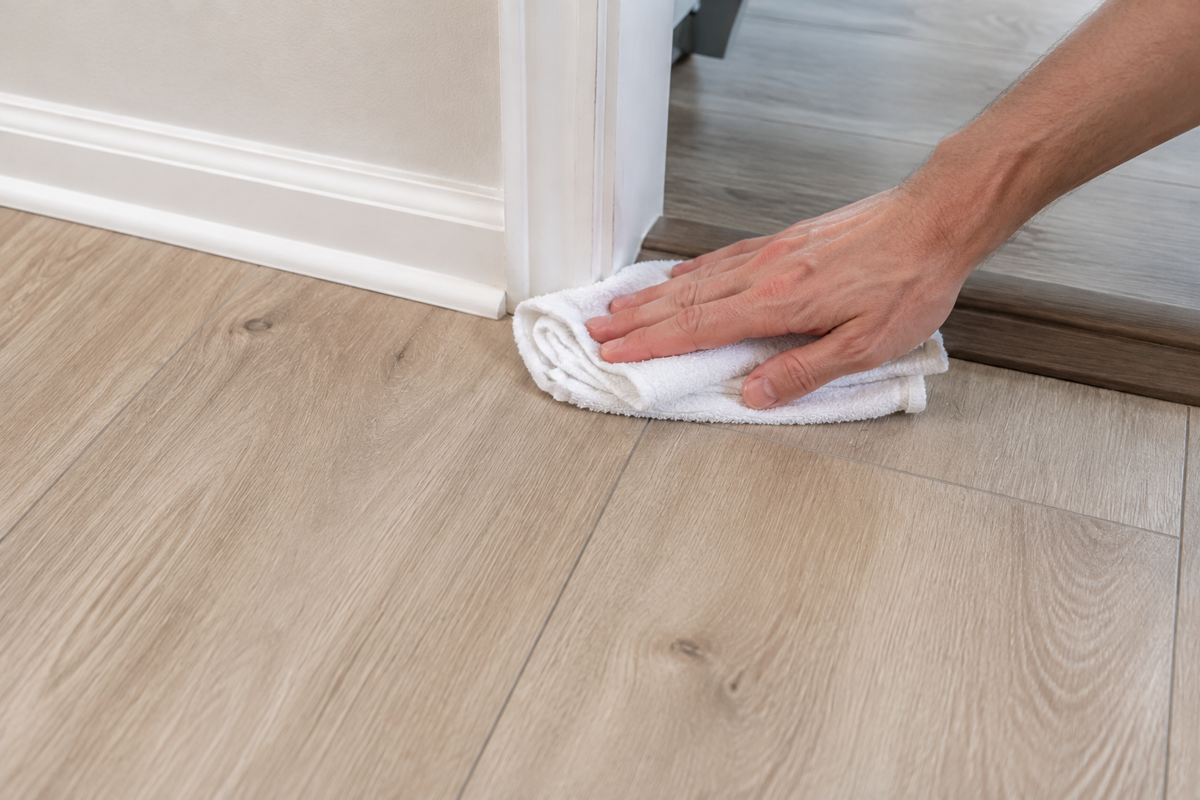
1. Dry seams and transitions. Use a separate dry cloth at plank ends, door thresholds, appliance edges and baseboards.
1. Inspect after complete drying. Check in side light for arcs or haze. Correct the cause before making another full-floor pass.
Where Eco Cln Citrus Concentrate Fits
When the laminate manufacturer permits it, Eco Cln Citrus Concentrate offers a measured light-duty option for routine floor cleaning. Use 1 ounce per quart of water, water first, and a nearly dry pad. Do not jump to the 8-ounce heavy-duty mix for an ordinary laminate floor.
Accurate measurement matters because leftover product can make a clean floor feel sticky. The cleaner concentrate guide explains the 1-ounce, 2-ounce and 8-ounce Citrus levels, while the seven common mixing mistakes covers guessed amounts and wrong mixing order.
Common Laminate-Floor Mistakes
• Wet-mopping before grit is removed.
• Pouring cleaner directly onto the floor.
• Guessing concentrate amounts.
• Using the heavy-duty mix for routine maintenance.
• Reusing a dirty pad until every room looks hazy.
• Letting puddles collect along the wall or beneath a mat.
• Using steam without explicit manufacturer approval.
• Treating a swollen seam as removable residue.
Fixing a Hazy or Sticky Floor
First let the floor dry. Use clean side lighting to identify whether haze follows mop strokes or concentrates at joints. Review what was used, how it was measured, the pad condition and whether a previous polish or wax is present.
Follow the laminate maker’s residue-removal process. Do not stack products in an attempt to cancel one another. The article on why floors feel sticky after mopping helps separate excess cleaner from oily soil and dirty-tool problems.
When Cleaning Is Not Enough
Raised edges, bubbling wear layer, soft core material and persistent dark joints indicate physical damage. Stop adding moisture and ask the flooring maker or installer whether individual planks can be replaced. Check for leaks, pet accidents or water entering at an exterior door before repairing the visible floor.
Frequently Asked Questions
Why does laminate feel sticky after mopping?
Too much cleaner, a dirty pad, oily soil or old product film can remain after the water dries. Identify the source before repeating the job.
How wet should a laminate-floor mop be?
Only lightly damp. It should not drip or leave standing beads, and seams should dry quickly.
Can I use the heavy-duty Citrus mix on laminate?
Not as the routine default. If the floor maker permits Citrus, start with the light-duty 1-ounce-per-quart mix and use stronger cleaning only when both sets of directions support it.
Can a swollen laminate seam be cleaned flat again?
No. Swelling is damage to the plank core or edge. Cleaning may remove soil but cannot reverse the physical change.
Should I use a steam mop on laminate?
Only if the exact flooring manufacturer expressly permits it. Many products restrict steam because heat and moisture can reach joints and the core.
The bottom line
Residue-free laminate cleaning depends on dry soil removal, accurate cleaner measurement, a clean nearly dry pad and prompt seam drying. Use the light-duty Citrus mix only where the floor maker permits it. Stop wet cleaning when edges swell or lift; that is a repair issue, not stubborn grime.