Rental Turnover Cleaning Checklist for Landlords and Property Managers

Quick Answer
Photograph and inspect the empty unit before cleaning. Separate damage, maintenance, pests, leaks, failed caulk, broken hardware, and unsafe conditions from ordinary dirt. Then remove trash and dry debris, clean high surfaces, reset kitchen and bathroom areas, treat stains, clean glass, and finish with floors.
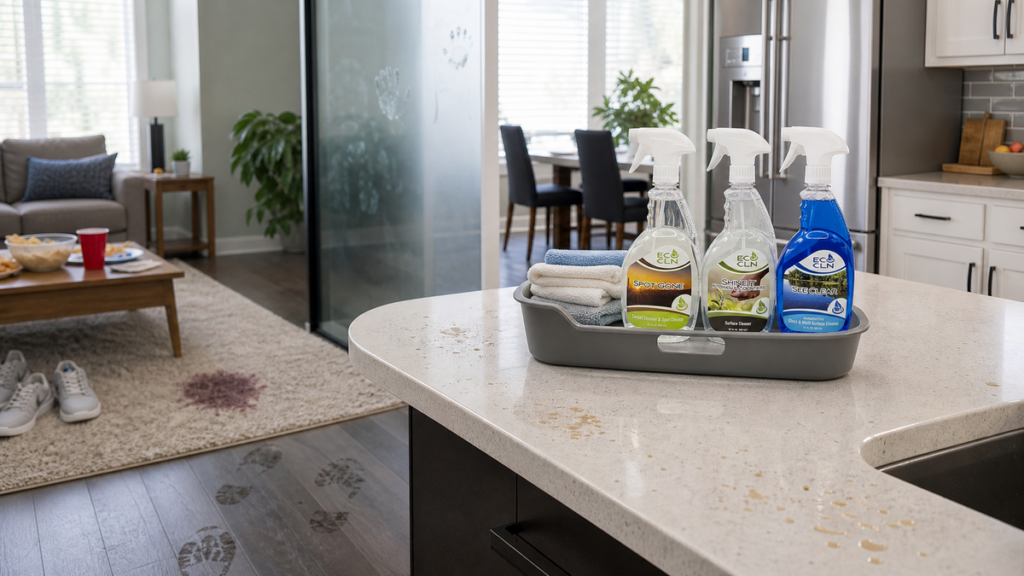
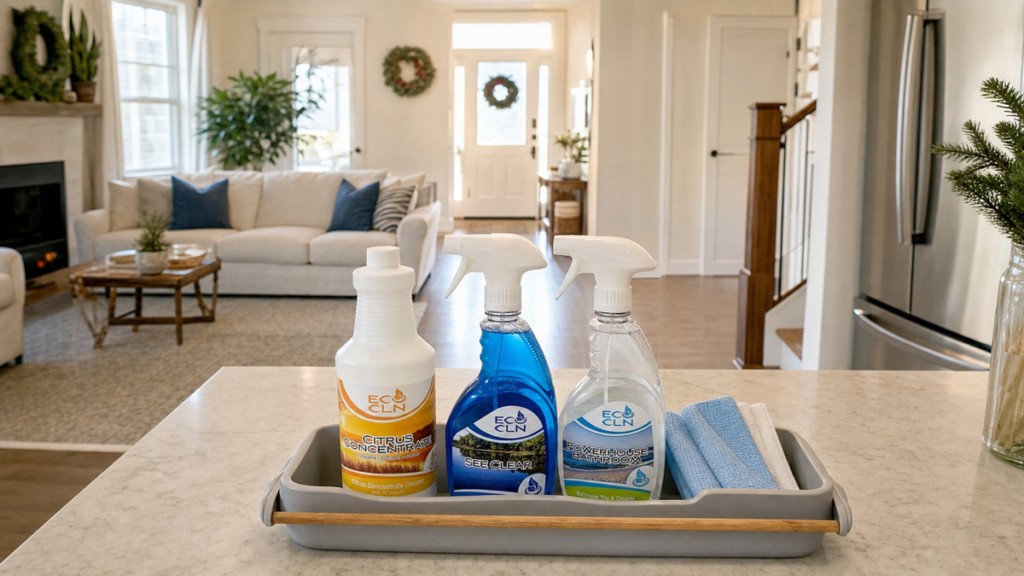
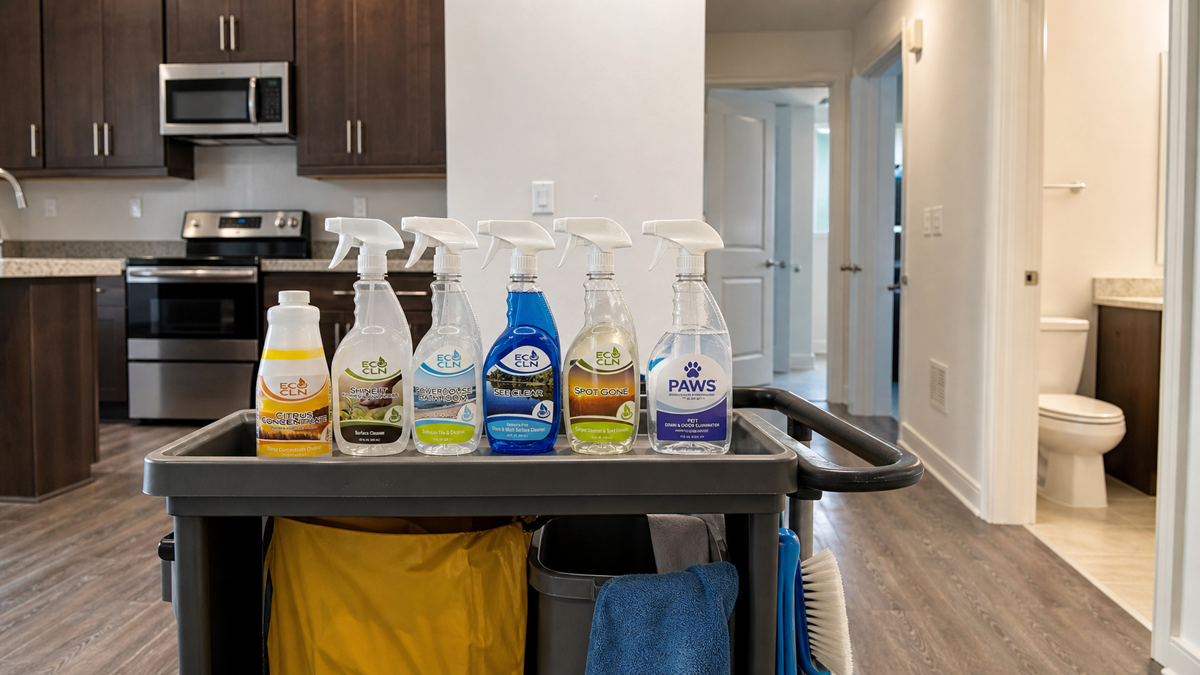
Use the Eco Cln product that matches the mess rather than one cleaner for every surface.
Phase 1: Inspect Before You Erase the Evidence
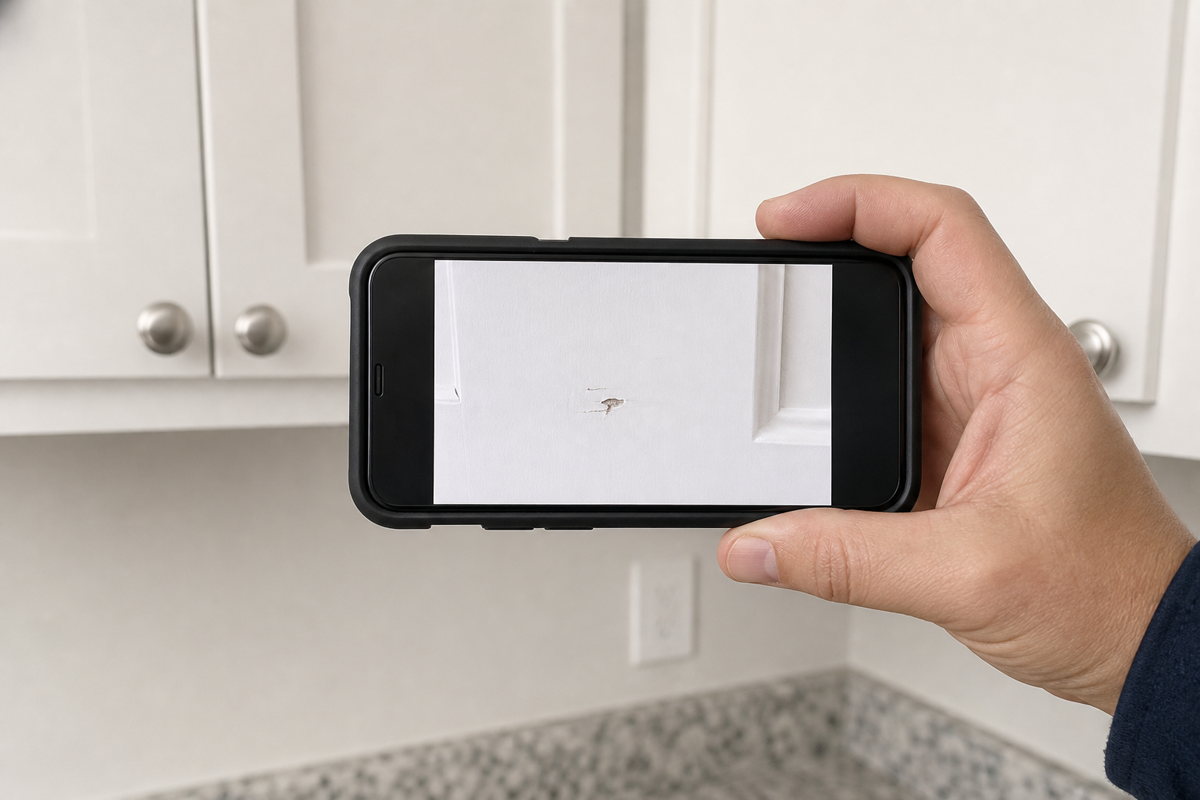
- Photograph walls, floors, appliances, cabinets, bathrooms, windows, doors, and visible damage.
- Document leaks, water staining, failed caulk, loose fixtures, broken glass, damaged flooring, and appliance problems.
- Separate tenant-charge or maintenance decisions from the cleaning workflow before residue is removed.
Phase 2: Remove Trash and Dry Debris
Clear abandoned items, trash, cabinet crumbs, shelf liner debris, and loose dust.
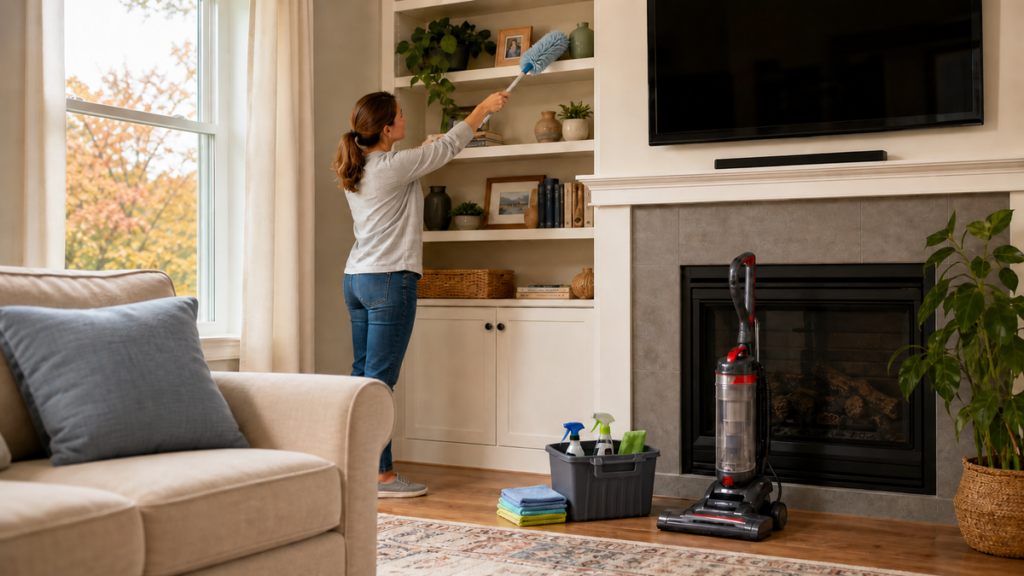
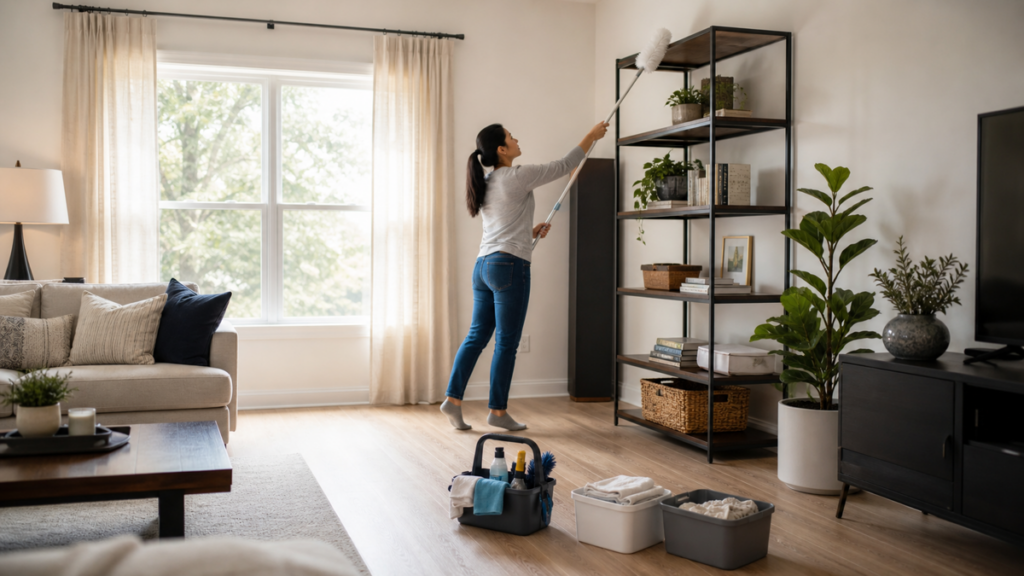
Vacuum upper shelves, vents, blinds, baseboards, window tracks, closets, and floor edges before wet cleaning.
Phase 3: Whole-Home Washable Surfaces
Eco Cln Citrus Concentrate fits compatible washable hard surfaces and larger turnover-cleaning jobs. Use the current dilution guide and the lowest strength that fits the soil.
Spot-test painted walls, trim, and specialty surfaces before broader use.
Phase 4: Kitchen Reset
Shine-It fits compatible counters, grease, cooking residue, appliance exteriors, stainless steel, cabinet fronts, and handles.
Clean inside appliances only according to the appliance manufacturer. Turnover cleaning should not involve spraying general cleaner into vents, burners, controls, seals, or electrical openings.
Phase 5: Bathroom Reset
Powerhouse Bathroom is the bathroom-focused option for soap scum, hard-water buildup, tubs, tile, sinks, fixtures, shower areas, and bathroom grime.
Inspect caulk, grout, toilet seals, leaks, slow drains, and damaged finishes separately. Cleaning cannot repair them.
Phase 6: Carpet, Upholstery and Pet Evidence
Spot Gone fits compatible non-pet carpet, rug, upholstery, and fabric spots from food, grease, mud, dirt, and everyday stains.
PAWS fits pet urine odors, organic pet accidents, repeat pet spots, hard floors, carpets, rugs, upholstery, and pet bedding areas.
If odor returns after drying, inspect pad, subfloor, baseboards, seams, or other deeper materials before flooding the surface again.
Phase 7: Windows, Mirrors and Shiny Surfaces
See-Clear is the ammonia-free Eco Cln cleaner for compatible windows, mirrors, glass doors, chrome, stainless steel, appliances, and shiny surfaces.
Clean tracks and sills before the glass so dirty runoff does not ruin the finished pane.
Phase 8: Floors Last
Vacuum or sweep after all higher work is done, then wet-clean according to the flooring manufacturer.
Do not use a generic mop method on wood, laminate, resilient flooring, tile, and specialty floors as though they are identical.
Commonly Missed Turnover Areas
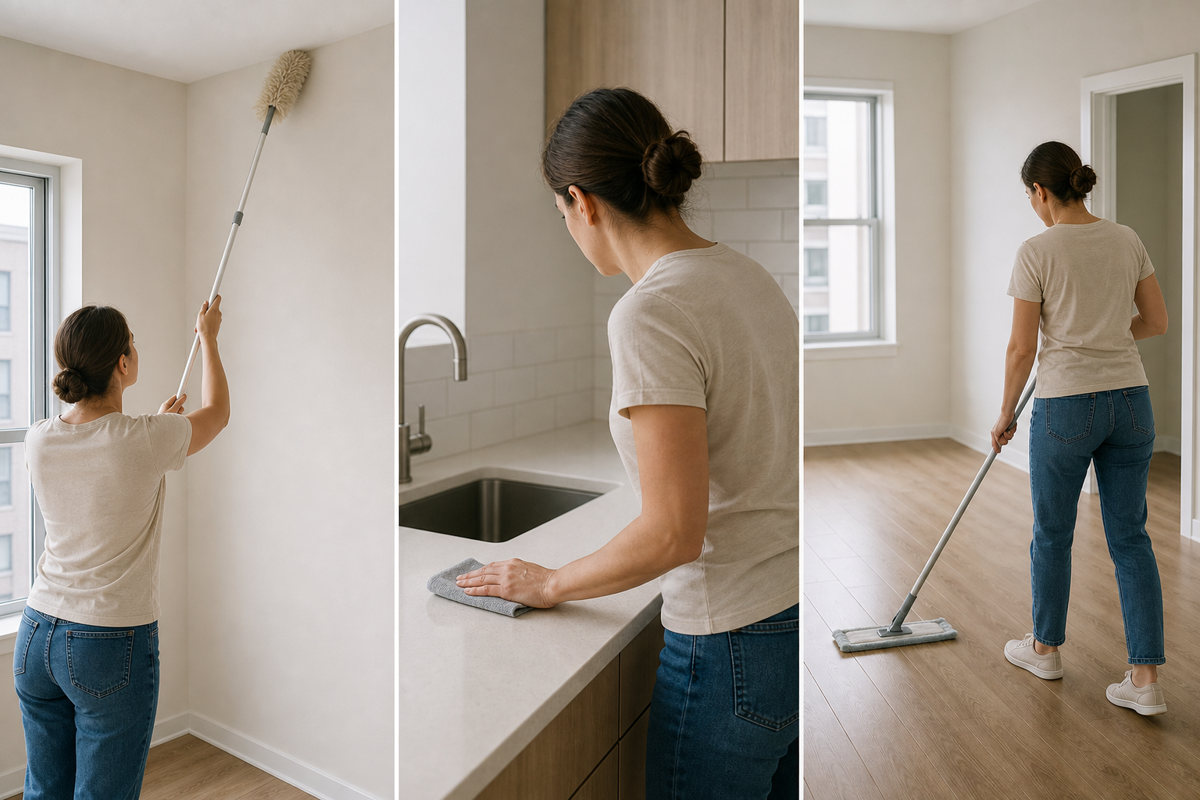
- Top of doors and frames.
- Inside cabinet corners and drawer tracks.
- Under/behind removable appliance areas when safely accessible.
- Range hood exterior and microwave underside.
- Window sills and tracks.
- Closet shelves and baseboards.
- Shower-door tracks.
- Door handles and cabinet pulls.
- Rug or carpet edges near baseboards.
- Balcony/patio door glass and tracks.
Do Not Clean Over a Maintenance Problem
- Active leaks or water intrusion.
- Soft drywall or swollen flooring.
- Broken or cracked glass.
- Failed caulk or missing grout.
- Electrical problems.
- Damaged appliance wiring or controls.
- Pest infestation evidence.
- Strong odor that appears to come from subfloor, walls, HVAC, or plumbing.
A Practical Turnover Order
- Inspect and photograph.
- Remove trash and abandoned items.
- Dry dust/vacuum high to low.
- Clean walls, trim, doors, and washable hard surfaces.
- Reset kitchen.
- Reset bathroom.
- Treat carpet/upholstery/pet spots.
- Clean windows, mirrors, and shiny surfaces.
- Vacuum/sweep floors.
- Wet-clean compatible floors last.
- Final dry walk-through and maintenance punch list.
FAQ
Should landlords clean before or after repairs?
Do the initial inspection first. Complete dusty or messy repairs before the final cleaning whenever possible so repaired areas do not contaminate already-clean surfaces.
Which Eco Cln product should I use for a whole apartment?
Use Citrus for compatible broad washable surfaces, then Shine-It, Powerhouse, See-Clear, Spot Gone, or PAWS for their targeted messes.
Should I shampoo carpet during every turnover?
Not automatically. Follow carpet condition, manufacturer requirements, lease standards, and professional-cleaning needs rather than adding unnecessary moisture.
What if pet odor returns after the unit is dry?
Inspect carpet pad, subfloor, baseboards, seams, and other hidden materials. Surface cleaning may not reach the full source.
Does this checklist replace local landlord rules?
No. Cleaning standards, deposits, habitability, documentation, and turnover requirements can vary by lease and jurisdiction.
The Bottom Line
Photograph and inspect the empty unit before cleaning so existing damage, abandoned belongings, appliance condition, odors, stains, leaks, and repair needs are documented before the surfaces change. Confirm utilities, ventilation, access, and the turnover scope, then remove trash and loose debris. Separate repair, pest, mold, biohazard, and specialty-restoration issues from ordinary cleaning rather than asking a routine cleaner to hide them. Work top to bottom and generally dry to wet: dust vents, ledges, cabinets, trim, and fixtures; clean kitchens and bathrooms; address approved carpet or upholstery spots; finish glass, touch points, and floors last. Keep clean and dirty cloths separate, change water and tools between heavily soiled zones, and give wet areas enough time to dry before the final walk-through. Match each Eco Cln product to both the material and the mess: Citrus for compatible general washable surfaces at the current dilution, Shine-It for compatible kitchen grease and food residue, Powerhouse for compatible bathroom soil, See-Clear for suitable glass and shiny-surface smudges, Spot Gone for compatible localized food or everyday fabric spots, and PAWS for compatible pet-accident cleanup. Spot-test when finish or dye stability is uncertain, follow appliance and surface-maker instructions, and avoid saturating seams, flooring edges, cabinets, wallboard, carpet backing, or upholstery fill. After cleaning, inspect with the lights on and from doorway height, check for cleaner film, tackiness, streaks, missed edges, slow drains, leaks, odors that returned after drying, and areas that need repair rather than another cleaning pass. Record the completed condition with photos and note anything deferred to a qualified trade. A disciplined turnover checklist creates a consistent handoff; it does not replace local lease rules, damage documentation requirements, sanitation protocols, or professional remediation when those apply.
For additional material or process limits, review the CDC facility-cleaning guidance.
Build a turnover kit by problem instead of forcing one formula into every room. Shop Eco Cln products for Citrus, Shine-It, Powerhouse, See-Clear, Spot Gone, and PAWS.