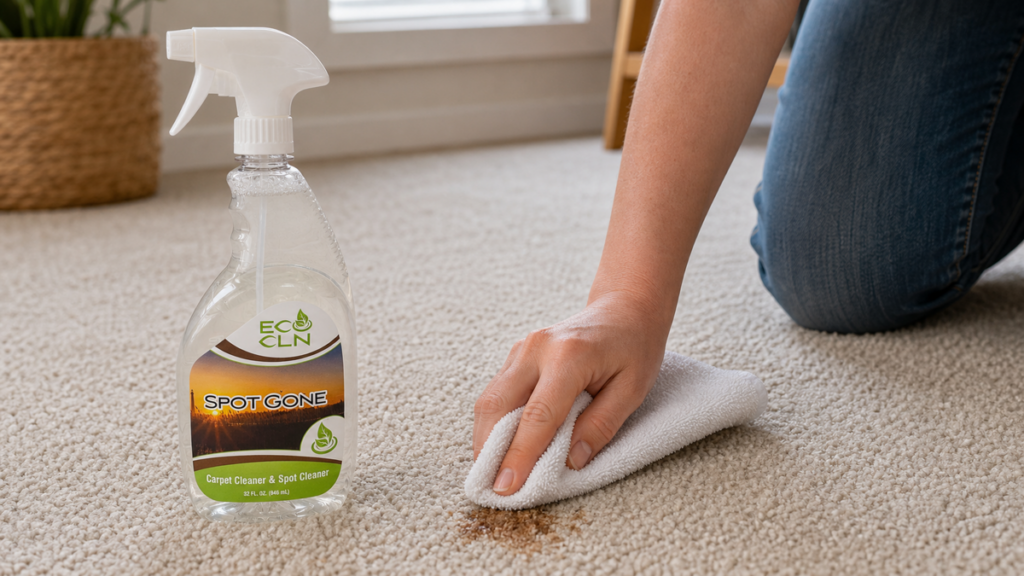
How to Get Chocolate Stains Out of Carpet and Upholstery

Quick Answer
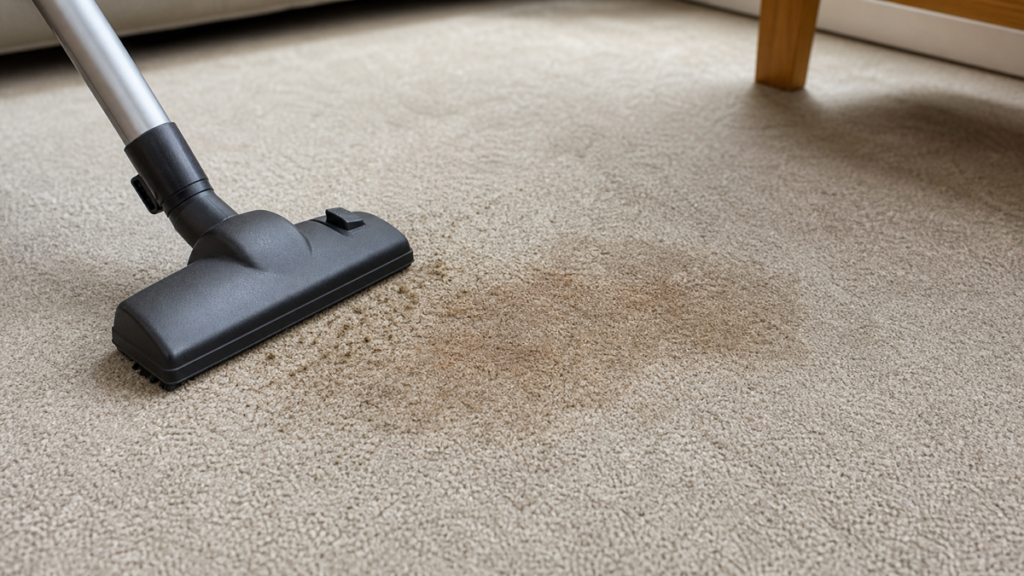
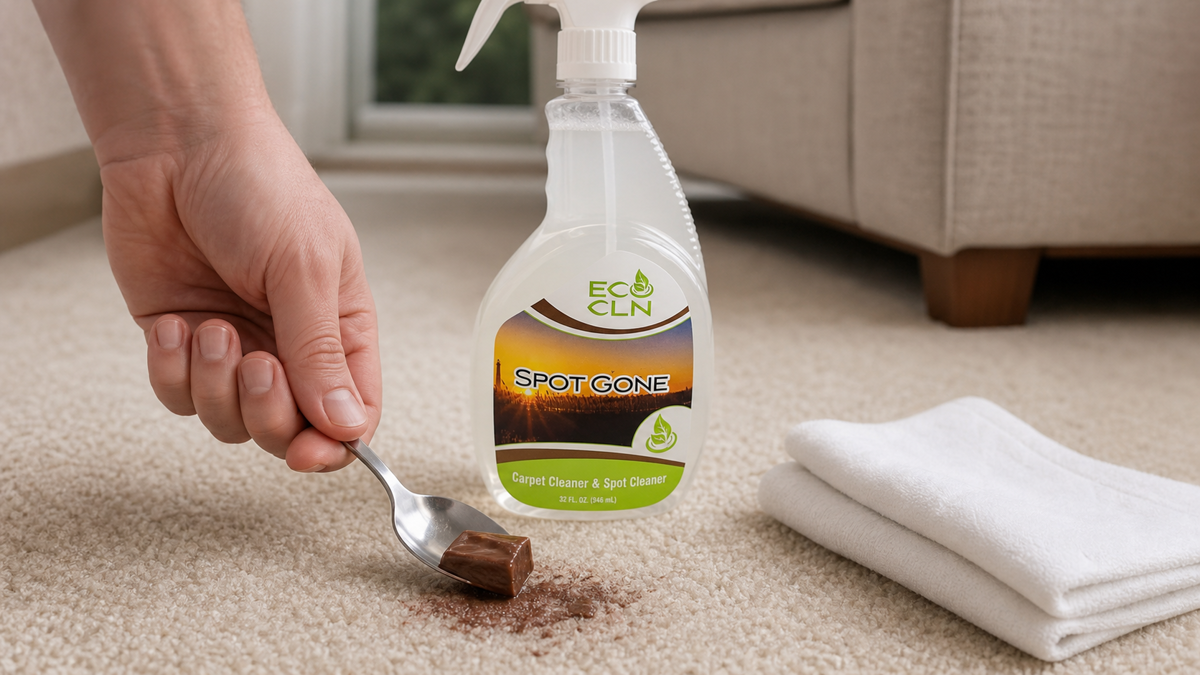
Remove any solid or semi-solid chocolate with a spoon or dull plastic edge, taking care not to smear it outward. If the residue is dry, vacuum loose crumbs. Spot-test first, then apply a small controlled amount of Eco Cln Spot Gone to the remaining carpet or upholstery stain according to the product directions. Blot with a clean white cloth from the edges toward the center, remove leftover cleaner as appropriate, and let the material dry completely.
Do not grind chocolate into the fibers with a brush. Chocolate often contains cocoa, sugar, milk solids, and fat, so the visible brown color can improve while a greasy residue remains.
Why Chocolate Stains Can Be Stubborn
Chocolate is not a single-ingredient spill. Melted candy or dessert can combine pigment, oil, sugar, dairy, and crumbs. That mixture can cling to fibers, feel tacky after drying, and attract dirt later if residue remains.
On upholstery, too much liquid can also create a water ring or spread the stain into cushion fill. Controlled spot treatment matters even more than on carpet.
Step 1: Lift the Solid Material First
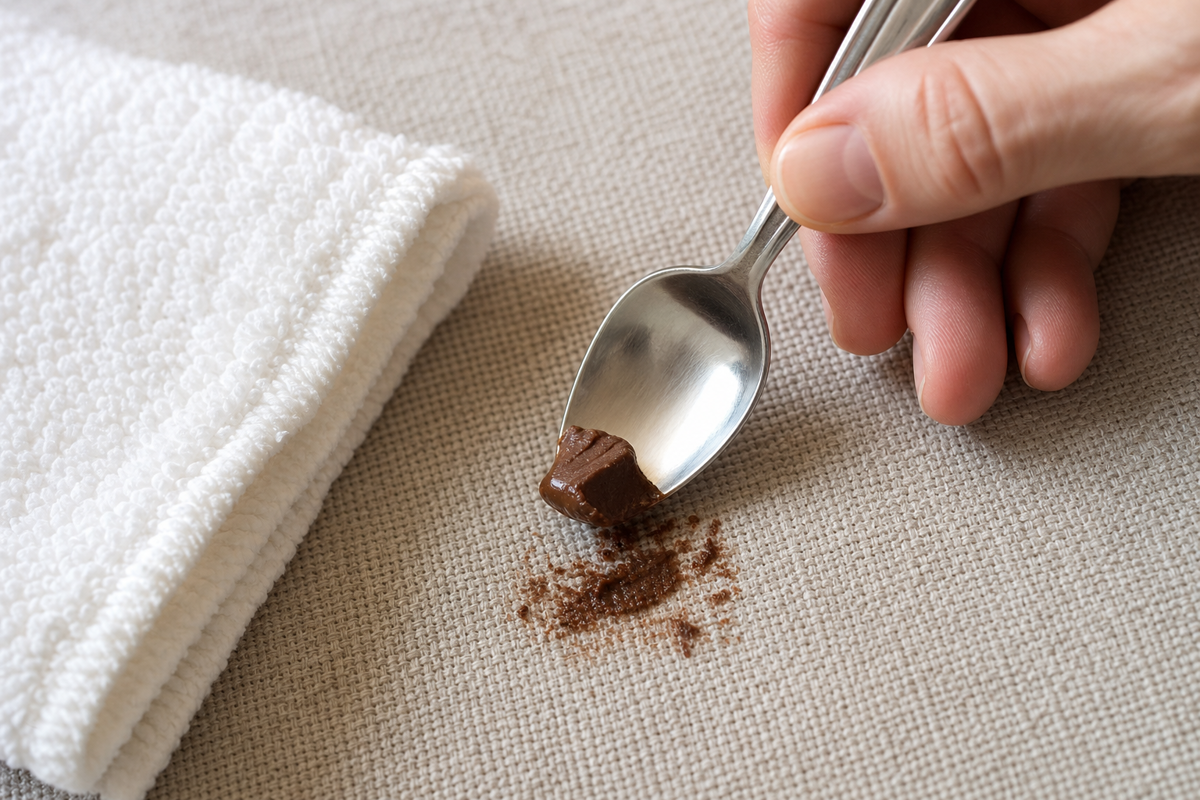
Use the edge of a spoon or dull plastic scraper to lift chocolate pieces, frosting, brownie crumbs, or semi-solid residue. Work upward rather than pushing the material sideways.
The Carpet and Rug Institute recommends removing semisolids first and warns against scrubbing carpet spots. Review CRI spot-care guidance.
Step 2: Let Hardened Chocolate Become Removable Debris
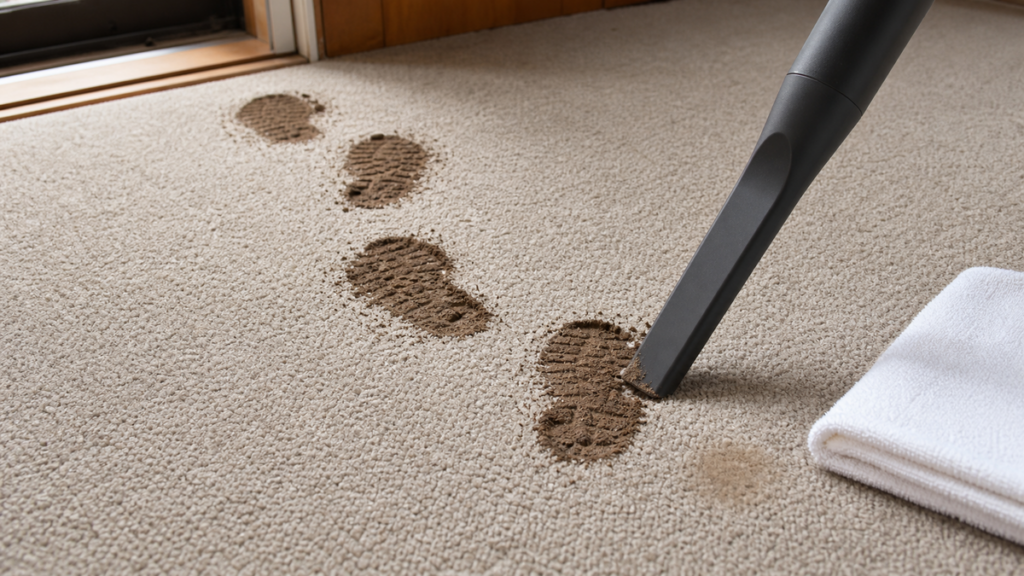
If the chocolate has already hardened, remove loose dry material before adding cleaner. Vacuum crumbs and gently lift what releases without pulling carpet loops or damaging upholstery texture.
Do not add a large amount of water just to soften everything. That can create a larger brown ring.
Step 3: Check the Care Code and Spot-Test
Carpet, rugs, and upholstery can differ in dye stability and wet-cleaning tolerance. Check upholstery tags or manufacturer instructions when available.
Test Spot Gone in a hidden area and let it dry before treating the main stain. The current Eco Cln directions specifically call for testing delicate fabrics, older carpet, specialty rugs, and materials with unknown dye stability.
Step 4: Apply a Small Amount of Spot Gone
Treat only the stained fibers. Give the product brief contact time according to its directions, then blot rather than scrub.
On upholstery, applying cleaner to a cloth first can provide better moisture control when the cushion or fabric should not be heavily wetted.
Step 5: Blot From the Outside In
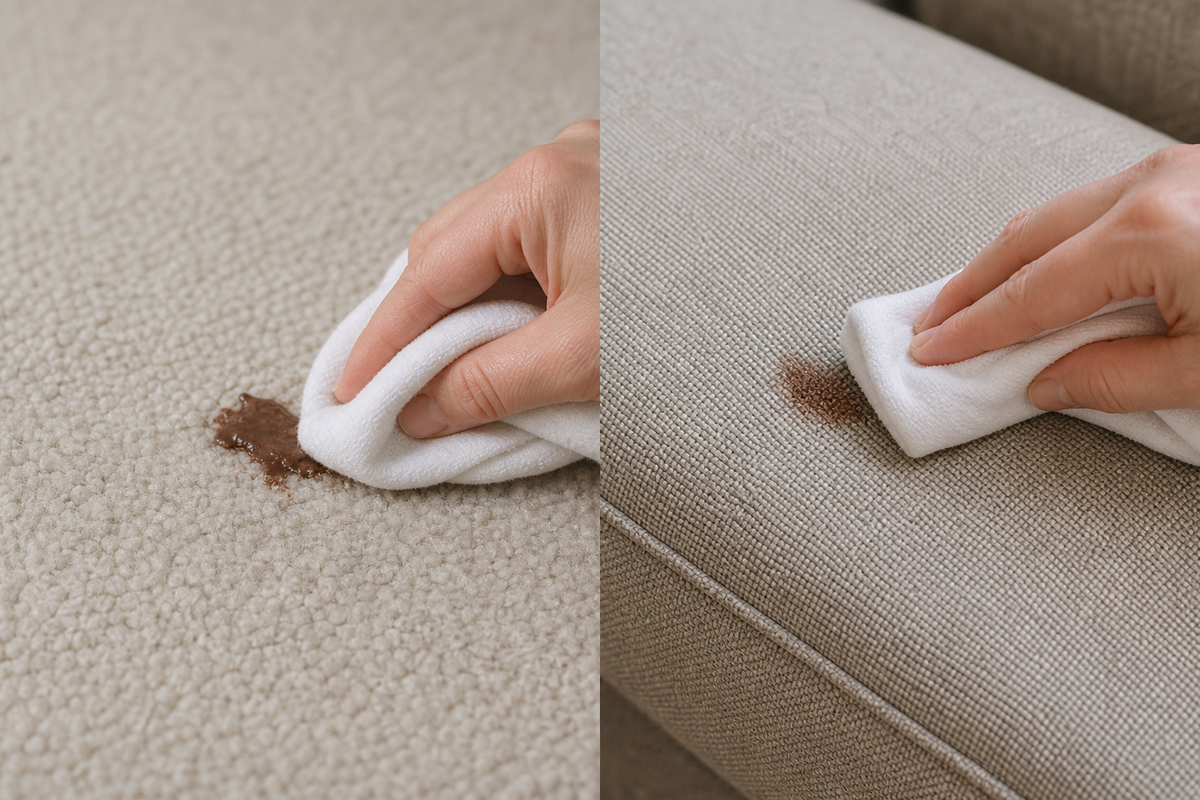
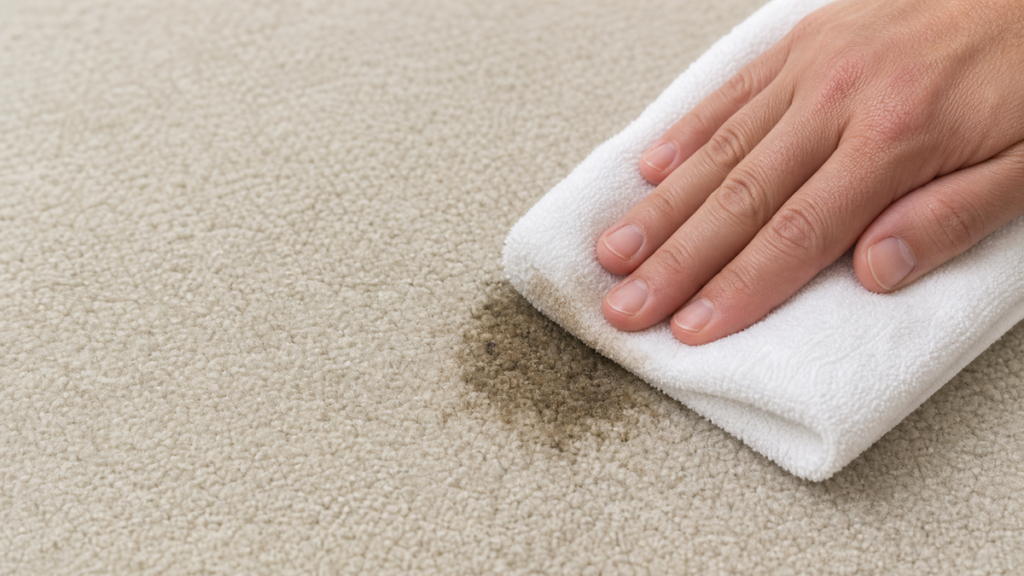
Use a clean white towel so you can see what is transferring. Press, lift, rotate to a clean section, and repeat.
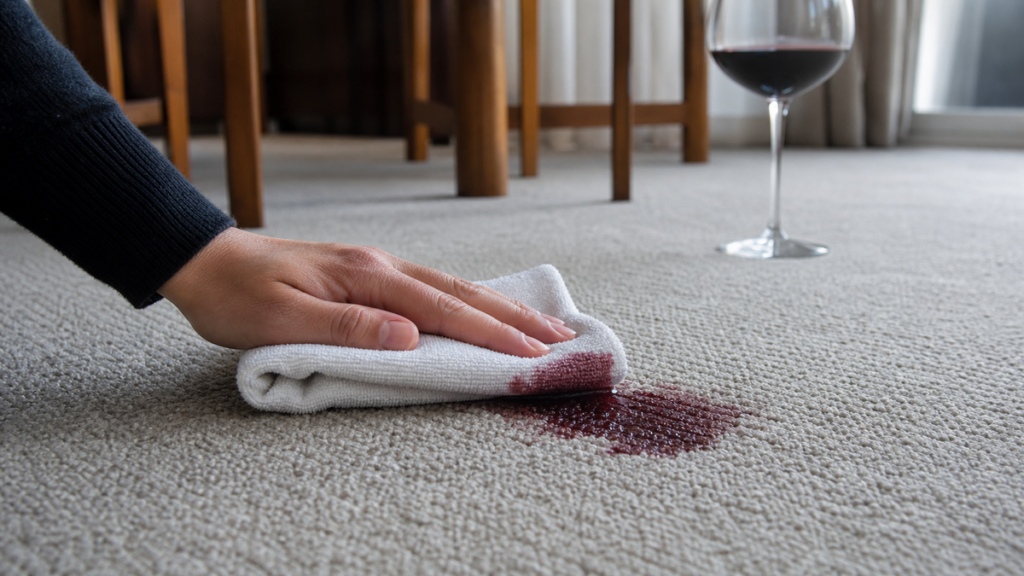
Start at the perimeter of the stain and move toward the center. That keeps softened chocolate residue from being pushed into a larger halo.
Step 6: Deal With the Oily Residue, Not Just the Brown Color
If the visible brown stain improves but the area still feels tacky or looks darker, oily or sugary residue may remain. Use another controlled pass rather than a heavy soak.
Stop if the fabric color, texture, or pile begins to change. A stain is not worth damaging the surface.
Step 7: Remove Cleaner Residue and Dry
Once the stain has improved, remove remaining cleaning product in the way the carpet or upholstery instructions allow. Use minimal moisture and blot it back out.
CRI notes that leftover spot-cleaning residue can attract soil and that overwetting should be avoided. See CRI cleaning guidance.
Carpet vs. Upholstery: What Changes?
Carpet usually gives you more access to blot from above and more airflow around the fibers. Upholstery may have foam, batting, backing fabric, piping, or seams underneath the visible surface.
For a sofa or chair, use less liquid and keep the treatment zone smaller because cleaner can travel into foam, batting, piping, and seams. Check the upholstery care code and manufacturer instructions before wet cleaning. Apply product to a white cloth first when better moisture control is needed, blot the visible fabric without saturating the cushion, and watch the edge of the damp zone for a forming water ring. Stop if color transfers, the texture changes, or the stain spreads during the hidden-area test.
Common Chocolate-Stain Mistakes
- Rubbing melted chocolate outward.
- Adding cleaner before lifting solid food.
- Using a colored towel that can transfer dye.
- Oversoaking upholstery cushions or carpet backing.
- Using heat to soften chocolate without fabric-specific guidance.
- Leaving cleaner or sugary residue behind.
- Assuming every brown mark will disappear completely.
Where Spot Gone Fits
Eco Cln Spot Gone is the targeted Eco Cln product for food stains, beverage spots, grease marks, mud, dirt, carpets, rugs, upholstery, and fabric surfaces. Chocolate is a food-stain problem, so Spot Gone is the right Eco Cln lane when the material is compatible.
FAQ
Should I let chocolate dry before cleaning it?
Remove loose or semi-solid chocolate as soon as practical. If it has hardened, lift or vacuum what is removable before adding liquid.
Can I scrub a chocolate stain?
Avoid aggressive scrubbing. It can spread the stain and damage carpet or upholstery texture.
Can Spot Gone be used on upholstery?
Yes, Spot Gone is positioned for upholstery and fabric surfaces when used as directed. Test first and avoid oversaturation.
Why does the area still look dark after the brown color lifts?
Chocolate can leave oily residue. Let the material dry, then reassess before another controlled treatment.
When should I call a professional?
For valuable rugs, delicate upholstery, large stains, unknown fabric codes, dye movement, or repeated unsuccessful treatments.
The Bottom Line
Lift solid or semi-solid chocolate with a spoon or dull plastic edge before adding cleaner. Vacuum dry crumbs, spot-test the carpet or upholstery, then apply a controlled amount of Spot Gone to the stained fibers and blot from the outside toward the center with a clean white cloth. Remove remaining product as the material allows and dry the area fully before judging any oily shadow. Valuable rugs, unstable dyes, unknown upholstery codes, spreading water rings, or repeated unsuccessful treatments belong with a professional cleaner.
Continue with this related Eco Cln guide: Spot Gone stain-remover guide.
For a localized chocolate or other food stain on compatible carpet, rug, or upholstery, Eco Cln Spot Gone gives you a targeted treatment so you can focus on the spill instead of soaking the entire surface.