How to Get Dried Dog Urine Smell Out of Carpet


Quick Answer
To deal with dried dog urine smell in carpet, first locate the full affected area, then clean it with a pet accident cleaner using controlled moisture rather than soaking the carpet. Work from the outside toward the center, allow the product the contact time listed on its directions, blot with clean absorbent towels, and let the carpet dry completely.
If the odor returns after the carpet is dry, the original accident may have spread wider than the visible stain or reached the carpet backing, pad, tack strip, baseboard edge, or subfloor. At that point, repeatedly wetting the surface can make the problem harder instead of easier.
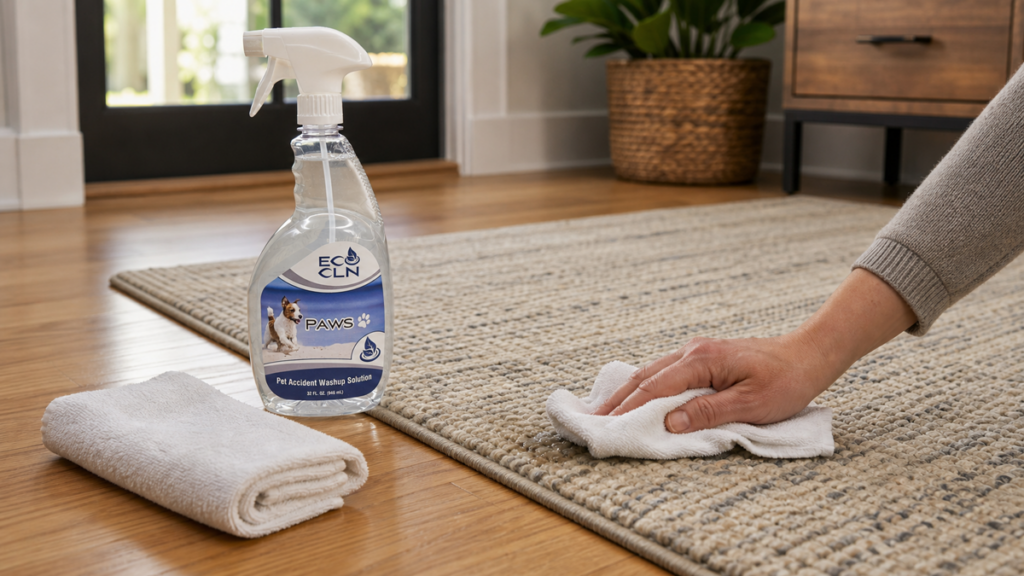
Eco Cln PAWS is the targeted Eco Cln product for pet urine odors, organic stains, carpet accident spots, rugs, upholstery, hard floors, pet beds, and repeat pet mess areas when used as directed.
Why Dried Dog Urine Can Smell Long After the Spot Disappears
A fresh accident is obvious. A dried accident can be sneaky.
The visible moisture may evaporate, but residue can remain in the carpet fibers and, depending on how much liquid was present, below the surface. Humidity, damp cleaning, or walking over the area can make an old odor seem noticeable again.
The spot you can see may also be smaller than the spot that was actually wet. Liquid can spread outward through carpet fibers or downward into the backing and pad before it dries.
That is why treating only the darkest visible mark is not always enough.
Step 1: Find the Entire Accident Area

Start with your nose and your eyes, not another round of cleaner.
Check the carpet from several angles in good light. Look for slight discoloration, matted pile, a ring, or a section that feels different underfoot. Check nearby baseboards, furniture legs, rug edges, doorways, and floor transitions if the smell seems stronger near a wall.
If you are dealing with multiple old accidents, mark the suspected areas so you do not keep re-cleaning one spot while missing another.
Do not assume every carpet odor is urine. Damp carpet, old food spills, dirty padding, previous cleaning residue, or moisture problems can produce their own smells.
Step 2: Vacuum or Remove Loose Debris First
If the carpet is dry, vacuum loose hair, dust, and debris around the area before applying liquid.
This keeps dry material from becoming muddy during cleaning and makes it easier for your cloth or towel to contact the carpet fibers directly.
If the carpet is delicate, handmade, vintage, wool, or otherwise specialty material, follow the carpet maker’s care guidance or use a professional cleaner instead of experimenting.
Step 3: Spot-Test Before Treating the Main Area
Test the pet cleaner in an inconspicuous location first, especially on dark, patterned, older, or unknown carpet.
Check for color transfer, lightening, texture change, or dye movement. If anything changes, stop.
The goal is to clean the pet accident without turning one problem into a larger visible patch.
Step 4: Use Controlled Product — Do Not Flood the Carpet
More liquid is not automatically more effective.
Apply PAWS according to the product directions and focus on the affected zone. The carpet needs enough product to contact the residue in the fibers, but pouring or soaking can push moisture deeper into the backing and pad.
On an old accident, it is tempting to saturate the area because the smell feels deep. That can backfire if the surface stays wet for a long time or if the cleaner carries residue farther into the carpet construction.
Step 5: Give the Cleaner Time to Work
Follow the product directions for contact or dwell time.
Do not immediately scrub the carpet after application. Let the cleaning step do its job, then move to blotting.
For a repeat or older accident, a second controlled treatment may be more sensible than one extremely wet application.
Step 6: Blot — Do Not Aggressively Scrub

Use clean, absorbent towels and press into the area. Lift, rotate to a clean section, and repeat.
Blotting helps pull moisture and loosened residue upward. Aggressive scrubbing can spread the affected area, fuzz the carpet pile, or drive residue deeper.
Work from the outside toward the center so the spot does not grow as you clean.
Step 7: Let the Carpet Dry Completely
This step is easy to rush, but it tells you whether the cleanup actually worked.
Improve airflow, keep people and pets off the spot, and allow the carpet to dry fully. Do not judge the final odor while the carpet is still damp.
Humane World for Animals advises against using steam cleaners on urine odors in carpet or upholstery because heat can set the stain and odor into fibers. For an old urine spot, controlled cleaning and thorough drying are safer first moves than reaching immediately for high heat.
What If the Smell Comes Back After the Carpet Dries?
A returning odor does not necessarily mean you “did not use enough cleaner.”
The original urine may have reached the carpet backing or pad. It may have spread under a nearby rug edge, furniture foot, baseboard, or transition strip. There may also be more than one accident in the room.
Start by checking the perimeter around the treated spot. If the odor is strongest at the floor edge, read the Eco Cln guide on cleaning dog urine smell from baseboards before adding more moisture to the center of the carpet.
If a large amount of urine has soaked through carpet and padding, surface treatment may not be able to reach all of it. A professional carpet cleaner may be able to assess deeper contamination. In severe or repeated cases, padding or other material may need to be lifted or replaced.
Common Mistakes With Old Pet Urine Spots
The most common mistake is oversoaking. The second is scrubbing harder because the odor is old.
Other problems include treating only the visible center, using a dirty towel, covering the spot before it dries, mixing unrelated cleaning products, using heat or steam, and repeatedly adding fragrance without actually cleaning the residue.
Avoid combining cleaning products unless their labels specifically say they are meant to be used together.
When PAWS Fits the Job
PAWS is the Eco Cln product specifically positioned for pet urine odors, organic stains, carpets, rugs, upholstery, hard floors, pet beds, kennels, litter box areas, and repeat pet accident spots.
That makes it a better fit for a dog urine accident than a general kitchen cleaner or a standard non-pet carpet spot cleaner.
For ordinary food, grease, dirt, or non-pet stains on carpet and upholstery, Eco Cln Spot Gone is the more targeted product. Matching the cleaner to the mess keeps the cleanup process simpler and avoids turning every stain into an all-purpose-cleaner job.
How to Reduce Repeat Odor Problems
Clean new accidents as soon as you find them. Blot first, treat the actual accident zone, and let the area dry completely.
Pay attention to repeat locations. If your dog returns to the same corner, check the baseboard, carpet edge, rug backing, and nearby furniture—not just the center of the visible spot.
Also address the reason for repeat accidents with your veterinarian or a qualified trainer when appropriate. Cleaning can manage the mess, but it does not diagnose medical or behavioral causes.
FAQ
Can old dog urine smell come out of carpet?
Often, an old accident can be improved when the residue is still accessible in the carpet fibers. Results depend on how much urine was present, how long it sat, and whether it reached the pad or subfloor.
Should I soak an old urine spot?
No. Controlled application is safer than flooding the carpet. Too much liquid can spread moisture deeper and extend drying time.
Can I steam-clean dog urine from carpet?
Humane World for Animals advises avoiding steam cleaners on urine odors in carpet or upholstery because heat can set the stain and odor into the fibers.
Why does the smell get stronger when the room is humid?
Moisture can make residues and odors from old accident areas more noticeable again. A humid-day odor is a clue to re-check the full accident zone, including edges and padding.
What if I cannot find the urine spot?
Check walls, baseboards, rug edges, furniture legs, room corners, and transitions. If the odor is persistent but the source is unclear, the separate Eco Cln article on finding hidden pet urine odor should be linked here once published.
The Bottom Line
To deal with dried dog urine smell in carpet, first locate the full affected area, then clean it with a pet accident cleaner using controlled moisture rather than soaking the carpet. Keep moisture and pressure controlled, follow the material’s care instructions and stop if the finish or fabric reacts poorly.
Continue with this related Eco Cln guide: Dog urine smell from baseboards.
For additional material or process limits, review the Humane World pet-stain guidance.
Old pet accidents need a targeted cleanup, not a random household spray. Eco Cln PAWS is made for pet urine odors, organic stains, carpet spots, rugs, upholstery, hard floors, pet beds, and repeat pet mess areas when used as directed.