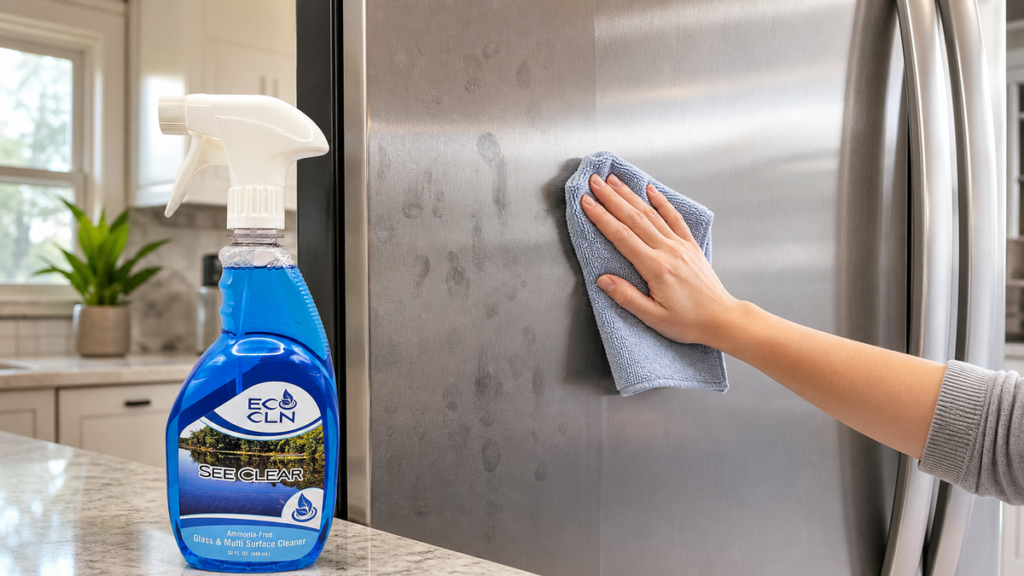
Why Glass Looks Hazy After Cleaning

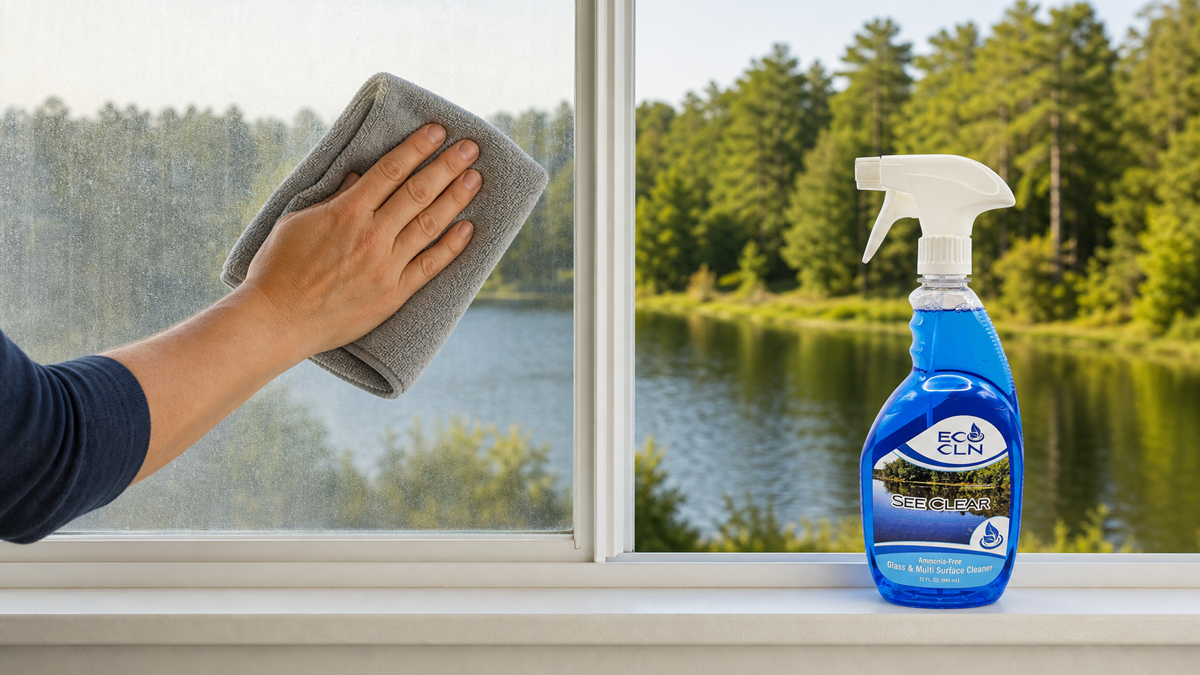
Quick Answer
Glass usually looks hazy after cleaning because cleaner, minerals, grease, dust, or moisture was moved around but not fully removed. Start with a clean dry microfiber cloth, use a small amount of Eco Cln See-Clear on compatible glass, work in controlled overlapping passes, and buff the surface completely dry.
If the haze does not change at all after proper surface cleaning, check whether it is inside an insulated glass unit, part of a coating, etching, scratching, or another physical glass problem. Surface cleaner cannot fix haze trapped between panes.
Seven Common Reasons Glass Looks Hazy
- Too much cleaner was used.
- The cloth was already dirty or oily.
- Dust was not removed before wet cleaning.
- Cleaner dried too quickly in direct sun or on hot glass.
- Minerals or hard-water spots remain on the surface.
- Grease, aerosol, smoke, or cooking film is still present.
- The haze is inside the glass unit or is physical damage rather than removable residue.
Cause 1: Too Much Cleaner
Large amounts of cleaner leave more liquid and cleaning ingredients that have to be removed. If the cloth becomes saturated, it can leave a thin film across the pane.
The current See-Clear product page recommends light passes and notes that too much product can make streaking more likely.
Cause 2: A Dirty Microfiber Cloth
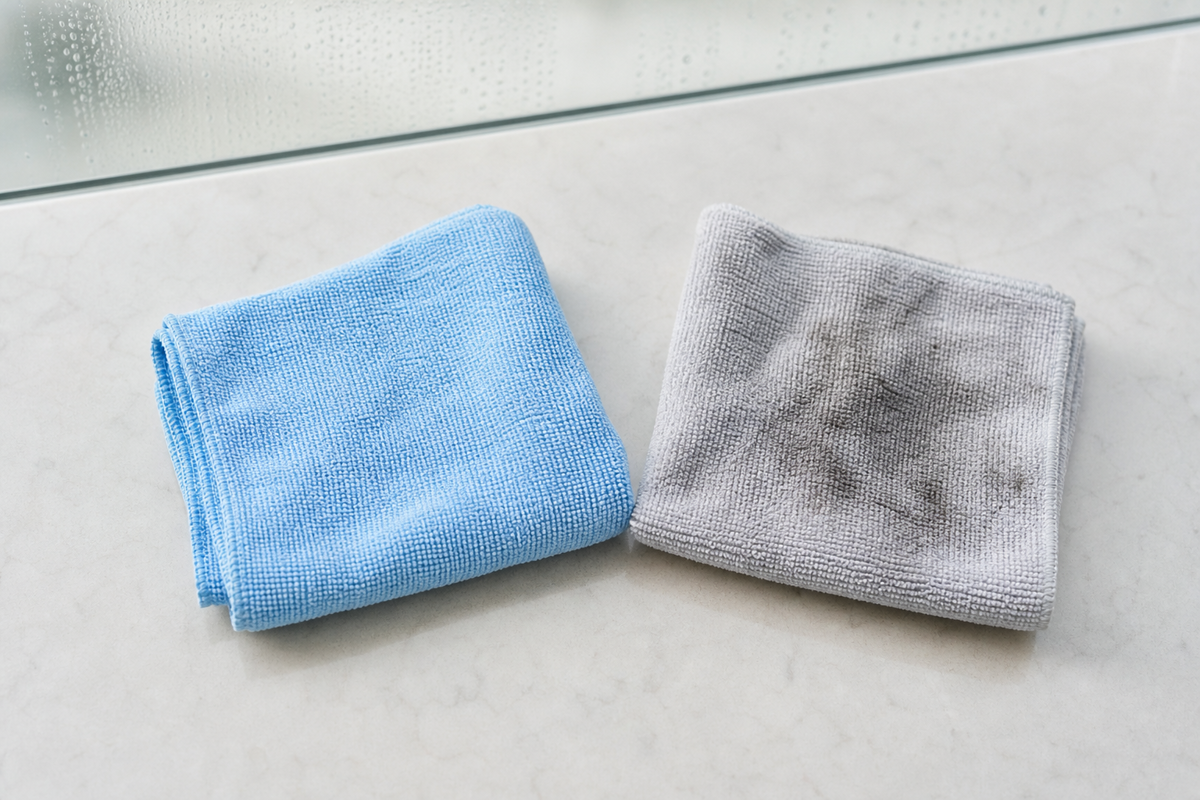
A cloth used on a greasy countertop, stainless appliance, or bathroom fixture can carry oils onto glass. Use a clean lint-free cloth dedicated to glass.
Fold it into multiple faces and rotate to a fresh side before the current one becomes saturated.
Cause 3: Dust Under the Wet Cleaner
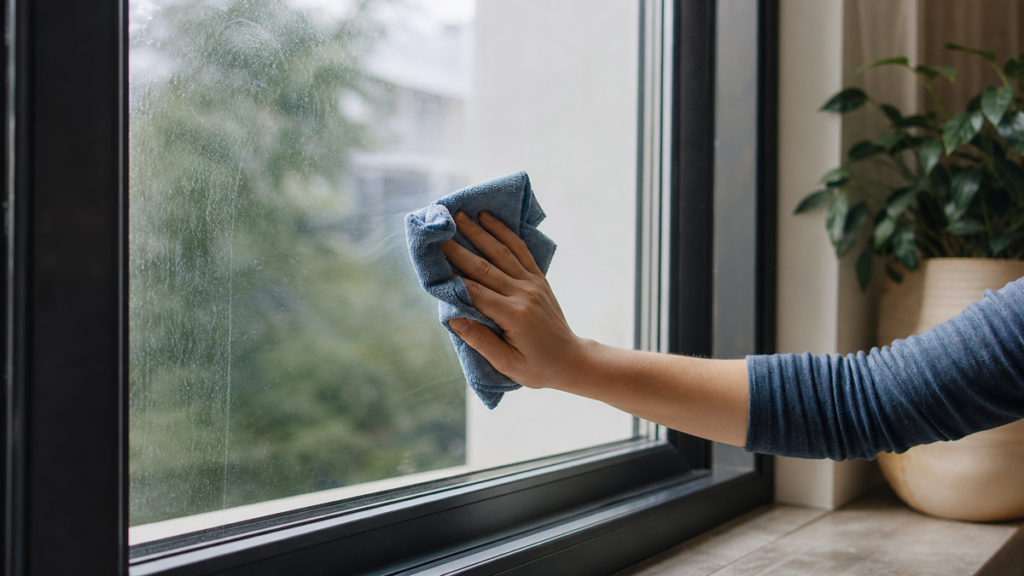
Dry dust and pollen can turn into a cloudy slurry when cleaner hits them. On windows or glass tables, remove loose dust first.
Pella and Marvin both recommend dry removal or a clean microfiber approach before or during glass cleaning. Review Pella window-cleaning guidance.
Cause 4: The Glass Dried Too Fast
Direct sun or warm glass can evaporate cleaner before you finish the wiping pass, leaving streaks and spots.
Marvin notes that cleaning solution can dry too quickly in sunlight, leaving glass streaky or spotty. See Marvin window-cleaning guidance.
Cause 5: Minerals or Hard-Water Film
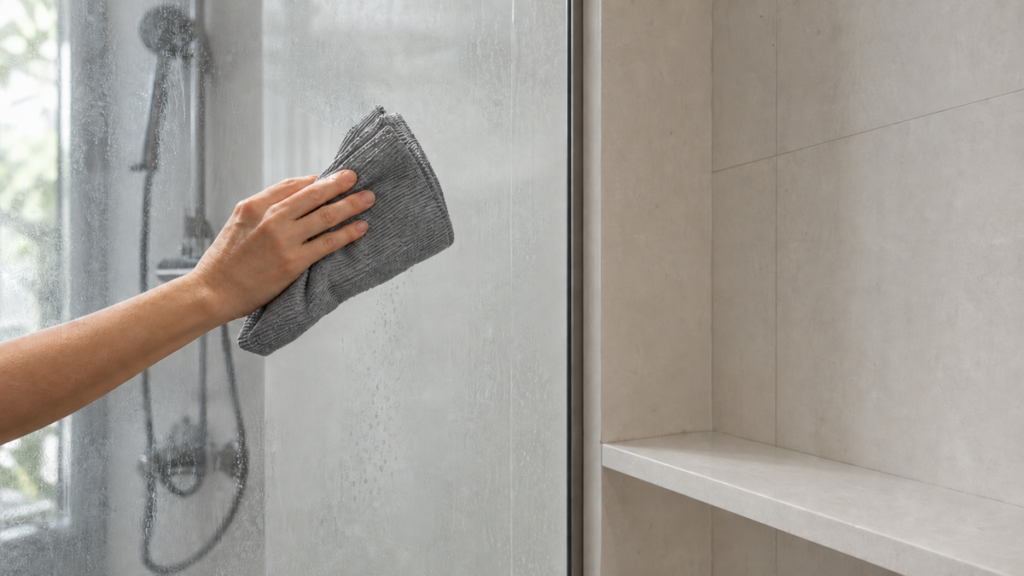
Glass near sinks, showers, exterior sprinklers, or hard-water droplets may hold mineral deposits that ordinary glass cleaner does not fully remove.
See-Clear is for glass haze, fingerprints, smudges, and routine residue. Heavy bathroom hard-water buildup may need the Powerhouse Bathroom lane first if the surface is compatible.
Cause 6: Grease or Household Aerosol Film
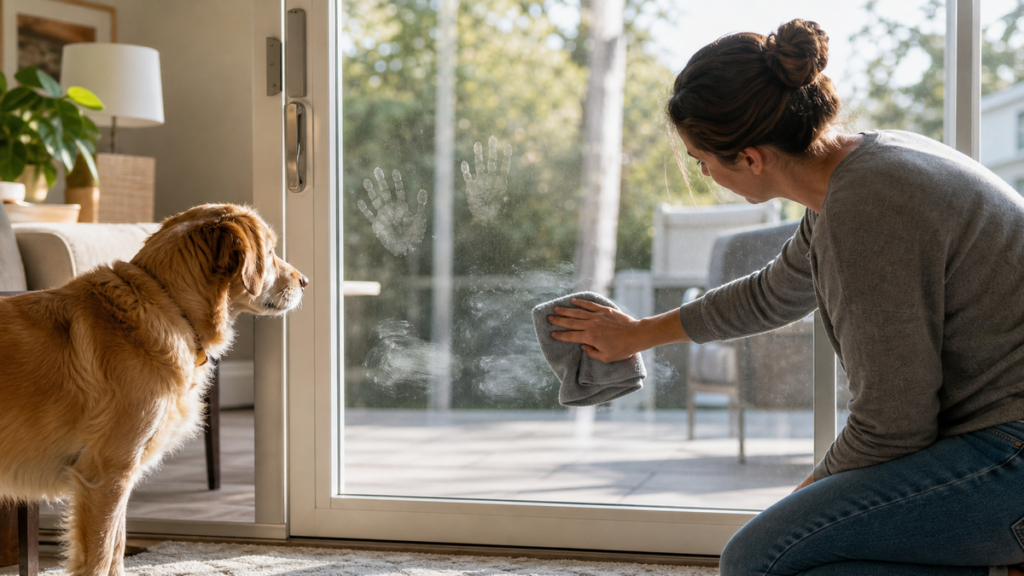
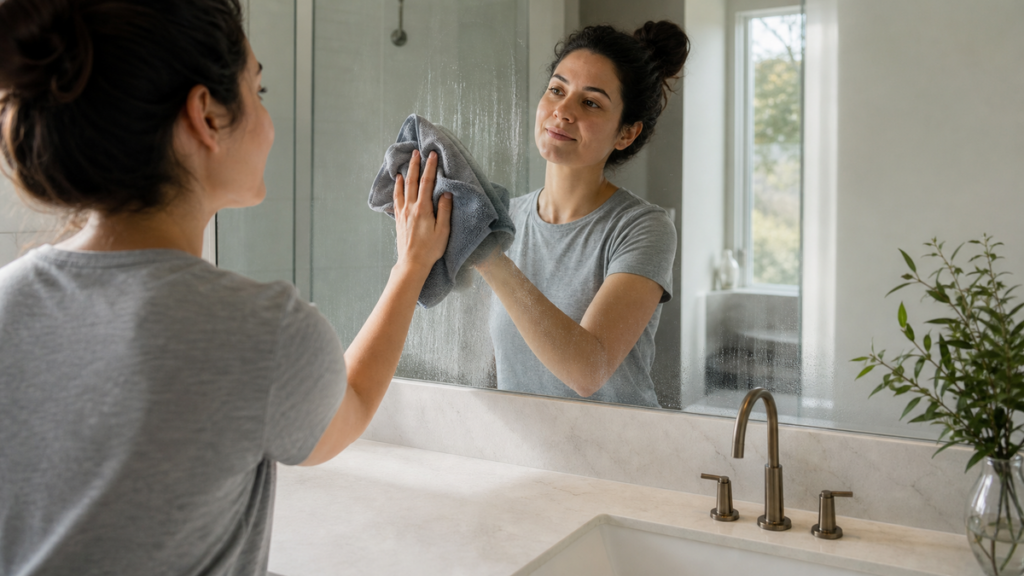
Kitchen windows, glass doors, mirrors near hair products, and glass tabletops can collect oily aerosol residue. One light cleaning pass may loosen the film without fully removing it.
Use a fresh cloth and repeat a controlled pass rather than adding more and more product to the same saturated towel.
Cause 7: The Haze Is Not on the Surface
Insulated windows can develop haze or moisture between panes when a seal fails. Coatings can also become damaged, and glass can be etched or scratched.
If careful cleaning on both accessible surfaces does not change the cloudy area, investigate the glass unit rather than escalating the cleaner.
A Better Haze-Removal Routine
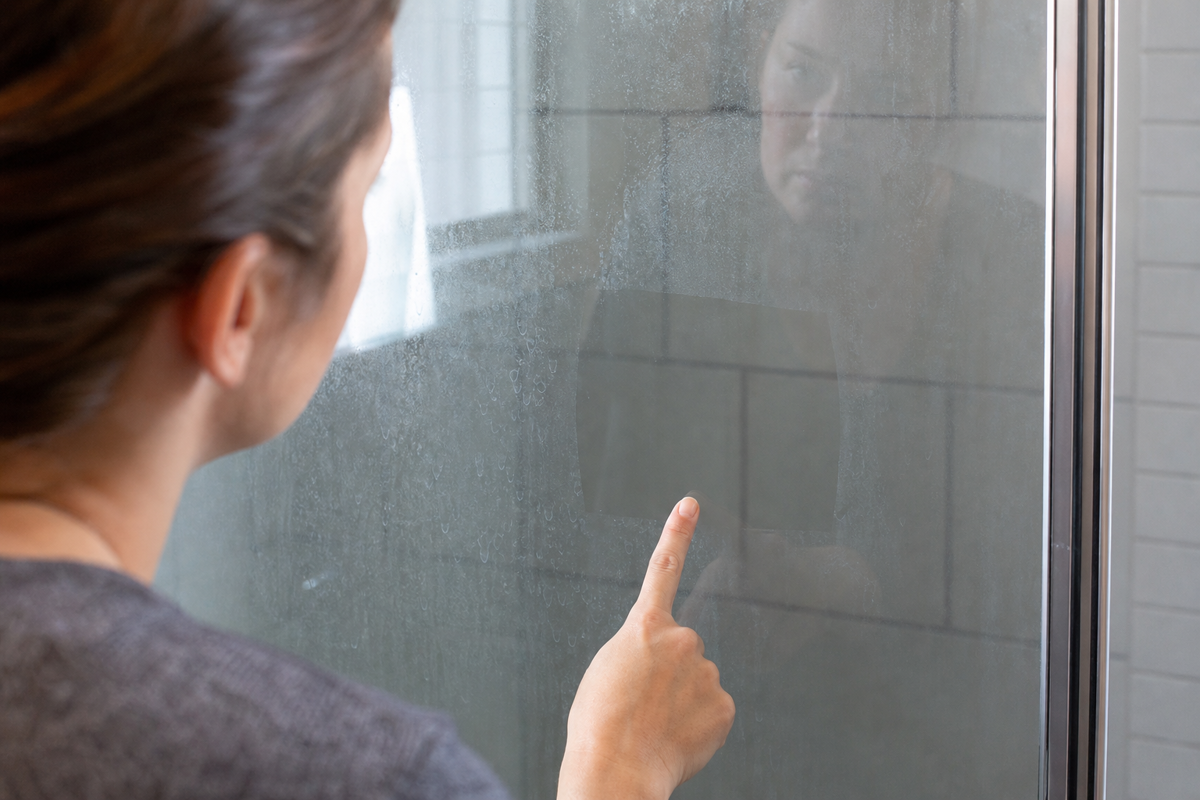
- Check the glass manufacturer instructions, especially for tint or coatings.
- Remove loose dust.
- Use a small amount of See-Clear on the glass or cloth.
- Wipe in overlapping passes from top to bottom.
- Rotate to a clean cloth face.
- Buff dry with a second microfiber cloth.
- Inspect from an angle before adding more product.
Common Hazy-Glass Mistakes
- Using one wet cloth for every pane in the room.
- Cleaning hot glass in direct sunlight.
- Over-spraying edges, seals, frames, or electronic controls.
- Using a cloth contaminated with grease or fabric softener.
- Assuming all haze is removable dirt.
- Using abrasive pads or razor blades without manufacturer approval.
- Adding more cleaner when the real problem is leftover cleaner.
Where See-Clear Fits
Eco Cln See-Clear is the ammonia-free Eco Cln product for glass, windows, mirrors, glass doors, chrome, stainless steel, display cases, and shiny surfaces. It fits haze, fingerprints, smudges, and streak-prone routine cleaning – not heavy soap scum, carpet stains, or pet odor.
FAQ
Why does my glass look cloudy right after I wipe it?
Usually because cleaner, moisture, dust, or oil remains on the surface. Use less product, a clean cloth, and a dry finishing pass.
Is See-Clear ammonia-free?
Yes. Keep the ammonia-free claim specific to See-Clear.
Should I clean windows in direct sun?
Shade or cooler conditions are easier because the cleaner is less likely to dry before you remove it.
What if haze is between two window panes?
Surface cleaner cannot reach haze trapped inside an insulated glass unit. That may require window service or replacement.
Can hard water make glass look hazy?
Yes. Mineral deposits can leave cloudy spots or film. Heavy mineral buildup may require a surface-compatible hard-water cleaning method rather than routine glass cleaner alone.
The Bottom Line
Glass usually looks hazy after cleaning because cleaner, minerals, grease, dust, or moisture was moved around but not fully removed. Diagnose the haze before adding more product. Wipe one small test area with a clean dry microfiber cloth and compare it from two angles. If the patch clears, residue or moisture is still on the surface. If it improves only after a light See-Clear pass followed by a separate dry cloth, the earlier method likely used too much cleaner or a loaded cloth. If scattered rings remain, treat them as mineral spots and follow the glass or window maker’s compatible deposit-removal guidance. Haze that stays identical on both sides may be etching, scratches, coating damage, or moisture between insulated panes, none of which routine surface cleaner can repair. Work in shade or on cool glass, keep the application light, switch cloth faces often, and finish completely dry. Stop if a coating changes appearance or the haze appears trapped inside the glass assembly. Correcting the cause is more effective than repeating the same wet pass until the window is coated with even more residue.
Continue with this related Eco Cln guide: Ammonia-free glass cleaner guide.
For removable haze, fingerprints, smudges, and streak-prone residue on compatible glass, Eco Cln See-Clear gives you the ammonia-free glass-cleaning lane. Use it lightly, use clean microfiber, and finish dry.