How to Get Red Wine Out of Carpet: Fresh vs. Dried Stains

Quick Answer
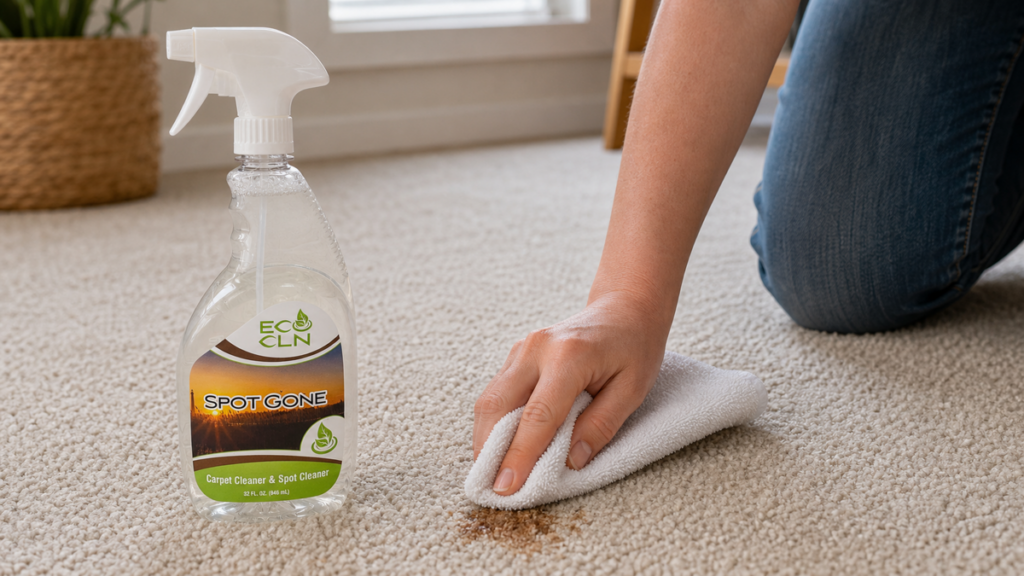
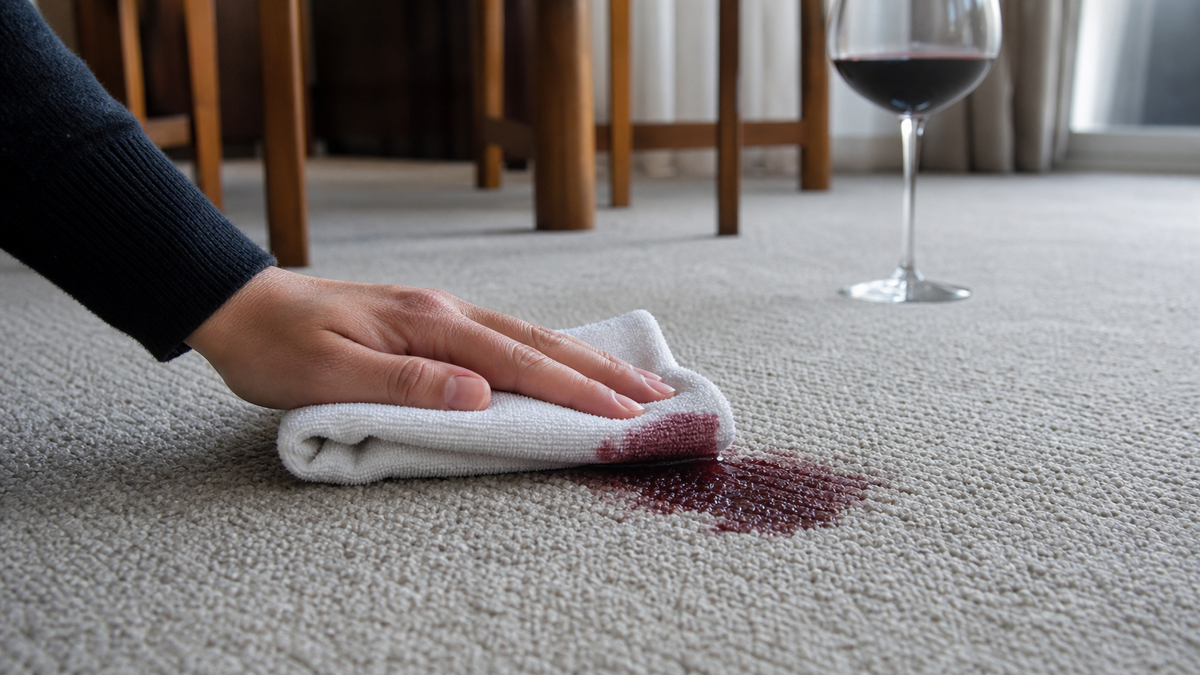
For fresh red wine, blot immediately with a clean white towel, working from the outside edge toward the center. Do not rub. Once you have removed as much liquid as possible, spot-test your stain remover and use a controlled amount. Eco Cln Spot Gone is positioned for targeted carpet, rug, upholstery, and fabric spots from food, drink, grease, mud, dirt, and everyday household messes when used as directed.
For a dried red wine stain, start dry: vacuum loose soil, spot-test, lightly re-wet the stained fibers with the chosen stain remover according to its directions, allow the stated contact time, and blot. Old stains may need repeated controlled treatments. More liquid and harder scrubbing are not shortcuts.
Fresh vs. Dried Red Wine: What Changes?
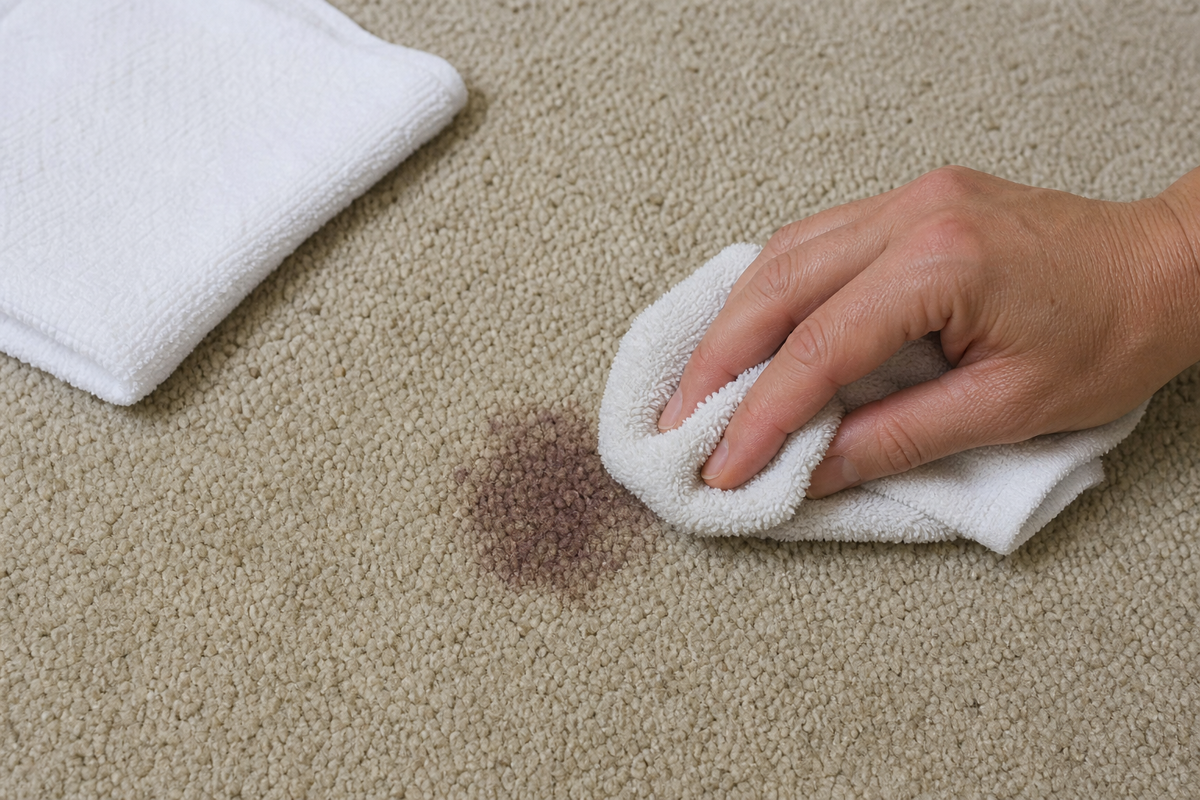
A fresh wine spill still contains movable liquid. Your first advantage is that you can physically remove a large portion before it settles deeper into the carpet. A dried stain has already lost that easy extraction window, so the job becomes loosening residue and lifting color without over-wetting the carpet.
The basic rules stay the same for both: identify the carpet, test first, work from the outside in, use clean towels, avoid aggressive rubbing, and let the area dry fully before judging the result.
Fresh Red Wine: Step 1 – Blot Immediately
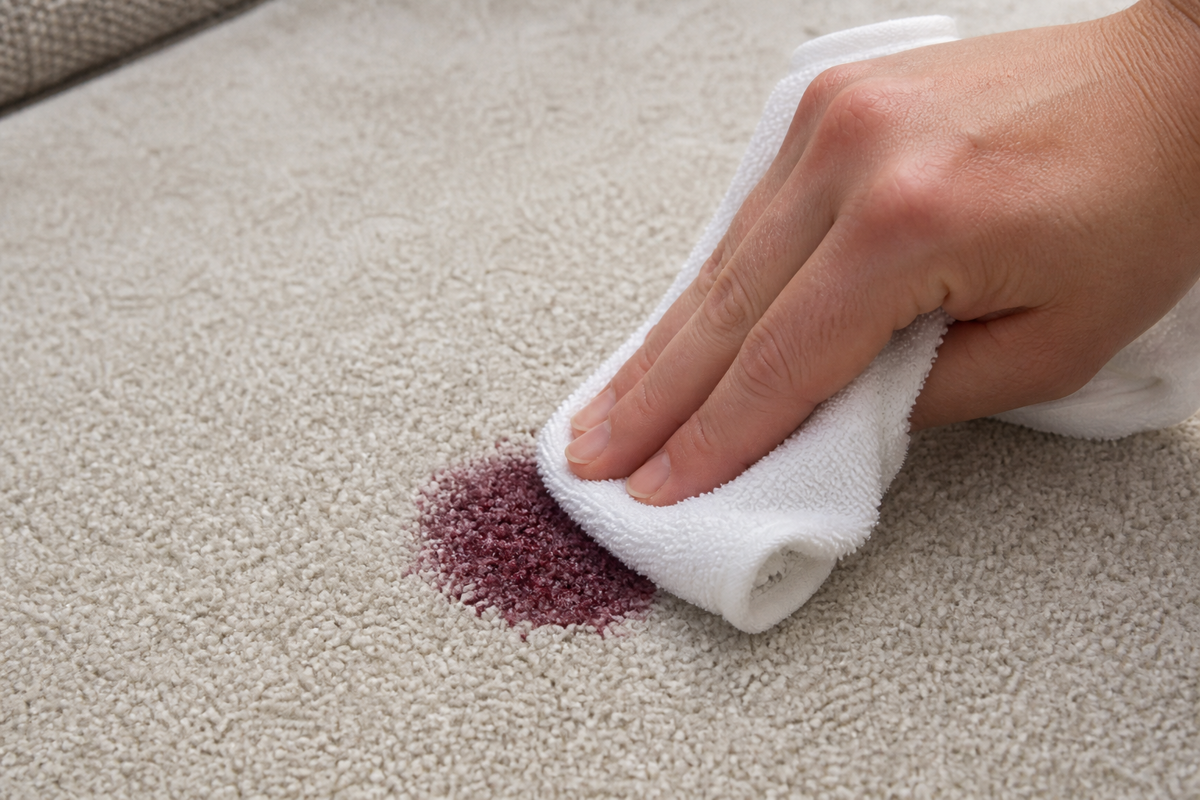
Use a clean white towel or plain white paper towel and press into the spill. Lift straight up and move to a dry section. Repeat until the towel is picking up much less wine.
The Carpet and Rug Institute recommends blotting rather than rubbing and working from the outside of a spot toward the center. That is especially useful with red wine because rubbing can quickly turn a small spill into a wider stain.
Fresh Red Wine: Step 2 – Keep the Spill Contained
Do not pour a large amount of water or cleaner over the carpet. A fresh wine spill is already wet. Flooding adds more liquid that can spread sideways or move deeper toward the backing. If the stain is six inches wide, keep your treatment focused on that area and its immediate perimeter.
Fresh Red Wine: Step 3 – Spot-Test Spot Gone
Test Spot Gone in a hidden location. Check for dye transfer, lightening, texture change, or a visible ring after drying. This matters on dark carpet, patterned rugs, wool, older carpet, and any material with unknown care instructions.
Fresh Red Wine: Step 4 – Treat and Blot
Apply Spot Gone according to the product directions and allow the stated contact time. Then blot with a fresh white towel from the outside edge toward the center. Rotate the towel constantly so a clean area is touching the carpet.
If the color is transferring to the towel, keep blotting rather than scrubbing. Stop when the towel no longer picks up much residue or the carpet starts getting too wet.
Dried Red Wine: Step 1 – Vacuum the Area First
If the stain is old and dry, vacuum loose dust, crumbs, pet hair, and surface debris before adding liquid. That keeps dry soil from turning into a dirty slurry during stain treatment.
Dried Red Wine: Step 2 – Re-Treat in a Controlled Pass
Spot-test first, then apply a controlled amount of stain remover to the dried area. Give the product the contact time listed in its directions. The goal is to loosen the dried residue, not saturate the entire carpet pad.
Blot with clean white towels and reassess. A second pass after partial or full drying may be more useful than one extremely wet treatment.
Dried Red Wine: Step 3 – Know When the Stain Is No Longer a Surface-Cleaning Problem
Some old stains permanently alter carpet dye or become difficult to remove after long contact, heat, prior chemicals, or repeated cleaning attempts. If the red or purple tone barely changes after appropriate spot treatment, stop before creating a larger faded patch around it.
Professional carpet cleaning may be the better next step for valuable carpet, wool rugs, large spills, stains that reached the pad, or areas that were previously treated with unknown chemicals.
Why White Towels Matter
A white towel lets you see whether red pigment is still transferring out of the carpet. It also reduces the risk of dye from a colored towel moving into a light carpet. Change towel sections often. Once the towel is saturated, it can start redepositing what you just removed.
What About Salt, Club Soda, Peroxide, or DIY Mixtures?
Red wine has inspired an entire universe of home remedies. The problem is that carpets vary, and combining several methods can make it difficult to know which chemical is affecting the dye, backing, stain protection, or texture.
For Eco Cln content, the cleaner approach is simpler: blot first, use a stain remover designed for carpet and upholstery, follow the label, keep moisture controlled, and do not mix products unless their directions specifically allow it.
Remove Cleaner Residue and Dry the Carpet
Once the visible stain improves, follow the product and carpet-care directions for removing remaining cleaning residue. Then blot as dry as possible and improve airflow. A damp carpet can look darker than the surrounding area, so do not decide that a stain is still present until the carpet has dried.
If a spot returns after drying, deeper residue may be wicking back to the surface. Reassess before adding more cleaner.
Where Spot Gone Fits the Job
Eco Cln Spot Gone is the targeted Eco Cln cleaner for carpet, rugs, upholstery, and fabric spots including food and drink stains. For broader technique guidance, link to the Spot Gone stain-remover guide and the Eco Cln carpet cleaning tips article.
FAQ
Is fresh red wine easier to remove than dried red wine?
Usually yes, because a fresh spill can be blotted before as much residue dries into the carpet. Dried stains can still improve, but they often need more patient repeat treatment.
Should I rub a red wine stain?
No. Rubbing can spread the wine and rough up the carpet pile. Blot with a clean white towel and work from the outside toward the center.
Can I soak the stain with water?
Avoid flooding. Controlled moisture is safer because too much liquid can spread the stain and increase drying time.
Why did the wine stain come back after drying?
Moisture can pull deeper residue back toward the carpet surface, or cleaning residue may remain. Let the area dry fully, then reassess before re-treating.
Can I use Spot Gone on every carpet?
Carpet fibers, dyes, stain treatments, and rug backings vary. Spot-test first and follow manufacturer care instructions, especially on wool, handmade, antique, or specialty carpet and rugs.
The Bottom Line
For fresh red wine, blot immediately with a clean white towel and work from the outside edge toward the center. For a dried stain, vacuum first, spot-test, use a controlled treatment, and blot again after the listed contact time. Keep the carpet and pad from becoming saturated, then let the area dry before judging the result. Eco Cln Spot Gone fits targeted food-and-drink stains when the carpet and product directions allow it, but older discoloration or dye damage may require professional help.
Whether the red wine spill is fresh or already dry, keep the treatment targeted and controlled. Eco Cln Spot Gone is made for carpet, rug, upholstery, and fabric spots from food, drink, grease, dirt, and everyday household stains when used as directed.