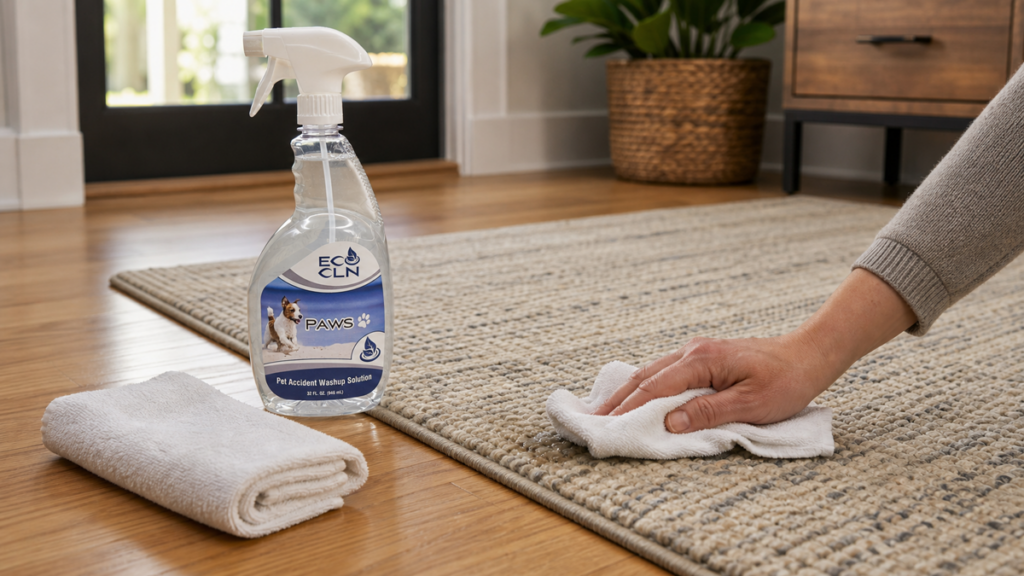
How to Clean Cat Urine From a Couch or Upholstered Chair

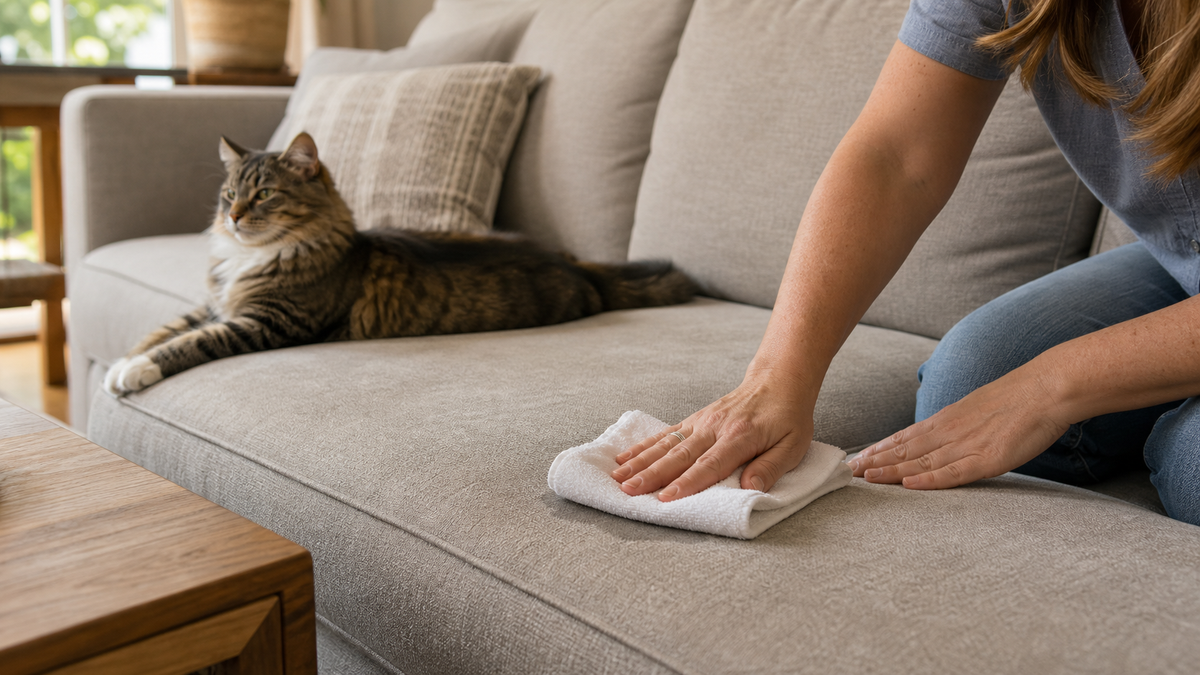
Quick Answer
For fresh cat urine on a couch or upholstered chair, blot up as much liquid as possible before adding cleaner. Check the furniture care label or cleaning code, test in a hidden area, then use a pet-accident cleaner only if the fabric is compatible. Eco Cln PAWS is positioned for pet urine odors, organic stains, upholstery, carpets, rugs, pet beds, and repeat accident areas when used as directed. Apply a controlled amount, blot instead of scrubbing, and let the fabric and cushion dry completely before judging the final odor.
If urine soaked through the upholstery cover and into the cushion foam or filling, a surface wipe may improve the fabric while deeper residue remains. That is when repeated surface spraying can become less useful than removing the cushion cover if allowed, treating accessible layers appropriately, or calling a professional upholstery cleaner.
Why Cat Urine on Upholstery Is Tricky
A couch is not one flat surface. Upholstery can include the face fabric, backing, batting, foam, seams, piping, zippers, wood framing, and sometimes removable cushion covers. A small visible wet spot can spread sideways through fabric or downward into the cushion before you get a towel on it.
That is why the odor may seem to come back after the surface looks clean. The material that you can wipe is only part of the structure that may have gotten wet.
Step 1: Check the Upholstery Care Label or Cleaning Code
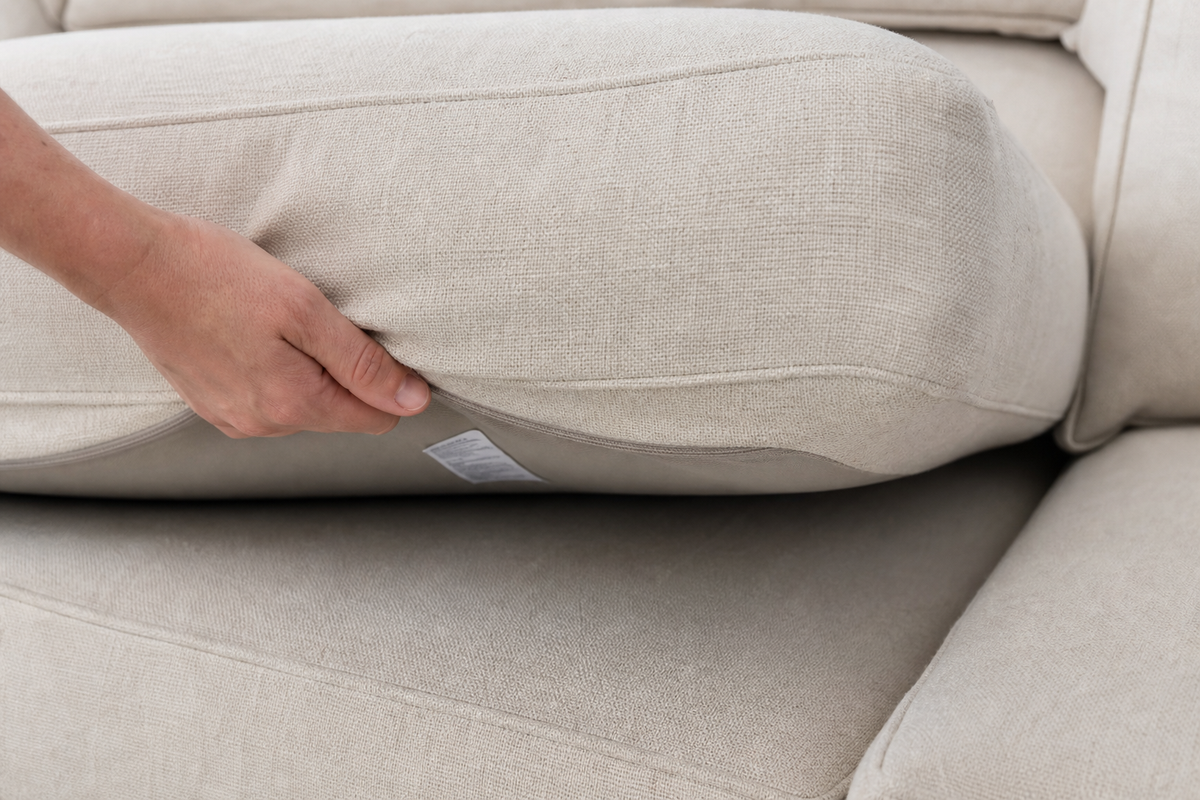
Look under the cushions or on the furniture label for the manufacturer care instructions. Some upholstery is meant for water-based cleaning, some requires solvent-based care, and some should only be professionally cleaned. La-Z-Boy fabric and leather care guidance is a good example of why the cleaning code matters: different fabrics require different spot-cleaning methods.
If the couch is leather, suede, silk, velvet, antique fabric, highly textured specialty material, or an unknown upholstery type, do not assume a general pet-cleaning method applies.
Step 2: Blot Fresh Urine Before Adding Product
Place clean white towels over the wet area and press down firmly. Lift and move to a dry towel section, repeating until very little moisture transfers. If the cushion is removable and urine reached the underside, blot that side too if the care instructions allow access.
Humane World pet stain guidance also starts fresh urine cleanup by absorbing as much liquid as possible before deeper treatment. That first removal step reduces how much urine remains for the cleaner to handle.
Step 3: Find the Full Accident Zone
Check more than the center of the visible spot. Feel the seams, piping, cushion edge, underside, and the neighboring fabric for dampness. Cat urine can wick farther than the obvious mark. If the accident happened against the couch back or arm, inspect the vertical fabric and creases too.
Do not keep enlarging the wet area with cleaner just because the smell is strong. First figure out where the liquid actually traveled.
Step 4: Spot-Test PAWS on a Hidden Area
If the care label allows water-based spot cleaning, test PAWS on an inconspicuous area. Let the test area dry before evaluating it. Watch for color transfer, bleeding, lightening, texture change, water rings, or altered sheen.
A product can be appropriate for upholstery in general and still be wrong for a particular dye, coating, vintage fabric, or specialty finish.
Step 5: Apply Product With Controlled Moisture
Apply PAWS to the affected area according to the product directions. Use enough to contact the urine residue in the fabric, but avoid flooding a cushion that the manufacturer does not want saturated. On delicate-looking upholstery, applying product to a clean cloth first may provide more control.
For an old or repeat accident, two controlled cleaning cycles with full drying between them may be safer than one extremely wet application.
Step 6: Blot – Do Not Aggressively Scrub
Blot the treated upholstery with a clean white towel. Work from the outside edge toward the center of the accident zone. Rotate the towel as it picks up moisture and residue.
Aggressive rubbing can spread the wet area, distort the fabric pile, rough up fibers, or create a larger visible patch. The goal is extraction by pressure, not friction.
Step 7: Dry the Cushion Completely
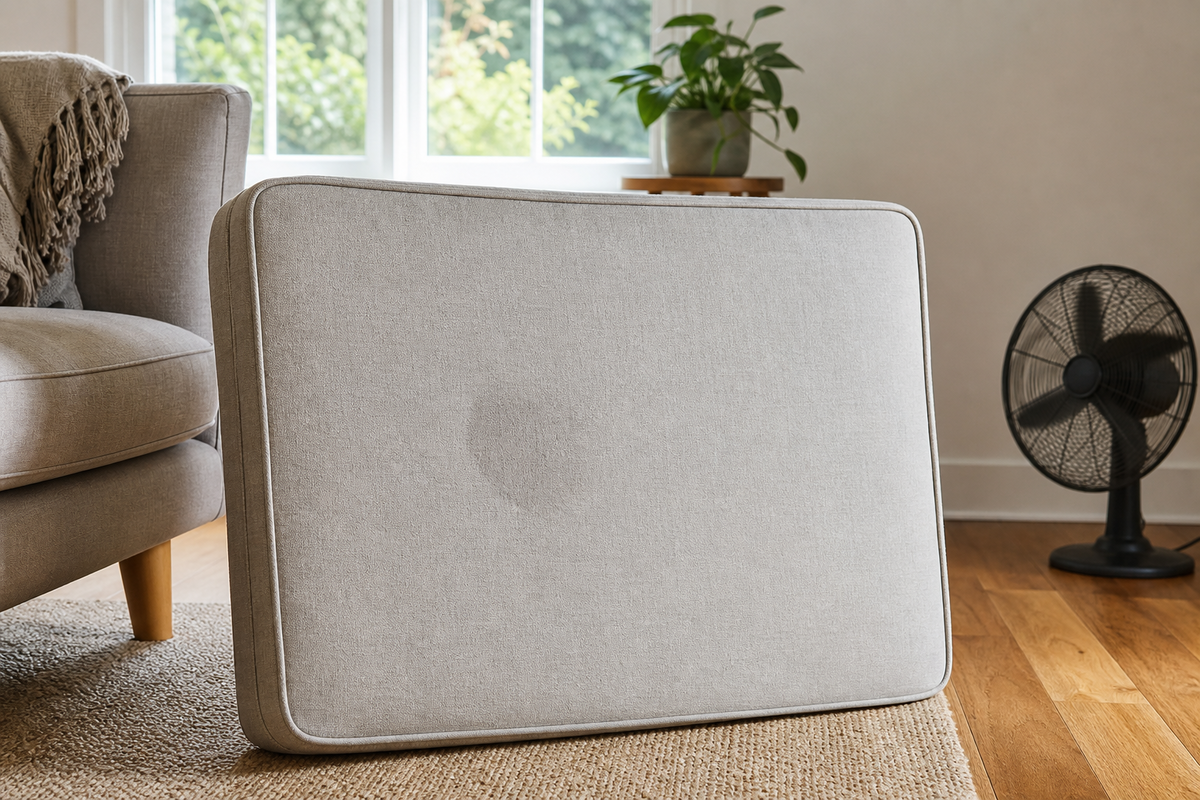
Improve airflow around the cushion. If the furniture manufacturer allows the cushion to be removed, stand it so air can circulate around more than one side. Keep pets and people off the area until it is completely dry.
Do not judge the final odor while the upholstery is still damp. Wet fabric, cleaner, and lingering urine residue can all smell different while moisture remains.
What If the Urine Reached the Cushion Foam?
If the cushion was deeply soaked, the outer fabric may not be the only source of odor. Urine can reach foam, batting, seams, or internal layers that are difficult to clean evenly from the surface. Repeatedly spraying the top fabric does not guarantee the deeper material is being reached or dried.
If a removable cover can be taken off according to the furniture instructions, inspect the cushion insert. If the insert is saturated, specialty cleaning or professional upholstery service may be the better option. Severe repeated accidents can sometimes make replacement of the cushion insert more practical than endless surface treatment.
What About Old Cat Urine on a Couch?
For a dry old spot, first identify the full odor zone and vacuum loose hair or debris. Spot-test, then use a controlled pet-cleaning treatment according to the product directions. Allow complete drying before deciding whether another pass is needed.
Avoid using heat or steam as a first move on urine odor in upholstery. Humane World specifically advises avoiding steam cleaners on urine odors in carpet or upholstery because heat can set the stain and odor into fibers.
Common Mistakes With Cat Urine on Furniture
The most common mistakes are oversoaking the cushion, scrubbing hard, skipping the upholstery care code, treating only the center of the visible spot, closing a damp cushion back into the couch before it dries, and layering unrelated cleaners or fragrances over the accident.
Do not mix cleaning products unless their labels specifically say they are intended to be combined.
Where PAWS Fits the Job
Eco Cln PAWS is the targeted Eco Cln product for pet urine odors, organic stains, upholstery, carpets, rugs, pet beds, hard floors, kennels, and repeat accident areas. For food, grease, dirt, or non-pet upholstery spots, Spot Gone is the more targeted stain-removal lane.
For broader surface differences, link to the Eco Cln pet accident cleanup guide so readers understand why upholstery, carpet, and hard flooring should not all be cleaned the same way.
FAQ
Can cat urine soak through a couch cushion?
Yes. Enough liquid can move through the face fabric into batting, foam, seams, and lower layers, which is why a surface that looks clean can still smell after drying.
Should I scrub cat urine out of upholstery?
No. Blot and use controlled pressure. Aggressive rubbing can spread the spot and change the fabric texture.
Can I use PAWS on upholstery?
PAWS is positioned for upholstery and pet urine cleanup, but upholstery fabrics vary. Check the furniture care label, test in a hidden area, and use the product as directed.
Why does the odor return after the couch dries?
The original accident may have reached deeper cushion material or a wider area than the visible spot. Re-check seams, cushion edges, the underside, and internal padding if accessible.
When should I call a professional?
If the furniture care code restricts wet cleaning, the upholstery is delicate or valuable, the cushion is deeply soaked, or odor keeps returning from inside the cushion, professional upholstery cleaning is a sensible next step.
The Bottom Line
For fresh cat urine on a couch or upholstered chair, blot up as much liquid as possible before adding cleaner. Keep moisture and pressure controlled, follow the material’s care instructions and stop if the finish or fabric reacts poorly.
Cat urine on furniture needs a pet-specific cleanup process, especially when odor-causing residue can move into fabric and cushions. Eco Cln PAWS is made for pet urine odors, organic stains, upholstery, carpet, rugs, pet beds, and repeat accident areas when used as directed.