How to Clean Patio Furniture After Pollen, Dirt and Outdoor Grime

Quick Answer
Identify the furniture material and check the manufacturer care instructions. Brush or vacuum loose pollen and dirt before adding water so you do not turn dry debris into muddy streaks.
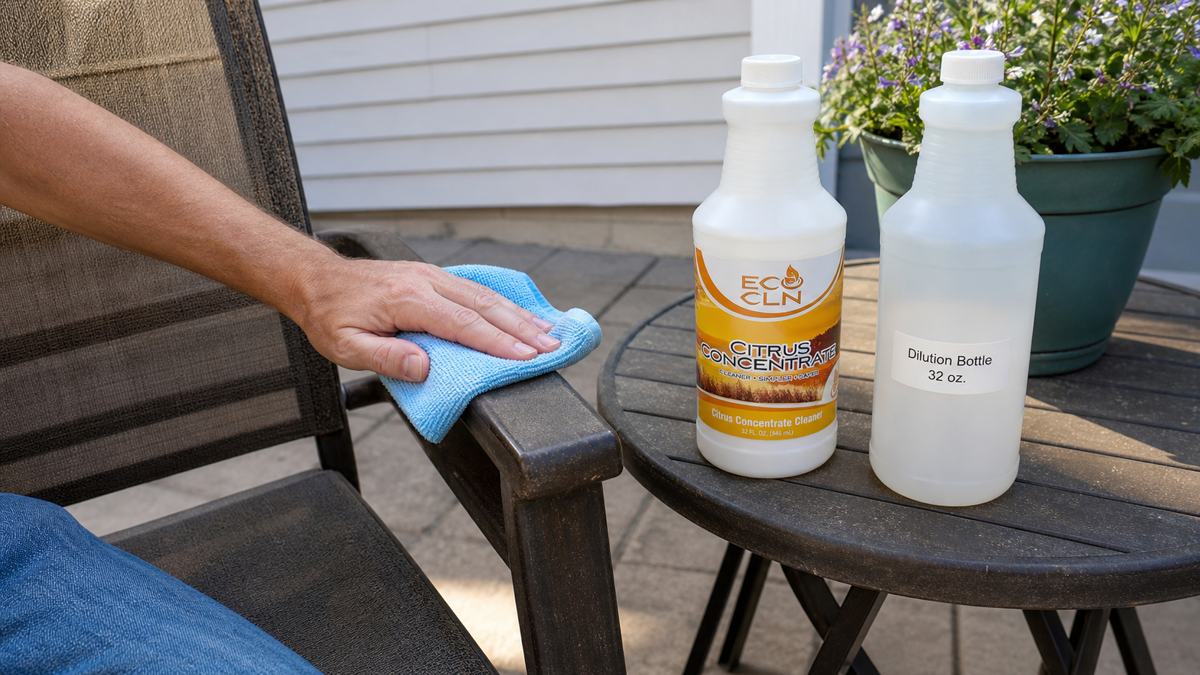
For compatible washable outdoor frames and hard surfaces, start with the light-duty Eco Cln Citrus Concentrate mix: 1 oz concentrate per quart of water. Apply to a cloth or soft brush, work in small sections, wipe or rinse away loosened grime as the material allows, and dry metal, wood, hardware, and cushions completely.
POLYWOOD, for example, recommends soap, water, and a soft-bristle brush for its outdoor-furniture material – a good reminder that manufacturer-specific care should override a one-size-fits-all method. Review POLYWOOD care guidance.
Why Outdoor Furniture Gets Dirty So Fast
Outdoor furniture sits in a constant stream of airborne pollen, dust, traffic film, plant debris, sunscreen, food residue, and moisture. Horizontal arms, tabletops, slats, and cushion seams collect the most.
Pollen is easiest to remove dry. Once it becomes wet, it can smear into yellow-green film that takes more wiping.
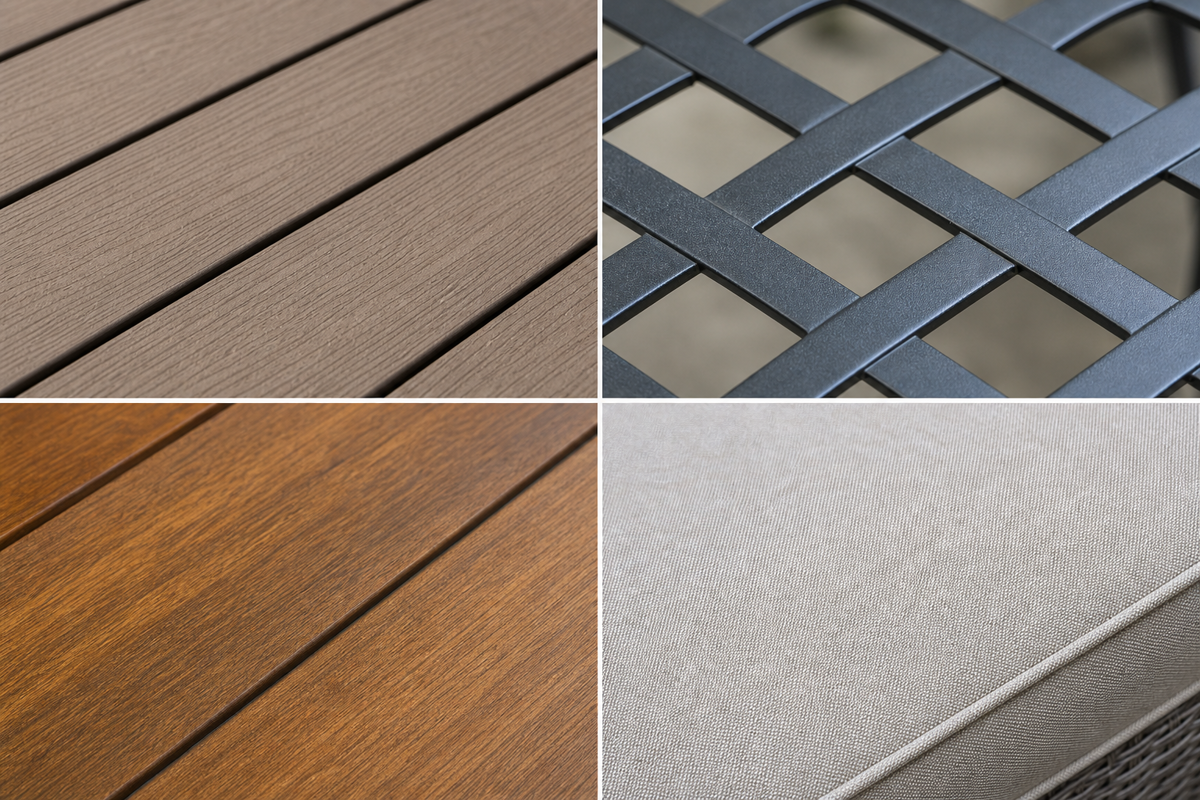
Step 1: Identify the Material
- Plastic lumber / HDPE
- Powder-coated or painted metal
- Bare or coated aluminum
- Sealed wood or teak
- Resin wicker
- Outdoor fabric and removable cushions
- Glass tabletops or mixed-material furniture
Do not assume the same cleaner or brush belongs on all of them.
Step 2: Remove Dry Pollen and Debris
Use a soft brush, microfiber cloth, vacuum attachment, or gentle air movement to lift loose pollen, leaves, dust, and crumbs.
Avoid blasting debris into fabric seams or scratching glossy surfaces with gritty particles.
Step 3: Mix Citrus Light for Routine Outdoor Grime
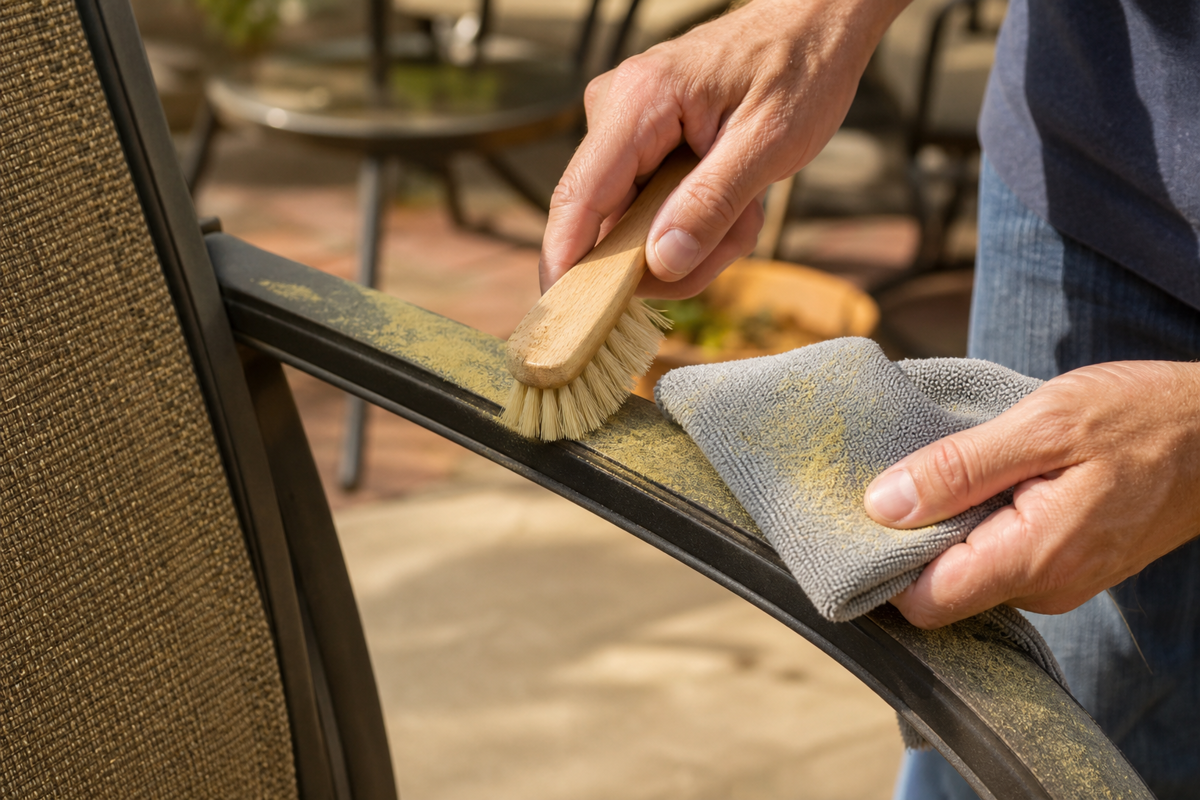
The current Eco Cln dilution guide uses 1 oz Citrus per quart for light duty, 2 oz for all-purpose, and 8 oz for heavy duty. Start light on patio furniture.
Use stronger mixes only when the furniture maker permits the cleaner and the soil level actually requires it.
Step 4: Spot-Test Before Broad Cleaning
Test an underside, rear leg, or hidden section. Let it dry and check for color, gloss, coating, or texture changes.
Be especially cautious with painted finishes, natural stone tabletops, unfinished wood, specialty coatings, and unknown materials.
Step 5: Clean From the Top Down
Start with backs and arms, then work down toward seats and legs. Use microfiber or a soft brush appropriate to the material.
Do not flood joints, hollow frames, wood end grain, hardware, or cushion zippers.
Step 6: Rinse or Remove Residue
If the manufacturer allows rinsing, use clean water and avoid high pressure that can force water into joints or damage finishes. Otherwise use a clean damp cloth.
Dry reflective metal, wood, and hardware to reduce water spotting and trapped moisture.
Outdoor Cushions Are a Separate Material
Read the cushion care label. Remove dry pollen first and follow the fabric maker for spot cleaning, removable-cover washing, or professional care.
Do not use Citrus on outdoor fabric just because the frame is compatible.
Common Patio-Furniture Mistakes
- Wetting heavy pollen before removing it dry.
- Using a pressure washer without manufacturer approval.
- Using an abrasive brush on painted or coated metal.
- Flooding wood joints, wicker openings, or hollow frames.
- Applying the frame cleaner to cushions without checking the fabric label.
- Leaving cleaner or rinse water pooled on hardware.
- Assuming stronger Citrus dilution is always better.
Where Citrus Concentrate Fits
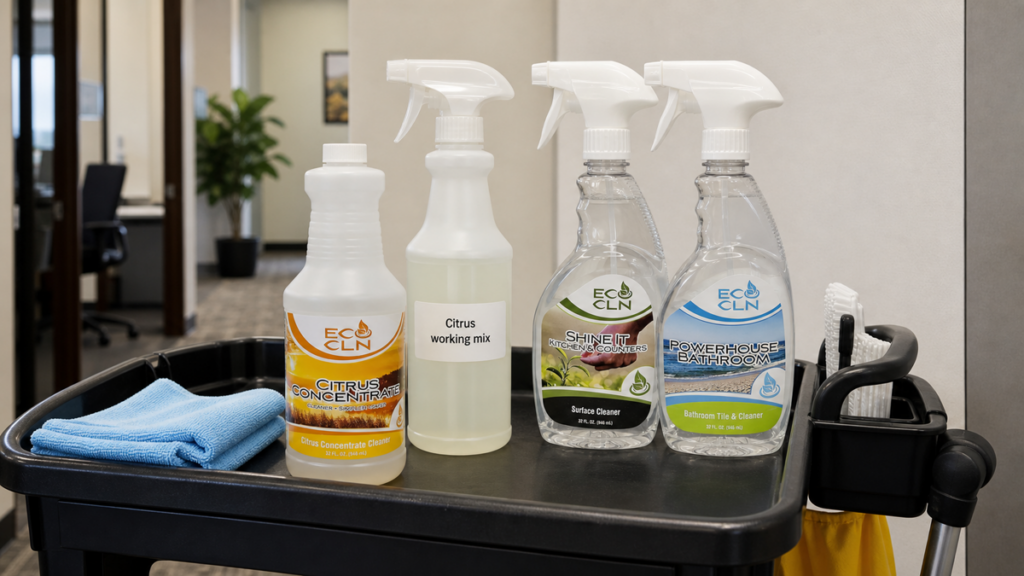
Eco Cln Citrus Concentrate is the dilution-based Eco Cln cleaner for compatible washable hard surfaces and larger cleaning jobs. Patio furniture is a good candidate only when the furniture material and manufacturer allow a general cleaner.
FAQ
What Citrus dilution should I start with on patio furniture?
Start with the current light-duty ratio: 1 oz Citrus Concentrate per quart of water on compatible washable surfaces.
Can I pressure-wash patio furniture?
Only if the manufacturer specifically allows it. High pressure can damage coatings, wood fibers, wicker, joints, and hardware.
Can I use Citrus on outdoor cushions?
Do not assume so. Follow the cushion fabric care label and spot-test any compatible water-based cleaner first.
How do I remove pollen without smearing it?
Remove as much pollen as possible while dry using a soft brush, microfiber, or vacuum before wet cleaning.
What if the finish looks chalky after cleaning?
Stop. The coating may be oxidized or damaged rather than dirty. Stronger cleaner will not repair a failing finish.
The Bottom Line
Start by identifying every patio-furniture material in the set, because a painted metal frame, resin lumber, wood arm, woven sling, cushion, and glass insert may each have different limits. Check the maker’s care instructions, close cushions and umbrellas if wind is moving pollen around, and work in shade on a cool surface. Remove dry pollen, leaves, grit, and cobwebs with a soft brush, vacuum attachment, or gentle rinse when the material allows it. Skipping that dry step can turn pollen and soil into abrasive paste. For compatible washable frames and hard surfaces, mix Citrus Concentrate at the current light-duty rate of 1 ounce per quart of water, test a hidden area, and apply it to a cloth or soft brush instead of flooding joints, fasteners, unfinished edges, or cushion foam. Clean from the cleaner upper areas downward, use light pressure, and rinse or wipe away loosened soil before it dries back onto the furniture. Follow with a clean damp cloth where the manufacturer permits, then dry metal hardware, seams, feet, and trapped-water areas. Treat removable cushion covers and specialty outdoor fabrics only according to their care labels; do not assume a frame-cleaning method belongs on fabric, foam, wood oil, powder coating, wicker, or stone. Move the furniture only after it is dry enough to inspect. Let cushions dry on edge and store them only when the covers, seams, and inner fill are fully dry. Stop if paint, stain, dye, sealant, or finish transfers to the cloth, or if you find rust, cracked coating, loose weave, swollen wood, mildew inside a cushion, damaged hardware, or another condition cleaning cannot repair. Citrus can help remove compatible pollen film, dirt, and outdoor grime; however, it does not restore failed finishes or replace the furniture maker’s material-specific care method.
For pollen film, dirt, and everyday outdoor grime on compatible washable patio-furniture frames and hard surfaces, Eco Cln Citrus Concentrate lets you start with a light measured mix and increase only when the surface and soil justify it.