7 Cleaner Dilution Mistakes That Waste Product and Leave Residue

Quick Answer
For Eco Cln Citrus Concentrate, use the current source-of-truth ratios: 1 oz concentrate per quart of water for light-duty cleaning, 2 oz per quart for all-purpose cleaning, and 8 oz per quart for heavy-duty cleaning. Add water first, then the measured Citrus Concentrate, and label the bottle.
The seven biggest mistakes are guessing the amount, using the wrong bottle size, making every job heavy-duty, adding concentrate before water, topping off mystery leftovers, leaving bottles unlabeled, and copying Citrus ratios to ready-to-use Eco Cln products.
The Current Citrus Dilution Ratios
The current Eco Cln dilution guide and current Citrus product page agree on these mixes:
- Light Duty: 1 oz Citrus Concentrate per 32 oz / 1 quart of water.
- All-Purpose: 2 oz Citrus Concentrate per 32 oz / 1 quart of water.
- Heavy Duty: 8 oz Citrus Concentrate per 32 oz / 1 quart of water.
Those ratios apply to Citrus Concentrate. Shine-It, See-Clear, Powerhouse Bathroom, PAWS, and Spot Gone are not Citrus concentrates and should not inherit the same dilution formula.
Mistake 1: Eyeballing the Concentrate
A quick free-pour feels harmless, but a small over-pour repeated across dozens of bottles can waste a surprising amount of concentrate. It also makes results inconsistent: one bottle may be weak while the next is far stronger than intended.
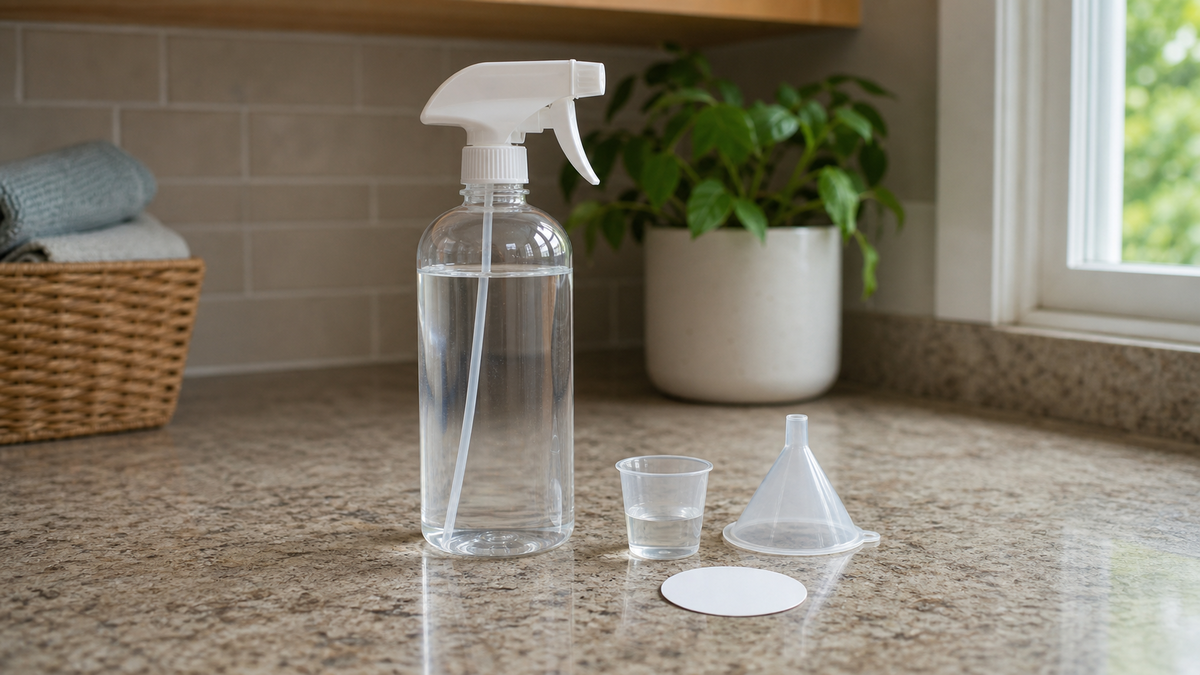
Use a marked measuring cup, dosing cap, or other repeatable measuring method.
Mistake 2: Forgetting the Bottle Size
A ratio written for a 32 oz / one-quart bottle does not automatically work unchanged in a smaller or larger container. The ratio has to scale with the water volume.
Before mixing, confirm the bottle capacity instead of assuming every spray bottle on the shelf is a quart.
Mistake 3: Making Every Job Heavy Duty
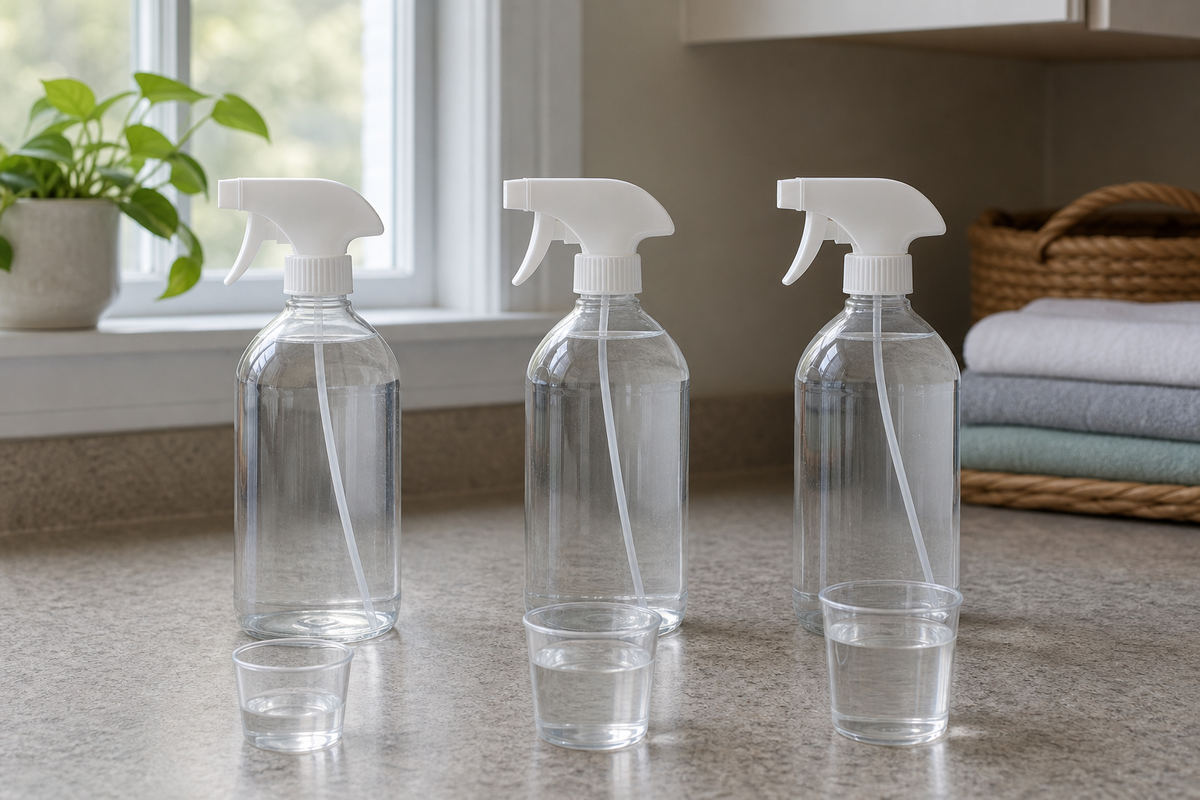
More concentrate is not a badge of seriousness. Routine fingerprints, light soil, or maintenance cleaning often do not need the heavy-duty ratio.
Starting with the lightest mix that fits the job can reduce residue, make wiping easier, and preserve the value advantage of a concentrate. Move stronger when the soil level actually calls for it.
Mistake 4: Adding Concentrate Before the Water
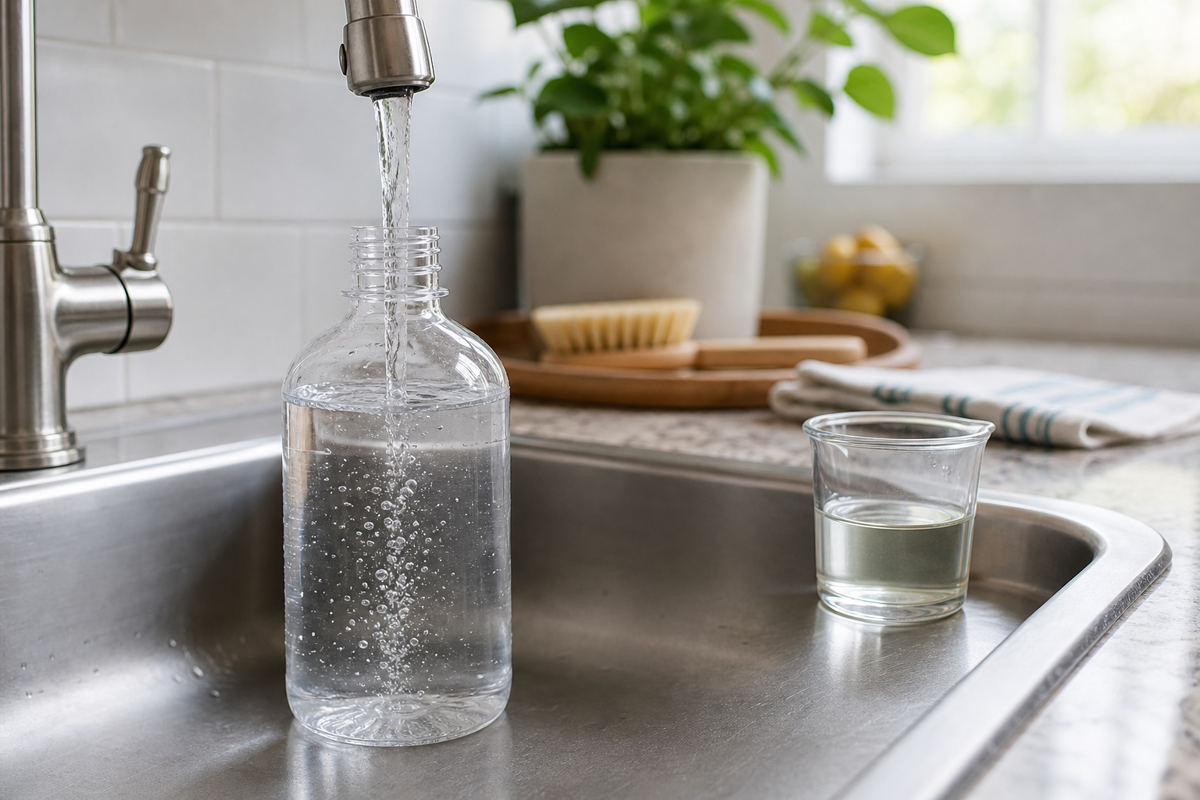
The current Eco Cln directions say to add water first, then concentrate. That order helps the mixture combine with less unnecessary foaming and makes the final volume easier to control. See the current dilution instructions.
If you pour concentrate first and then blast water into the bottle, you can end up with excess foam, an inaccurate fill level, and more mess around the bottle neck.
Mistake 5: Topping Off an Old Mystery Mix
Do not keep adding fresh concentrate and water to an unknown leftover solution. If you no longer know the old ratio, the new bottle will not have a trustworthy ratio either.
Empty and clean the bottle as appropriate, then remake a clearly measured batch. Never combine unrelated cleaners or leftover products in the same bottle.
Mistake 6: Leaving the Bottle Unlabeled
A clear spray bottle with no label becomes a guessing game. You need to know what product is inside and what strength it was mixed at.
Label the bottle with the product name and dilution level. In a workplace or shared household, this also prevents somebody from assuming the bottle is plain water or a different cleaner.
Mistake 7: Copying Citrus Ratios to Other Eco Cln Products
This is the big one. Citrus Concentrate is designed to be diluted. Shine-It, See-Clear, Powerhouse Bathroom, PAWS, and Spot Gone have their own use directions.
Do not take the 1 oz / 2 oz / 8 oz Citrus chart and apply it to every Eco Cln bottle. That would create instructions that the product pages do not support.
Why Over-Concentrating Can Leave Residue
When more cleaning product is used than the job or surface can easily pick up, you create more material that has to be wiped or rinsed away. On floors, glass, dark counters, painted surfaces, and other visible finishes, leftover product can show up as haze, tackiness, streaks, or dull film.
If a surface feels sticky after cleaning, the next move is not always more concentrate. A controlled residue-removal pass may be the better fix.
A Simple Mixing Routine
- Confirm the bottle volume.
- Choose Light Duty, All-Purpose, or Heavy Duty based on the job.
- Add the measured amount of water first.
- Measure the Citrus Concentrate.
- Add the concentrate to the water.
- Close the bottle and mix gently.
- Label the bottle with product and dilution strength.
Where Citrus Concentrate Fits
Eco Cln Citrus Concentrate is the dilution-based all-purpose cleaner in the Eco Cln lineup. Its advantage comes from matching the strength to the job—not from automatically making every bottle as strong as possible.
FAQ
What is the current Eco Cln Citrus light-duty dilution?
1 oz Citrus Concentrate per quart / 32 oz of water.
What is the current all-purpose dilution?
2 oz Citrus Concentrate per quart / 32 oz of water.
What is the current heavy-duty dilution?
8 oz Citrus Concentrate per quart / 32 oz of water.
Should I add water or concentrate first?
The current Eco Cln directions say water first, then the measured concentrate.
Can I use the Citrus dilution chart for Shine-It or See-Clear?
No. Those products have their own directions. The 1 oz / 2 oz / 8 oz ratios belong to Citrus Concentrate.
The Bottom Line
Measure Eco Cln Citrus Concentrate instead of guessing: 1 oz per quart for light-duty, 2 oz per quart for all-purpose, and 8 oz per quart for heavy-duty cleaning. Add water first, then concentrate, label the bottle, and never copy Citrus ratios to another product.
For additional material or process limits, review the CDC cleaning-product preparation guidance.
The easiest way to get the value out of Eco Cln Citrus Concentrate is to stop treating dilution like a guess. Measure the job, mix the right strength, label the bottle, and keep the current dilution guide with your cleaning supplies.