How to Remove Hard Water Buildup Around Faucets and Fixtures

Quick Answer
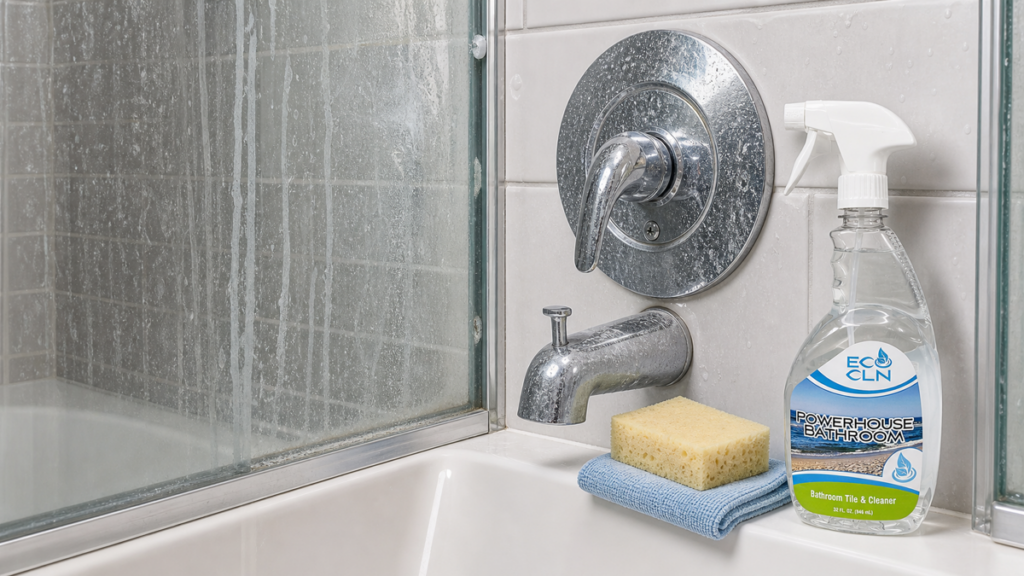
To remove hard water buildup around faucets and fixtures, start by identifying the finish and checking the manufacturer care instructions. Remove loose residue with a soft damp cloth, then use a bathroom cleaner intended for hard-water-related buildup. Eco Cln Powerhouse Bathroom is positioned for hard water buildup, soap scum, sinks, fixtures, tile, tubs, and everyday bathroom grime when used as directed. Apply it in a controlled layer, allow brief contact according to the product directions, wipe with a soft cloth or non-scratch sponge, rinse if the surface guidance calls for it, and dry completely.
The key is finish protection. Chrome, brushed nickel, matte black, oil-rubbed bronze, gold-tone, coated, and specialty finishes do not all tolerate the same cleaners or scrubbers. If the faucet maker gives more restrictive instructions, follow those instructions instead of a generalized bathroom-cleaning method.
Why Hard Water Leaves White or Chalky Buildup
Hard water contains dissolved minerals. When droplets sit around a faucet base, handle, aerator, sink rim, or shower fixture and then evaporate, some of those minerals stay behind. One dried splash may look like a faint spot. Repeated splashes can build a rough white or gray ring that catches more soap residue and grime.
That is why hard-water buildup often appears first around faucet bases, handle seams, aerators, showerheads, drain edges, and places where water repeatedly pools. The existing Eco Cln guide on soap scum vs. hard water stains is useful when the residue looks filmy in one area and chalky in another.
Step 1: Identify the Faucet Finish Before Cleaning
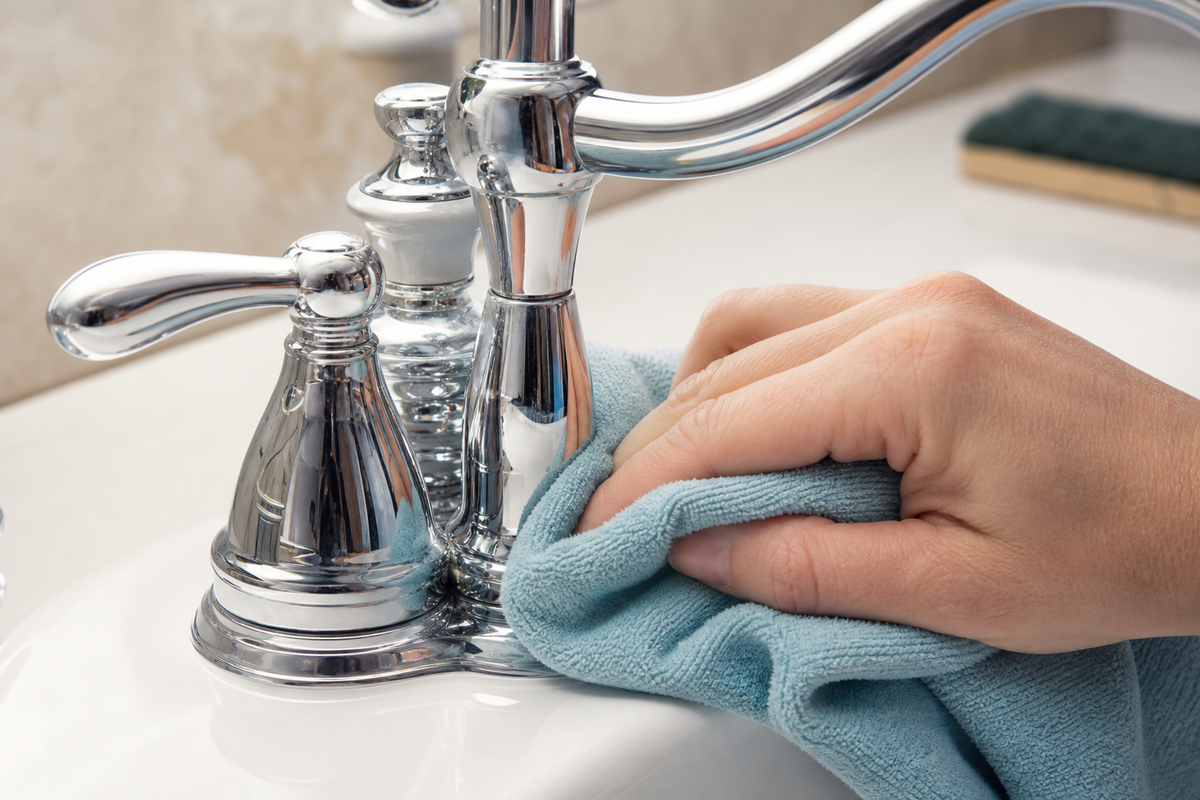
Before putting cleaner on the fixture, look for the brand and finish name if you know it. Specialty finishes may have specific restrictions. Moen faucet finish-care guidance separates care instructions by finish type, which is a good reminder that a cleaning method that is acceptable on one finish may be wrong for another.
If the finish is unknown, start conservatively: soft cloth, limited moisture, hidden-area test, and no abrasive pad. Avoid assuming that a crusty deposit gives you permission to scrub harder.
Step 2: Remove Loose Dirt First
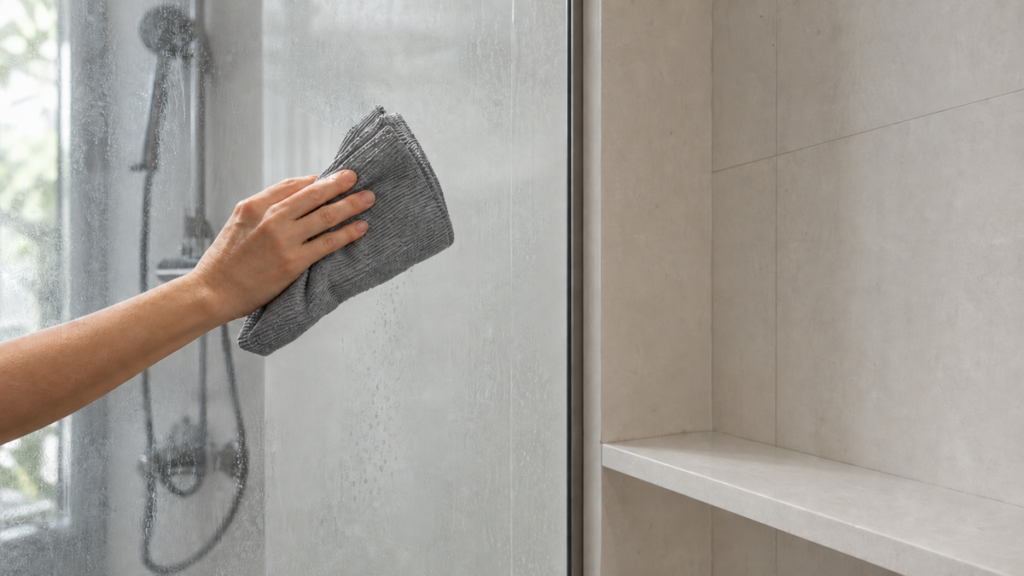
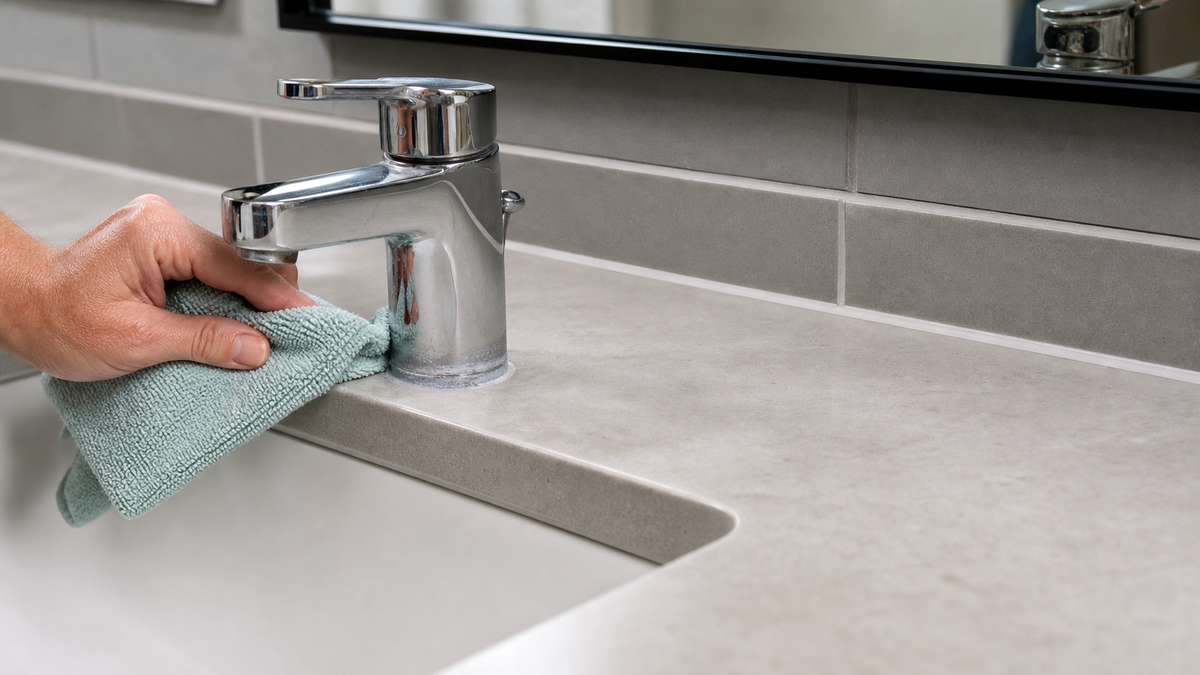
Wipe the faucet and surrounding area with a clean damp microfiber cloth. Remove toothpaste, dust, loose soap, hair, and other surface debris before treating the mineral buildup. This prevents loose grit from getting trapped under the cloth while you work.
Step 3: Apply Powerhouse Bathroom to the Buildup
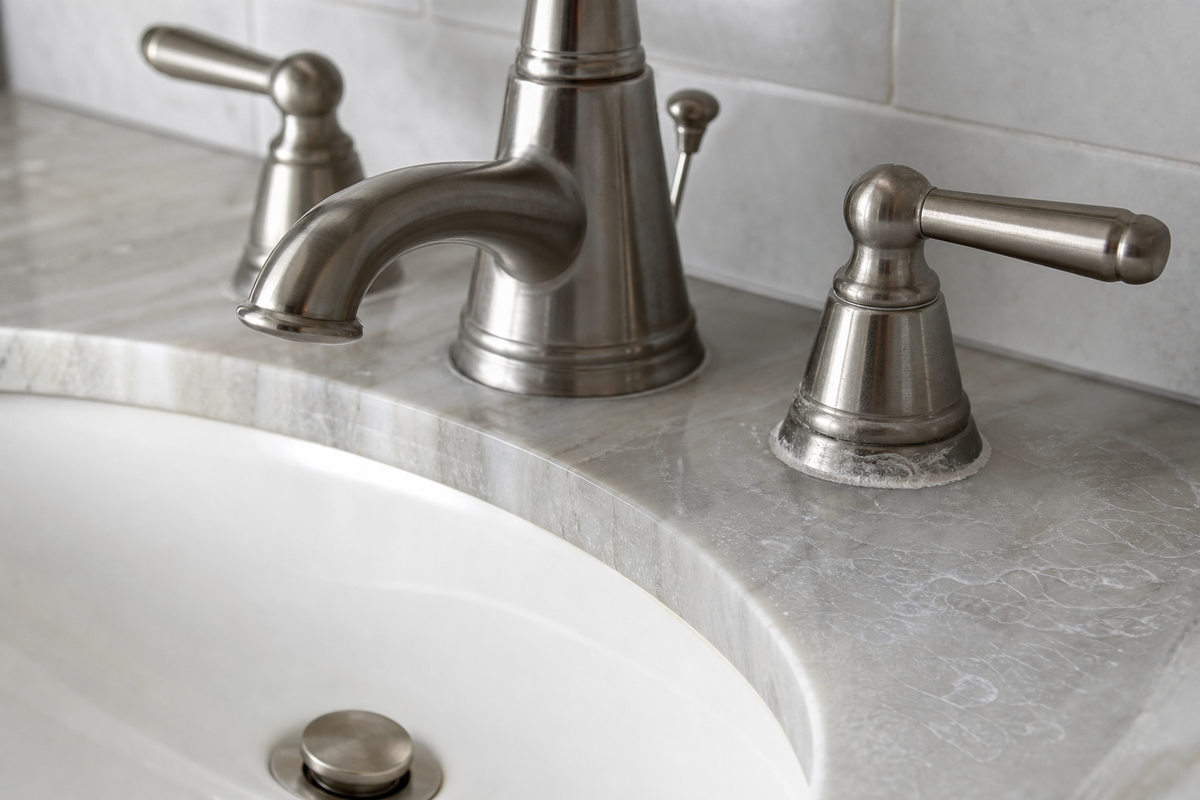
Apply Powerhouse Bathroom according to the current product directions. Focus on the mineral-marked areas around the fixture instead of flooding the entire sink or countertop. On a faucet with seams, electronics, sensors, decorative inserts, or a finish you are unsure about, applying cleaner to a cloth can give you more control than heavy spraying.
Let the cleaner sit briefly as directed so the cleaning action has time to work on the buildup. Do not let cleaner dry onto the finish unless the product and fixture manufacturer specifically allow that.
Step 4: Wipe With a Soft, Non-Abrasive Tool
Use a clean microfiber cloth or a soft non-scratch sponge that is appropriate for the fixture. Work around the base, handle, and other mineral-marked zones with light pressure. Fold the cloth often so lifted residue is not dragged across the finish.
This is where aggressive green scrub pads, steel wool, abrasive powders, and rough brushes can create a second problem. Kohler hard-water guidance uses a soft cloth or sponge approach, and manufacturer finish-care instructions should remain the final rule for your specific fixture.
Step 5: Rinse or Wipe Away Cleaner Residue
Once the buildup loosens, remove the cleaner and residue from the fixture. If the manufacturer allows rinsing, rinse with clean water and wipe dry. If you need to limit water around seams or electronics, use a separate clean damp cloth for the final pass.
Do not leave loosened mineral residue mixed with cleaner around the faucet base. When that mixture dries, it can leave another dull-looking film.
Step 6: Dry the Fixture Completely
Dry the faucet, handles, and surrounding sink edge with a clean soft cloth. Drying is one of the simplest ways to slow the next round of hard-water spotting because it removes droplets before they evaporate and leave minerals behind.
Do Not Forget the Aerator
If water flow has become uneven or weaker, mineral buildup may be affecting the aerator at the end of the faucet. Do not force or scratch the aerator trying to remove it. Check the faucet manual for removal and cleaning instructions. Some aerators are recessed and require a small manufacturer key.
If the aerator is heavily scaled, treat it as a separate maintenance job rather than soaking the entire faucet head in a solution that may not be compatible with the finish.
What If the Buildup Does Not Come Off?
Do not immediately escalate to a harsh scale remover or abrasive tool. First confirm that the remaining mark is actually removable mineral residue. A dull or discolored patch may be finish damage, etching, corrosion, or wear. Cleaning cannot restore a coating that has already been damaged.
For stubborn but removable buildup, repeat a controlled cleaning pass rather than scrubbing with more force. If the fixture manufacturer recommends a specific scale-removal method, use that method.
How to Slow Hard Water Buildup
The easiest maintenance habit is drying. Wipe the faucet and the small puddle around its base after heavy sink use. Clean light water spots before they become a thick mineral layer. Pay extra attention to the back of the faucet, the handle base, and the sink ledge where water tends to sit.
If your home has very hard water, the buildup will still return, but frequent light maintenance is usually easier on the fixture finish than occasional aggressive descaling.
Where Powerhouse Bathroom Fits
Eco Cln Powerhouse Bathroom is the targeted Eco Cln cleaner for soap scum, hard water buildup, sinks, fixtures, tile, tubs, shower areas, and everyday bathroom grime. Use it when the problem is bathroom residue rather than routine fingerprints on a mirror or kitchen grease near a stove.
FAQ
What causes white buildup around a faucet?
Usually minerals left behind when hard-water droplets dry. Soap and toothpaste residue can collect on top of that mineral layer and make it look worse.
Can I use an abrasive pad on faucet buildup?
Only if the fixture manufacturer specifically approves it for that finish. Rough pads can scratch or dull many polished, coated, matte, or decorative finishes.
Why does the buildup return so quickly?
The source is the water. If droplets repeatedly dry on the same fixture, minerals can accumulate again. Drying after use and frequent light cleaning can slow the cycle.
Can cleaning fix a dull or damaged finish?
No. Cleaning can remove surface residue. It cannot restore plating, coatings, scratches, corrosion, or etched areas that are physically damaged.
Can I use Powerhouse Bathroom around faucets?
Powerhouse Bathroom is positioned for hard water buildup, bathroom fixtures, sinks, tile, tubs, soap scum, and bathroom grime. Follow the product directions and the fixture manufacturer care instructions, and test specialty finishes first.
The Bottom Line
To remove hard water buildup around faucets and fixtures, start by identifying the finish and checking the manufacturer care instructions. Keep moisture and pressure controlled, follow the material’s care instructions and stop if the finish or fabric reacts poorly.
If hard-water residue is making faucets and bathroom fixtures look chalky or dull, Eco Cln Powerhouse Bathroom gives you a bathroom-specific cleaner for hard water buildup, soap scum, sinks, fixtures, tile, tubs, and everyday bathroom grime when used as directed.