How to Clean Doors, Door Frames and Painted Trim

Quick Answer
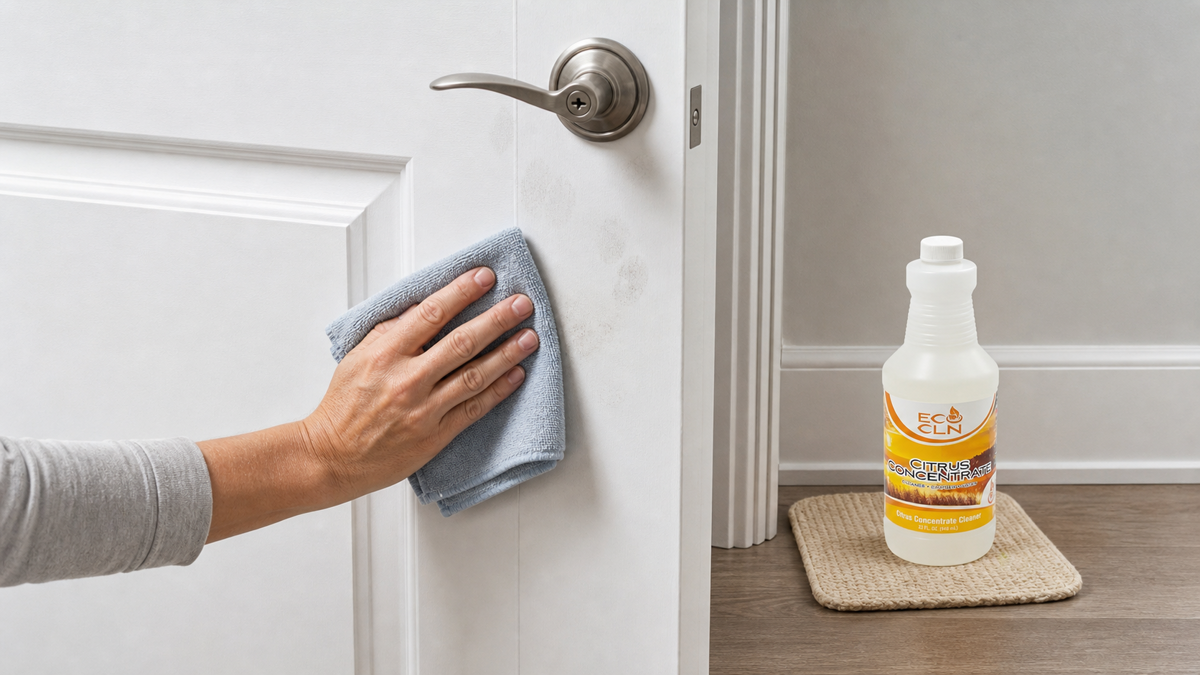
Dust the door, frame, and trim first. Check the paint or finish and spot-test in a hidden area. For compatible washable painted surfaces, start with the current light-duty Citrus mix: 1 oz Eco Cln Citrus Concentrate per quart of water. Apply the diluted cleaner to a soft microfiber cloth, not directly into hardware or seams, wipe gently, follow with a clean damp cloth if the paint maker allows it, and dry the area.
Paint sheen matters. Gloss and semi-gloss trim often tolerate cleaning better than flat or matte paint, but every coating can be damaged by aggressive scrubbing.
Why Doors and Trim Get Dirty So Fast
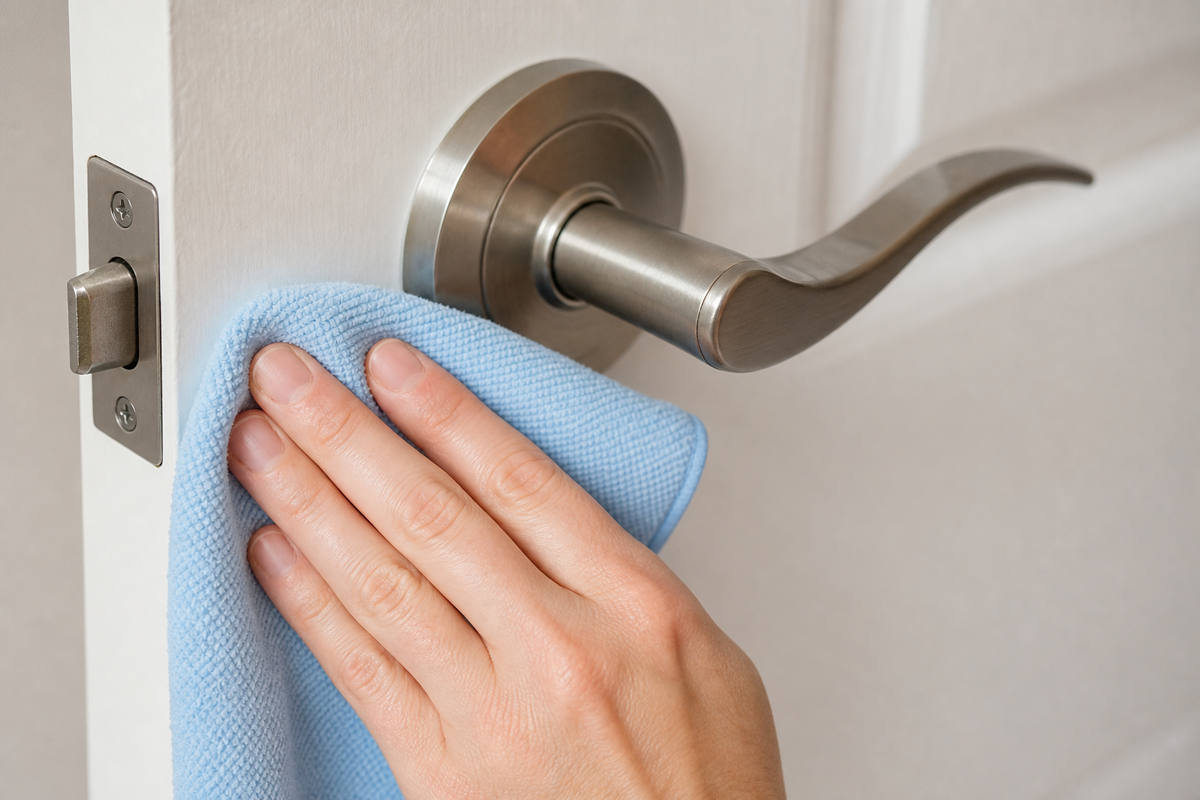
Door handles are not the only high-touch area. Grime builds on the door edge, the frame beside the latch, the push side of the door, lower panels, base trim, and the height where hands naturally land.
White and light-colored trim make gray hand oils and dust especially visible.
Step 1: Identify the Finish
Check whether the door and trim are painted, stained wood, factory-coated metal, laminate, unfinished wood, or another material.
Sherwin-Williams recommends checking manufacturer cleaning instructions and notes that rubbing or scrubbing can cause burnishing – an unwanted increase in sheen. Review Sherwin-Williams marring guidance.
Step 2: Remove Dust Before Wet Cleaning
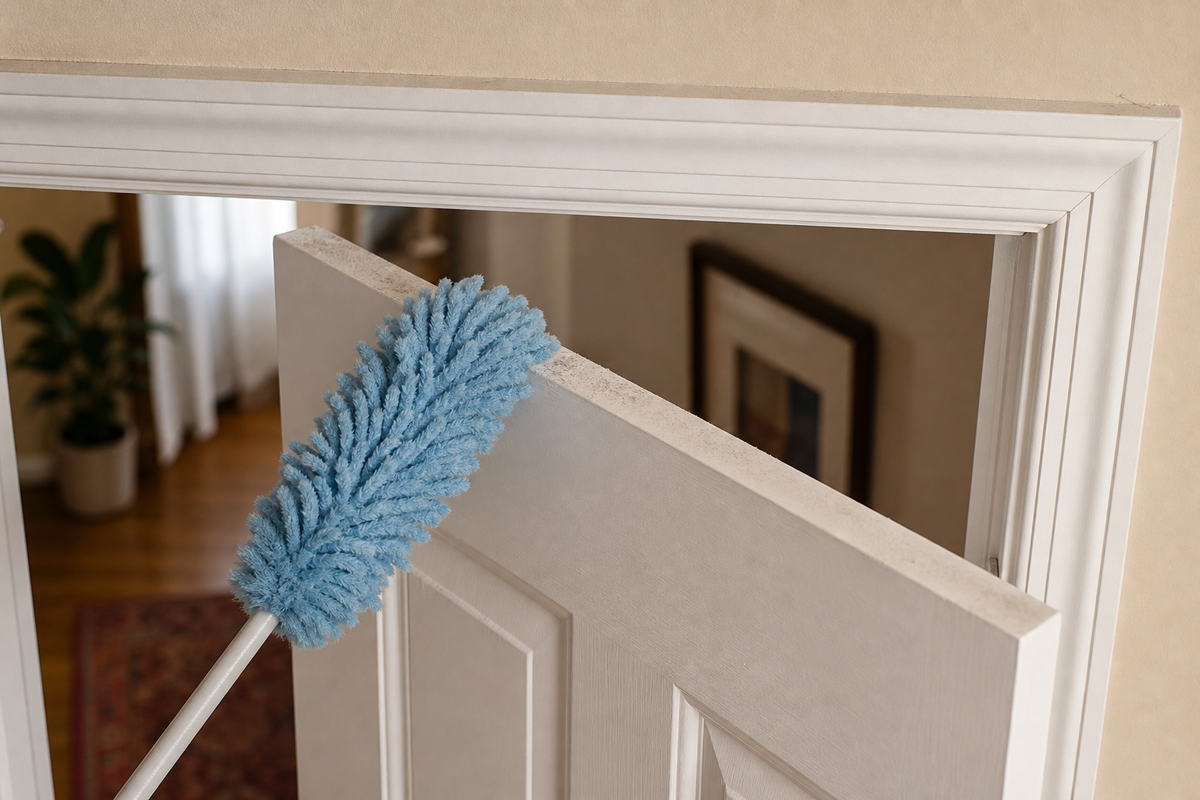
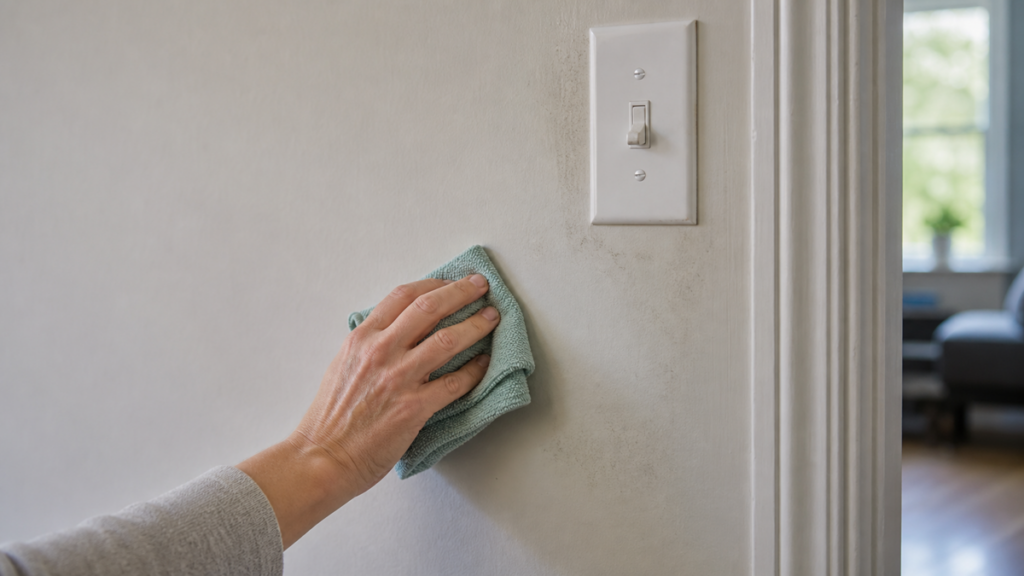
Use a microfiber duster, vacuum brush attachment, or dry cloth on the top edge of the door, frame corners, casing, panel grooves, and base trim.
Dry removal prevents loose dust from turning into gray streaks once cleaner is added.
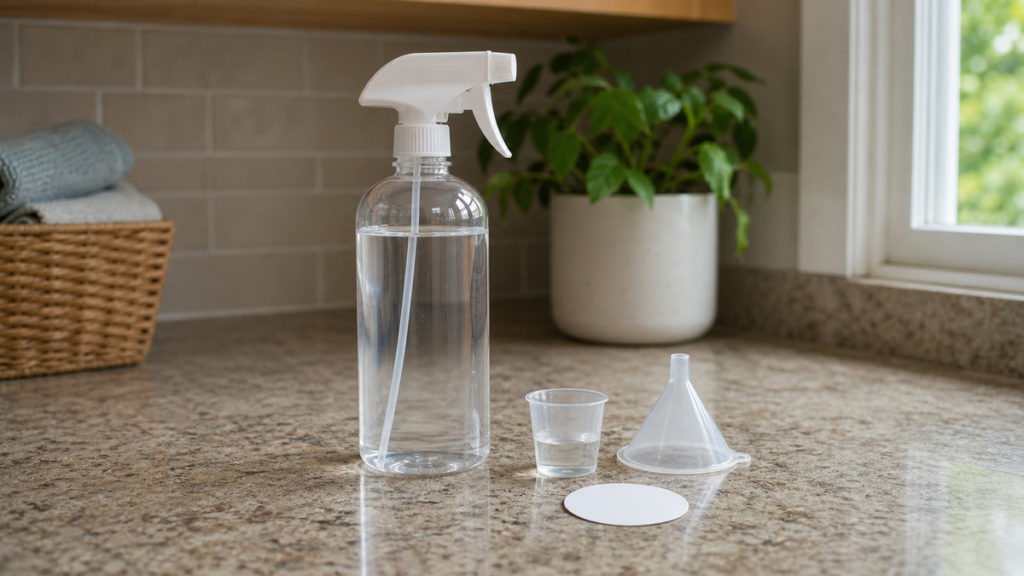
Step 3: Mix Citrus for Light-Duty Cleaning
The current Eco Cln dilution guide uses 1 oz Citrus Concentrate per quart of water for light-duty cleaning, 2 oz for all-purpose cleaning, and 8 oz for heavy-duty cleaning.
Fingerprints and routine trim grime are a good reason to start light. Stronger is not automatically better on paint.
Step 4: Spot-Test Behind the Door or Low on the Frame
Lightly dampen a microfiber cloth with the diluted cleaner and test an inconspicuous spot. Let it dry fully.
Watch for color transfer, dulling, increased shine, softening, or a watermark. If the finish changes, stop.
Step 5: Clean High-Touch Zones First
Focus on the door around the handle, latch edge, push area, and the frame where fingers touch. Work in small sections.
Apply cleaner to the cloth rather than spraying around hinges, locks, electronic hardware, weatherstripping, or gaps.
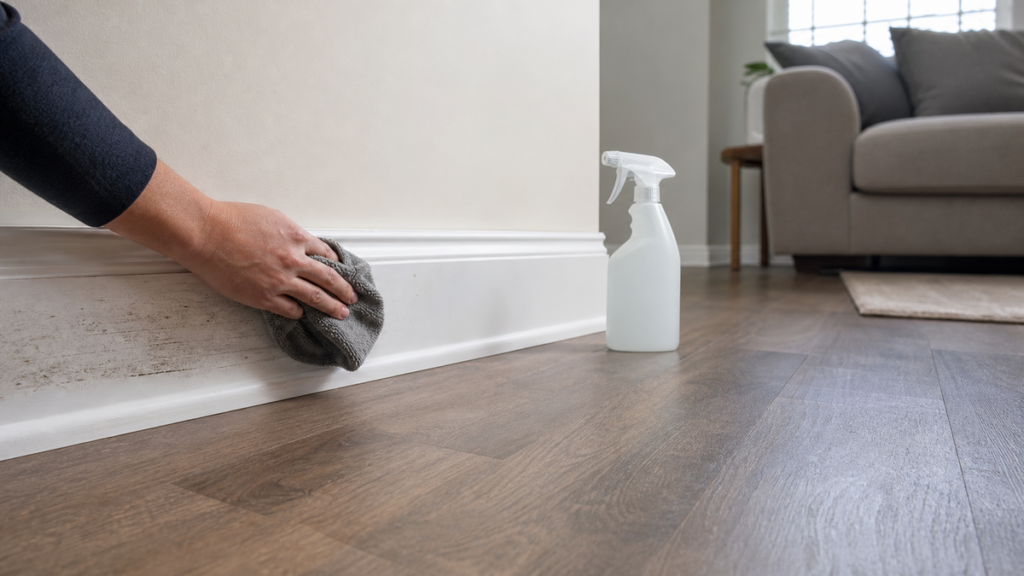
Step 6: Use Gentle Pressure on Painted Trim
Do not treat a scuff like a sanding project. Use a soft cloth and the mildest compatible method first.
Sherwin-Williams advises a soft sponge or cloth and testing cleaning technique on painted surfaces. See painted-surface cleaning guidance.
Step 7: Remove Residue and Dry
If the paint instructions permit it, follow with a second clean cloth lightly dampened with water to pick up remaining cleaner.
Dry the door edge, trim, and frame so moisture is not left sitting near joints, unfinished edges, or hardware.
What About Shoe Scuffs and Black Marks?
A scuff may be transferred rubber or dirt, but it can also be actual paint damage. Start gently.
If the mark does not transfer after mild cleaning and the paint is becoming shinier, stop. Touch-up paint may be safer than increasingly aggressive cleaning.
Fresh Paint Needs Extra Patience
Recently painted doors and trim may be dry to the touch before the coating reaches full washability.
Sherwin-Williams advises waiting before washing fresh paint and checking the specific coating instructions. Review paint maintenance guidance.
Common Door-and-Trim Cleaning Mistakes
- Using a rough scrub pad on glossy or matte paint.
- Spraying cleaner into locks, hinges, electronics, or seams.
- Using a heavy-duty mix for routine fingerprints.
- Cleaning fresh paint before it has cured enough for washing.
- Using one dirty cloth on every door in the house.
- Trying to clean away chipped paint or finish failure.
- Leaving wet cleaner on unfinished wood edges.
Where Citrus Concentrate Fits
Eco Cln Citrus Concentrate is the dilution-based all-purpose cleaner for everyday household cleaning on compatible washable surfaces. Painted doors and trim are a good fit when the paint tolerates washing, the mix is appropriate, and a hidden-area test succeeds.
FAQ
What Citrus dilution should I start with on fingerprints?
Use the current light-duty mix: 1 oz Citrus Concentrate per quart of water.
Can I spray cleaner directly onto a painted door?
A cloth-first method gives more control around hardware, seams, trim, and sensitive finishes.
Why did my painted trim turn shiny after cleaning?
Aggressive rubbing can burnish some paints and increase the sheen. Stop scrubbing if the finish changes.
Can I clean a door immediately after it was painted?
Check the paint manufacturer’s cure and washability instructions. Fresh paint may need time before wet cleaning.
What if a scuff will not come off?
It may be paint damage rather than surface dirt. Avoid escalating until you change the sheen or remove paint.
The Bottom Line
Dust the top edge, frame, panels, trim, and hardware area before wet cleaning so loose grit does not become an abrasive paste. Identify the finish and test a hidden spot, especially on flat or matte paint, recently painted surfaces, stained wood, factory coatings, and unknown trim. For compatible washable paint, start with the light-duty Citrus mix and apply it to a soft microfiber cloth instead of spraying the door, hinges, latch, or unfinished edges. Clean from the least soiled area toward the grimier handle zone, using gentle pressure and a fresh cloth face as hand oils lift. Follow with a clean damp cloth only when the paint maker permits it, then dry the surface and inspect from an angle. A dark mark that does not transfer may be a scuff, missing paint, burnishing, or finish damage rather than removable soil. Stop if the color transfers, the sheen becomes patchy, the surface softens, or moisture enters a raw wood edge. For multiple doors, replace gray water and loaded cloths before moving to the next room so removed soil is not redeposited. Clean each piece of hardware according to its own finish instructions rather than assuming the painted-door method is safe for every knob, lever, hinge, or decorative coating. Recheck the lower door edge and trim after drying because drips often collect there even when the upper panels look clean.
For fingerprints, hand oils, everyday grime, and washable painted doors or trim, Eco Cln Citrus Concentrate lets you start with a light measured mix instead of attacking the finish with more cleaner than the job needs.