Sticky Floors After Mopping: Why Cleaner Residue Happens and How to Fix It


If you have sticky floors after mopping, the most likely cause is cleaner residue—not a floor that somehow became dirtier out of spite. Too much product, an incorrect dilution, dirty mop water, or a cleaner that does not suit the flooring can leave a tacky film behind.
A cautious first step is usually to stop adding cleaner, remove loose grit, and go over a small section with a clean, lightly damp microfiber pad and fresh water if the flooring manufacturer allows it. Then dry the section and check the result before doing the whole room. Wood, laminate, vinyl, tile, and natural stone do not all tolerate the same amount of water or the same products, so identify the floor before trying to strip away the film.
Quick answer: how to fix sticky floors after mopping
- Stop adding more cleaner; stronger solution usually creates more residue.
- Sweep or vacuum the floor so grit does not get dragged through the film.
- Use a fresh microfiber pad and clean water where the floor’s care directions permit damp cleaning.
- Work in small sections, using very little moisture on laminate and sealed wood.
- Change the water or pad as soon as it becomes cloudy or dirty.
- Dry the floor and reassess. If the tackiness remains, use only a compatible cleaner measured to the correct dilution.
Do not soak plank seams, mix cleaning products, or assume vinegar and steam are safe for every finish.
Why floors feel sticky after mopping
Sticky floors after mopping usually come down to a mismatch between the amount of soil, the amount of product, and the amount of clean water or clean mop surface available to pick everything back up.
Too much cleaner was used
Concentrated floor cleaner has to be measured. A casual extra pour can leave surfactants and other ingredients on the floor after the water evaporates. The floor may look clean while wet, then feel tacky under socks once it dries.
The mop water or pad became dirty
One bucket of gray water cannot keep cleaning an entire busy floor. A saturated mop pad or dirty bucket spreads loosened grease, dust, and cleaner across the next section. Kitchen traffic lanes, entryways, edges, and corners often show this first.
The cleaner was wrong for the floor
A product that works on washable tile may not suit waxed wood, unfinished wood, natural stone, or a specialty laminate finish. Some ready-to-use products also contain polishing ingredients that can build up when layered repeatedly.
Grease or old product film was never fully removed
Kitchen floors can hold a mix of cooking film, tracked-in dirt, and several rounds of cleaner. Adding another layer may soften that buildup without lifting it away. The result is a floor that looks dull and feels sticky again soon after mopping.
Too much moisture collected in seams and low spots
Standing water can carry loosened residue into grout lines, embossed vinyl texture, plank seams, and floor edges. It also creates a separate risk for laminate and wood. More water is not a universal answer; controlled moisture and frequent pad changes matter more.
How to Remove Floor Cleaner Residue Carefully
1. Identify the flooring and check its care directions
Confirm whether you have ceramic or porcelain tile, sheet vinyl, luxury vinyl plank, laminate, sealed wood, natural stone, or another finish. If you are unsure, check the flooring paperwork or manufacturer guidance before adding water or cleaner. Waxed, unsealed, damaged, or specialty-finished floors need extra caution. When sticky floors after mopping appear, material identification keeps the residue fix from creating a finish problem.
2. Remove crumbs, hair, and grit first
Vacuum with a hard-floor setting or sweep with a soft broom. Pay attention to baseboard edges, grout lines, plank bevels, and the space under cabinet toe kicks. Dry debris turns into muddy streaks when it meets a damp mop.
3. Start with a clean pad and fresh water
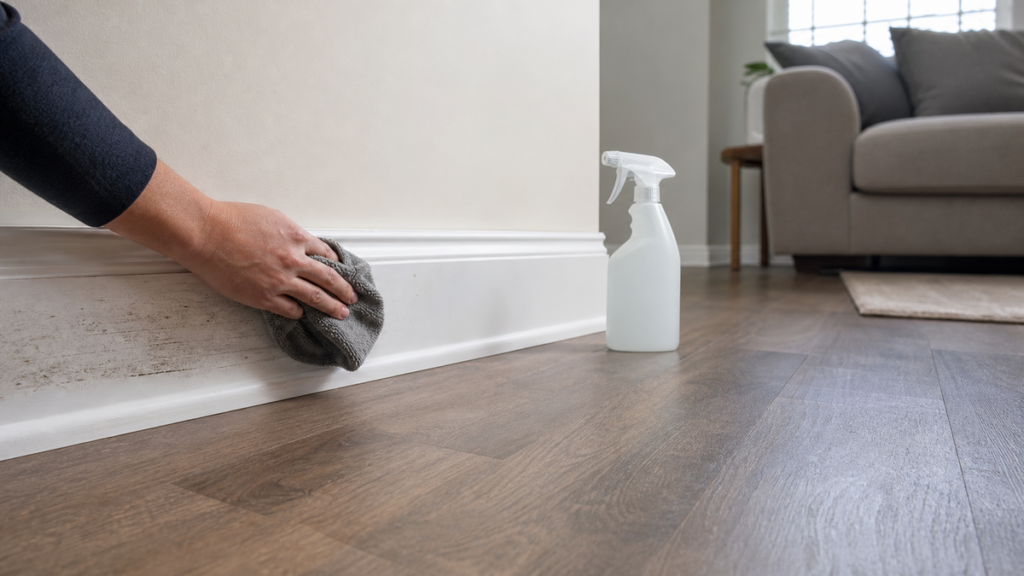
Use a freshly washed microfiber pad that has not been coated with fabric softener. If the flooring directions allow damp cleaning, lightly dampen the pad with clean, lukewarm water and wring it well. Test a small section away from the main walkway.
For laminate and sealed wood, the pad should be barely damp—not dripping. If you can squeeze water out of it or see puddles behind the mop, it is too wet.
4. Work in small sections and lift the film
Move the mop in overlapping passes across a manageable area. Do not flood the floor and then chase the water around. On textured vinyl or tile, change direction to reach shallow grooves; around grout lines, use controlled passes rather than leaving water pooled in the joints.
5. Change dirty water and pads early
The moment the bucket turns cloudy or the pad looks gray, replace it. Two buckets can help: one for clean water and one for rinsing the dirty pad. With flat mops, keeping several clean pads nearby is often easier than trying to rinse one pad perfectly.
6. Dry the section and test the result
Use a clean, dry microfiber cloth or towel, especially along laminate seams, wood-board edges, grout lines, and room perimeters. Let the test section dry fully, then walk over it with clean, dry socks. If the tackiness is gone, repeat the same controlled process on the remaining floor.
7. Use a compatible, measured cleaner only if needed
When sticky floors after mopping involve greasy or older residue, plain water may not lift it; follow the flooring manufacturer’s directions and choose a cleaner approved for that material. Measure it exactly. Start with the lowest appropriate strength, use a clean pad, and follow any rinse or dry instructions on the product and floor-care labels.
Do not mix cleaners in the bucket. Combining products can create more residue, damage a finish, or produce unsafe fumes.
Adjust the method for tile, vinyl, laminate, and wood
Ceramic and Porcelain Tile
Sticky floors after mopping can show up on tile when grout lines and textured surfaces hold dirty solution, even though ceramic and porcelain often tolerate damp cleaning better than plank flooring. Use fresh water, change pads frequently, and do not leave puddles sitting in the joints. Natural stone tile is different and should not be treated like ceramic or porcelain.
Sheet vinyl and luxury vinyl plank
Use a damp—not flooded—mop and focus on embossed texture, beveled edges, and kitchen traffic lanes. Keep liquid from collecting between luxury vinyl planks, and follow the flooring maker’s product restrictions.
Laminate flooring
Use minimal moisture because liquid can enter seams and affect the core. A barely damp microfiber pad, small work sections, and immediate drying are safer than repeated wet passes. Avoid steam unless the manufacturer explicitly allows it.
Sealed wood flooring
Sticky wood floors need restraint. Dry dust first, use very little moisture, and follow the finish or flooring maker’s guidance. Do not wet-mop unsealed, waxed, damaged, or unknown wood. For general care context, review the National Wood Flooring Association maintenance guidance, while treating the flooring maker’s instructions as the final authority. Our wood floor cleaning guide covers the low-moisture routine in more detail.
Natural stone and unknown finishes
Do not reach automatically for vinegar or another acidic solution. Acid can etch or dull some stone, and unknown coatings may react unpredictably. Use a stone-compatible product or ask the installer or manufacturer what is safe.
Common mistakes that make sticky floors worse
- Adding extra cleaner: More concentrate can leave a thicker film.
- Using one dirty mop pad for the whole room: Once loaded with residue, it spreads rather than lifts.
- Using fabric softener on microfiber: Softener can coat the fibers and reduce how well they pick up soil.
- Flooding plank floors: Water can enter laminate, vinyl-plank, and wood seams.
- Using vinegar everywhere: Acid is not suitable for every stone, grout sealer, finish, or flooring product.
- Steam-cleaning without checking: Heat and moisture can damage some adhesives, seams, finishes, and cores.
- Mixing products: Different cleaners can interact, leave more film, or create hazardous fumes.
When sticky flooring is not just cleaner residue
Cleaning cannot repair a worn finish, failing floor adhesive, moisture coming through the subfloor, damaged laminate edges, softened wax, or an incompatible polish that has built up over time. If sticky floors after mopping remain after a carefully cleaned test section—or the finish looks cloudy, soft, swollen, or discolored—stop experimenting.
Check the flooring warranty or care guide. For valuable wood, natural stone, or widespread finish damage, a flooring professional may be cheaper than turning a small problem into a full-room refinishing project.
Where Citrus Concentrate fits
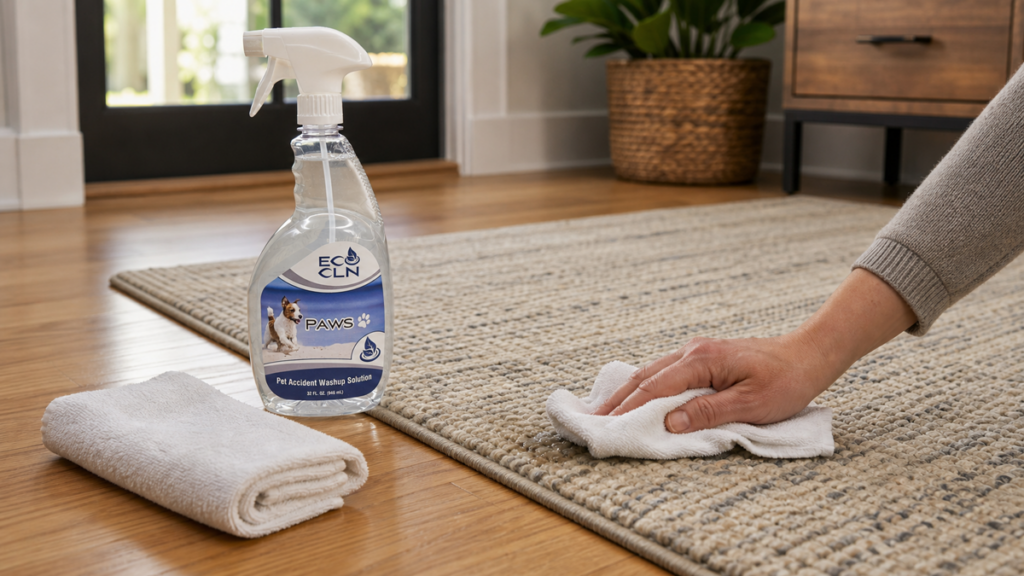
Once the existing residue is removed, Eco Cln Citrus Concentrate may fit routine cleaning on compatible washable hard floors when both the product label and flooring manufacturer permit it. Use the current floor-appropriate dilution, measure exactly, test a hidden area, and avoid stronger mixes unless the label and cleaning job call for them. See the cleaner concentrate dilution guide for current mixing directions.
Use extra caution with specialty flooring, natural stone, sealed wood, specialty finishes, and materials with unknown compatibility. If the product label and floor-care instructions do not clearly support the combination, stop and confirm before cleaning.
Correct measuring matters more than bravado. Your floor does not award bonus points for the strongest bucket.
Frequently asked questions
Why is my floor sticky after I mop it?
Sticky floors after mopping are usually caused by too much cleaner, incorrect dilution, dirty mop water, a saturated pad, or a product that does not suit the floor. Old grease or polish buildup can also stay tacky after cleaning.
Can I mop a sticky floor again with plain water?
Often, yes—if the flooring manufacturer permits damp cleaning. Use a clean, lightly damp microfiber pad, work in a small test section, and dry it promptly. Do not soak laminate, wood, plank seams, or unknown finishes.
Does vinegar remove floor cleaner residue?
It can affect some residue, but it is not a universal floor rinse. Vinegar may damage or dull natural stone and some finishes. Check the flooring directions before using any acidic solution.
How do I fix sticky wood floors after mopping?
Stop adding cleaner, dry dust the floor, and use a barely damp clean pad only if the finish allows it. Work in small sections and dry promptly. Waxed, unsealed, damaged, or unknown wood should not be wet-mopped.
Will using more floor cleaner remove the sticky layer?
Usually not. If excess product caused the film, adding more makes the problem worse. Lift the residue with clean pads and the least moisture the floor safely allows, then use a correctly measured compatible cleaner only if needed.
How can I prevent sticky floors next time?
To prevent sticky floors after mopping, measure concentrate, start with the lowest suitable strength, vacuum first, use clean pads, change dirty water early, and follow the floor maker’s moisture and product guidance. Let the floor dry before deciding it needs another pass.
The bottom line
Sticky floors after mopping are usually a residue problem, and the fix is controlled removal—not another generous splash of cleaner. Identify the flooring, remove dry grit, use clean pads and fresh water where allowed, work in small sections, and dry the floor before judging the result.
Once the film is gone, prevent it from returning by measuring cleaner accurately and matching the product, dilution, moisture level, and mop method to the floor. On compatible washable hard floors where the product label and flooring manufacturer permit use, a correctly diluted cleaner can support routine care; on delicate or unknown finishes, the manufacturer’s directions get the final word.